An equally problematic condition in the HOA concerns the Somali people. This part of the HOA is like no other. Somalis were essentially forced to live in more than five distinct places and/or states for decades: British Somaliland (Hargeisa based Somalia), Italian Somaliland (Mogadishu centered Somalia), French Somaliland (Djibouti), Ethiopia (Ogaden), and Kenya (Northern Frontier District). This is, of course, in addition to the
thousands or even million (s) of Somalis “settled” in Europe, North America, and the Middle East. Yet, the postcolonial Somalis’ life is not essentially different in many ways
either. There are as many loyalties and as much disfranchisement today as before in the different places where Somalis live. The people face, much like Eritreans, constant drought, famine, and food insecurity. However, unlike Eritrea, which has a deeply repressed society with less security challenges and thus relatively stable (or “stuck”), the case with the Somalis is fundamentally different. The Somali people fight different wars at the same time in different places. For instance, Ethiopian Somalis in the South Eastern part of Ethiopia struggle to find a safety valve from the relatively relentless political oppression in the region. Hundreds and even perhaps thousands of Somalis were detained, raped, tortured, killed, and made to flee their place of residence due to the TPLF- backed Abdi Mahmoud Omar’s (“Abdi Iley”) dictatorship in Ethiopia’s Somali region until recently.
In addition, the region is known for its deep-rooted corruption, repression of human and democratic rights, poverty, famine, drought, and food insecurity in Ethiopia. The Somalis based in and around Mogadishu fight against many things on different fronts: terrorism, poverty, direct or indirect foreign interventions and invasions (for instance, Ethiopia, Eritrea, USA), food insecurity, an unreliable and unstable state, intra-and-inter group loyalty driven frictions, and others.
The Somalis in Kenya, which Keren Weitzberg dealt with it effectively (and interestingly) in her latest work We Do Not Have Borders, struggle with different problems with different causes. One, among others, is the problem of belongingness and identity.
The Horn of Africa on the Move
In spite of all these existential crises, the year 2018 brought a convincingly new episode promising an optimistic future in the yet-to-be written political history of the HOA. With the increasingly encouraging reform efforts underway in the last three-to-four months, the EPRDF‘s (TPLF led) induced twenty -seven year long crisis in Ethiopia has just recently been clearly appreciated.
Not only did the TPLF dominated EPRDF government cause unfathomable chaos in Ethiopia (political, ethnic, economic, and religious), but also to neighboring countries in the HOA (for instance, Somalia, Eritrea). However, with the advent of Dr Abiy under the OPDO (Oromo People’s Democratic Organizations) led EPRDF, many analysts and ordinary Ethiopian citizens alike are clearly realizing how much Ethiopia (and many Ethiopians) have lost under the TPLF rule. Now, unlike the last twenty-seven years, there are signs that religious and ethnic based sensibilities in Ethiopia are receiving appropriate attention.
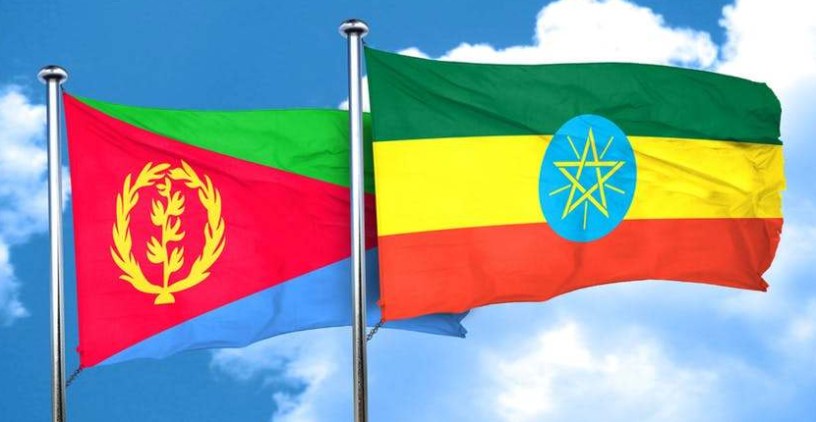
The face of Ethiopia, which, for the last two and a half decades, has been like the face of a gangster bullying other states in the HOA, is beginning to send out signals of hope and peace in the region. The recent Ethio-Eritrean rapprochement, initiated by the newly appointed Ethiopian Prime minister Abiy Ahmed, is a very relevant instance that would potentially transform the overall political landscape of the HOA. Previously state sanctioned people-to-people socioeconomic and cultural interaction between Eritreans and Ethiopians is now a practical possibility. Within days of this initiative, people of the two states immediately started moving in both directions, many of whom overwhelmed by the idea that they will be meeting with their close relatives and friends: father and son, husband andwife, mother and daughter, and others. Unsurprisingly, the majority of Eritrea’s ethno-linguistic stocks have their close siblings in Ethiopia and vice versa. State sanctioned artificial territoriality might have hampered the organic interaction of the same people, with the same religion, ethnicity, and culture, living in different and bordered nation states, the trans-territoriality of interaction, although having gone through a period of hibernation, remained well and alive to these days.
Both Martin Plaut and Keren Weitzberg deal with these issues in their own ways. While Plaut essentially wrote his book in more of journalistic (for which he has significant experience working for BBC) rather than the academic manner that Weitzberg employed. Methodologically, unlike Plaut, she effectively utilized a wide array of data sources, including in depth archival and field researches. In addition, it is less likely that one wouldfind such putative statements and generalizations as “Eritreans
 Martin Plaut