It is unacceptable that the henchmen of the Eritrean dictatorship are kept under the arms of Swedish taxpayers.
Source: Expressen
[Note: computer translation]
Published 4 Aug 2023

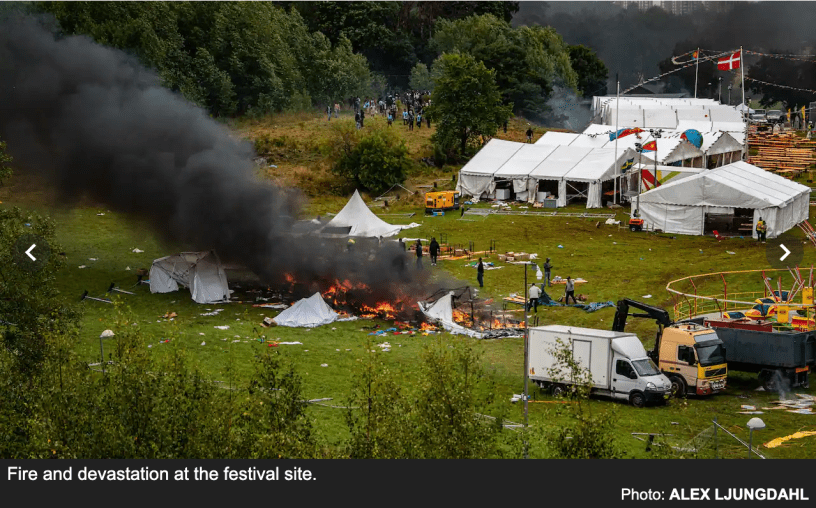
The images from Thursday’s riots in connection with the regime-loyal Eritrean cultural festival at Järvafältet in Stockholm are deeply unpleasant. A great and wild multitude rushed forth with intent to disturb and destroy. Many people have been injured, several seriously. The violence is innocent. Anyone who has committed acts of violence must be prosecuted.
But the background is this: The regime in Eritrea is a full-fledged dictatorship. Isaias Afewerki is the leader of the only party allowed and has been president since independence from Ethiopia in 1991. No opposition is allowed. The citizens can be used in the service of the state for an unlimited time, for military service or other tasks. Murder and torture of anyone who protests in any way is commonplace.
It is this regime that has held the Swedish journalist and writer Dawit Isaak in prison without trial since 2001, and committed very serious abuses against the population of Ethiopian Tigray between 2020 and 2022.
Eritrea is a small country with a relatively large diaspora. It tries to control and remotely control the regime in a particularly suggestive way. The approach is described in a report from the Total Defense Research Institute from last spring. In order to be able to get help with consular matters, Eritreans, for example, have to pay two percent of their income in a kind of tax.
The fundamental problem is that Sweden is unable to protect the Swedish-Eritreans from the dictator in Asmara.
If you don’t pay or if you’re caught expressing criticism of the regime, you don’t get help. Even worse, the regime also punishes relatives in Eritrea by cutting them off from public services. It may be that they are not given permission to marry or to bury dead relatives. It can also mean threats or outright violence.
It’s a hostage situation.
In addition to this, pro-regime organizations abroad regularly organize different kinds of festivals and cultural events, which, among other things, aim to collect money for the Eritrean state. And these festivals thus become recurring objects of violent, regime-critical demonstrations.
The fundamental problem is that Sweden is unable to protect the Swedish-Eritreans from the dictator in Asmara. The issue has been raised many times, both in Sweden and internationally, but the system has so far been difficult to access.
Therefore, it may be worth trying Riksdag member Fredrik Malm’s proposal to change the law to stop Eritrea’s collection activities in Sweden.
However, there are things that are very easy to remedy, but which Sweden has so far ignored.
Last year, for example, the Eritrean Orthodox Church received SEK 802,390 in grants from the Swedish state, despite the fact that it is used by Eritrea to control Swedish-Eritreans. Not a single tax kroner should end up in the regime’s collection box. And of course, public land and public premises should not be rented out to pro-regime festivals.
Sweden must stop supporting the henchmen of the dictatorship.
 Martin Plaut