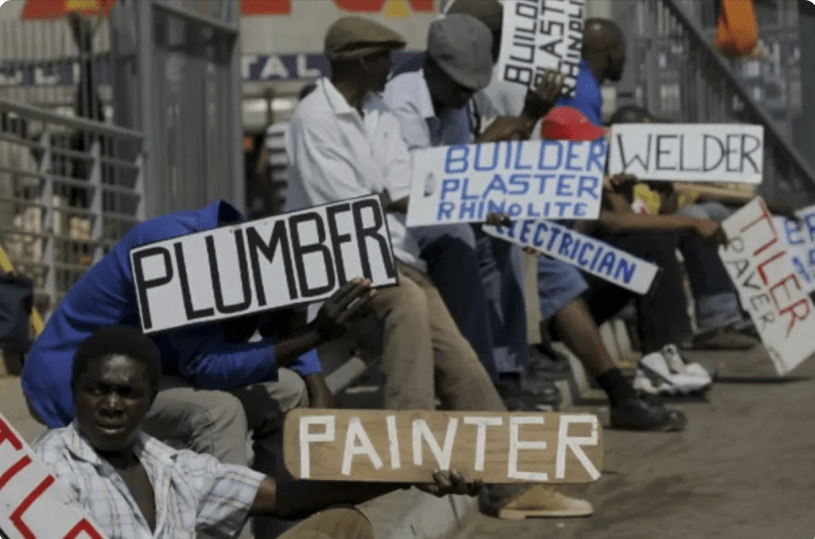
Africa faces a lost decade. It’s time for Africans to stand up, to march, agitate and send serious messages to their leaders. It’s time for young leaders to emerge. Nothing less than vigorous action will do. No-one is coming to save us.
Source: Financial Mail
President Cyril Ramaphosa famously characterised the period under his predecessor, Jacob Zuma, as nine wasted years. Sadly, South Africa is not the only country going through a sustained season of anomie. Our entire continent is in trouble, and quick, effective solutions are needed.
Last week, the World Bank said Africa is in danger of going through a “lost decade” unless we “urgently achieve stability, increase growth and create jobs”.
Reading the bank’s assessment ought to bring tears to the eyes of all Africans and those who genuinely care for this continent.
The bank is scathing about prospects for Africa’s large economies: “Economic growth in Sub-Saharan Africa is forecast to decelerate to 2.5% in 2023, from 3.6% in 2022. South Africa’s GDP is expected to grow by only 0.5% in 2023 as energy and transportation bottlenecks continue to have an effect.
“Nigeria and Angola are projected to grow at 2.9% and 1.3% respectively, due to lower international oil prices and currency pressures affecting oil and non-oil activity. Increased conflict and violence in the region weigh on economic activity, and this rising fragility may be worsened by climatic shocks.
“In Sudan, economic activity is expected to contract by 12% because of the internal conflict which is halting production, destroying human capital and crippling state capacity.”
How did we get here? In the late 1990s and early 2000s, Africa’s prospects were glittering. Consultants and economists spoke not of a lost decade but of “Africa rising”.
You could not blame them. The guns that had devastated Africa for decades were being put aside. South Africa and Namibia had stopped their wars and democracy reigned. Mozambique was finding peace. Nelson Mandela and others had helped Zaire (the Democratic Republic of Congo) out of its decades-long war. Angola was in a similar peacemaking process. Economies were transforming. Zambia cast aside its experimentation with socialism. By the mid-2000s, stability and prosperity were taking root in many jurisdictions. Even Sudan was haltingly signing peace decrees.
There was one key element to these changes: visionary, committed, selfless political leadership. South Africa’s Thabo Mbeki, Nigeria’s Olusegun Obasanjo and a handful of other leaders, among them Abdoulaye Wade of Senegal, were committed evangelists for a new, democratic, proud, economically revived Africa.
They laid the groundwork to open the continent’s economies, to build a strong middle class, to revive educational institutions, to ensure stability and transparency and to boost business confidence. It was their work that led, for example, to the enthusiastic adoption of the African Continental Free Trade Agreement.
Their efforts were rewarded. Investment started arriving. Coups and “presidents for life” declined substantially.
Yet after this generation of leaders we have chosen successors without vision, character or drive. The gains of that magnificent period are swiftly being lost. Since Obasanjo, Nigeria has been dominated by leaders of such an advanced age they can hardly stand in front of a podium, let alone lead with vision and vigour.
South Africa elected Zuma, an incoherent mess of corruptions and conspiracies, to succeed Mbeki. In intellectual terms, we went from the sublime to the slime.
For the rest of the continent, it’s been truly demoralising. Africa has had eight military coups since 2020. Between 2010 and 2022 there were 40 coups and attempted coups, according to The Conversation. We cannot expect economies to grow and countries to develop while leaders are oppressing their people and looting the fiscus.
That is why many people across the continent are losing faith in democracy. According to an Afrobarometer poll earlier this year, only 68% of Africans prefer democracy as a system of governance, a decline from 73% a decade ago. Would you blame Zimbabweans for losing faith in democracy after Ramaphosa and other Southern African Development Community leaders hugged Emmerson Mnangagwa while their own monitors told them the Zimbabwe election was not free or fair?
Africa faces a lost decade. It’s time for Africans to stand up, to march, agitate and send serious messages to their leaders. It’s time for young leaders to emerge. Nothing less than vigorous action will do. No-one is coming to save us.
 Martin Plaut