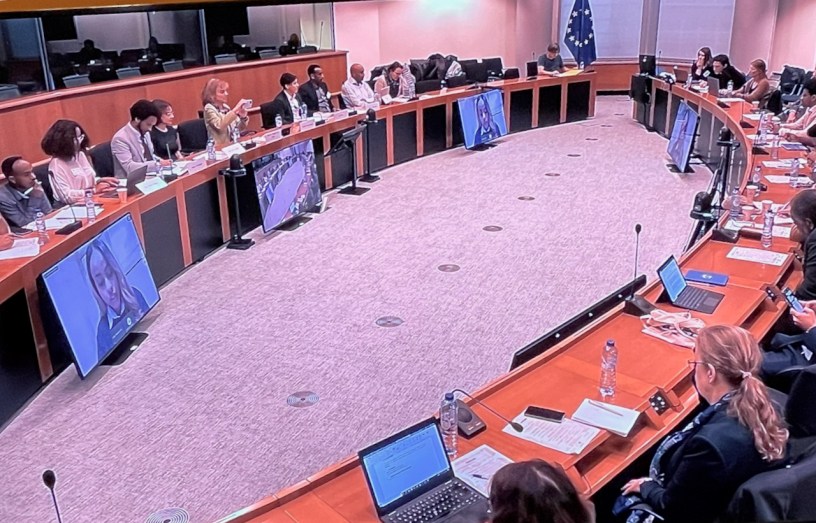
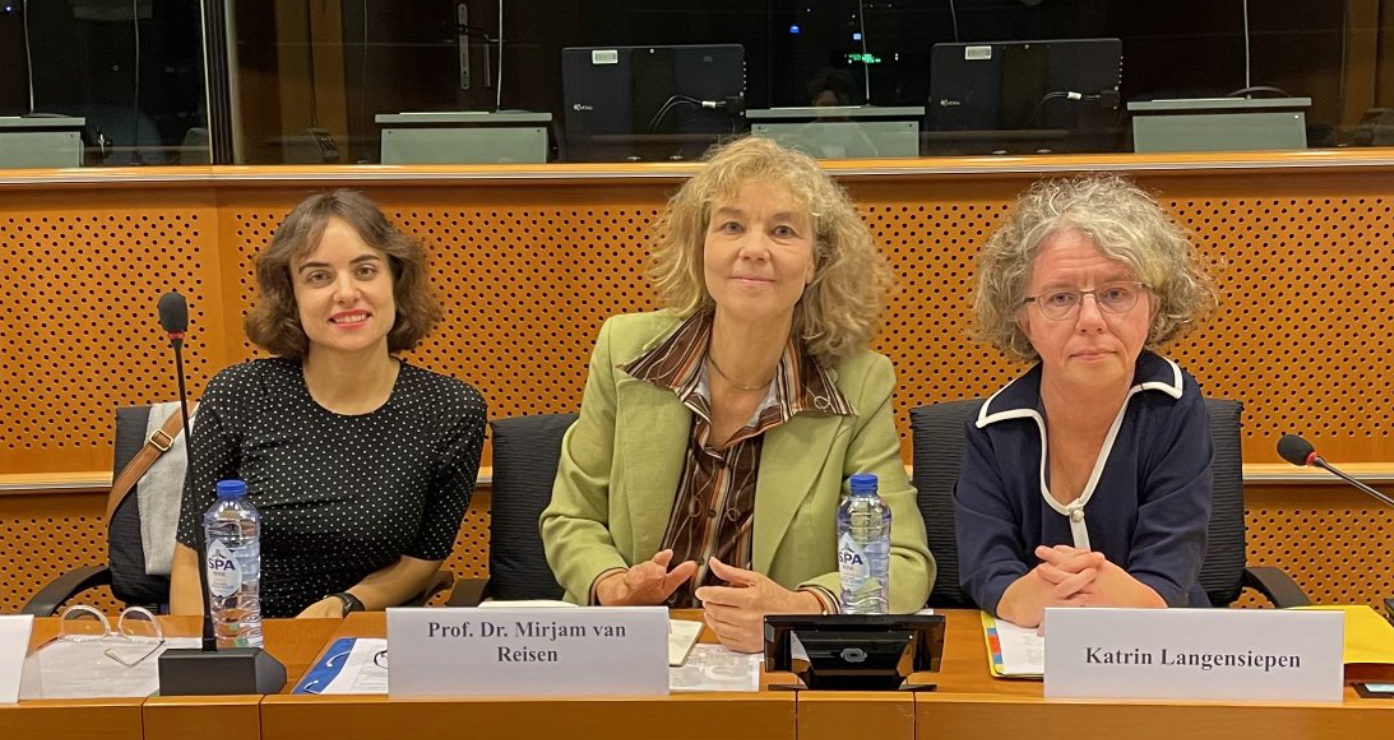
These were part of a Round Table at the European Parliament hosted by Katrin Langensiepen, a German Green MEP. All contributions can be found here.
Statement by Dr. Mohamed Abdelsalam Babiker, UN Special Rapporteur on the situation of human rights in Eritrea
European Parliament Roundtable on Eritrea
25 October 2023
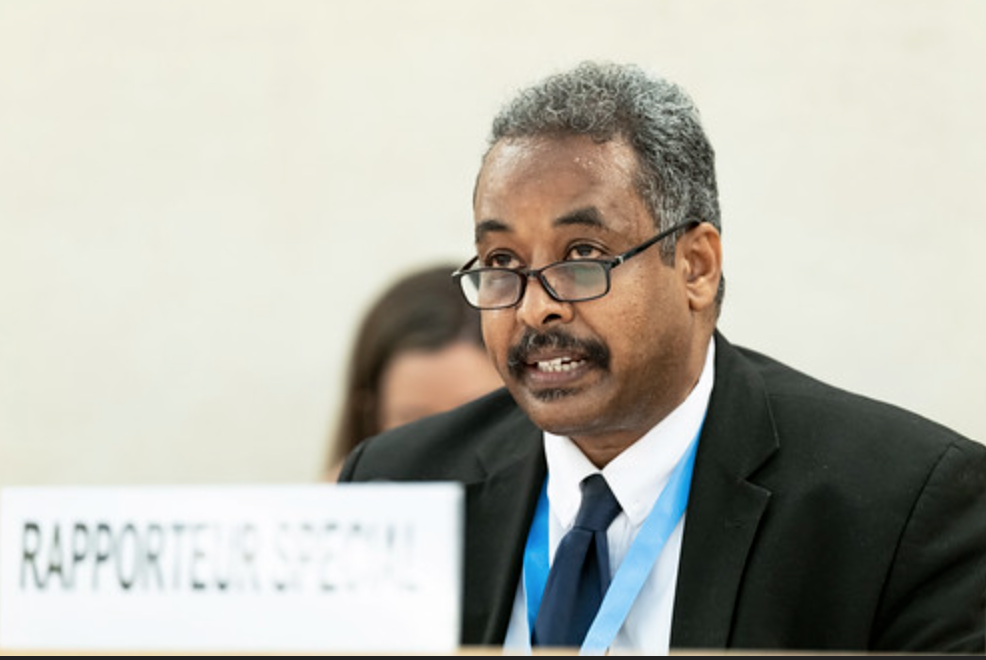
I would like to thank MEP Langensiepen and the European External Programme with Africa for organising this important event. I regret that I could not attend in person due to a previous engagement and thank you for your understanding in accepting this written statement.
Since I took up the mandate of UN Special Rapporteur in September 2020, the human rights situation in Eritrea has continued to deteriorate. The two-year long conflict in Tigray erupted two months after I took on the duties of Special Rapporteur. Over the past three years, I have received testimonies and documented atrocities committed by the Eritrean Defence forces in Tigray, including massacres, extrajudicial killings, sexual violence, kidnappings, destruction of humanitarian infrastructure and targeting of Eritrean refugees, and looting.
I continue to receive information regarding human rights and humanitarian law violations committed by Eritrea in Tigray after the cessation of hostilities, including the kidnapping and enforced disappearance of civilians, extra judicial executions, sexual violence, and looting. The continued presence of the Eritrean Defence forces in disputed areas in Ethiopia, as well as the presence of a large contingent of Eritrean Defence Forces alongside the Eritrean – Ethiopian border is of great concern.
Beyond Tigray, I cannot emphasize enough the perverse impacts of the conflict on the human rights situation in Eritrea. The Eritrean government ramped up conscription campaigns, forcing thousands of Eritrean men, women, children, and older persons to fight in a war that has taken the lives of 400,000 – 600,000 people. Thousands of Eritreans are estimated to have perished. In most cases, their families have not received any information about the fate of their loved ones. Almost a year after the signature of the Cessation of Hostilities Agreement between the Ethiopian government and the TPLF, Eritrean families continue to live in anguish and uncertainty as they wait to hear from them.
The Eritrean authorities effectively have raided the country, conducting round ups and conscripting thousands of Eritreans into the military. Those who attempted to evade the draft or refused to fight in Tigray faced harsh punishments to force them to comply: torture, arbitrary detention in inhuman or degrading conditions, extrajudicial killings for those who attempted to flee, and the collective punishment of their families and communities, who found themselves imprisoned, evicted from their homes, their homes destroyed, their cattle killed or starved. When neighbours or relatives attempted to help them, they were threatened. I also documented the conscription and deployment of children – something that is not new in Eritrea, but that has escalated since 2020; and the kidnapping or pushback of Eritrean refugees from Tigray, who were later also forced to fight in Ethiopia.
Over the past year, the repression of freedom of religion or belief has escalated, with renewed waves of mass arrests of people of faith and attempts to control and interfere in all aspects of religious life, both in Eritrea and in the diaspora. As of September, an estimated 400 members of proscribed Christian churches remain arbitrarily imprisoned. Members of authorised religious communities are also under pressure. In October 2022, three Catholic priests were arbitrarily detained, and released in late December. The followers and supporters of the late Patriarch of the Orthodox Church Abune Antonios are being persecuted, both in Eritrea and abroad, as the authorities seek to solidify their control over the Orthodox Church. 44 Orthodox monks were arbitrarily detained in April 2023. Between 150 and 180 teachers and students were arrested at an Orthodox theological college in Asmara.
In recent months, we have also seen an increasing polarization among Eritreans in the diaspora, with clashes between Eritreans in several European and North American cities. This is the result of the complete lack of civic space in Eritrea, and of any avenues for Eritreans to participate in decision-making in their own country. No elections have been held in over 30 years, and President Afwerki has continued to rule with no rule of law, no separation of powers, or any limitations to his power. Eritrea remains a single party state, where no political groups or movements are allowed to organise, and independent media and civil society are not allowed to operate. As documented in my reports, journalists, political opponents, artists, people of faith, draft evaders, and returned asylum seekers, continue to be subjected to grave human rights violations including enforced disappearance, torture, and prolonged arbitrary detention in inhuman or degrading conditions. In that context, and with a large flow of Eritrean refugees and asylum seekers over the last decade, Eritreans in the diaspora have become increasingly active, organising, protesting, engaging in activism and mobilisation. These efforts have been met with pressure from the Eritrean diplomatic and consular services and from structures linked to the governing party.
Over the last three years in my mandate, I have gotten to know what Eritreans refer to as “the long arm of the regime.” This is the intelligence activities and interference of the Eritrean government with the lives of their citizens in the diaspora. I have received hundreds of testimonies that referred to the coercion Eritreans are subjected to, and the pressure to support the Eritrean government in different ways: social, with the participation in events, festivals and seminars; economic, through the payment of the 2% tax and contributing financially to a variety of causes and calls for funding; and physical by volunteering their time to participate in organisations, taking on responsibilities, and carrying out tasks. Those who refuse to participate are considered government opponents and face stigmatisation and ostracising in the community. In some cases, they are expelled from their churches, others face intimidation. Those who do not pay the 2% tax or are flagged as opponents, cannot access any consular services, or even services from the administration in Eritrea. This can have a huge impact on their lives and the lives of their families: in some cases, the entire family cannot settle an inheritance or register land for this reason, in other instances relatives in Eritrea are threatened with losing their business licenses, and the persons concerned, or their family members, are denied the right to burial in their homeland in Eritrea.
The situation is more complex for those who are politically active in opposition movements in the diaspora. They are regularly subjected to threats, harassment, and defamation both online and offline. In the case of women, these attacks are often gendered and sexualised. Some of the activists participating in this roundtable have suffered it in their own flesh. In recent months, there have also been several assaults of Eritreans active with the opposition or participating in protests.
I want to take this opportunity to highlight the plight of Eritrean refugees and asylum seekers, and the responsibility of the EU to provide legal routes to safety and effective protection. According to UNHCR, over 577,000 Eritreans had sought asylum as of end of 2022. Eritrean refugees and asylum seekers face perilous journeys and are often subjected to grave human rights violations along the way. Their situation has only deteriorated in recent years, as the two main destination countries for Eritrea – Ethiopia and Sudan – face conflict, instability, and violence. There were over 130,000 Eritrean refugees and asylum seekers in Sudan at the onset of the conflict on the 15th of April this year. A large proportion of them have been displaced again, facing violence, heightened difficulties to move safely, and an increased activity of human trafficking networks in the region. I have received several reports about missing Eritrean refugees, raising alarms that they may have been kidnapped by traffickers or by the Eritrean authorities. In Libya, Eritrean asylum seekers are particularly vulnerable, as they are perceived by traffickers as more lucrative for kidnapping for ransom. I have spoken to dozens of Eritreans who were kidnapped and tortured at their passage through Libya. Almost all the women described having been raped. This cycle of violence must stop. I take the opportunity in this forum to call on the EU to exercise solidarity, adequately protect Eritrean refugees and asylum seekers, and ensure their access to and enjoyment of human rights.
I also call on the EU Member States to exert maximum pressure on Eritrea to implement the recommendations made by Special Rapporteurs and by the Commission of Enquiry on the situation of human rights in Eritrea, and to consider all available measures to ensure access to justice for the Eritrean People, including exercising universal jurisdiction.
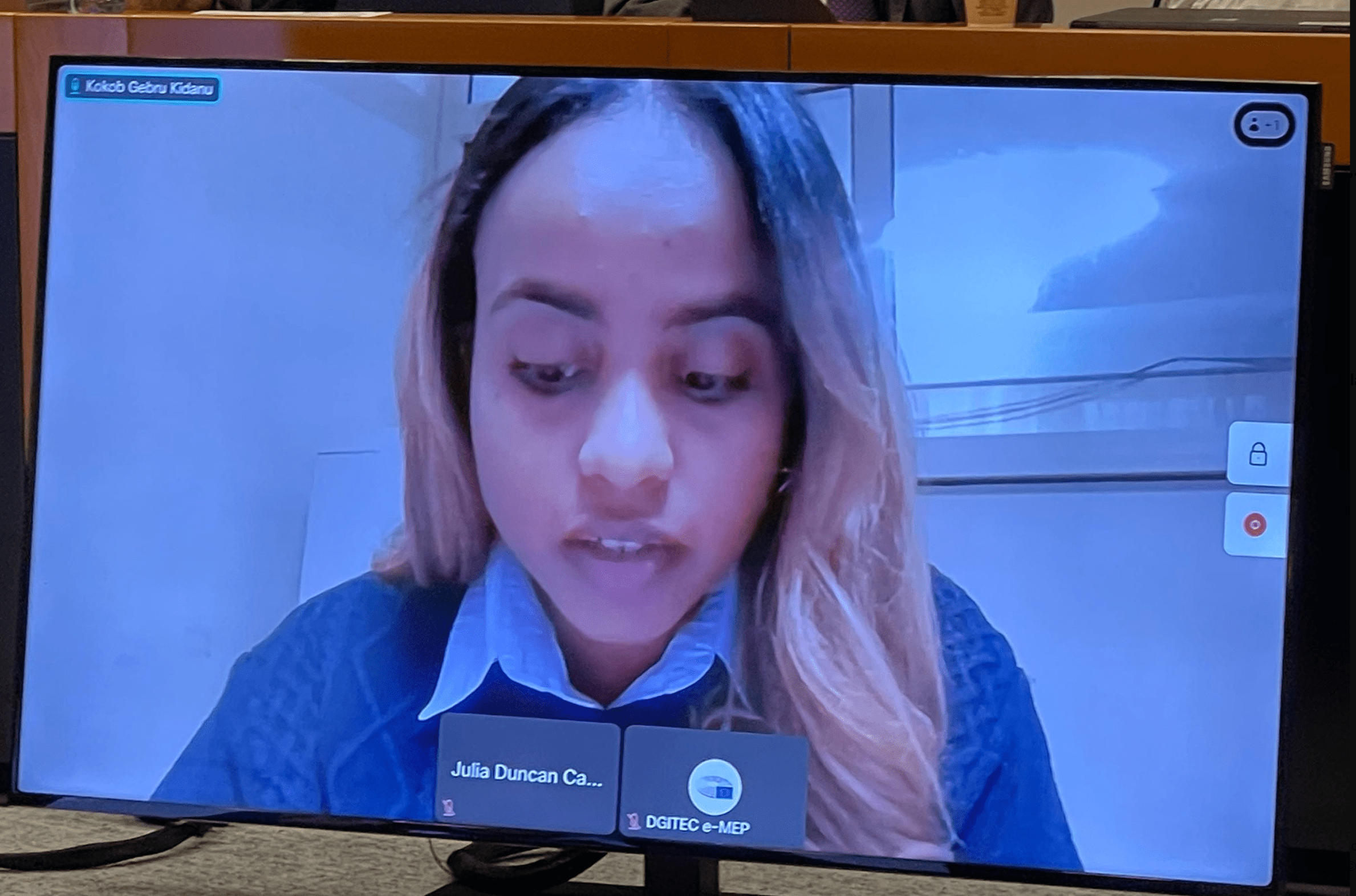
Statement by Kokob Gebru Kidanu, Mekelle University, Tigray, Ethiopia
Conflict related sexual violence perpetrated by Eritrean forces against Tigrayan women.
25 October 2023
I would like to thank MEP Langensiepen and the European External Programme with Africa for inviting me to speak here today.
All protocol observed.
It is truly an honour to be here and be a voice for Tigrayan women and girls as I share my understanding of the conflict related sexual violence perpetrated against the women and girls by Eritrean forces.
As we continue to witness the devastating effects of the war on Tigray, it is important to address one of the most heinous crimes being committed against the people, which is the use of rape as a weapon of war and genocide. Since November 2020, numerous reports have emerged with evidence of women describing the perpetrators to be from different groups. Some women reported that they were raped by Eritrean Defense Forces (EDF), some by Ethiopian National Defense Forces (ENDF) while others reported being rape by Amhara Special Forces or by the irregular armed group from the same region, the FANO. In other instances, survivors reported that multiple soldiers wearing different uniforms and speaking different languages performed acts of violence jointly.
It is heart-wrenching to know that no one has been spared – from young girls to elderly women, pregnant and lactating mothers – all have fallen victim to these brutal attacks without any discrimination.
It is unfortunate that there were delays by the international community in addressing the involvement of Eritrean soldiers and the violence they were committing in the region even with sufficient evidence being available and reported. Eritrea denied its presence in the war and its participation in the rape and sexual violence against Tigrayan women. Meanwhile our sisters, daughters, and mothers were and still are subjected to unimaginable horrors.
The way we understand it is that for the Eritrean forces It was not a violence adjacent to a conflict, but it was primed by years of propaganda as well as the official narrative on the eve of the war and the subsequent months by their government. Women have been gang-raped, forced into sexual slavery, foreign bodies inserted to their reproductive organs and brutally and sadistically abused by Eritrean soldiers.
These atrocities are not only physically damaging but also leave deep emotional scars on survivors and their families. The trauma they endure not only affects them but also tears apart the fabric of our society.
Survivors who have sought medical help have come with bruises, stab wounds, burns, foreign objects lodged in their vaginas and other physical injuries. But it doesn’t end there – they also suffer from psychological trauma and reproductive health issues such as fistula, intentionally spread HIV/AIDS, unwanted pregnancies, and miscarriages. This is not just a violation of their bodies but also an attack on their mental health and their identity as Tigrayan women.
The Eritrean perpetrators have gone beyond just physical violence; they have used ethnic slurs like “AGAME”, “KOMAL”, they have told women that they are “telamat” meaning traitors, that they have been sent here to make sure no Tigrayan is left alive, that their wombs should never bare children ever again and that they are unworthy because of their Tigrayan identity. This is not just rape; this is a deliberate attempt to destroy our entire ethnic group.
Multiple reports and research papers conclude that much of the sexual violence perpetrated in the Tigray context was by Eritrean forces a recent report by Physicians for human rights (PHR) specified that up to 66% from the reviewed sample of medical records in their report indicated that rape was perpetrated by Eritrean forces against women and girls in Tigray. However, identifying perpetrators became more challenging as they adapted their tactics. Initially, they were identified by their different dialect when speaking Tigrigna, wearing “Congo” shoes, some having marks on their faces, and wearing a different uniform. However, after facing international condemnation, they started wearing the uniforms of the Ethiopian National Defense Force (ENDF) while continuing to commit crimes. This was part of the attempt to conceal the Eritrean perpetration of these crimes.
Additionally, the blockade and siege in the region had cut off any support that was coming in, making it even more difficult for survivors to access the help they urgently needed. The communication and internet blockade meant there was no voice for the victims. Our sisters were being silenced and isolated from the rest of the world and suffering in silence.
Despite the cessation of hostilities Agreement signed in November 2022, which led people to believe that there would be a complete end to hostilities and enforcement of the agreed-upon terms, Tigrayan women continued to report incidents of sexual violence. This is because there are still areas occupied by Eritrean forces, and our women continue to experience violence until the present day.
As a clinician and researcher, I have first-hand witnessed the devastating impact of conflict-related sexual violence on survivors. The physical and psychological trauma inflicted upon the women is immense, and it is crucial that they receive appropriate support and justice for the crimes committed against them. To share some stories:
A survivor said: “three Eritrean soldiers raped me. But that was not all, they put hot metal on my skin and repeatedly hit me on the head. I have burn scars all over my back, my head and between my thighs and vagina. And then they poured some type of chemical on my head, I can’t explain to you what it was, but I’ve been bold ever since. My hair hasn’t been able to grow back that’s why I cover it this way.
Another survivors disclosed during our interview as she was fleeing her home and she was detained by Eritrean soldiers and one she described as “Ben Amir” started raping her but when she spoke his language, he immediately stopped and said “I thought you were Tigrayan” and got up. This are just two of the many stories of our women.
The lack of access to essential services further exacerbates the suffering of survivors and hinders their ability to heal and recover from the trauma they have endured. It is crucial for the international community to prioritize the rebuilding and restoration of health facilities in the region, as well as the provision of specialized support services for survivors of sexual violence.
As the mandate of the international commission of human rights experts in Ethiopia (ICREE) ends the chances of our women getting the justice they so deserve has become uncertain and seems almost impossible. It is crucial that those responsible for these terrible crimes are held accountable. Justice for Tigrayan women and girls cannot be delayed or denied. The international community must support efforts to investigate and prosecute these perpetrators, ensuring that justice is served.
Statement of Beyene Gerezgiher, Spokesperson for the Eritrean Bright Future Movement
Stop the Impunity of the Eritrean regime
25 October 2023
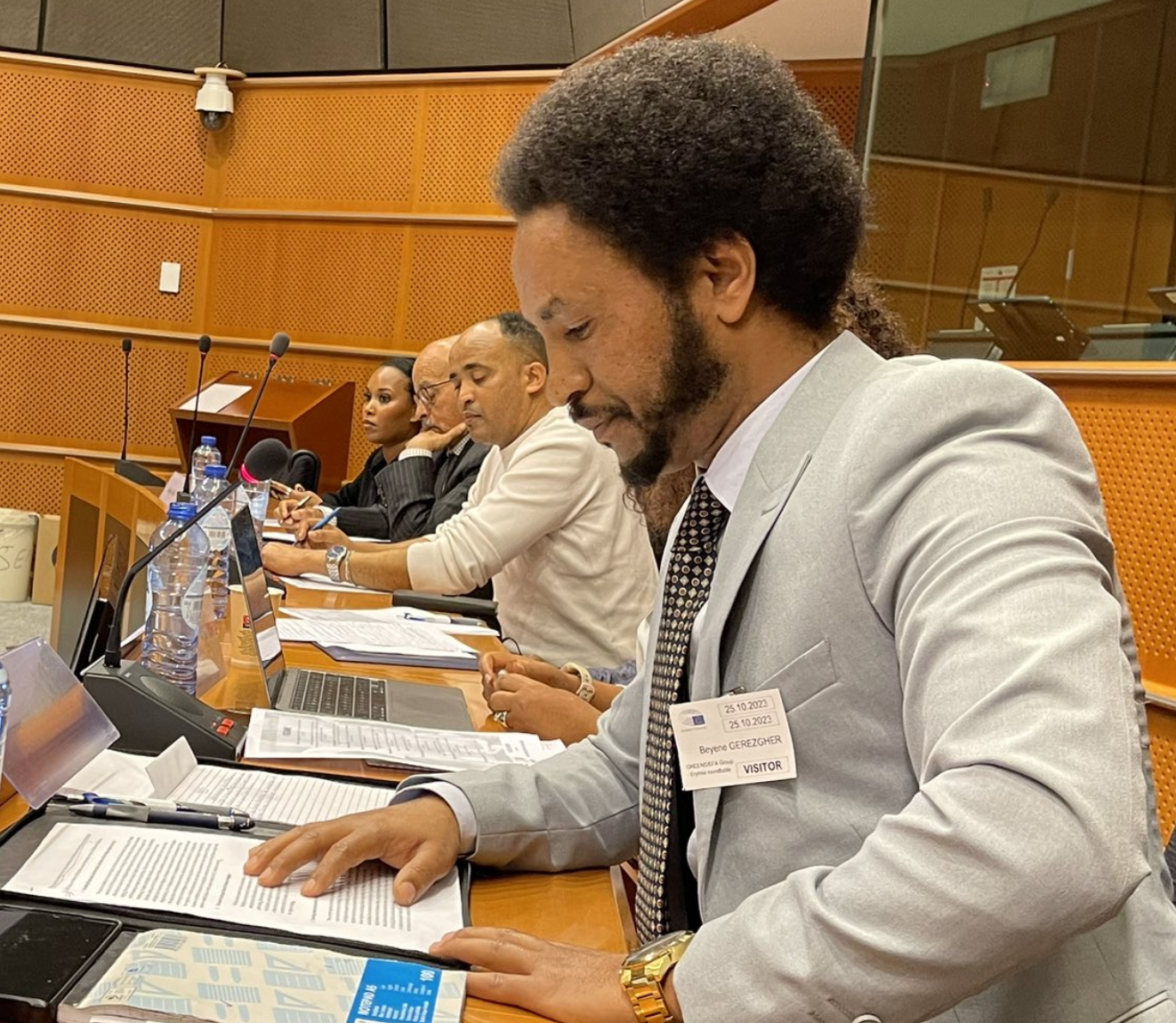
I would like to thank MEP Langensiepen and the European External Programme with Africa for inviting me to speak here today.
All protocol observed.
Thank you for inviting me to this important meeting.
I am Beyene Gerezgiher the spokesperson for the Eritrean Bright Future Movement.
I will focus on three crucial points requiring urgent attention and our collective effort.
1. Stopping illegal and undemocratic activities of the Eritrean regime in the EU
The gross violations of human rights in Eritrea are well-documented, including a 600-page report by the UN Special Commission of Inquiry. The reports states that Eritrean Embassies abroad recruit spies for intelligence gathering and force Eritreans in exile to support the regime. The regime also conducts illegal activities in European soil, harassing, intimidating and threatening refuges and collecting a 2% tax on the income of exiles and money laundering. It stages propaganda festivals used to showcase support from exiles and the European public. The increasing number of propaganda festivals in major European cities and the associated violence witnessed recently, necessitates action from the EU to safeguard the well-being Eritrean refugees in European soil. Many of the Eritrean refugees traumatized by the regime’s cruelty and oppression, feel extremely shocked and provoked to see that regime in Eritrea is using Europe as platform to exercise its power. We underscore the spies of the Eritrean regime that openly supports Russia President Putin and all of which poses a threat to EU security. As the EU is aware of these activities, we believe it has the moral obligation and legal duty to protect refugees on European soil and prevent the continuation of these illegal activities.
2. The issue of continued flow of Eritrean refugees
Eritrea has been experiencing a mass exodus, with approximately 1 million Eritreans fleeing the country since its independence in 1993. This not only affects the demographics of the nation but also hampers the struggle for democratic governance. The repressive regime sees this mass exodus as a way of eliminating the risk of youth uprisings and an opportunity to exploit refugees for monetary gain. To address the root causes of this situation caused by the repressive regime in Eritrea, it is essential for the EU to assist us by recognizing and supporting the need for regime change in Eritrea.
3. Ensuring peace and security in the Horn of Africa
The current regime in Eritrea has destabilized and undermined the security of several countries in the Horn of Africa. It has committed gross violation of human rights including crimes against humanity, genocide, war crimes in Tigray region of Ethiopia together with Ethiopian armed forces as reported by the International Commission of Human Rights on Ethiopia. Those responsible for these crimes must be held accountable. The prevention of a failed state in post-dictatorship Eritrea, the fragmentation of the Ethiopian state, and guaranteeing peace and security in the Red Sea and Bab-al-Mandeb and the entire region are not only in our interest but also vital for the EU. The EU and its allies should pressure for regime change and need to create a stable alliance with those of us who seek a transition to a democratic governance and minimize the risk of societal collapse and regional instability.
We in The Eritrean Bright Future Movement, who stand for the democratic values of liberty, equality and fraternity, believe that by working together, we can address these issues effectively and pave the way for a prosperous and democratic Eritrea in peace with itself and its neighbors.
Round Table summary by Martin Plaut, Senior Researcher, University of London
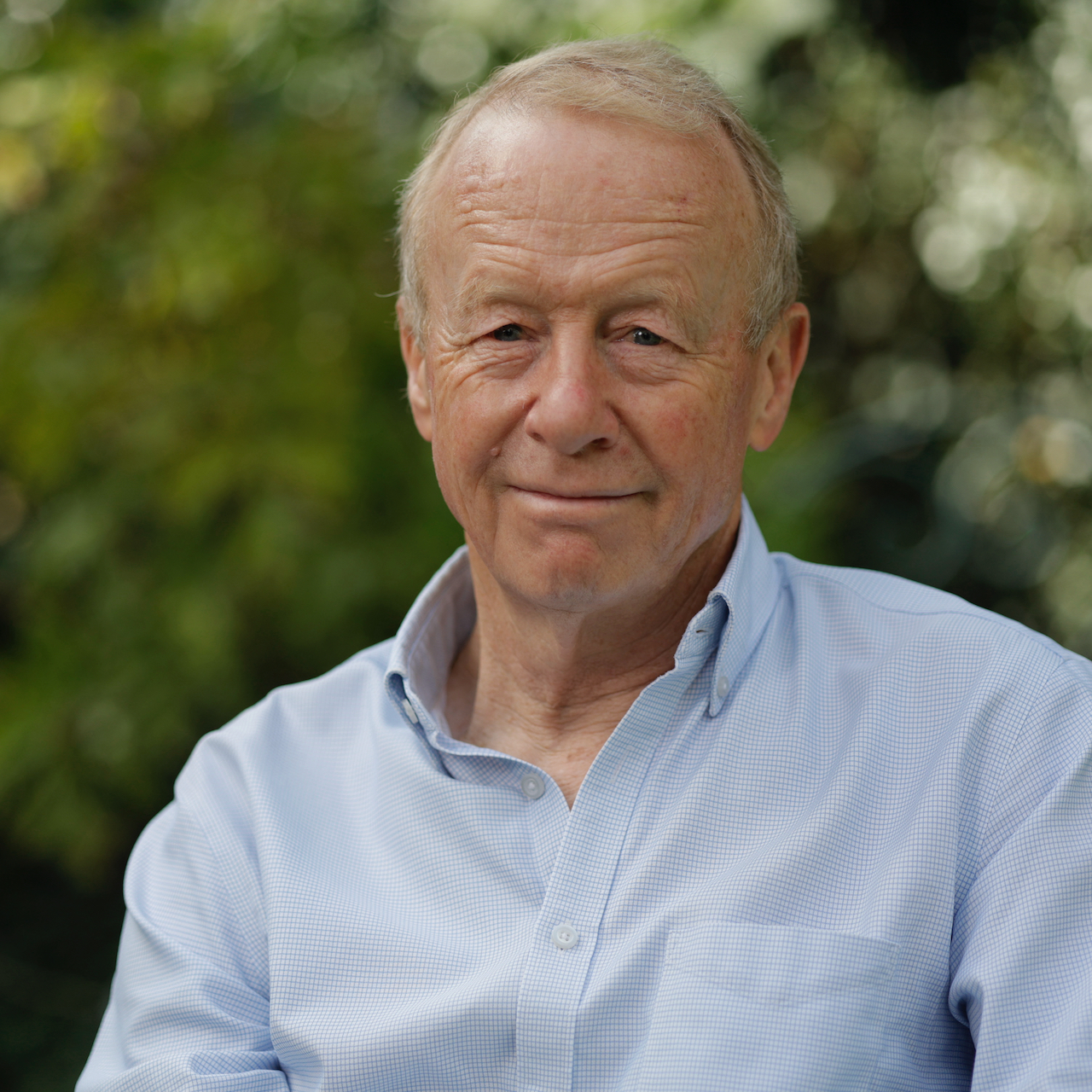
I would like to thank MEP Langensiepen, Professor van Riesen and the European External Programme with Africa for holding this important Round Table which comes at such a critical moment.
I would like to thank everyone for their observations, but particularly the UN Special Rapporteur on the human rights situation in Eritrea, Dr Babiker. His careful sifting of the evidence is enormously helpful.
I will highlight two of his points.
First, the huge exodus of Eritreans which can be seen across the world. This is continuing, despite the terrible dangers they face. These were underlined this week by the Report of the UN Panel of Experts to the Security Council. [S/2023/673]
This provided – in great detail – the involvement of Libyan state and parastatal actors in human trafficking, smuggling and enslavement. The key actors are named and the roles explained.
I quote just one section, underlining the impact on European Union states.
“The Panel identified eight human trafficking and migrant smuggling routes in Libya. Those routes are operated by Libyan networks of human traffickers and smugglers with international and regional elements in 17 countries, including France, Germany and Italy…
Victims were constantly subjected to acts of enslavement, rape, sexual slavery, enforced prostitution, deliberate starvation and torture, as well as cruel and extremely degrading treatment.
The Panel found that these human rights abuses were committed in the course of organized criminal operations. These private trafficking networks were operated in collaboration with Libyan armed groups and used well-developed illegal enterprises in Libya and abroad with the aim of generating significant financial profits and other benefits for these actors.”
Secondly, what Dr Babiker refers to as “the long arm of the regime.” The intelligence activities and interference of the Eritrean government with the lives of their citizens in exile.
These activities across Europe are particularly important. But the Eritrean diaspora are now challenging this “long arm of the regime” wherever they find it.
There have been demonstrations and protests from Israel to Canada, and in many European states including Germany, the Netherlands, Switzerland and Norway.
The Dutch are aware of these activities and has already taken some steps to counter them. The Norwegian government commissioned an important and insightful report on “Transnational Repression” by foreign powers against diaspora communities.
The European Union has access to all this information.
What we now need is action both to prevent the enslavement of Eritreans in Libya and to tackle the “long arm” of the Eritrean regime.
 Martin Plaut