Isaias said that during the ongoing final phase of our struggle, our cooperation with the TPLF was important. And for that cooperation to deliver for us to an internationally accepted referendum and legitimize its outcome, Isaias said that there had been an idea to form a joint government in Ethiopia, including Eritrea, and that an understanding had been reached with the TPLF to that effect.
Mesfin Hagos with Awet Tewelde Weldemichael, An African Revolution Reclaimed, p. 294
Just prior to the conflict erupting in Tigray President Isaias brought his closest political and military advisers together for an intense discussion on how to proceed. The president told them that the country had to accept that it has a small and not very viable economy and a lengthy Red Sea coast, which Eritrean cannot patrol on its own. He is reported to have suggested that some sort of “union” with Ethiopia might be possible, at least in terms of economic co-operation and maritime security.
The Tigray war threatens to transform the Horn of Africa, Martin Plaut, Eritrea Hub
Introduction
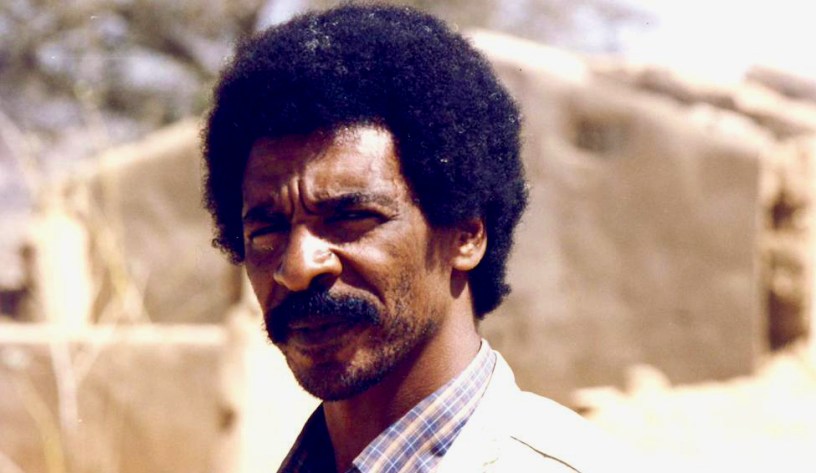
Mesfin Hagos is a hero to many Eritreans. One of the original leaders of the EPLF and the clandestine party that controlled the Front (the Eritrean People’s Revolutionary Party) Mesfin was best known as an outstanding military leader.

Mesfin organised the EPLF military operations in the Kebessa region in the 1970’s. He oversaw the capture of of Afabet in 1988 and the EPLF victory on the Dekemhare front in the final battles that saw liberation in 1991. After independence Mesfin was appointed minister of defence but, worried by his popularity with the fighters, Isaias sidelined Mesfin in 1994.
Concerned by the absence of democracy after independence and critical of the role of President Isaias during the 1998- 2000 border war with Ethiopia, Mesfin joined the EPLF members who opposed the direction the president was taking the country: the G15. Mesfin and his colleagues broke with the president. Those inside Eritrea were arrested and have been imprisoned ever since. Mesfin happened to be outside Eritrea for medical treatment when the G15 and others were rounded up. He has remained in exile ever since.

Now Mesfin has written a fascinating autobiography which gives an insight into the early years of the Eritrean fight for independence and what has happened since. It is published by Red Sea Press and is written with Professor Awet Tewelde Weldemichael of Queen’s University.
Critically, given the current question of whether Ethiopia should have access to the Red Sea, he also reveals how Isaias discussed plans for a joint government with the Tigrayans to rule both Eritrea and Ethiopia. As the second quote at the start of this article indicates, this idea was resurrected by Isaias just prior to the 2020 – 2022 war in Tigray. Below is an extract from Mesfin’s book.
Martin

From “An African Revolution Reclaimed” by Mesfin Hagos and Awet Tewelde Weldemichael, p. 293-294
“[In] February of 1991, EPLF’s legislative and executive bodies converged at Afabet for what turned out to be their final meeting before the full liberation of the country. In the run-up to the formal opening of the EPLF Central Committee meeting, Isaias called a small side meeting of eight members of the clandestine party’s Central Committee and and myself, even though I had not been a member of that body since the 1987 congress. The seven (Sebhat, Ukbe, Berhane, and Petros, and corps commanders Sahel, Tekhlay and China) and I practically constituted the military wing of EPLF leadership.
Isaias said that during the ongoing final phase of our struggle, our cooperation with the TPLF was important. And for that cooperation to deliver for us to an internationally accepted referendum and legitimize its outcome, Isaias said that there had been an idea to form a joint government in Ethiopia, including Eritrea, and that an understanding had been reached with the TPLF to that effect.
I was not sure if Isaias had disclosed that plan to other members in their own party leadership meetings. But their quietude in the face of such a major and potentially consequential revelation was curious to me. Even though all of them were my seniors in their formal party positions, their silence compelled me to raise pertinent questions.
First, I wanted to be sure that I correctly heard what Isaias said and so I asked him to explain to me what exactly he was saying, which he did by repeating his earlier statement. Once I was sure that I understood what the proposed plan was, I rhetorically asked if we had mobilised our people and our membership in pursuit of joint government, did we struggle for so long in order to join the government in Addis Ababa? Our people paid dearly for the right to independence and I enumerated the sacrifices, none of which was news to those in the meeting.
I then asked a practical question: if we suddenly reversed position and take one that contradicts our long-held and stated pro-independence stance, how would we present the new plan to our members and the Eritrean people? And would it be justified and acceptable in their eyes? I concluded by clearly stating that said plan was inappropriate in its approach and unacceptable to me in its substance.
There was no follow-up question nor a conversation on the topic. Isaias then said the issue could then be dropped, and dropped it was, not to be brought up in the subsequent EPLF Central Committee meeting or any other meeting that I am aware of.”
 Martin Plaut