
More than a year after the end of the civil war, nearly a thousand people have died of starvation in the region, where 2 million residents suffer from acute malnutrition. A situation which risks spreading to neighboring Amhara.
Source: Le Monde
By Noé Hochet-Bodin (Nairobi, correspondence) Published yesterday at 6:17 p.m., modified yesterday at 10:07 p.m.
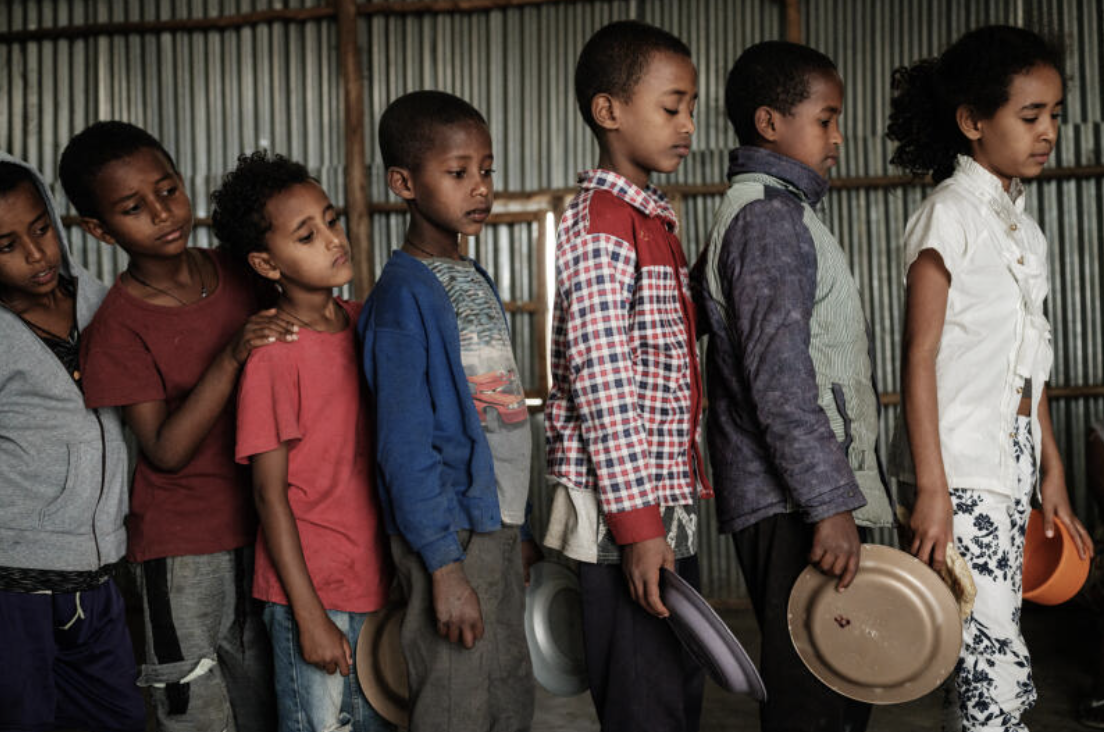
The sound of weapons has stopped in Tigray and it is now hunger that kills. It killed 816 people in November and December 2023, according to the authorities in this region of northern Ethiopia . The latter are worried that the current catastrophe will eventually take on the proportions of the great famine of 1984, during which around a million Ethiopians were killed, on the same highlands in the north of the country.
Devastated by a two-year civil war (2020-2022) which left around 600,000 dead according to the African Union, Tigray and its 6 million inhabitants today face a much more insidious threat. “More than 2 million Tigrayans are in a situation of acute malnutrition due to drought and lack of food aid ,” assures Gebrehiwot Ghebreigzabhier, who heads the regional humanitarian action office and who considers himself “overwhelmed” by the scale of the tragedy.
East Africa as a whole is experiencing its worst drought in four decades, despite the recent episode of flooding linked to the El Niño weather phenomenon in November. Tigray, a rocky region accustomed to episodes of extreme aridity, missed the last rainy season. Almost half of the province did not receive any precipitation in summer: 141,000 hectares of crops have already suffered and harvests are expected to be minimal. A disaster for this agrarian society, now condemned to wait until June before the next rains.
Vast embezzlement scandal
But the humanitarian drama playing out in Tigray is not only linked to the drought and the destruction left by the war. The region is also deprived of food aid. The United Nations World Food Program (WFP) and the American development agency USAID suspended their food distributions in the country between June and mid-December after the discovery of a vast embezzlement scandal orchestrated by the Ethiopian authorities. With 29 million Ethiopians – a quarter of the country’s population – in need of humanitarian assistance according to UN data, Ethiopia is the largest recipient of US food aid in the world.
Distributions resumed at Christmas, but “they represent only a fraction of what is required ,” wrote Getachew Reda, the president of the Tigray region, in an open letter on December 29. The WFP is in fact only delivering around 20% of the required aid, because it is testing a new allocation process, where national authorities no longer draw up lists of beneficiaries or monitor warehouses in order to avoid flights. At the same time, “thousands of Tigrayans have died of hunger” for six months, says Getachew Reda, according to whom 91% of the Tigrayan population requires humanitarian assistance that his administration does not have the means to provide.
While waiting for the complete resumption of international aid, Tigray must rely on a few citizen initiatives. In civilian life, Shewit Wudasie is a law professor at the University of Mekele, the regional capital of Tigray. Faced with the disaster caused by hunger, he created “A lunch for Tigray” at the end of November, an association with which he raised 800,000 euros to distribute kolo, a local cereal, to more than 35,000 Tigrayans in the districts of Atsbi, Tselemti and Abergelle, the most affected localities in the south and east of the region.
“These areas were the main battlefields during the war, they still bear the marks, the infrastructure was destroyed and the farms were pillaged by the enemy. Additionally, they did not receive any rain last summer. I cannot describe the life of the inhabitants to you. It’s indescribable. Everyone is malnourished, their fields are burned and their livestock is dead. They no longer expect anything from the Ethiopian authorities and are losing hope vis-à-vis international NGOs ,” he describes. Shewit Wudasie says he expects “thousands more deaths” in the event of the status quo.
“Unacceptable propaganda”
But the federal government in Addis Ababa remains deaf to these calls for help. The declaration of “famine” by the president of Tigray, Getachew Reda, even provokes the ire of Addis Ababa. Ethiopian authorities refute the term, accusing Tigray of wanting to “politicize the crisis” . In Ethiopian history, whether in 1973 under Emperor Haile Selassie or in 1984 under the “Red Negus” Mengistu Haile Mariam, episodes of famine have had disastrous consequences for the regimes in place, accused of using food aid as a political lever and to impose humanitarian blockades to combat insurgent movements. Follow us on WhatsApp Stay informed Receive the essential African news on WhatsApp with the “Monde Afrique” channel Join
However, Prime Minister Abiy Ahmed approached the Tigrayan authorities after the Pretoria peace agreement, in November 2022, which ended the civil war. But anxious to preserve its image, Addis Ababa describes the calls from Tigray as “unacceptable propaganda”. “Comparisons with the famine of the 1980s are completely wrong ,” said government spokesperson Legesse Tulu. The Ethiopian authorities did not respond to requests for comment from Le Monde .
 Martin Plaut
Thank you Martin for your report on existing reality though utterly denied by ruling group. By the way hunger is prevalent in Oromia too. The suffering in Oromia is less heeded and less reported. There are reports of diseases like malaria in western Oromia besides other man made calamities. Please be voice for them too. Thanks,