
By Martin Plaut
Source: Bulletin of the National Library of South Africa, Vol. 70, No. 1, June 2024
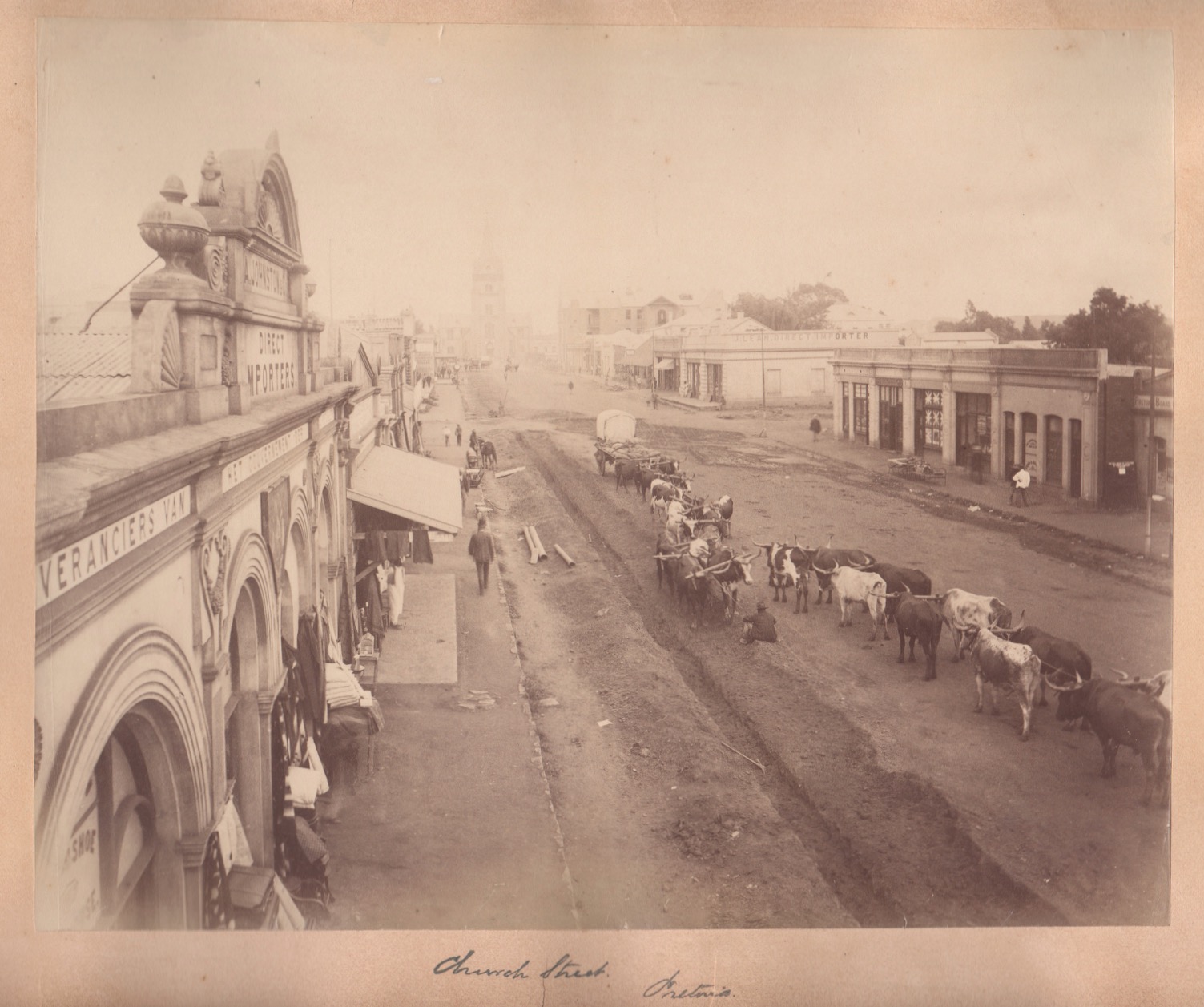
Is there any more iconic image in South African history that the ox wagon? The wagon is to be found in paintings and drawings going back to the time of van Riebeek and subsequently captured on film, once photography came into being.
The wagon was an entirely local invention. “The first South African ox-wagon was not an importation – it was strictly a home product. What is more, it derived from a meeting of cultures – the wagon from the new white settlers and the oxen from the indigenous population, the Khoikhoi,” wrote Jose Burman.
The wagon was also for many months the homes of those who travelled in them. Towns were designed to accommodate these iconic forms of transport. They were even played their part in defence.
[1] Jose Burman, Towards the far horizon: the story of the ox-wagon in South Africa, Human and Rousseau, Cape Town, 1988
 Martin Plaut
Thank you for this, Martin. I was wondering about the large number of oxen to drag one waggon. On the photographs, I counted between 10 and 16 apparently well-fed oxen for pulling one waggon. What could have been the weight of one waggon?
Contrast to:
And the economics of it? Feeding all these oxen permanently… Were they owned by the traders or did they rent them in?
Dear Jan, The oxen were used in large numbers – as far as I know and this is not something I am an expert in – because they were needed to drag the carts fully laden over mountain ranges, which were steep and without roads. They were used by the Afrikaners during the great trek, when they ventured deep into the interior of South Africa. Again, they went where there were no roads. Also, I assume that they were used as spares, in case some dies. They were mostly owned by the farmers who used them in the early days. I can’t comment on the economics later in this period. All the best. Martin