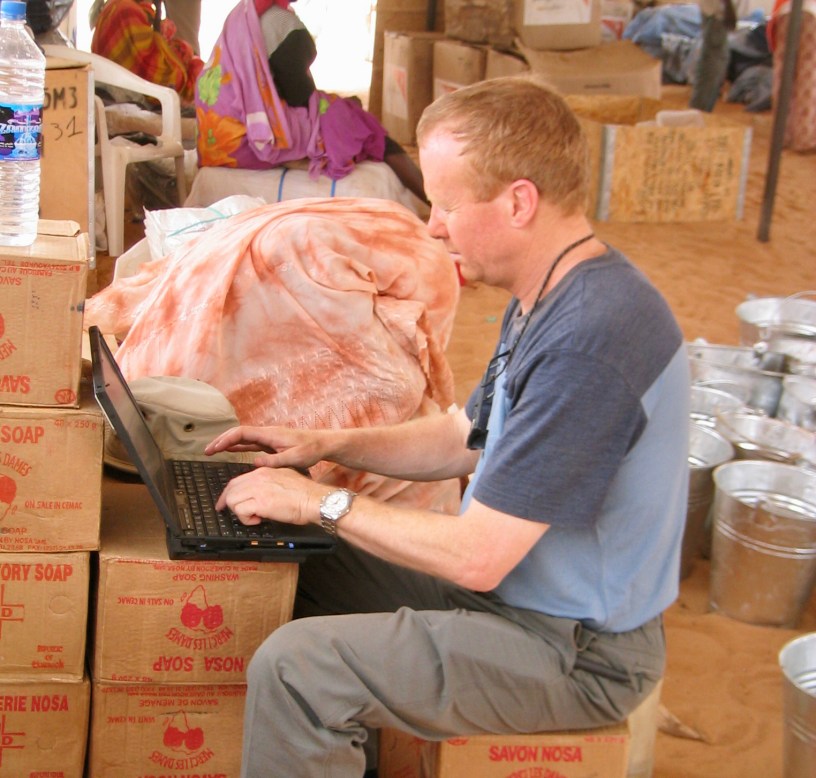
This comment, left on Twitter – now X – by a reader of the post below, left me amazed.
As an author and journalist I seldom talk about myself: my role is to report as accurately and impartially as possible about any issue. However, I have always believed – as I said – that “In due course, Ethiopia will be a powerful and prosperous country and remain a leader of Africa.”
But if Ethiopians feel that I have anything but respect and affection for them, and their extraordinary culture and history, then something is clearly wrong.
Where did it begin?
I grew up in Cape Town in the 1950’s and – like almost all South Africans – had next to no understanding for Africa. It was only when I left for Britain in the 1970’s where I lived in exile that I came to meet and know people from across the continent.
I was lucky enough to get a job with the Labour Party working on the Middle East and Africa. It was a baptism of fire, and I had to rapidly get up to speed on all fifty-plus countries that make up the continent.
But one event stood out for me. A tall, young Eritrean came to see me. “Come and see us” – he said. “But you are at war”, I replied. “Don’t worry. If you come to Port Sudan, we will do the rest.”

He was Ermias Debessai, European representative of the EPLF. And so my wife and I travelled to Sudan and then into those areas of Eritrea held by the liberation movement.
The journey left me with a deep respect for the people I had met.
I visited Eritrea twice more – once again during the war of liberation and then in 1991, going to a free Asmara and touring the country.
It was wonderful to see a people so happy, so determined to make Eritrea a vibrant, prosperous nation. I had met Isaias Afwerki several times, also interviewing him for the BBC after I joined it in 1983. He was always cold and aloof, but I assumed this was just the attitude of a war leader. How wrong I was.
After that I travelled to and repeatedly reported from Ethiopia, and all the countries of the region, except Somalia and Djibouti.
I came to know, respect and to appreciate all the peoples of the Horn. Their fortitude, courage and the depth of their culture and history are so clear for anyone who has had the privilege of meeting them.
Eritrea was my first love, but I can truly say that I have affection for all the peoples of this region. I cannot say the same for all of their leaders, or of their repressive regimes.
My role, reporting for the BBC was always to explain as accurately and impartially as I could what I found. Sometimes this was uncomfortable, but as George Orwell remarked so memorably: ‘If liberty means anything at all, it means the right to tell people what they do not want to hear.’
Getting into trouble
This led me to the two most controversial reports of my career. Both concerned the Horn of Africa, even though I reported from war zones, famines and coups across Africa for over 27 years.
I broke the news that the decision by the Permanent Court of Arbitration in the Hague had NOT awarded the town of Badme to Ethiopia, despite celebrations in Addis that it had been given Badme.
The Ethiopian government was so furious it sent a minister to London to try to get me sacked, but the BBC stood by me. And soon it was shown that the story was accurate.
The second report concerned the tragic 1983 to 1985 famine that hit Ethiopia, affecting 7.75 million people and leaving between 300,000 to 1.2 million dead. I learned that some aid funds that went to the Tigrayan rebels, the TPLF, had been syphoned off for weapons to fight the government.
This time it was the rock star Bob Geldof who flew into a rage. He complained about the programme, despite having refused to give me an interview and even though I had not said that Band Aid money had gone missing.

The BBC upheld the complaint, but I did not lose my job.
I stand by both stories, which I believed to be true.
The extraordinary people of the Horn
I still have great affection for all the peoples of Africa, but especially for those from the Horn.
I will never forget how my surprise when a giant UN truck and trailer burst through the bush and undergrowth in the far north of South Sudan, to bring vital aid to a refugee camp of over 100,000 people, who were facing starvation if it did not arrive. How did you get here from Djibouti, I asked the diminutive Somali who had been behind the wheel. “I just drove,” he replied.
For a Somali it was really not a challenge. Who else could claim as much?
There were the Eritrean women who lay under bridges for days at a time during the war of independence, to blow the structure and prevent Ethiopian tanks reaching EPLF lines.
I interviewed Meles Zenawi, surely one of the most brilliant leaders I have ever had the opportunity to question.

I have immense respect for the Ethiopian public, who put their hands in their pockets and funded the Great Renaissance Dam on the Nile, when the World Bank and others refused to back the project.
And I wrote about General Jagama Kello and his resistance to the fascist invasion in 1935, despite overwhelming odds.
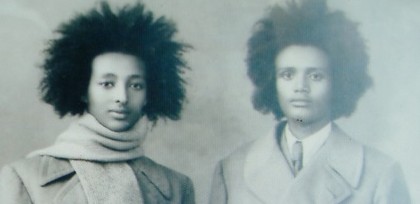
What do I think of the Horn of Africa today?
So many memories are etched on my mind. Not least the tragic waste of so many wars.

Who now remembers the horrific loss of life in eastern Ethiopia during the war with Somalia of 1977 – 1978? But the tanks are still there, gradually rusting into the sands of the Ogaden.
My overwhelming regret is that the Horn has had so few truly visionary leaders, who could bring their people with them without coercion. Freedom and democracy are what everyone I know longs for, but where is it?
When I reported for the BBC I could have no opinions of my own. Now I try to live by three principles.
First, I stand by the rights of all peoples to enjoy the basic rights enshrined in the UN Charter. This includes a:
“faith in fundamental human rights, in the dignity and worth of the human person, in the equal rights of men and women and of nations large and small, and to establish conditions under which justice and respect for the obligations arising from treaties and other sources of international law can be maintained, and to promote social progress and better standards of life in larger freedom.”
Second, I believe that by shining a light on events in the Horn we can bringing pressure to bear across the world, to strive towards these rights and freedoms.
Third, I know that only the people of the Horn will shape their own futures. No-one else has the right to prescribe how they live or govern themselves. But everyone has a right to ask that the enjoy the freedoms enshrined in the UN Charter.
These guide my work as an author and activist.
 Martin Plaut