Source: BBC –Tigrinya Service on 2 Oct 2024.
BBC has confirmed from its sources in Asmara that all the actors, the writer, the director, the cameramen, the editor and others involved in the making of the film ’Verso’ have been arrested.
The film, which was made in Eritrea a few years ago and recently released via the YouTube channel, ‘Eri-Oasis Entertainment’, has caused controversy, especially within the Eritrean Diaspora communities.
It is believed the film, which received widespread condemnation on social media, led to the arrest of all the film crew.
There has been no official statement from the Eritrean government concerning the imprisoned film crew.
Under international human rights law, no one can be detained without a legitimate reason and, anyone accused of a crime has the right to a fair trial. But detention without charge is common in Eritrea
Any artwork in Eritrea is normally censored by the country’s ‘Ministry of Information’. But the process has been, to some extent, relaxed in recent years; especially after the proliferation of YouTube channels. The government, realising it cannot totally ban You Tube channels, opted for personal / group accountability through its ‘Freedom with Responsibility’ policy.
In addition, according to a film critic the BBC contacted, there used to exist a committee that checked artistic quality and evaluated films produced in Eritrea before they were released to the public.The Committee, which was formed in 2006, ceased its operation when movies began to be uploaded directly to YouTube. The quality of making decent films declined, showing films in theatres took a dive with it as uploading to YouTube proliferated.
However, it is not yet known under what section the artists involved in ‘Verso’ will be charged or how they will be treated.
Once again, as experience has shown, the recently arrested individuals are not expected to be formally prosecuted. But collective punishment seems inevitable, according to those who closely follow the State of the Eritrea’s stand towards freedom of expression.
The film which is written by ‘Hagerey 3’ (pen-name) and directed by Samson Fisehatsion, can be cited as a case in point. Issues incited by the film went well beyond talking points. It is to be remembered that the film did not only spark condemnation among some of its audiences, it also instigated anger, threats and attacks on individual actors.
Owners of ‘Eri-Oasis Entertainment’, ended up apologising for the uproar the film created and announced that they had taken it off the website; they really did.
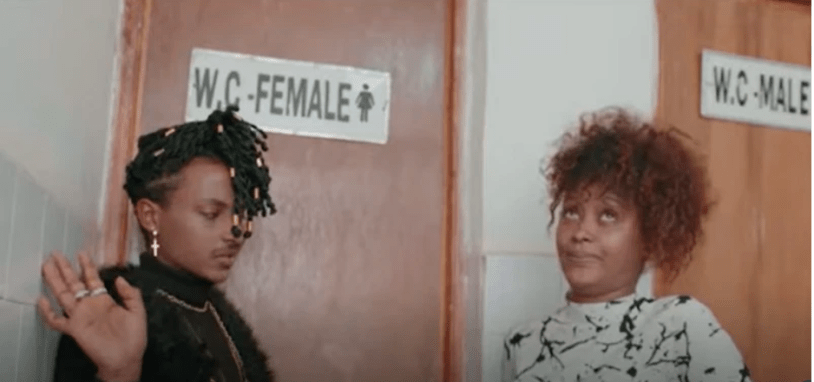
In this film (‘Verso’) the main actors are Mereb Stefanos, Fisehaye Workneh, Meron Tesfu, Mussie Michael and Snow-White Assefaw. All are experienced and renowned actors.
Mereb and Fisehaye were driven to ‘apologise to the public’ through messages posted on social media.
However, some episodes that have been uploaded earlier, primarily the fifth episode which raised controversy, are still attracting reviews and more debates.
But what is the film all about?
Some artists and film critics BBC reached out to review the film stated it is difficult to review the film in its entirety.
Attempts to speak directly to the writer and director, regarding the character that provoked controversy, did not bear any fruit for both are in jail.
What is the problem?
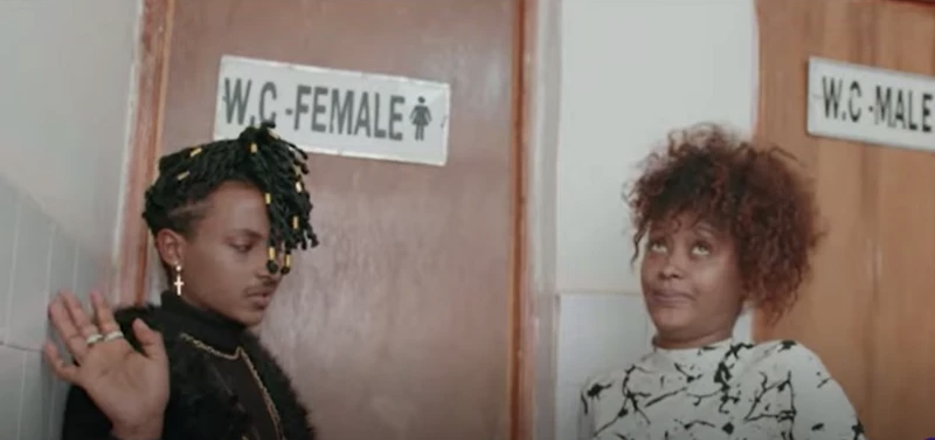
The main talking point is the ‘feminine’ character in the film. This character, in many ways – his mannerisms, his speech, his actions… was portrayed as a girl.
In the fifth episode, the character speaks in a female tone of voice, expresses his feelings as a woman, and so on.
Moreover, another controversy that overshadowed public discussions is to do with promiscuity. The film was considered erotic for the characters in the film exhibited promiscuous sex. It also exhibited excessive drinking and ‘floozie’ behaviour.
However, nothing was explicit about his sexual identity. Apart from the way he expressed his feelings, the film showed that the boy had sex with a woman for the first time.
However, many viewers, in a more or less the same tone, asserted the contents of the film were not in line with the cultural and religious values of Eritrea. They were of the opinion the film contained contents that promoted homosexuality. In fact, they went as far as advocating that ‘all those involved in the film should be punished’.
Many others saw the whole thing as mere entertainment – as comedy. In Eritrea homosexuality is a crime.
Subsequent circumstances and concerns
The problem is that once the campaign against the film and its actors began, the rest – spitefulness – followed like a wave.
‘The negative reaction towards the film shows that Eritreans have little tolerance for topics that touch on sexuality at the moment’, said a critic who spoke to the BBC. On the other hand, many are worried about the draconian measure the government has taken towards the film crew.
The concern is considerable, given the possibility that all the artists involved are now behind bar and whether they will be subject to punishment without due process of law.
 Martin Plaut