The University of Tilburg in the Netherlands has just released a three volume study of the disastrous Tigray war, that cost over 700,000 lives with Langaa press. All three volumes can be found in links below, which can be downloaded. They are edited by researchers Mirjam van Reisen, Araya Abrha Medhanyie, and Munyaradzi Mawere.
Written by academics in Tigray and the Netherlands, the work reveals for the first time the extraordinary events that preceded the 2020-2022 war.
The three books can be downloaded here:
- https://www.researchgate.net/publication/385202452_Tigray_The_Hysteresis_of_War_Book_1
- https://www.researchgate.net/publication/385394658_Tigray_The_Panarchy_of_War_Book_2
- https://www.researchgate.net/publication/385402687_Tigray_War_in_a_Digital_Black_Hole_Book_3
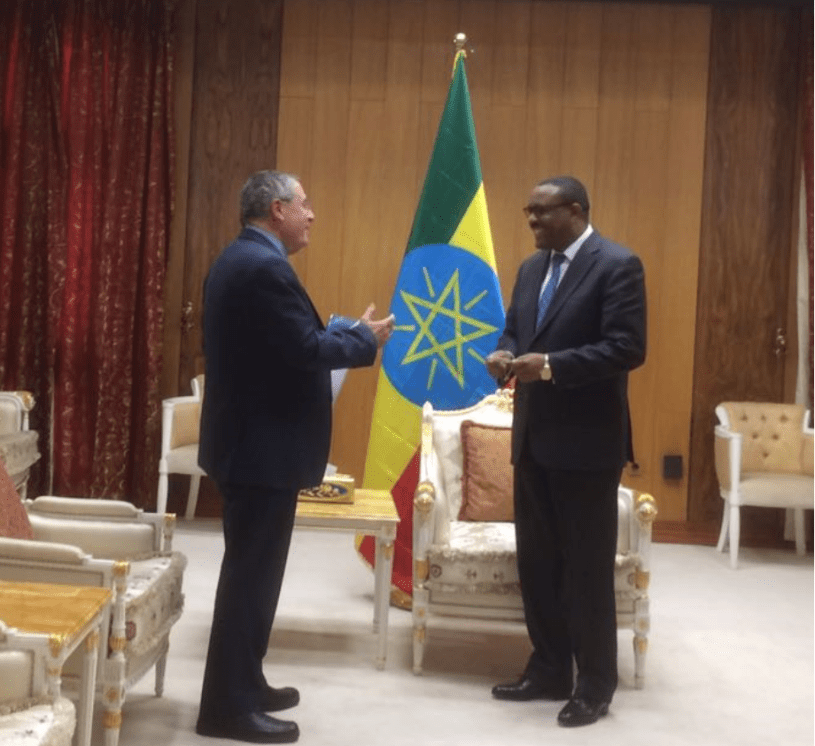
This edited extract explains the role of the Israeli, Joseph (Yossie) Shevel, who led mediation talks between Eritrea and Ethiopia in 2017.
It is reported that an Israeli diplomat met Eritrean President Isayas in Asmara, and subsequently in Addis Ababa with President Hailemariam Desalegn of Ethiopia at the end of 2017, to discuss the future of the Assab port . The meeting had been proposed by President Hailemariam Desalegn. Earlier, Israeli Prime Minister Benjamin Netanyahu had visited Prime Minister Hailemariam Dessalegn, focusing, among other things, on Ethiopian support for Israel’s request for observer status in the African Union as well as other regional matters).
A one-person delegation travelled from Israel to Mekelle on 24 December 2017, to meet with high level officials in Mekelle. While the programme in Mekelle identified a proposal for research collaboration, the interviewees indicated that the key substance of debate was on a political proposal for resetting relations between Ethiopia and Eritrea, including the port of Assab.
Eritrea was to offer Ethiopia use of the port of Assab, in exchange a settlement of the border dispute in Badme; additionally, the European Union (EU) would help to build roads from Assab to Addis Ababa with a connection to Mekelle. This would allow the hostile situation between Eritrea and Ethiopia to positively evolve into active collaboration between Eritrea and Ethiopia. Both countries would gain economically.
According to the three interviewees, the proposal was not well received by the Tigray leadership.
Three weeks later, on 14 January 2018, President Isayas gave his speech identifying the TPLF as a problem and presenting the slogan ‘Game over, Woyane’ in which he referenced that the geopolitical situation had been altered which, he said, made it “the right time” for the campaign against TPLF – and by extension, Tigrayans. This suggested that President Isayas was confident that the political momentum had moved in his favour.
The geopolitical circumstances had indeed changed. In 2012, Meles Zenawi, then Prime Minister of Ethiopia had passed away. He was succeeded by Hailemariam Desalegn from the Ethiopian regional state of South Nations Nationalities and People. President Isayas of Eritrea was also seriously ill in 2012, with repeated rumours that he had also died. This subsequently proved to be untrue.
In 2015, the UAE changed its use of the port in Djibouti to the Eritrean port of Assab, which offered Eritrea an opportunity to develop the port with the help of the UAE. The UAE signed a lease contract for 30 years.
With the Trump administration having come to power in the United States of America in 2016, the landscape evolved further, ultimately culminating in the Abraham Accords of 2020, improving collaboration between the UAE, Saudi Arabia, and Israel, sponsored by the United States (US). If there was a peace plan proposed to Ethiopia and Eritrea in 2017 to give Ethiopia access to the sea and unlock Eritrea from the sanctions that had severely isolated it, then this would certainly fit the description that Isayas gave in his January 2018 interview: the geopolitical winds had changed.
The proposal offered in 2017 by Israeli’s diplomacy to Eritrea and Ethiopia was accompanied by offers of European support. After the secret peace deal was concluded in July 2018 with financial support offered by the UAE and Saudi Arabia to Eritrea and Ethiopia, the European Union offered road-building projects to Eritrea. A media message identified the plan to build up the port in Eritrea in collaboration with Ethiopia in July 2018:
Eritrea has announced plans to capitalise on its recent peace treaty with Ethiopia by building a port to export potassium. (Global Construction Review, 2018)
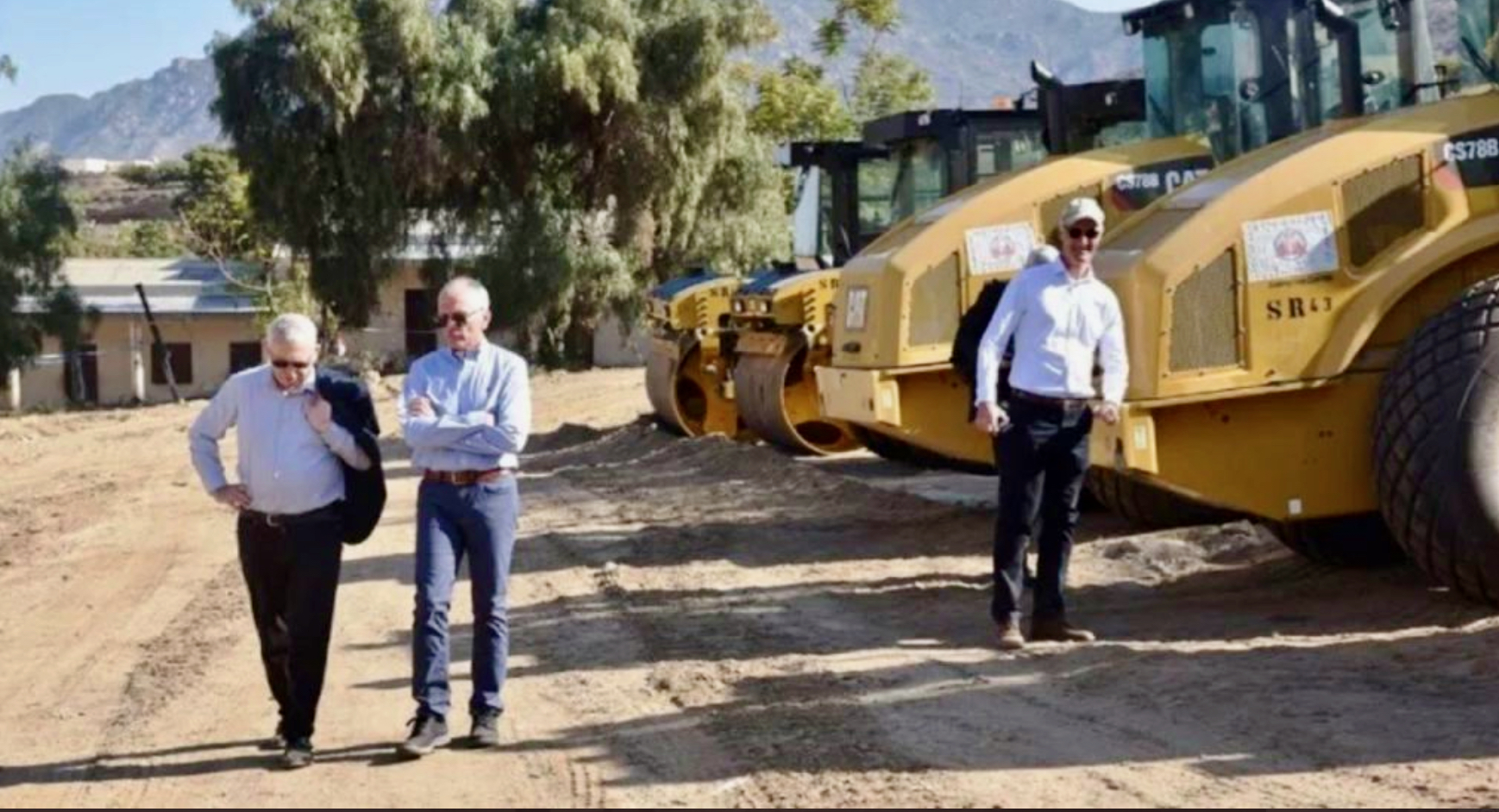
Planning for the EU-road building project in Eritrea started prior to the announcement in February 2019. With an initial EUR 20 million budget; this was later expanded with an additional EUR 60 million budget for subsequent phases. In the records sent by the EU to the authors in response to information requests, it can be ascertained that the earliest meetings with the implementing partner, the United Nations Office for Project Services (UNOPS), were between 25–30 November 2018. UNOPS is among the UN agencies under the Financial and Administrative Agreement (FAFA) with a special 70 arrangement, including a “pass-through arrangement”, where funds are mingled and given in trust to an agency.
The project was discussed in a meeting on 24 January 2019, in the presence of Austria, Belgium, Denmark, Finland, France, Germany, Italy, the Netherlands, Norway, Sweden, Switzerland and United Kingdom, as well as DEVCO and EEAS. The project was introduced as a key opportunity to “consolidate peace, open up economic integration and support Eritrea’s economic development” in the wake of the peace agreement of July 2018.
The EU’s poorly censored minutes of the meeting revealed that the project should be implemented “rapidly, otherwise Eritrea would look elsewhere”.
The minutes explained that the project was in essence an “emergency procurement project”, which transfers funds from the European Development Fund (EDF) to the EU Emergency Trust Fund for Africa (EUTF), “to benefit from its emergency procedures”. The documentation specified that the work on the roads was to be carried out by people in Eritrea’s permanent National Service, as there is “no way round this”.
The minutes mentioned that the European Commission suggested using only demobilised workers, but in a part that was poorly censored by the EU, it could be read that “this was rejected, given the situation and [Eritrea’s] opposition to conditionality”.
The Commission also claimed that labour laws in 72 Eritrea were broadly applied and that National Service workers received salary comparable to salaries in Ethiopia. The meeting minutes also mentioned cooperation with Ethiopia, including the Prime Minister, and it referred to a visit with the Prime Minister of Ethiopia, but does not include the date of this visit.
Secret diplomatic deals on peace between Eritrea and Ethiopia
An analysis of the critical events that shifted the international momentum, shows critical decisions associated with the following aspirations towards a deal:
- Integration (discussed in various ways) of Eritrea and Ethiopia
- Ethiopia’s access to a port in Eritrea
- Removing the isolation of Eritrea, with external support to Eritrea and Ethiopia, in an alliance with Saudi Arabia, the UAE, Israel, the US, and the EU
- Providing support for the building of port, road, and naval infrastructure.
Four months after the signing of the Peace Agreement in July 2018, the UN sanctions against Eritrea were lifted, thanks to Ethiopian diplomacy. Prime Minister Abiy of Ethiopia received the Nobel Prize for Peace in 2019. Eritrea was finally saved from isolation by the international community.
Meanwhile, pressure on the Tigray region mounted, resulting in the war in Tigray, which started on the eve of the American presidential elections on 3 November 2020, when all eyes were on the United States.

Three Volumes on Tigray War (2020-2022) published in Advance of Commemoration
Published: 01st November 2024 Last updated: 01st November 2024
A comprehensive three-volume series documenting the 2020-2022 Tigray War in Ethiopia is released just ahead of the upcoming commemoration on November 3-4, marking both the start and ceasefire of this devastating conflict.
The Tigray War (2020-2022) may have claimed as many as 700,000 lives. Fought between the Ethiopian and Eritrean national defense forces and the Tigray defense forces, the conflict unleashed horrific violence on civilians, including massacres, sexual violence, and the widespread destruction of infrastructure. The war was marked by a communications blackout and siege, which prevented much of the world from understanding the full extent of the atrocities as they unfolded. This series brings to light the scope and depth of the suffering endured and calls for urgent international attention and action.
Ethnographic and interdisciplinary
This groundbreaking series explores how the war has irrevocably transformed the Tigray region. Drawing on collaborative research between universities within and outside Ethiopia, these volumes are edited by researchers Mirjam van Reisen, Araya Abrha Medhanyie, and Munyaradzi Mawere, and published by Langaa RPCIG. The books employ ethnographic and interdisciplinary approaches to reveal the war’s harrowing impacts and the resilience of the Tigrayan people.
Volume 1: “Tigray. The Hysteresis of War”
This volume delves into the war’s timeline, uncovering the deliberate planning behind it, as well as the massacres and targeted sexual violence inflicted on civilians. It highlights the use of hate speech as a weapon of war, suggesting that the atrocities committed may amount to genocide. The researchers call for an international investigation into these crimes, emphasizing the need for accountability. Using the concept of hysteresis, the book describes how the war has left a mark on Tigray that may prove difficult to reverse.
Volume 2: “Tigray. The Panarchy of War”
In this volume, the authors examine the devastation of Tigray’s cultural heritage and identity, including the destruction of ancient cultural sites and the systematic assault on Tigrayan identity. The book provides insight into Eritrea’s hidden involvement in the conflict and argues that the war has reshaped the dynamics of the entire Horn of Africa. Through the lens of Panarchy, the authors explore how the ripple effects of this conflict extend beyond Tigray’s borders, affecting regional stability and social cohesion.
Volume 3: “Tigray. War in a Digital Black Hole”
The final volume investigates the consequences of the communication blackout and siege, which left Tigray isolated from the world. The war’s invisible nature—during a time when international support was crucial—created immense obstacles for researchers, humanitarian organizations, and healthcare workers attempting to address the escalating crisis. The book highlights Eritrea’s role as a hidden perpetrator in the assault on Tigray’s healthcare system. Yet, amid these hardships, it celebrates the resilience and creativity of the people of Tigray, who developed innovative methods to stay connected and retain agency despite the digital isolation.
These volumes are an essential resource for anyone seeking to understand the impact of the Tigray War and the resilience of a people who, despite unimaginable hardship, have fought to retain their identity and hope for the future.
The research was supported by grants, including OKP-ETH-104886, OKP-EAR-104672 and A-AFM-2021-5293.
More information
For questions please contact:
Prof. Mirjam van Reisen: m.vanreisen@tilburguniversity.edu
The books are available here:
Volume 1: “Tigray. The Hysteresis of War“
Volume 2: “Tigray. The Panarchy of War“
Volume 3: “Tigray. War in a Digital Black Hole“
 Martin Plaut