Translated and revised by Dawit Mesfin – London
There are many Eritreans who say that reading Semere Solomon’s book – “Eritrea’s Hard-won Independence and Unmet Expectations” – reminds them of the frequently cited phrase in literature which is to do with how ‘Revolutions devour their own children”.
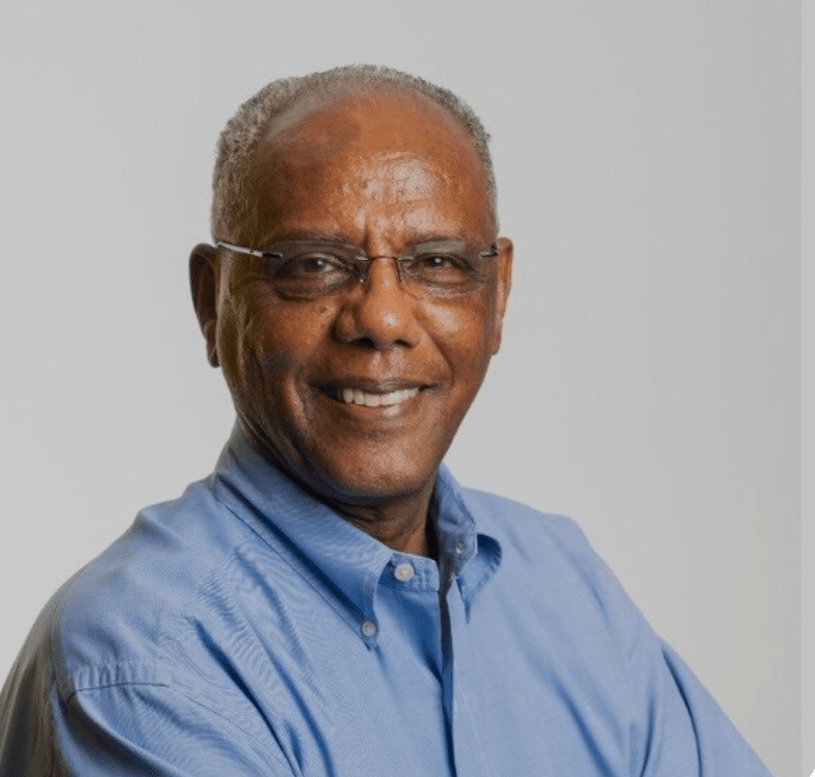
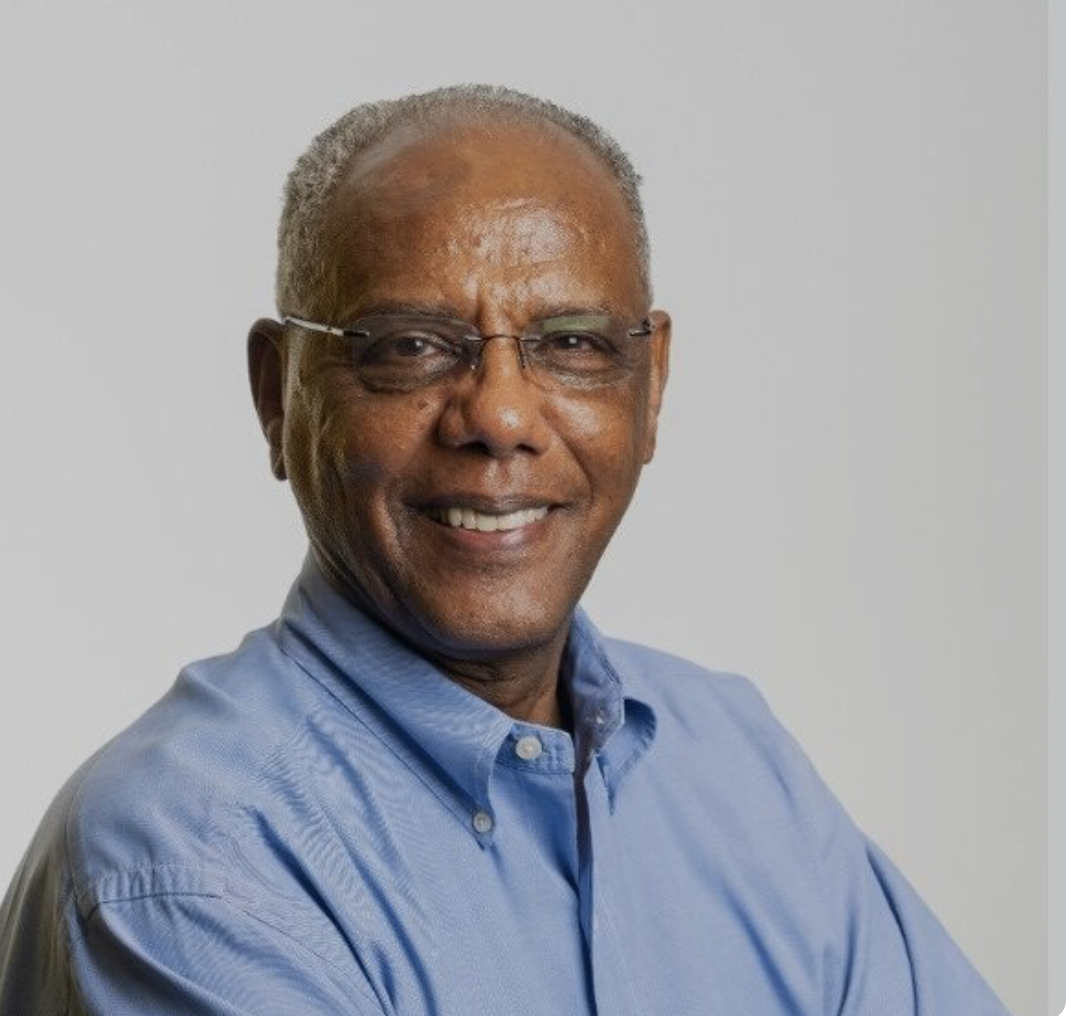
Who is Veteran freedom fighter Semere Solomon Abbay? And what is his view of the Eritrean government?
The current situation in Eritrea has been covered by many, including ordinary people, scholars, international organisations, various political analysts, opposition groups, individuals who managed to escape from government’s tentacles, and more importantly, former freedom fighters.
Semere Solomon, like many of his former comrades, spent the best part of his life on the Eritrean battlefields. While many of his fellow combatants were martyred and wounded, he was lucky enough to survive the intense battles that lasted for thirty years and see the freedom fighters march on the city of Asmara, the Eritrean capital, on 24 May 1991.
After independence, not only did Semere get a chance to live in Asmara for a while, his place of birth, but he also served his newly liberated country by accepting a high position at the Ministry of Education.
Semere, rather unfortunately, was quickly disappointed by the overall direction the government began to take after it assumed power without any democratic process.
The two much advertised promises during the armed struggle were instituting democracy and respecting people’s basic rights, both of which quickly went out of the window after independence. The leaders, after they got their first taste of power, brazenly began to devise ways to preserve their newly acquired powers.
‘Victory to the masses’, the country’s mantra, was never realised. The regime continued to chant of victory ad nauseam on one hand as it hollowed it on the other.
In stages the regime began to create an oppressive atmosphere for the free-spirited and open-minded individuals. Soon after, the country drifted towards economic and political regression. Not only were the young escaping from Eritrea in droves, the ex-freedom fighters who were also affected by the sudden turn of events began to follow suit. In the process Eritrea turned into a huge prison under the very eyes of its expectant citizens.
After the regime turned its back on the people, Semere was left with no choice but to leave Isaias’ Eritrea for good. Fortuitously, his departure enabled him to pursue a successful career in exile with the United Nations and USAID – an opportunity which enabled him to write a book in due course about his various experiences.
Semere Solomon is not only an eyewitness to what has transpired in today’s Eritrea but he also witnessed the draconian ways the Front’s leadership had conducted itself organisationally and politically on the battlefields of Eritrea. According to him, today’s setbacks could easily be traced to the era of the armed struggle when Isaias was out of control. He ‘named and shamed’ whoever stood up to him under false pretences; ‘froze’ prominent fighters whom he suspected might pose imagined threats to him down the road, questioned fighters’ patriotism if they slightly showed independent traits, and he isolated and humiliated stout fighters to make them feel emasculated.
Furthermore, Isaias set up another structure within the EPLF to solidify his autocratic leadership – a clandestine Marxist–Leninist party called Eritrean People’s Revolutionary Party (EPRP) – later renamed the Socialist Party – which was under his control.
According to Semere, the secret party ensured utter secrecy to prevail and rule the fighters’ world which in turn kept everyone guessing and in the dark as Isaias carried out his affairs under the counter. Moreover, the party kept everyone mortified and on their toes by instilling fear and mistrust among the fighters.
What made Semere’s account unique is the fact that he did not attempt to sugar-coat the experiences of the armed struggle. Unlike many others who hesitated to call a spade a spade, he argued that most of the problems Eritrea is suffering from today are rooted in its past.
It is to be remembered in 1973–1974 the EPLF was faced with a challenge to Isaias Afwerki’s autocratic rule from a group of progressive fighters branded as ‘Menqa’. He and those who allied with him acted ruthlessly to suppress the movement by executing key organisers and arresting dozens of their supporters.
What’s more, Isaias consolidated his high-handed rule through ‘Halewa Sowra’ (shield of the revolution), which was the behind-the-scene security force whose omnipresence kept everyone brutally in line.
Later on another group of dissidents labelled as ‘Yameen” was violently crushed, with its leading figures executed in the early 1980s.
By then many came to know what kind of a man Isaias Afwerki was and what he was capable of doing in future Eritrea. However, many prominent fighters (especially his main allies) chose to look the other way during crucial moments that defined and debased the course of the revolutionary war at the same time.
In other words, the Front tolerated Isaias to get away with many outrageous activities for the sake of ‘maintaining cohesion among the fighters’. Those misgivings backfired in the end, and many witnessed as the chickens came home to roost after independence.
There are a large number of former fighters living abroad who have turned their backs on the regime but have relatively said very little on their horrid experiences and how Isaias’ excessive power destroyed their lives.
In a discussion with the author on this subject, he was asked ‘why do so many former fighters, even those who were in the thick of it, refrain from critically and openly talking about the stumbling blocks they were made to go through during the armed struggle. And why do they hold back instead of telling it like it is – that those same old abnormalities that took place during the armed struggle have been replicated in post-independence Eritrea?’
Semere’s response showed that he thought things through as he said the following…
“Of course, the number of former fighters living abroad is not small. The most disturbing aspect of the history of Eritrea is the fact that the fighters who paid a huge debt for Eritrea’s independence have been pushed out to seek alternative existence abroad as refugees.
“But I find it hard to say, generally speaking, that these exiled veterans have gone on the blink in exposing Isaias and his clique for what they are. I admit that nothing speaks louder than the action they took as individuals – that is to abandon the regime and go into exile. Although they have from time to time said things to depict the true nature of the government, but it is my belief that more could have been achieved had they constructed a stronger case against the regime by concatenating the depravities of the past with the present predicaments” he said.
He went on to say, “I can say that there are some approaches that I have noticed in former combatants which I am not entirely satisfied with when presenting evidence. Although I realise it is not fair to paint the whole group with the same brush, I can say I have my own observations regarding their approach.
“I can tell that many of my fellow ex-freedom fighters are living in constant internal turmoil, some dislike the rhetoric of politics, some have grown older and are exhausted, some lack the ability to write, and some do not want to speak about the bad attributes of the revolutionary struggle” he said.
“Some think criticising the party they served is like defaming the country, while others closely associate their identity with the EPLF community they were raised in and feel that criticising it is an insult to themselves” he added.
“Well, it is appropriate to mention the overall direction of the struggle we dedicated our young lives to, the heroism of our fallen comrades we witnessed on the battlefields, the hard life we all faced together, the dreams that emanated from that hardship, the comradeship that arose from our shared experiences… etc. are all facts of our lives. Conversely, I want to get into a different commentary by taking the impediments that have developed in the Eritrean field,” he added.
“There were challenging situations in the field that subjugated the fighters. For example, adhering to a robotic lifestyle (espousing outright obedience without expressing any legitimate reaction), being bound by regimented rational, not nurturing one’s own views whatsoever, not deviating from the leaders’ position by any means.
“Attacking fighters (especially intellectuals) who could not adapt to coercive situations with unjustifiable allegations was common. These mind-boggling features that labelled patriots as unpatriotic was spiteful. Such demeanours ruined many fighters’ lives; and they cannot go unaddressed” said Semere as he stressed the public should know about such past secrets.
“These are facts that the public should know. And those of us who went through the process have a responsibility to cleanse our consciences, explain the situation truthfully, and tell about the grim obstacles we had faced. In other words, it should not be hidden that we were greatly influenced by the depressing circumstances and the secretive political culture that was prevalent throughout the armed struggle.
“Yes, it should not be hidden that the current behaviour of the government is not a post-independence culture but a culture that flourished during the armed struggle.
“It is no exaggeration to say that the leaders in the field nurtured secrecy to flourish, weakened the ground for pluralism, crippled the culture of bold and confident speech (especially in the top echelon) and created a condition that facilitated dictatorship and authoritarian practices” he described the situation.
‘A revolution that eats its own children’
One of Semere Solomon’s best chapters in his book is probably chapter four – one that he cynically titled as: ‘Freezing: a reward for excellence’. ‘Freezing’ has been the punishment of choice by Isaias since the time of the armed struggle. ‘Freezing’ or leaving fighters out in the cold (in limbo), was inflicted to suppress the morale of the fighters he disliked. Suspending fighters rather unceremoniously for all to see is a cruel form of punishment that Isaias practised not only during the revolution but also during independence.
The author’s examples of ‘freezing’ send tremors through the reader’s body as the punishment demonstrates nothing else but utter cruelty. He describes this humiliating act as “a punishment that affects one psychologically, creates feelings of isolation, frustration, exclusion and self-doubt.”
“’Freezing’ plunges the ‘frozen’ individual into confusion, causes him to lose his poise, pushes him to distance himself from everything, and destroys his humanity,” the author gives further examples. He also portrays ‘freezing’ as no different from dying in harness.
Semere Solomon’s book was first published in English. As soon as it was published it caught the attention of readers and created talking points in many corners of Eritrean diaspora communities. He has been praised by many citizens for his efficient, truthful and convincing presentation of his report.
 Martin Plaut