
Issue 779 | January 27, 2025
The Recognition of Xeer Issa

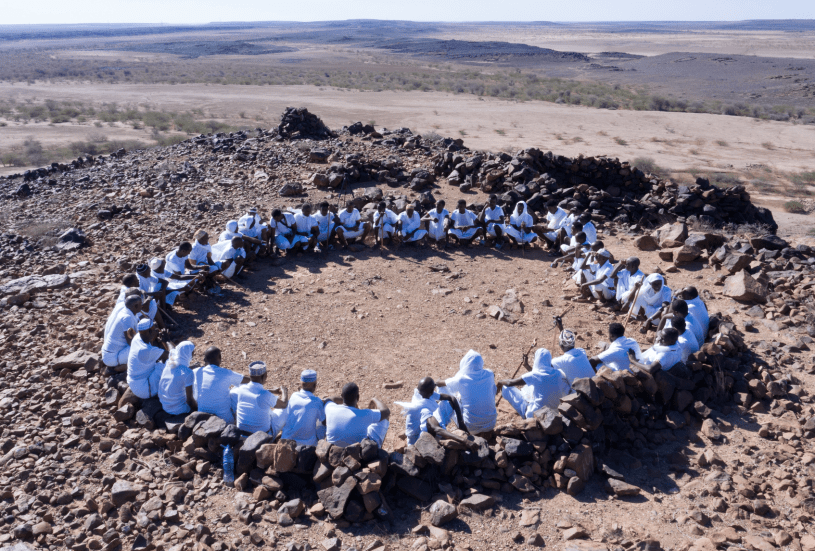
On 25 January, dignitaries from Somalia, Djibouti, Kenya, and Ethiopia gathered in Dire Dawa in Ethiopia’s Somali region to celebrate UNESCO’s recognition of Xeer Issa, the customary legal system of the Issa clan, as “intangible cultural heritage.” Headquartered in Paris, UNESCO’s enshrining of Xeer Issa, rather than any of its other Somali counterparts, has been in part driven by its study and promotion by francophone Djiboutians. While it has been asserted that Xeer Issa is a particularly sophisticated example of oral Somali jurisprudence, which is debatable, UNESCO’s recognition also raises questions about singling out a particular sub-clan when innumerate variations exist in all Somali-speaking regions.
Across Somalia’s decades of state collapse and civil war, xeer has operated in the absence of formal, state-backed courts as an alternative system of jurisprudence, where clan elders resolve conflicts and determine settlements based on oral agreements, precedent and elements of Sharia law. The traditional system dates back to around the 7th century and originated to mediate conduct between neighbouring clans competing over scarce pasture and water. It remains an oral tradition in Somalia, ostensibly based on reciprocal accountability, collective responsibility and reconciliation.
For years, this ‘uncentralised’ system has been a valuable tool for settling disputes, particularly in rural communities, where the state’s judicial bodies are either non-existent or widely distrusted. Somalia’s 2012 Provisional Constitution, which established the nation’s formal judicial system, envisions a three-tiered system consisting of state, federal, and constitutional courts. But in reality, the nation’s pluralist patchwork legal system remains largely dominated by Sharia and xeer. Al-Shabaab operates a system of ‘shadow’ courts, wielding a combination of Sharia and xeer in its territory. Many Somalis actually prefer the jihadists dispensing of justice, considering the federal and regional courts to be corrupt and highly inefficient.
During the internecine violence of the 1990s and 2000s, where the practice of Birimageydo – the convention that women, children, the elderly, and clan elders are not touched during war was upended – xeer still played a crucial role in inter-clan dispute resolution. Amid the brutal violence– often based on clan identity– and the disastrous collapse of state institutions, it was mainly the elders who attempted to preserve a semblance of order. Elders effectively continued to oversee various issues, from enforcing business contracts and settling marital disputes to managing crises within regional administrations. Today, for instance, it was Hawaadle elders in Beledweyne who played a crucial role in the recent reconciliation with the Abgaal-dominated Hirshabelle regional administration. Although these practices have played a role in promoting local peacebuilding to rebuild the social fabric, they are inadequate for establishing constitutional law, developing checks and balances on administrations, or eradicating abuse of power.
Moreover, the bilateral structure of xeer between two clans or sub-clans often leads to unequal outcomes, with the power dynamics between clans influencing both the resolution and the enforcement of rulings. In turn, lower caste clans often face systemic disadvantages, receiving less compensation or experiencing biased rulings due to their inability to enforce decisions through credible threats of retribution. For groups such as the Somali Bantu, who have long been treated as lower-caste clans without the economic or military might of larger clan families, xeer arguably perpetuates their socio-economic marginalisation.
For decades, it has been the Bantu and lower-caste clans that have been particularly dispossessed from their homes and lands, driven into sprawling peri-urban displacement camps. The phrase “Looma Ooyaan” (no one weeps for them), epitomises how crimes against these clans often go unpunished, and victims are disadvantaged in the dispute resolution processes. Victims from these clans are often socially pressured to accept decisions made by their elders, regardless of their personal damages. The socio-economic and political exclusion of these clans has also created a fertile ground for exploitation, with Al-Shabaab routinely taking advantage of the alienation and frustration within these communities.
This is also influenced by xeer’s emphasis on collective responsibility rather than individual justice. Under xeer, entire lineage groups are held accountable for the actions of a single member, with punishments or compensations distributed across the broader clan rather than addressing the harm done to the specific victim. For instance, in cases of theft or assault, the victim’s family may receive mag (compensation), but this payment is usually shared among the victim’s clan– rather than awarded to the individual plaintiff. Clan elders have also been accused of siphoning a significant proportion of mag, with concerns expressed regarding the lack of transparency in xeer processes. Victims may be shut out of the elder-negotiated process and only informed of the ruling post hoc.
There are other critiques of xeer, including that it systematically marginalises women, who are not seen as full members of their mag groupings and have subordinate legal status within the system. Barred from councils that resolve disputes, women must rely on male relatives for advocacy. The patriarchal system entrenches gender inequality, particularly in cases of sexual and gender-based violence (SGBV), where justice is often sacrificed in favour of narrow clan interests. Once the compensation has been made, historically in camels, there is impunity for the perpetrator, with the settlement process considered a form of social rehabilitation.
UNESCO’s recognition of Xeer Issa should have perhaps been an acknowledgement of xeer in its entirety—as a shared but varied system across Somalia, Somaliland, Djibouti, and Ethiopia. The study of Xeer Issa has been admirable and should be encouraged for Somali customary law writ large, but the enshrining and elevation of a single clan variant is problematic. And recognition of xeer’s contribution to maintaining social harmony must not be allowed to obscure its shortcomings with respect to individual rights, gender equality, and transparency. Perhaps UNESCO’s next project should be to study what the Xeer Issa has to teach us about balancing the traditions of Somali customary law with modern state judicial systems.
The Somali Wire Team
 Martin Plaut
Dear Martin, I am a regular follower of your very important articles whatever the topic is. Now, I am one from the war torn region of Tigray in Ethiopia. I am Sociologist in background but urban management is my masters degree. The situation of our community is dire because of the war. Crime is rampant in the community after the war. My concern is to reintegrate the lose social fabrics of the community, to bring back the traditional customs along the formal procedures of law. Now, I want to study the extent of the problems collecting data first and then provide psychosocial support training for the community. So can you help me in getting some references and if possible other support?
Regards!
Desta Beyene
Addis Ababa
Dear Desta, I wish you well, but I am a journalist and not involved in these personal issues. Martin