
Ethiopia has become like Libya, if not worse, for migrants on the run. This is the story of a sixteen-year-old, killed with two other boys by the police in Addis Ababa while trying to escape from prison. The family, in dire poverty, was being asked for six thousand dollars to get his body back.
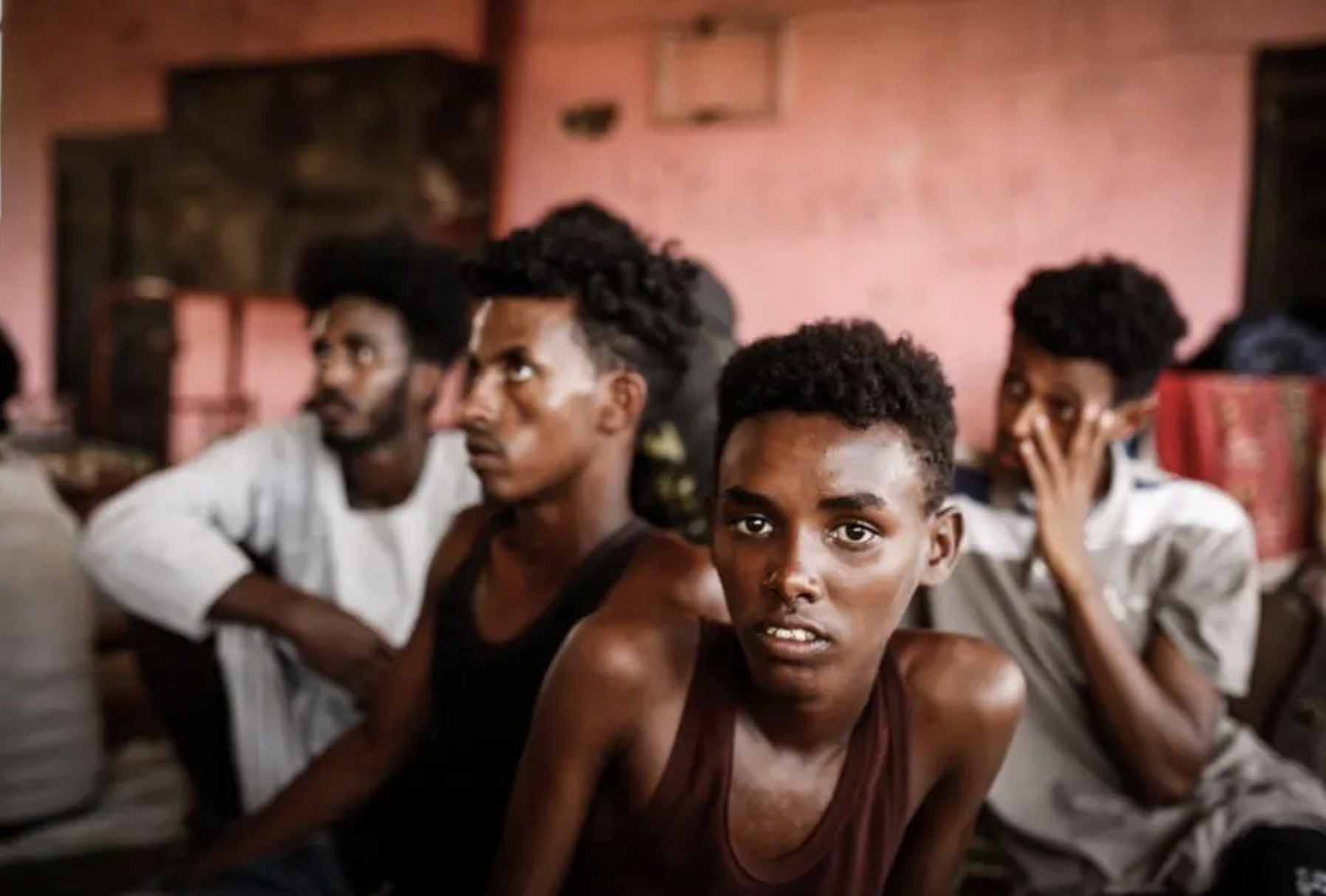
After the war in that bloodied Ethiopia for two years after 2020, four large Eritrean refugee camps in Tigray were cleared and dispersed. The reception system in the north of the region was swept away by the troops of Isaias Afewerki, who has been in power in Eritrea for thirty-two years. The operations of the Ethiopian security forces have intensified with a real “manhunt” conducted along the borders, on the streets, in the cities, in the neighborhoods where the refugees are most numerous. Among the fugitives is the young Mussié, who left from Dekameré, the Eritrean city south of Asmara. He is now trapped in Addis Ababa. In the second part of Emilio Drudi’s story, the alarm is raised by his brother who lives in Bologna.

Source: Italia Libera
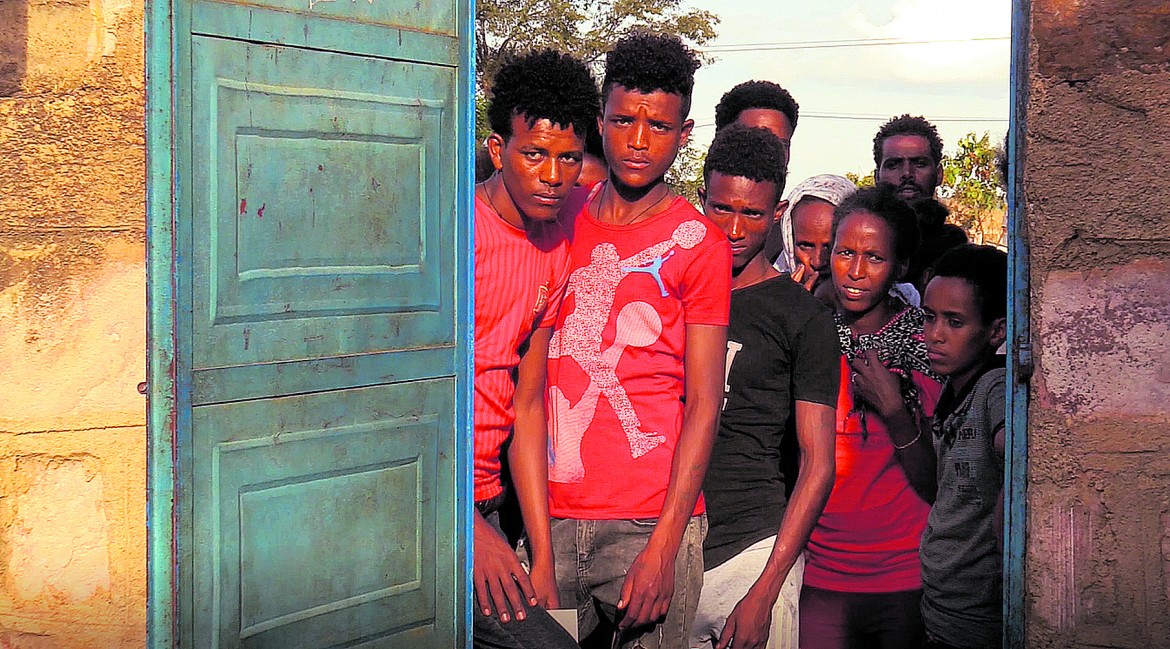
Ethiopia has become like Libya, if not worse, for migrants on the run. The story of a sixteen-year-old, killed with two other boys by the police in Addis Ababa while trying to escape from prison. The family, in absolute poverty, was asked for six thousand dollars to get his body back. Even less is known about Eritrean refugees than about other unfortunates trying to reach the Mediterranean coasts. Emilio Drudi, director of the website “Nuovi desaparecidos”, names one of them and sheds a small ray of light on the places, the poverty and the fear from which Eritreans try to escape after the Tigray war.
► They were trying to escape, along with many other prisoners, from the Ethiopian prison where they had ended up as “illegal immigrants” . They were three young Eritreans. They were killed by the police in Addis Ababa, towards the end of January. Two others had died, again in an escape attempt, but in a neighborhood of the city, at the beginning of the month. Five lives shattered in the space of a few days.
One of those boys, Hanibal, was just 16 years old, the third of three brothers from a farming family. He came from Damba Mich , a small town near the Ethiopian border at Agordat. A student, he had left his home for more than ten months to avoid the almost indefinite military call-up that awaited him in less than two years, before even finishing his studies, which he should have completed at the large military base in Sawa. The same reason that had driven the two friends killed with him and the other two young men who died about two weeks earlier to flee. He wanted to reach his older brother, Mussié Solomun, who had been in exile in Holland for some time, but not having the money to continue his escape, he remained stuck in Addis Ababa. Before him, the second brother had also fled Eritrea, living in a location further north of Damba Mich, who had crossed the border with Sudan from Tigray by paying a ticket of 8 thousand dollars to a trafficker organization but was stopped in Libya and is now trapped in Tripoli. He turned to the UNHCR office, which registered him among the asylum seekers: now he has been on the waiting list for months for a humanitarian channel to Europe.
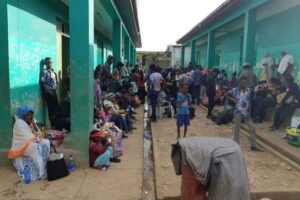
Hanibal was not discouraged by the fate of his older brother and at the first opportunity he reached and crossed the nearby border with Ethiopia on foot, trusting in luck. His family learned of his escape only when he was already in Addis Ababa. For months they hoped that he would change his mind and return home, where only his two parents, both advanced in years, remained. Perhaps also for this reason, already in difficulty due to the help given to their second son, they had not collected, perhaps with the contribution of relatives of the “extended family”, the money to allow him to continue his journey. He continued to insist that he would never go back.
Until he ran into a police checkpoint in the Lafto neighborhood, not far from the house where he had found lodging. He was immediately arrested and transferred to prison. He was awaiting forced repatriation to Eritrea when, a few days later, on January 21, dozens of prisoners attempted to escape. Hanibal joined them. But the reaction of the security forces was ferocious, with bursts fired at chest height. Three young men were killed and at least seven wounded. Among the first to fall lifeless was Hanibal. His body is still in the morgue of the San Paolo hospital in Addis Ababa. To bring him back to Eritrea – some relatives reported – the procedures require an expense of about 6 thousand dollars. But the parents do not know how to put them together. The bodies of the other two murdered boys ended up in the same morgue, one of whom, Ataklti Isayas, died from serious wounds on January 23, two days after the shooting, and the other, whose identity the police have not communicated, at the beginning of February.
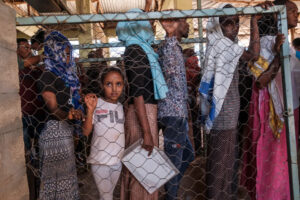
When this tragedy occurred, the large community of Eritrean refugees living in the Lafto neighborhood was already mourning two young men who had died a few days earlier. Having fled Afewerki’s dictatorship at different times, the two had met in Addis Ababa and, with the help of other refugees, had found a place to stay together. They were at home when they were surprised by a police raid. The stairs and the exit of the building where they were taking refuge were blocked by numerous officers. In desperation, they tried everything by lowering themselves from a window, several meters above the ground. They didn’t make it. Falling into the void one after the other, they remained on the ground, seriously injured. Taken to the hospital, they both died within a few hours.
The two tragedies were told by an Eritrean exile who has been in Bologna for years and has an Italian passport: when the escape followed by the shooting took place, he was in Addis Ababa and in some ways he directly experienced those dramatic days through the Eritrean community of Lafto, from which he also learned of the death of the other two boys, seeing first-hand what the condition of refugees fleeing Afewerki’s dictatorship is today in Ethiopia. He himself was not in Addis Ababa by chance: he had been forced to leave Italy to try to help his younger brother, Mussié, 19, who was also fleeing the regime. An escape in itself emblematic, for how it developed, of the fate of refugees who in Ethiopia find a situation extremely different from the welcome they encountered until the outbreak of the war in Tigray, in November 2020. Tomorrow the story of Mussié fleeing from Dekameré in the story of his brother from Bologna. — (1. continues tomorrow)
By Emilio Drudi March 4, 2025
Eritreans in Afewerki’s trap. Mussié from Dekameré: six thousand dollars to the “smuggler”, resold to traffickers
◆ The story of EMILIO DRUDI *
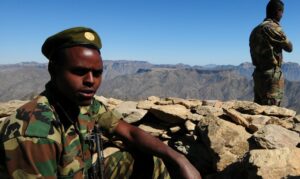
► Mussié left from Dekameré, about forty kilometers south of Asmara. To cross the Ethiopian border, at the end of November 2024, he relied on a trafficker and was included in a group of 63 desperate people who, in exchange for 6 thousand dollars each, were accompanied on foot to the border. The “smuggler” who was guiding them had assured them that that stretch of border was “safe” but just as they were crossing it they were surprised by a patrol that started shooting. No one was injured but the group quickly dispersed. Some turned back. Mussié and two companions ran into Ethiopian territory, moving away from the border as quickly as possible. After a while they asked for help from an elderly man, who took them into his house. It seemed like a done deal but instead that elderly man sold them to a gang of traffickers who demanded 5 thousand dollars from each of them for their release. It took the family several weeks to get the money, but when they did, they discovered that Mussié had been sold to another gang, and another $2,500 was needed to free him. He is now in Addis Ababa, but trapped: he cannot return to Eritrea because he would end up in one of the regime’s prisons, and he cannot continue his escape to Europe because all the routes are blocked.
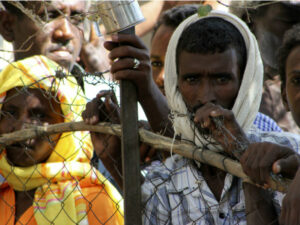
“The condition of Eritrean refugees in Ethiopia is a nightmare, similar to that of Libya,” says the brother who joined him from Italy. “The reception system that had been working for years was swept away by the war in Tigray. The four large camps that were in the north of the region no longer exist: devastated and cleared by Afewerki’s invading troops, they were never reopened. At the same time, the Ethiopian federal government, in the wake of the alliance with Asmara, has cancelled the rules that guaranteed refugee status to Eritreans who, now deprived of any form of protection, are exposed to all kinds of abuses. During the war there were even numerous arrests carried out in Ethiopia by the Asmara police. Now these raids conducted by Eritreans are over but the operations of the Ethiopian security forces have become increasingly stringent and systematic: a real “hunt” conducted along the borders, in the streets, in the cities, in the neighborhoods where the refugees are most numerous. And almost always those arrested are repatriated against their will. There have been at least two mass deportations, with a total of over 700 desperate people handed over to the dictatorship from which they had fled and practically ‘disappeared’. Nothing more is heard of them».
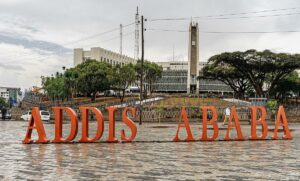
In this curfew climate, refugees are forced to live in hiding, locked in their homes as much as possible to avoid the risk of raids or even a simple check on the street. “In Addis Ababa, almost all Eritreans live a life of reclusion,” Mussié’s brother continues. “For fear of the police or possible denunciations, they cannot work. In fact, they cannot even go to the doctor or the hospital. Always with the fear of being caught and repatriated. To get by, they rely on the help of family and friends who manage to find a way to periodically send a little money. Hawala is spreading, the system that allows you to transfer cash secretly through trusted people, bypassing the banking circuit, since refugees certainly cannot show up at a normal counter. I, for example, have found a friend to whom I occasionally transfer a certain amount of money so that he can send it to Mussié. But it’s a terrible situation. I don’t know how long these kids will be able to resist. Even more so since the police have started raiding homes directly, as happened with those two young people who, as they told me, fell from a window in an attempt to escape capture. A glimmer of a solution could be to turn to the UNHCR, the United Nations Refugee Agency, which also has an office in Addis Ababa. Some have tried but, as far as I know, even the UNHCR can do very little because the Government limits its activity to the maximum. We can only hope that the headquarters in Geneva will request clarification from the Ethiopian federal authorities so that the Eritreans present in the country can be taken under the protection of the UN as asylum seekers and then organize humanitarian channels, perhaps not necessarily towards Europe but, for example, in Kenya or Uganda».
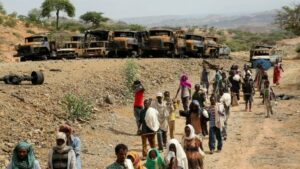
From these testimonies, a situation similar to that of Libya emerges. Except that from Ethiopia you can obviously only escape by land. “Trying to escape alone – explains Mussié’s brother, who returned to Italy about ten days ago – is a huge risk. The roads are heavily guarded, with frequent checkpoints. And all the border lines are sealed off: with Kenya and South Sudan but especially the one with Sudan, in the north, the most popular route until recently for refugees heading towards the Libyan coast. The area most at risk is Tigray, where at every step you can be stopped by the police or intercepted by border guards or even by the Amhara militias who have invaded the region. — (2. end; the first part was published here yesterday )
 Martin Plaut