

Eritrea and the route to the sea
“Ethiopia does not have any intention of engaging in conflict with Eritrea for the purpose of gaining access to the sea. Our desire is to engage in dialogue and discussion on this matter instead. Access to the Red Sea is nevertheless an existential matter for Ethiopia. What we want is to peacefully address our current challenges.”
Tigray and the Pretoria Peace
“The Pretoria Agreement has helped restore infrastructure and provide services to the people of Tigray. However, there are still issues that have not been adequately addressed, one of which is the Disengagement and Reintegration (DDR) process. This primarily affects the people of Tigray.
The youth should be redirected from militarisation and engaged in development instead. Billions of dollars that should be spent on development each month are being diverted to this work. Significant progress has been made in Raya and Tselemet in returning displaced people to their villages, but in other areas, the results have been less successful. This is largely due to the mixing of humanitarian efforts with politics.
Nevertheless, the Tigray Interim Administration has done an excellent job in preventing further conflict over the past two years. As the two-year term of the interim administration has now expired, there is a need for legal reform.
Once the law is amended, a review of past performance will be necessary. After making adjustments in line with the Pretoria Agreement, the interim administration will be able to carry out its responsibilities and prepare the people for upcoming elections. Discussions are ongoing with the leaders of the interim administration and other stakeholders on this matter. During this process, tasks will be evaluated, and changes to individuals may occur.”
Ethiopia PM rules out war with Eritrea over Red Sea access
Reuters: ADDIS ABABA, March 20 (Reuters) – Ethiopia’s Prime Minister Abiy Ahmed said on Thursday that his government would not seek conflict with longtime foe Eritrea over access to the Red Sea, after regional officials and experts warned of a possible war between the Horn of Africa neighbours.
“Ethiopia does not have any intention of engaging in conflict with Eritrea for the purpose of gaining access to the sea,” Abiy said, according to a post by his office on X.
Though access to the Red Sea was an existential matter for landlocked Ethiopia, his government wanted to address it peacefully via dialogue, Abiy added.
Fears of war emerged in recent weeks after Eritrea ordered a nationwide military mobilisation, according to a human rights group, and Ethiopia deployed troops toward the border, diplomatic sources and officials told Reuters.
Renewed clashes between two of Africa’s largest armies would end a historic rapprochement for which Abiy won the Nobel Peace Prize in 2019 and risk a humanitarian disaster in a region already grappling with the fallout of the Sudan war.
The rapprochement saw Eritrea back Ethiopian federal forces during the 2020-2022 war between the Tigray People’s Liberation Front (TPLF) and Ethiopia’s central government, which killed hundreds of thousands of people.
But the neighbours fell out again after Eritrea was frozen out of talks to end that war in November 2022.
Eritrea’s stand
Source: Eritrea Ministry of Information
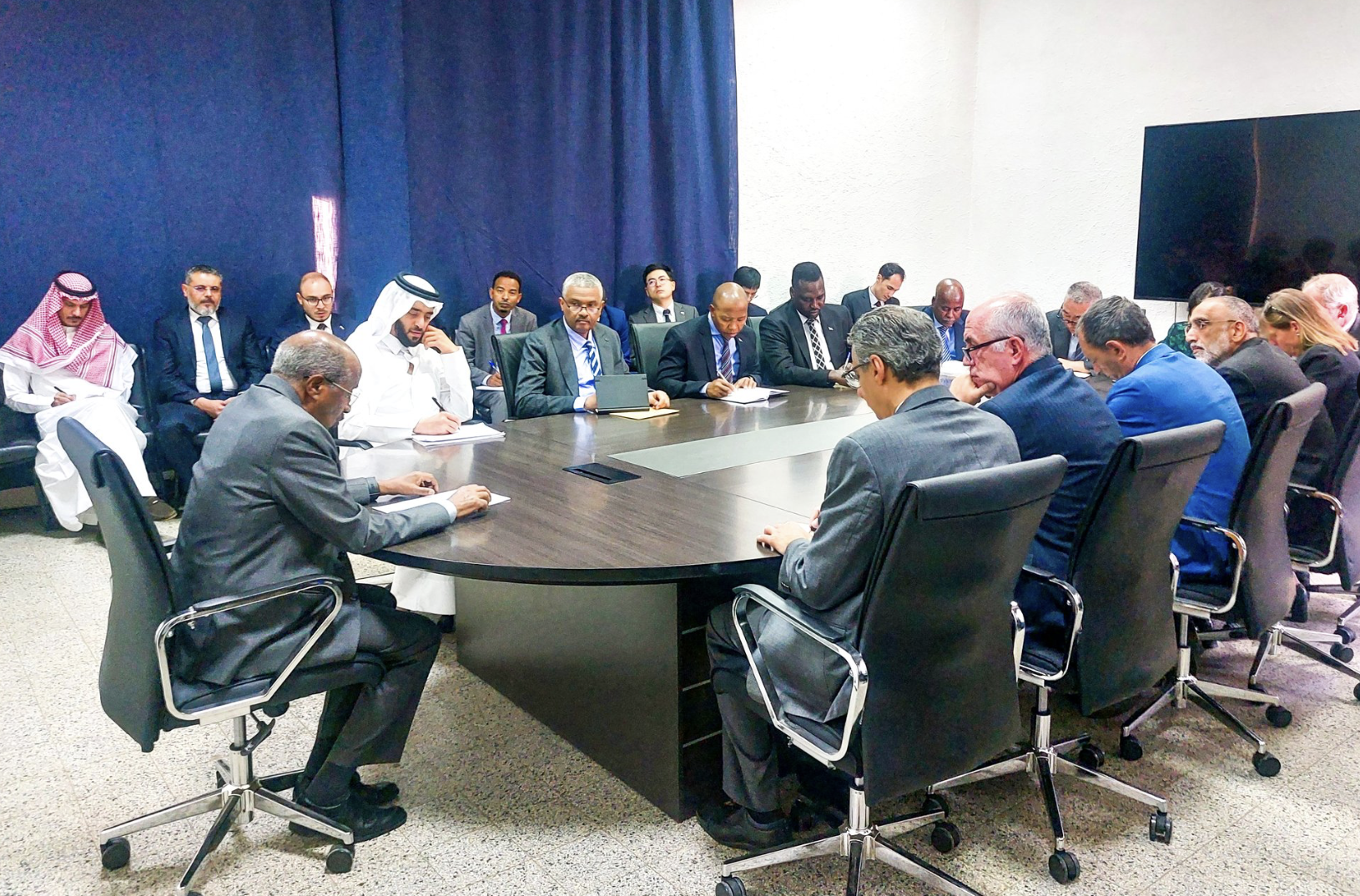
Asmara, 19 March 2025– Foreign Minister Osman Saleh gave a briefing yesterday morning, at the Foreign Ministry HQ in Asmara, to Resident Ambassadors and Members of the Diplomatic Corps and Heads of UN Agencies accredited to the country, on false accusations regarding: i) Eritrea’s presumptive preparations for war against Ethiopia; ii) the Pretoria Agreement; and, iii) Ethiopia’s obsession for an outlet to the sea and subsequent diplomatic campaigns and attendant sabre-rattling.
In his extensive briefing, FM Osman underlined:
* The EDF has been redeployed to Eritrea’s internationally recognized borders right after the end of the conflict in November 2022. “Anyone that claims or suggests that the Eritrean Defense Forces are still in Ethiopian territory is doing so to scapegoat Eritrea for Ethiopia’s internal problems”.
* These accusations are peddled by former TPLF members who had rejected from the outset, and continue to reject, the final and binding Eritrea-Ethiopia Boundary Commission (EEBC) decision, and who had worked for regime change in Eritrea “to no avail”.
* The Government of Eritrea views the Pretoria Agreement as an internal affair of Ethiopia and has no desire to intervene in that process.
*The Government of Eritrea has no role whatsoever in the ongoing internal conflict between the Interim Tigray Administration and the TPLF; it categorically rejects any accusations or allegations that insinuate otherwise.
* Eritrea is perplexed by Ethiopia’s misguided and outdated ambitions for maritime access and naval base “through diplomacy or military force”. In this respect, Eritrea urges the international community and its relevant bodies to put pressure on Ethiopia to respect the sovereignty and territorial integrity of its neighbours.
Yemane G. Meskel Eritrea’s Foreign Ministry Spokesman
From the diplomatic grapevine: “the new ruse of shifting blame to Eritrea for the failure of the full implementation of the Pretoria Agreement seems both disingenuous and rather pathetic. The Pretoria Agreement signed more than two years ago (in November 2022) had narrow timelines of implementation stretching from few weeks to a couple of months. Problems it has encountered in smooth and speedy implementation surely pre-date the quite recent political schisms within the TPLF”.
The fact is the tension in the wider region squarely stems from the the toxic agenda of territorial irredentism; from unwarranted pronouncements and related sabre-rattling for acquiring a port and maritime territory “legally if possible and militarily if necessary”. [emphasis added]
This is the malaise that warrants firm and unequivocal legal & moral stance by all countries who cherish the peace and stability of the Horn of Africa region.
 Martin Plaut