BBC Tigrinya – 17 Apr 2025
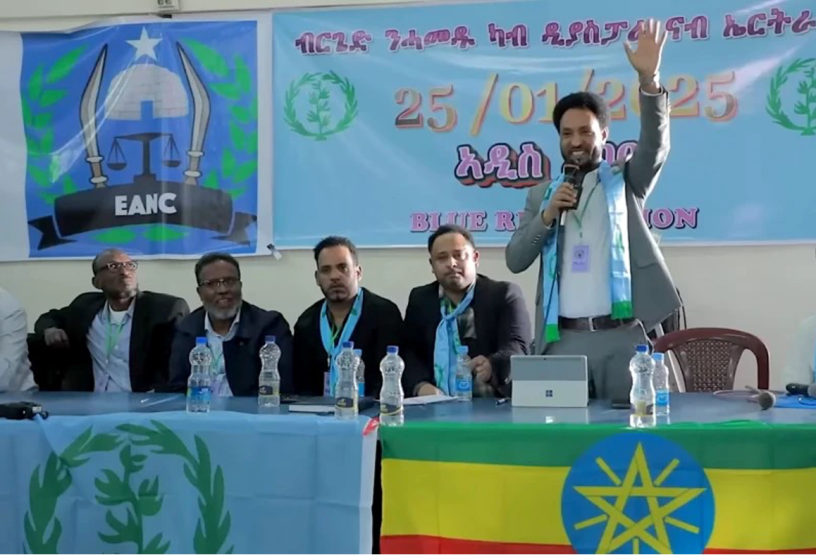
Recently, it has been reported that ‘Brigade nHamedu’ has opened an office in Addis Ababa.
By the way, what is ‘Brigade nHamadu’ ? Who are its members and what is its background? What is its aim and aspiration? BBC spoke to the movement’s leaders and veteran members to answer these questions.
Eritrea gained independence after 30 years of armed struggle. Due to the fact that Eritrea failed to establish an all-inclusive constitutional democracy, and started committing crimes against humanity, organised protests such as the G-15 (a group of 15 former government officials in Eritrea who opposed the policy of President Isaias Afewerki), operation ‘Wedi Ali and his comrades’ (coup attempt of 2013) emerged in Eritrea including several resistance movements abroad – Ethiopia, Sudan, several European countries, USA, Canada and Australia.
During the last decade or two more than 20 political parties and civil society groups that are based abroad have been organising peaceful demonstrations against the Eritrean government.
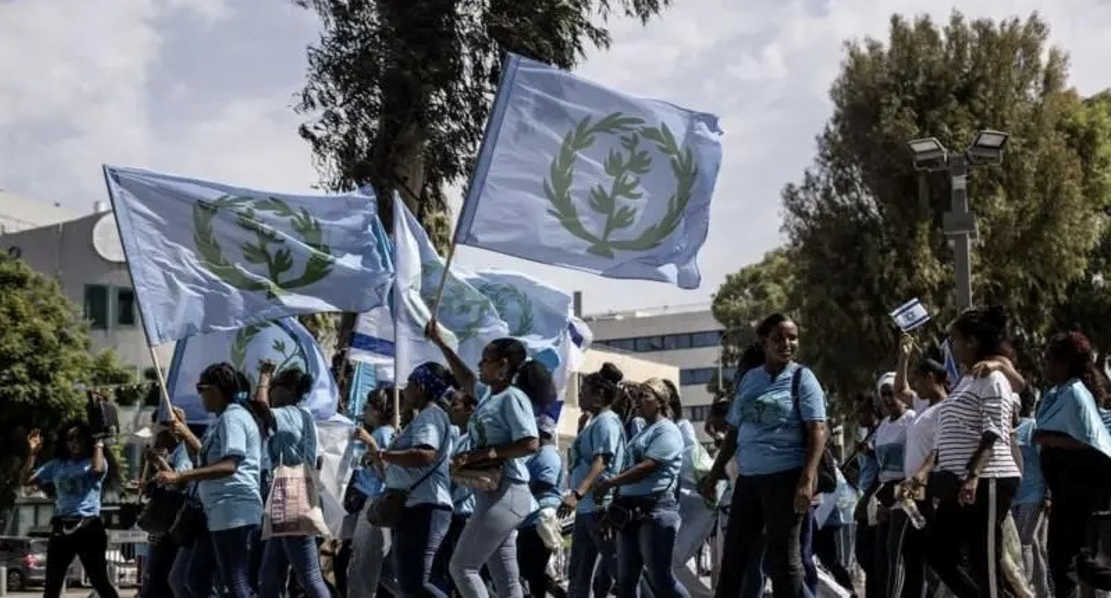
In recent times, a more daring and robust movement of ‘Brigade nHamedu’ broke out in many countries of the West, including parts of Asia and the Middle East.
Beyene Gebre-Egzabiher, the head of ‘Brigade nHamedu’s diplomatic branch, stated the group has opened an office in Addis Ababa in an area called ‘Haya-hulet’ in order to bring together the dispersed activities of the movement.
He added that the office will have “military and diplomatic centres” whose purpose is to conduct an armed struggle.
On January 27, 2025, ‘Brigade nHamadu ‘ held a meeting with another opposition party, the Eritrean Afar National Congress, regarding ways of securing safety for their members in Ethiopia.
According to Beyene Gebe-Egzabiher, the movement is communicating with the government of Ethiopia that it wishes to bring about radical changes in Eritrea.
However, several Eritrean activists are concerned that ‘Brigade nHamedu’ cannot establish a reasonable partnership with the Ethiopian government or any other force unless it narrows its internal differences, establishes a broad and inclusive organisation, strengthens itself and cleans up its internal affairs.
There are also problems in creating a unified and widely accepted leadership, and the presence of various individuals on social media who express different views and inconsistent statements on behalf of the movement highlights the need to get its act together.
Therefore, they warn that caution and responsibility need be exercised in order to avoid being instruments of PM Abiy Ahmed of Ethiopia, especially at a time when he is questioning ownership of the Red Sea and the ports.
More on ‘Brigade nHamedu’

‘Brigade nHamedu’ is an Eritrean opposition movement that has been expanding and attracting attention in the past three years in the West and the Middle East. The movement is known as the “Blue Revolution” because of the blue shirt their supporters wear. There are members of the movement who have been arrested for clashes with the regime’s supporters and host countries’ security forces.
Kiros Asfaha, a member ‘Brigade nHamedu’, said the movement started with a purpose of disrupting the regime’s supporters from organising festivals that raise money for the government of Isaias Afwerki. He also added members of the organisation rose up to challenge the regime’s structure all together.
President Isaias Afwerki has never held national elections in more than 30 years (since Eritrea gained independence). The legislative, executive and judicial branches of government do not function properly in Eritrea. The government, which does not tolerate differences of opinion, has been accused of mass human rights violations – mass arrests, targeting journalists and religious leaders making opponents disappear without procedural due process.
Beyene alleges that Eritrean youth face “cross-border suffering and suppression” when they flee from forced conscription and bondage in Eritrea.
Those interviewed said the movement’s main goal is to form a transitional government set up by the National Assembly to oversees far-reaching changes … make the perpetrators face justice and compensate the victims for damages, as well as mediate between feuding groups.
Kiros and Beyene, who firmly believe the regime in Asmara must go, said they have discussed seeking assistance from the United States, the European Union, Canada and Sweden.
They said the armed struggle will be conducted in areas most affected by the regime. But they declined to disclose where it would be launched for the time being. They also said they could establish campaigns, mobilise recruits, setup military and diplomatic centres in Ethiopia.
When asked if there had been any talks with Ethiopian military leaders, he said there were “leaders of the military wing” who were overseeing that.
Beyene said Ethiopia has a diplomatic advantage as it is the base of the African Union. Besides there are hundreds of thousands of Eritreans in Ethiopia, he said. Moreover, it is important for the Brigade nHamedu activists to come to Ethiopia to expand the struggle in places like Semera, Mekelle and Humera and to follow the developments in the Horn of Africa closely.
Both members of the movement, Beyene and Kiros, said they had discussed matters with Ethiopian government officials to register members of their movement in Ethiopia and to be issued identification cards to ensure their safety.
The experience of supporting militants in Ethiopia and Eritrea
It is to be remembered that both Ethiopia and Eritrea, which have been at odds for decades since the Ethio-Eritrea war (1998), had supported each other’s armed opposition groups.
With the arrival of Prime Minister Abiy Ahmed, that is after securing reconciliation with Eritrea, Ethiopian opposition parties in Eritrea returned home to continue their peaceful struggle.
However, Eritrean opposition parties in Ethiopia have been ordered to cease their activities and their offices have been closed. There were also reports of dissidents who were “kidnapped from Addis Ababa and taken to Eritrea” after the agreement.
Considering the fact when the relationship between Isaias and Abiy suddenly deteriorated things went haywire; there are some Eritrean activists who are concerned that the newly developed relationship between Brigade nHamdeu and Ethiopia might suffer the same fate tomorrow.
But there are also those who argue that things could not go into reverse anymore.
‘We can handle the port question’
There are also those who see it as treason that members of ‘Brigade nHamedu’ are planning to work with Prime Minister Abiy Ahmed who argues that Ethiopia deserves access to the Red Sea.
Beyene is of the opinion if Ethiopia helps his organisation in setting up a democratic system in Eritrea there will not be any problems in facilitating the use of Eritrean ports by Ethiopia.
On the other hand, there are many who say that it is does not make any sense for ‘Brigade nHamedu’ which resides in exile to speak about the sovereignty of the sea.
BTW, Beyene says he does not believe the tensions between Ethiopia and Eritrea will lead to war.
BBC’s repeated attempts to get an clarification from the Ethiopian Foreign Ministry via email and telephone were unsuccessful.
 Martin Plaut