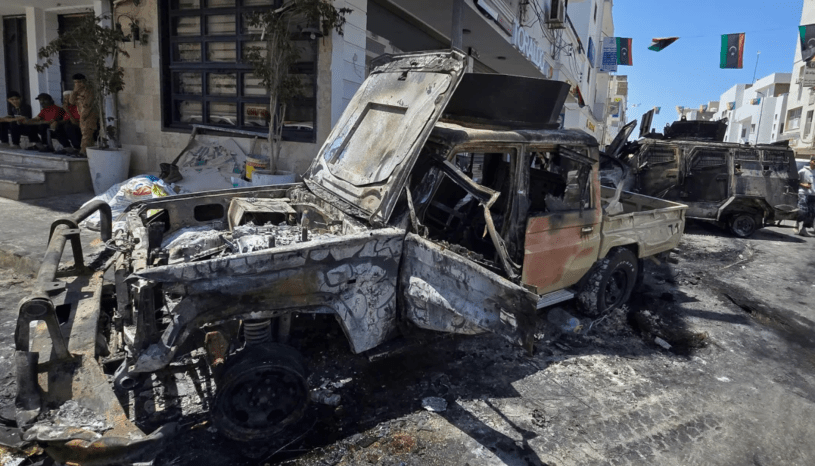
“The worst fighting in Libya’s capital for years calmed on Wednesday after the government announced a ceasefire, Tripoli residents said, while there was no immediate statement from authorities on how many people had been killed,” Reuters reported this morning.
Clashes broke out late on Monday after the killing of a major militia leader. After calming on Tuesday morning, the fighting reignited overnight, with major battles rocking districts across the entire city.
A fuller report of the fighting is carried below. But independent humanitarian workers monitoring the situation in Libya received heartbreaking stories and video on Wednesday of the impact on refugees.
We hear that the fighting continues and is spreading. Reinforcements are coming from both east and west of the country.
Refugees are terrified and they are staying put at this point.
There are no ambulances, and humanitarian phone numbers don’t seem to be available for assistance.
We received recording from a mother this morning, begging for help.
“I have three children, I don’t have anything unless someone from the neighborhood provides something to eat. I have nothing and don’t know what to do or where to go.” The message is a please for assistance…”
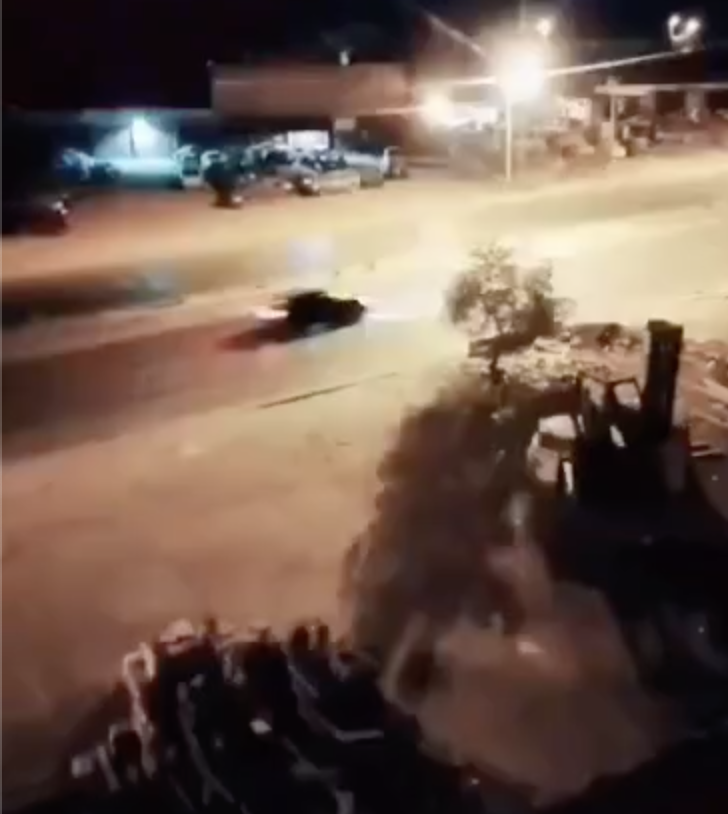
The background to these events has been explained by the human rights groups.
During the fighting a commander of the Abu Salim detention centre was killed. The gates of the centre were opened and refugee women and children detained there were able to escape.
“Some have called us, elated. But many will need assistance. There were over 1,000 Eritrean, Ethiopian and Somali women kept there. Niger refugees have reportedly been killed.”
Reuters report on the conflict
Regular forces, in coordination with the relevant security authorities, have begun taking the necessary measures to ensure calm, including the deployment of neutral units,” the defence ministry said.
The ministry said the neutral units it was deploying around sensitive sites were from the police force, which does not carry heavy weapons.
After the fighting, burned-out cars littered the streets in some areas, and nearby buildings were pocked with bullet marks.
Monday’s clashes had appeared to consolidate the power of Abdulhamid al-Dbeibah, prime minister of the divided country’s Government of National Unity (GNU) and an ally of Turkey.
However, any prolonged fighting within Tripoli risks drawing in factions from outside the capital, potentially leading to a wider escalation between Libya’s many armed players after years of relative calm.
The main fighting on Wednesday was between the Dbeibah-aligned 444 Brigade and the Special Deterrence Force (Rada), the last major armed Tripoli faction not currently in his camp, the English-language Libyan Observer reported.
 Martin Plaut