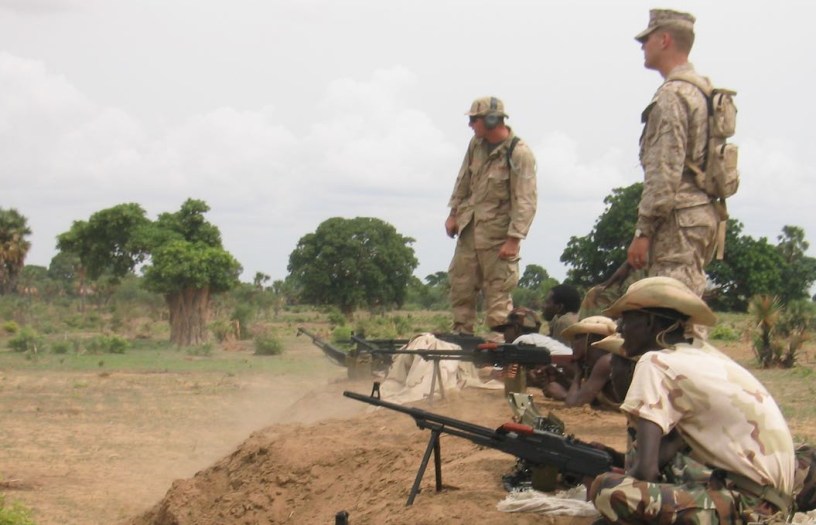
“The outlines of the Trump administration’s plans for Africa are becoming clear: an aggressive counter-terrorist campaign in Somalia and in west Africa; a concerted effort to curtail investments made by China through the Belt and Road Initiative, particularly in mineral-rich countries such as the DRC; and a complete disregard for the growing role of the Putin regime to restore Russian influence and power in Africa, particularly the brutal operations of the Africa Corps (the state controlled agency which has taken over the military operations of the Wagner Group) in the Sahel and the Russian government’s recent conclusion of an agreement with the regime of General Burhan in Sudan to establish a Russian naval base at Port Sudan on the Red Sea.”
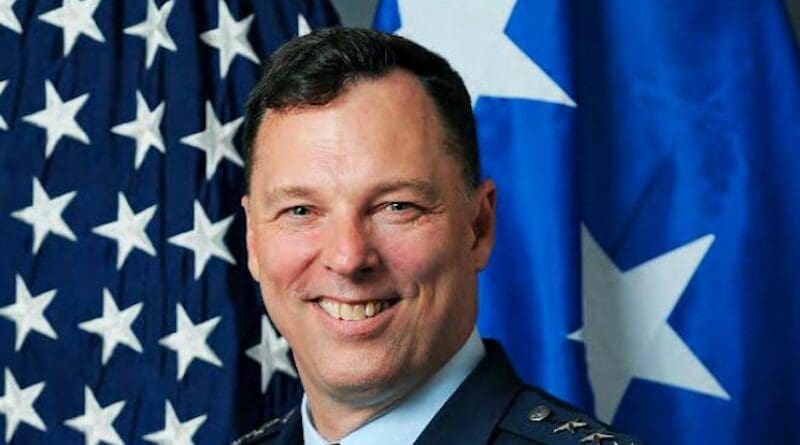
Lt Gen Dagvin Anderson. Photo Credit: US Air Force, Wikipedia Commons
Source: EurAsiaReview
On 4 June 2025, President Donald Trump signaled that he intends to preserve the US Africa Command (Africom) as an independent combatant command when he named a new commander to take the helm this summer, when the two-year term in of Marine General Michael Langley in that post comes to an end. The new commander will be Air Force Lieutenant-General Dagvin Anderson, currently serving as director of Joint Force Development for the Joint Staff of the Joint Chiefs of Staff at the Pentagon in Washington, DC.
For his new post, Anderson will be promoted to the grade of four-star general. That rank is required for all the commanders of the Pentagon’s combatant commands in different regions of the world. This shows that Africom will remain an independent command, with full responsibility for US military operations in Africa, despite reports that Trump planned to incorporate Africom into the US European Command (Eucom) as a sub-command. Lieutenant-General Anderson wouldn’t be promoted if he were going to be serving under the commander of Eucom, who is also a four-star general.
General Anderson graduated from the ROTC program at Washington University in Saint Louis, where he received a Bachelor of Science degree in electrical engineering in 1992. He received a Master of International Public Policy degree in 2003 from the School of Advanced International Studies of Johns Hopkins University in Washington, DC. And he has pursued further education in international affairs at Harvard University, the National Defense University, and Maxwell Air Force Base.
In addition to serving as a pilot in combat operations in the Middle East, Anderson has served in a number of positions in the US Special Operations Command and was the commander of US Special Operations Command Africa, which is based at the Africom headquarters in Stuttgart, Germany, from 2019 to 2021. In that capacity, he was responsible for Special Forces operations in Africa during the first Trump administration.
President Trump’s decision to promote Anderson and appoint him as commander of Africom is an important indication of the national security policy he intends to pursue in Africa. Given Anderson’s personal experience of combat in the Middle East and his many years working in the Special Operations Command, he wasn’t selected to oversee the withdrawal of US forces from the continent. We may know more when US Defense Secretary Pete Hegseth releases his new National Defense Strategy report, which is expected in the coming weeks.
According to Africa Intelligence, the new US policy is likely to include the restoration of security cooperation with the military juntas in Mali, Burkina Faso, and Niger. Under US law, the US military is prohibited from providing support to military regimes that have staged coups against civilian governments and taken power by force. But US law (Section 7008 of the State, Foreign Operations, and Related Programs Fiscal Year 2024 Appropriations Bill) permits the President to waive these restrictions, if he determines that this is necessary for US national security.
Trump is also likely to pursue the plan initiated by the Biden administration to relocate intelligence and reconnaissance operations by US drones to coastal west Africa, since the United States was forced to withdraw them from the Nigerien base at Agadez in 2024. Africom is actively exploring options in Cote d’Ivoire, Benin, and Togo.
However, on 8 June 2025, the Washington Post reported that it had interviewed four current and former US officials about the situation in west Africa, who spoke on the condition of anonymity to discuss sensitive details. According to two former officials, efforts to relocate the drone operations to Cote d’Ivoire and Benin have been scrapped.
General Langley provided more details on the future of US military operations in Africa under the Trump administration in a digital press briefing he gave following the conclusion of the African Chiefs of Defense Conference 2025, which was held in Nairobi, Kenya, from 28-29 May 2025, and was attended by senior military officers from 37 African nations.
This year, the defense chiefs of Mali, Burkina Faso, and Niger were all invited to attend. Last year, only Niger was invited to the conference held in Botswana, which was justified by the fact that the Biden administration was still engaged in negotiations about the continued presence of US troops in the country. The military junta in Mali declined the invitation this year, but Mali sent the head of the army, General Harouna Samake, to the meeting and Niger sent the air force chief of staff, Colonel Amirou Abdoul Kader.
“I want to emphasize US Africom’s strategic approach,” Langley said in his opening statement to the digital press conference, and “I’ve been charged by the Secretary of Defense Pete Hegseth to mitigate threats to the US homeland posed by terrorist organizations, the most dangerous of which are unfortunately right here on the African continent.” And, said Langley, “my second charge from Secretary Hegseth is to confront the military ambitions of the Chinese Communist Party on the continent.”
He went on to itemize the threats that “we and the world, especially Africans, are facing increasingly as years go by.” The Sahel, he said, “we consider the epicenter of terrorism—Mali, Burkina Faso, and Niger are confronted with this each and every day; they’re in crisis. The terrorist networks affiliated with ISIS and al-Qaida are thriving, particularly in Burkina Faso, where the government has lost control of wide swaths of territory across their sovereign nation. Attacks are resurging in the Lake Chad region as well, and extremist groups are growing more aggressive.”
According to Langley, “one of the terrorists’ new objects is gaining access to West Africa coasts. If they secure access to the coastline, they can finance their operations through smuggling, human trafficking, and arms trading. This puts not just African nations at risk, but also increases the chance of threats reaching the US shores.”
In remarks Langley made on the sidelines of the conference, he said “extremist groups are gaining ground and also expanding their ambitions. Therein lies the threat to the homeland, as they gain in capability and capacity.” Africom “is keeping a good eye on this,” he said, “because they have the capacity to attack the homeland.”
And In Somalia, Langley said during the digital press conference, “the US is actively pursuing and eliminating jihadists.” As Langley noted, “this year alone Africom has conducted over 25 airstrikes—double the number of strikes that we did last year.”
In response to a reporter’s question about basing arrangements in coastal west Africa, Langley said “since we’ve left Niger in September of last year, we’ve observed a rise in attacks by violent extremist organizations, not only in Niger, but across the Sahel to include Nigeria as well and emanating in—going into Burkina Faso and Mali. Now, this increases—measurable by both frequency and complexity of these attacks driven by persistent and socioeconomic grievances and the proliferation of weapons and increased capability of terrorist groups across the board. So, unfortunately with our withdrawal from the region, we have lost our ability to monitor these terrorist groups closely, but continue to Iason with partners to provide what support we can.”
Asked specifically about Burkina Faso, Langley explained that “the US seeks opportunities to collaborate with Burkina Faso on counter-terrorism challenges. I invited Burkina Faso’s chief of defense to the African Chiefs of Defense Conference because I believe in maintaining that dialogue. So, it’s still open. We’re still open to conversations to be able to address the challenges of being able—and solutions to be achieved through our collaboration for addressing the terrorist problem, which is the epicenter within their great country.”
Speaking to reporters in Nairobi before the conference began, Langley declared, “we need to stay engaged with these countries [Mali, Burkina Faso, and Niger]. We know that they’ve taken on other partners, and (that’s) okay, but we’re looking for other ways to stay engaged. So, building partnership capacity in a nuanced approach, such as information sharing, intel[ligence] sharing, so that they can build institutional capacity to be able to take on the burden.”
Asked about Nigeria, Langley said “Nigeria is a strategic African partner, and we have a long history of providing critical material and training support to Nigeria. It extends across from military sales, excess defense articles, and also training to go along with the foreign military sales. That’s a great example of how the law of armed conflict education goes along with military training, and also, we’ve had some intel[ligence] sharing with them.”
And to counter China, said Langley, “we’re taking a different approach—one that links security with trade. We are not just helping build military capacity for African nations, we are helping build the stability that underpins both African and American prosperity.” In remarks at the conference, Langley elaborated on this, saying “we know that security and trade are inextricably linked. There is no economic development without safety, and safe environments encourage private-sector investment. Africom’s role is vital to enabling that environment, not just for African nations, but for the prosperity and security of Americans as well.”
He wasn’t any more specific than this, but his statement suggests that he expects Africom to play an important role in President Trump’s plan for a deal with the Democratic Republic of Congo (DRC) and Rwanda to end the conflict in the eastern DRC and facilitate private US investments in the production of cobalt, copper, lithium, coltan, and other critical minerals, much of which is currently dominated by Chinese companies.
So, the outlines of the Trump administration’s plans for Africa are becoming clear: an aggressive counter-terrorist campaign in Somalia and in west Africa; a concerted effort to curtail investments made by China through the Belt and Road Initiative, particularly in mineral-rich countries such as the DRC; and a complete disregard for the growing role of the Putin regime to restore Russian influence and power in Africa, particularly the brutal operations of the Africa Corps (the state controlled agency which has taken over the military operations of the Wagner Group) in the Sahel and the Russian government’s recent conclusion of an agreement with the regime of General Burhan in Sudan to establish a Russian naval base at Port Sudan on the Red Sea.
Much else remains unclear, or undisclosed. Although we now know that Africom will continue to be an independent combatant command for Africa, President Trump hasn’t yet released a budget request for the Defense Department for FY 2026. So, we don’t yet know how much money he intends to spend on Africom operations. We now know that he will not dismantle the Bureau of African Affairs in the State Department, but he has given no indication of when he might name an Assistant Secretary of State of African Affairs to head it. We now have his full budget request for security assistance programs, but the request only reveals the total amount of money he wants to spend on the programs globally and contains no data or information on how the money will be allocated to specific countries or specific regions.

Daniel Volman
Daniel Volman is the director of the African Security Research Project in Washington, DC, (www.africansecurity.org) and a specialist on U.S. military policy toward Africa and African security issues.
 Martin Plaut