By Samuel Admassu
June 7, 2025, London
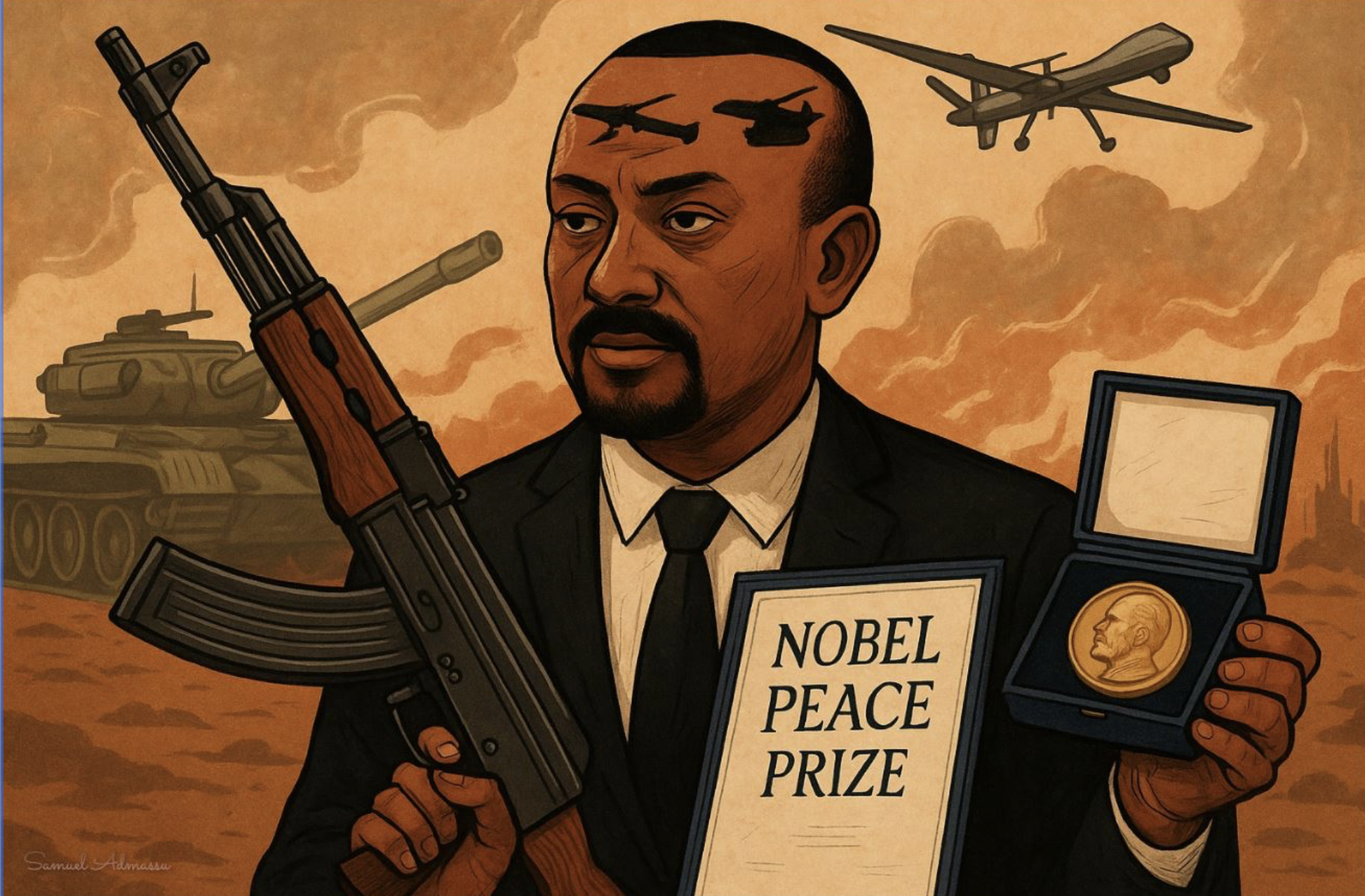
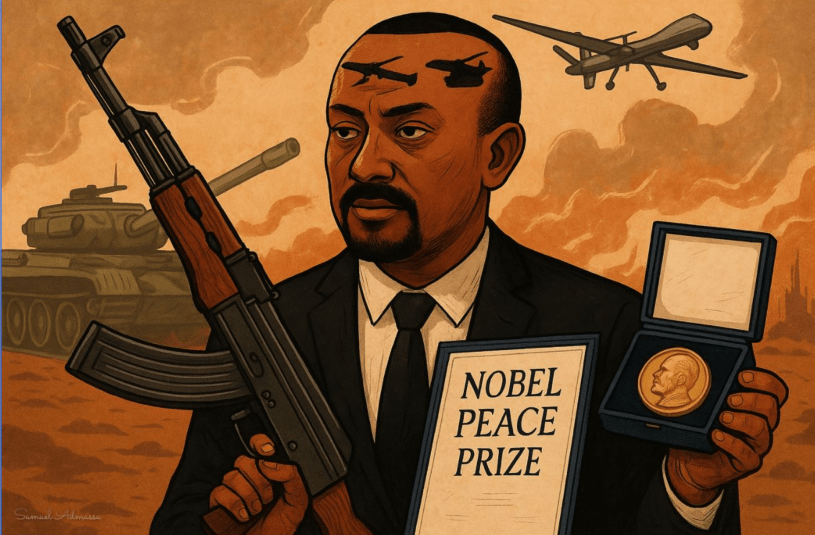
The Nobel Peace Prize, awarded for advancing peace and international cooperation, has recently faced scrutiny regarding its recipients. Ethiopia’s Prime Minister, Abiy Ahmed Ali, is a notable example. In 2019, he received the Nobel Peace Prize for his decisive initiative to resolve the border conflict with Eritrea, ending a two-decade stalemate. His early tenure also saw domestic reforms, including political prisoner releases and increased press freedom, alongside diplomatic engagement across the Horn of Africa. The Nobel Committee praised his decisive steps towards peace, setting a hopeful trajectory for the region.
However, the period following his Nobel recognition became highly controversial due to escalating internal conflicts. In November 2020, barely a year after the award, a brutal conflict erupted in Tigray between Ethiopian federal forces and the Tigray People’s Liberation Front (TPLF). This war resulted in tens to hundreds of thousands of deaths, widespread displacement, and a severe humanitarian crisis. Allegations of war crimes and ethnic cleansing were reported by all sides, profoundly contradicting the spirit of “fraternity between nations.” The conflict was also marked by a prolonged communications blackout and restricted access for journalists and humanitarian aid.
Beyond the conflict, human rights organizations have reported an aggressive centralization of power and crackdowns on dissent under Abiy Ahmed’s government. This includes arbitrary arrests, censorship, internet shutdowns, and mass detentions, actions perceived as a reversal of his initial democratic reforms. The peace with Eritrea has also shown fragility, with continued border re-closures. Adding to the controversy, Abiy Ahmed was notably stripped of the German Hessian Peace Award in 2021 (publicized 2023). Trustees of the German prize cited his government’s role in escalating violence in Tigray and a perceived return to authoritarian rule as reasons for the withdrawal, marking a rare direct judgment against a laureate’s post-award conduct.
Abiy Ahmed’s laureateship has prompted a global examination of peace, power, and international recognition. Concerns persist regarding leadership in fragile states like Ethiopia, where deep-seated grievances can quickly escalate conflict. Analysts suggest his “securitized response” exacerbated existing tensions rather than finding peaceful resolutions. His case also reignited debate on whether peace prizes should recognize past achievements or encourage future behavior, especially given the rapid deterioration of peace in Ethiopia. Additionally, the Nobel Committee’s stance of not revoking awards, despite humanitarian concerns and admonishments, has led some to question the prize’s moral authority in upholding its values.
Leaders in civil conflicts bear an immense moral and ethical burden concerning the use of force and civilian protection. Human rights organizations accuse Abiy Ahmed’s government of widespread abuse, including extrajudicial killings, civilian casualties from drone strikes, and deliberate obstruction of humanitarian aid. A recent televised interview on June 4, 2025, further highlighted a perceived disconnect from immediate humanitarian concerns. Prime Minister Abiy Ahmed recounted being bothered by constant ambulance sirens during a trip to Europe, comparing the “noise” to political activity. While his companion emphasized the life-saving purpose of these sirens, this analogy drew strong public contrast, with many viewing it as insensitive given the ongoing civil war and human rights abuses in Ethiopia, where emergency services are desperately needed and civilian lives are at risk.
Abiy Ahmed’s story serves as a stark reminder of peace’s fragility and how a leader’s global narrative can shift. It highlights the limits of symbolic awards against real-world governance, internal power struggles, and the profound human cost of conflict. The situation in Ethiopia continues to prompt the international community to critically re-examine pathways to peace and the responsibilities of those entrusted with leading nations, especially a Nobel Peace laureate.
 Martin Plaut