The mandate of the independent expert renewed for another year. Violations continue in various fields: extrajudicial arrests, forced disappearances, no freedom of expression, persecution even abroad to silence the diaspora
By Africa ExPress Editorial Team-July 7, 2025

Africa ExPress
Geneva, 6 July 2025
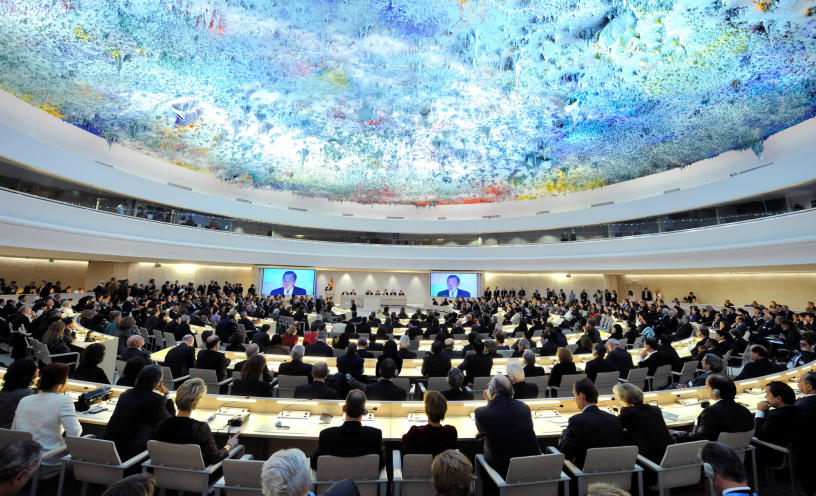
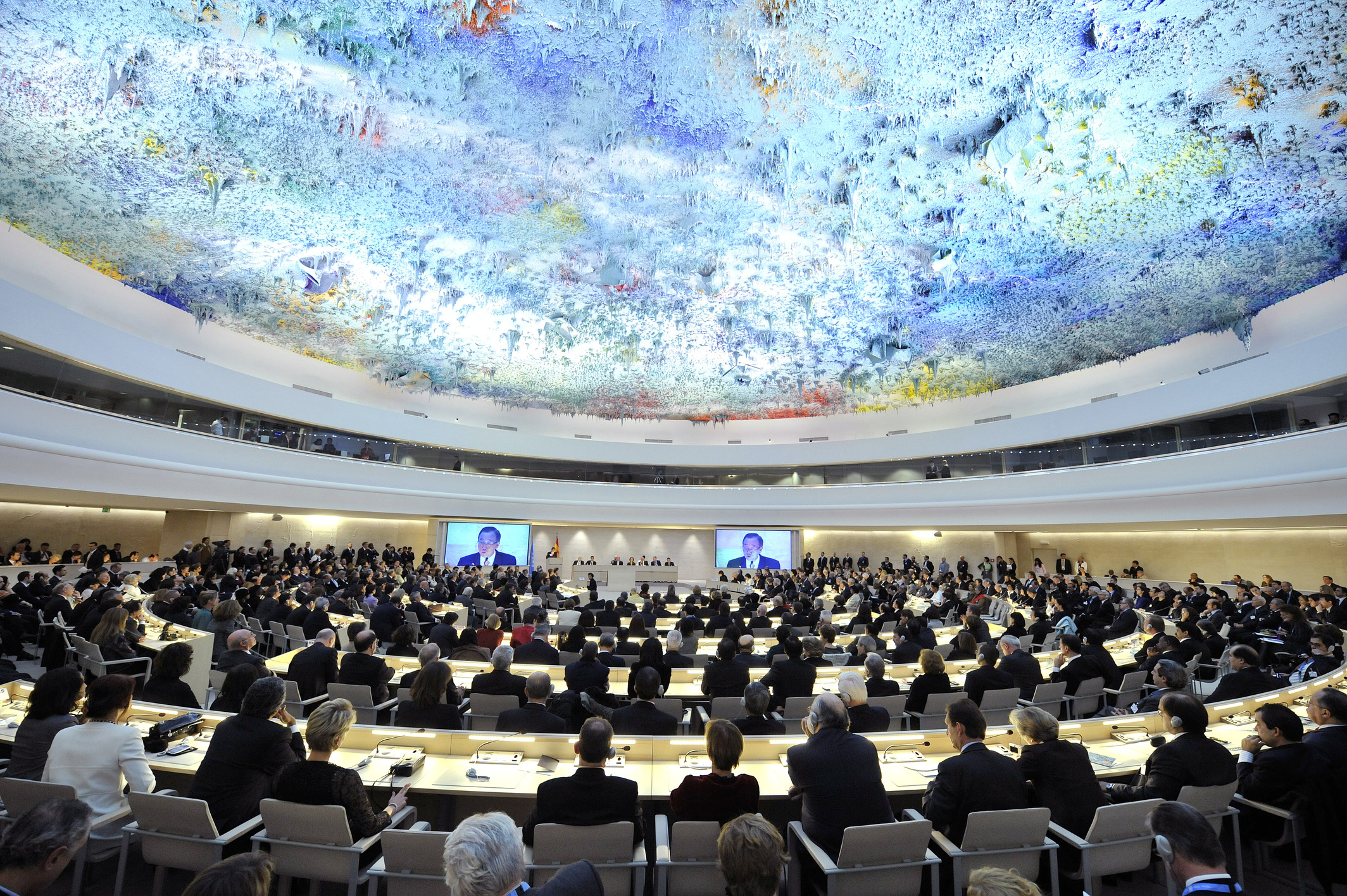
The Human Rights Council (UNHRC), a body of the United Nations, rejected last Friday the motion presented by Eritrea to terminate the mandate of an independent expert, charged with investigating possible violations of fundamental rights in the country. The fact of having rejected Asmara’s request was really important because it aimed at avoiding possible impunity.
Supported by only 4 states
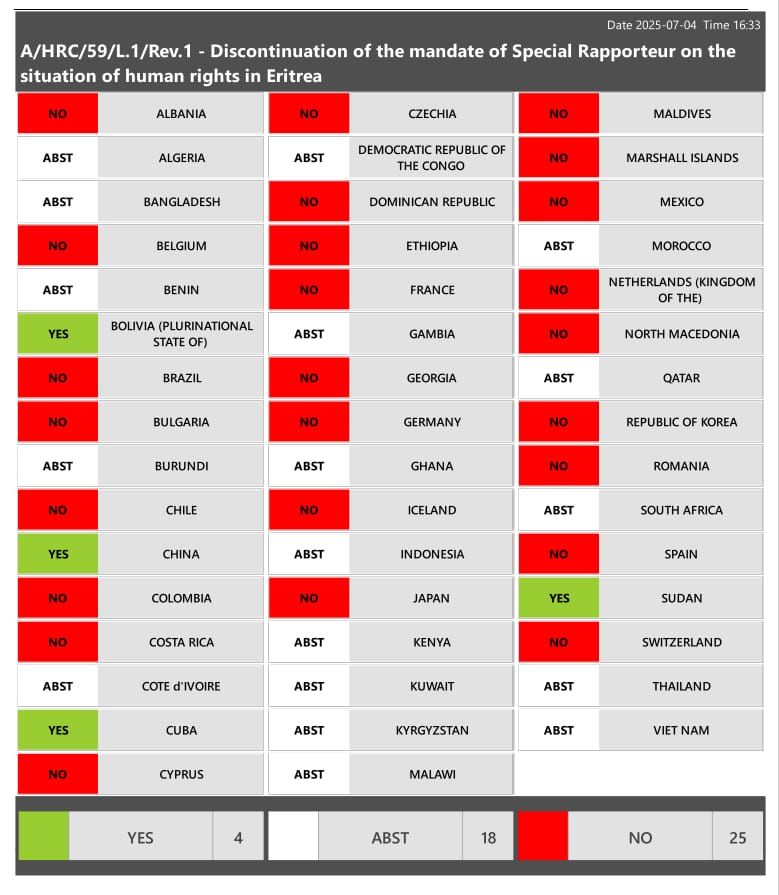
Eritrea’s attempt to revoke the mandate failed completely. Only 4 states voted in favor (Bolivia, China, Cuba and Sudan, the only African country), 18 abstained, while 25 expressed their NO openly, among them Ethiopia, which has long been Asmara’s worst enemy again.
Eritrea’s representative at the Human Rights Council, Habtom Zerai Ghirmai, lashed out at the decision, accusing the EU of suffering from a “neocolonial savior mentality complex”.
China supported Eritrea’s motion , arguing that such mandates are a misuse of international resources.
Even Sudan, a country at war since April 2023, bordering our former colony, has supported the government of Asmara. Last April, the de facto Sudanese president, Abdel Fattah al-Burhan, met with his Eritrean counterpart, Isaias Aferworki, in Asmara. On that occasion, the two leaders discussed cooperation, the situation in the former Anglo-Egyptian protectorate, regional and international issues. In short, it is clear that Khartoum at this historical moment does not want to create further problems for itself, so it is better not to antagonize a “neighbor”.
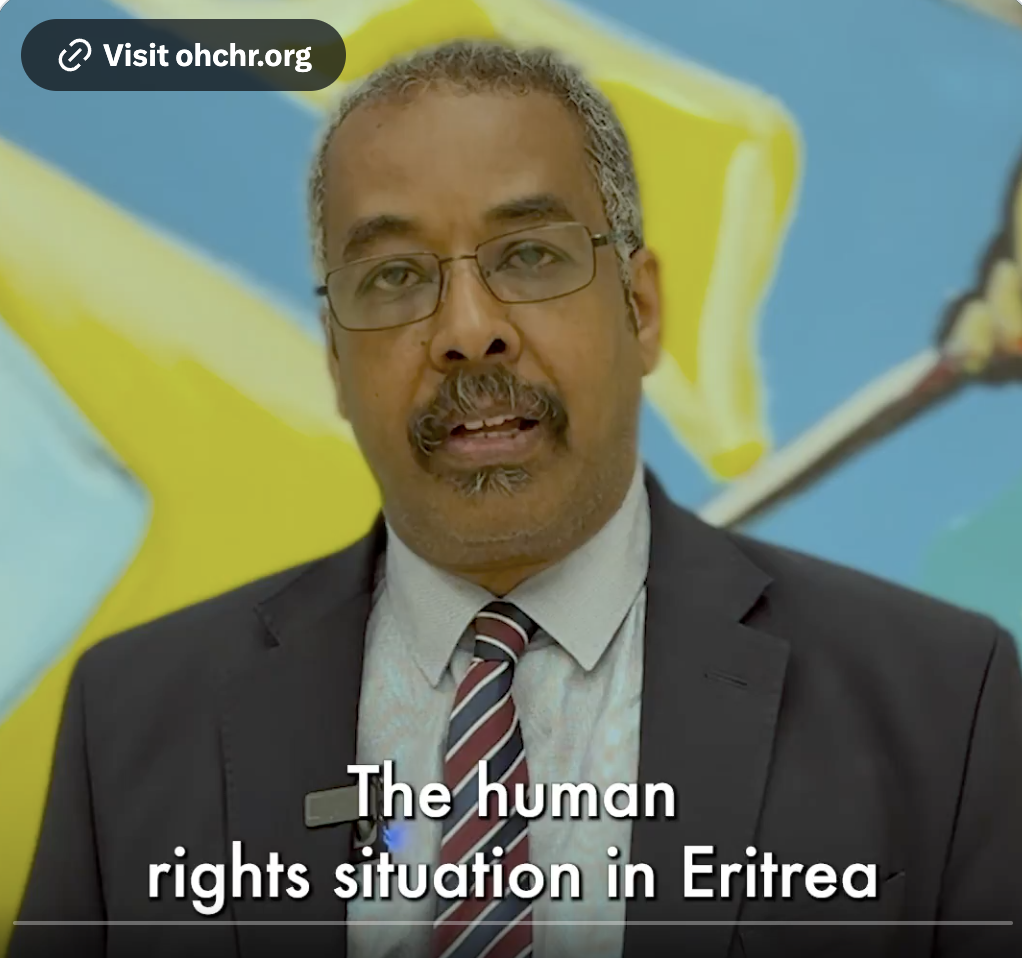
Not only did the UNHRC not approve the request of the Asmara regime , but it also extended for another year the mandate of the independent UN expert, the Sudanese Mohamed Abdelsalam Babiker, associate professor of international law at the University of Khartoum and founder and director of the university’s Human Rights Centre.
No significant improvement
Babiker presented his last report on Eritrea last June. The special rapporteur was appointed in 2020, the year in which the bloody conflict in Tigray (Ethiopia) also began, in which Asmara troops also participated.
“The country has not shown significant progress in all these years,” the expert explained in his latest report. He also stressed that many abuses are linked to indefinite military/civilian service, which is almost impossible to escape.
No private media
The report also highlights the lack of freedom of expression , association, assembly, religion and the right to participate in public affairs are virtually non-existent. They are granted only with the approval of the government and to those who align themselves with the positions of the authorities. In 2024, Eritrea was ranked as the worst country for press freedom globally and remains the only African state without a private media.
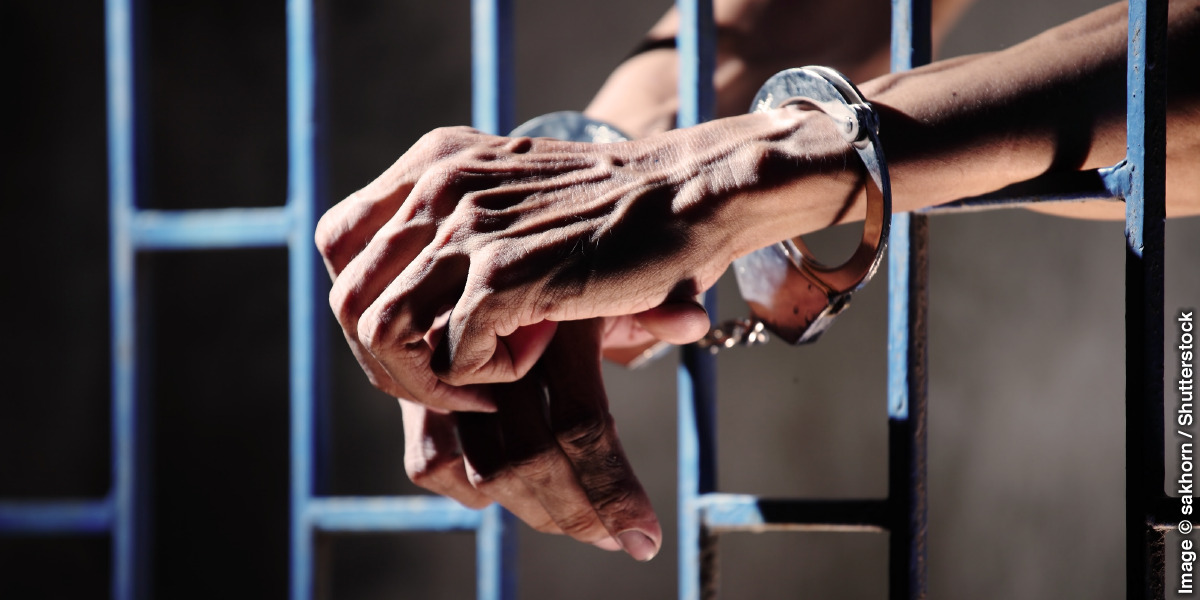
Even religious freedom remains illusory . Just think that in April 2025, 64 Jehovah’s Witnesses and about 300-500 evangelical Christians were in jail, without charges and trial.
The list of human rights abuses in Eritrea is long, not to mention the young people who, after fleeing, if sent back home, are thrown into prison or forcibly recruited. Numerous disappearances have also been reported.
Intimidations also abroad
But the regime’s tentacles also reach those who have fled to other countries. The Eritrean government continues to practice transnational repression, targeting the diaspora. Many Eritrean activists have faced intimidation, surveillance, and threats, aimed at silencing criticism and discouraging political engagement. In some cases, these individuals have faced attacks or harassment from pro-government members abroad.
 Martin Plaut