Mulugeta Gebregziabher, PhD

In a July 22nd viewpoint article in the Ethiopian Insight, Abrar Fitwi argued that ‘Tigray needs democracy before secession’. He further argued that “independence without civil liberties is like starting a new nation in a prison- ask Eritreans and South Sudanese”. I would like to first appreciate him for taking the time to put his opinion in writing which many Tigrayan scholars or broadly Tigrayan elites are shy to do – they mostly prefer arguing on the phone or on social media. Unfortunately, I happen to disagree with the premise and conclusion of his well-written article.
The article presents a compelling but ultimately flawed argument that independence without democracy is hollow, and that sovereignty must be deferred until democratic norms are firmly in place. This view, while well-intentioned, misreads both history and the lived realities of post-colonial and post-conflict societies. It also risks denying people the very agency that democracy is meant to protect. Thus, I disagree with the premise and conclusions. I rather believe that sovereignty is the necessary condition for building democracy, not the other way around. I provide my rejoinder as follows.
No nation was born democratic, they became democratic through nationhood: The article implies that democracy is a prerequisite for nationhood. But history tells a different story. No modern nation-state emerged fully democratic. The United States, France, India, Ghana, and countless others were born in struggle, often violent, often exclusionary and only later evolved democratic institutions through internal contestation, reform, and civic engagement. Democracy is not a precondition for sovereignty; it is a project that unfolds within the framework of a sovereign state. To demand that a stateless people first build a democratic utopia before claiming independence is to set an impossible standard, one that no existing nation has ever met.
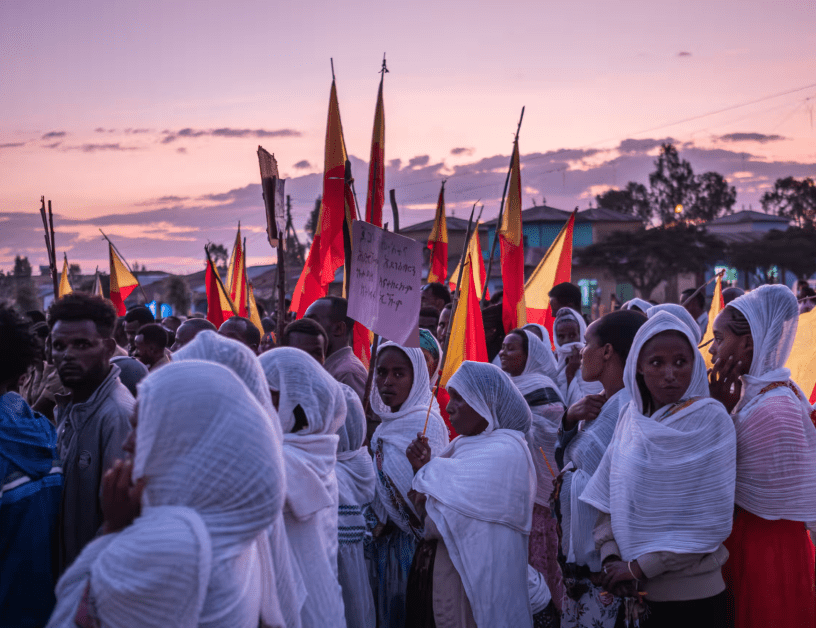
The right to self-determination is not conditional: The article’s insistence that Tigray must first prove its democratic credentials before seeking independence undermines the very principle of self-determination. This right is not earned through good behavior; it is inherent. It belongs to peoples, not governments. To suggest otherwise is to place the fate of a people in the hands of those who may have already oppressed them. Moreover, the trauma Tigrayans have endured is not a distraction from strategy—it is the context that makes the demand for independence urgent and legitimate. To ask a traumatized people to wait for perfect conditions is to ask them to endure further subjugation in the name of theoretical ideals.
Democracy is not a prerequisite, it is a practice: The article rightly emphasizes the importance of democratic culture, but it wrongly assumes that such a culture must be fully formed before independence. In reality, democracy is learned by doing. It is built through struggle, compromise, and participation, often in the messy, imperfect space of a newly independent state. Somaliland is cited as a model, but its success came not because it waited for democracy before declaring independence, but because it used independence as a platform to build democratic norms. The same could be true for Tigray—if its people are given the chance.
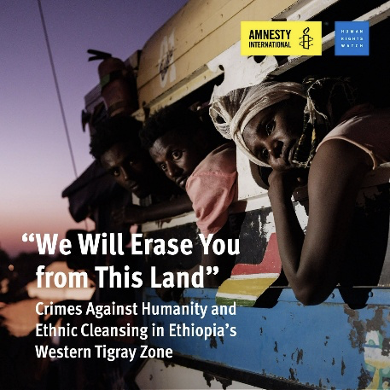
Independence is not a shortcut, it is a commitment: The article warns against using independence as a shortcut around reform. But for many stateless peoples, independence is not a shortcut, it is the only path to reform. It is the only way to escape systems that have proven incapable of protecting their rights or recognizing their identity. The author should have understood this more than anyone given the recent genocidal war on Tigray and the type of deep interest (not emotion) in freedom and independence that it created. To equate independence with escapism is to ignore the deep, principled commitment many Tigrayans feel toward building a just and inclusive society. It is not independence that threatens democracy, it is the denial of it.
The central flaw in Abrar’s article is to treat nationhood as something to be earned through democratic virtue. But nationhood, like democracy, is a collective act of will. It is built by people who share a vision of freedom, dignity, and self-rule. Tigrayans, like all peoples, have the right to pursue that vision, not someday, but now.
Abrar and his likes should understand that if democracy is the goal, then sovereignty is the means. Let us not confuse the tools of liberation with its obstacles.
I would like to conclude by stating that a nation is not a reward. It is a right! Tigrayans deserve the right to self-determination and nationhood. They have paid thousands of lives to enshrine this universal right to be part of the Ethiopian constitution.
About the author: Mulugeta is a tenured professor at the Medical University of South Carolina, a research health scientist and director of the Region IV Public Health Training Center for South Carolina. He won an award in 2022 from the American Public Health Association for his work promoting peace. These are his own personal views. Follow him on his X or BlueSky @ProfMulugeta
 Martin Plaut
Your opinion on Ethiopian affairs is a travesty. It is not going to be useful except to cause huge bloodshed. The Abiy government is suggesting Tigray leave Ethiopia, based on the constitution, if they wish to. If you have been listening recently, the Chief of Staff, the Mayor of Addis, and Abiy himself have asked Tigray to secede from Ethiopia. However, this is a trap to rally Ethiopians with the government for another war with the TPLF. If Tigray wanted to secede, they would not do it without the so-called Western Tigray, which is a contentious subject with the Amhara people. The TPLF needs to be very careful not to play into Abiy’s hand and cause enormous suffering to the Tigrayans yet again.