How fragile deals, factional rivalries, and maritime ambitions deepen the Horn’s peril – Viewpoint by Dahilon Yassin Mohamoda
Source: Ethiopia Insight

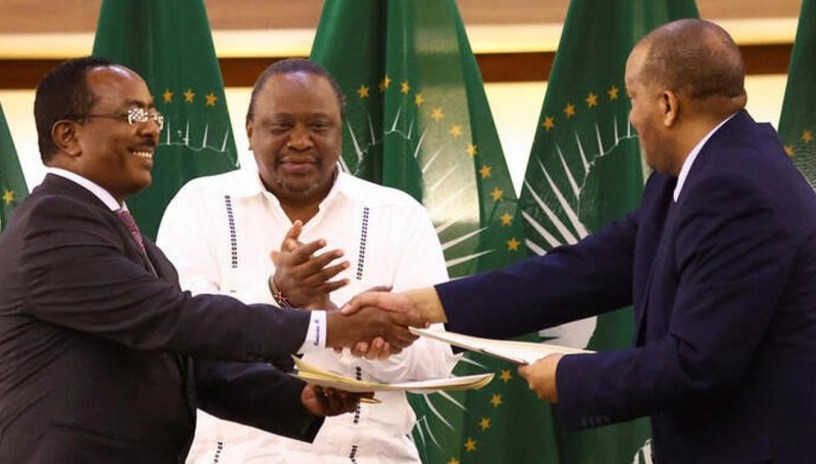
While the world’s gaze is fixed on the Middle East, another crisis is quietly brewing in the Horn of Africa—no less dangerous, yet largely ignored. Nearly two years after Ethiopia’s federal government and the Tigray People’s Liberation Front (TPLF) signed the Pretoria Peace Agreement to end a brutal war, the promise of peace is unraveling.
Instead of ushering in stability, the post-war landscape is splintering: alliances are fraying, old rivalries are reigniting, and fragile new fault lines are emerging. Tensions between Ethiopia and Eritrea are once again on the rise, fuelled by unresolved territorial disputes and the simmering ambitions of powerful men.
Amid the escalating turmoil, Tigray remains suspended in political limbo—its peace deal stalled, and its wartime leadership increasingly fractured by deepening internal divisions.
Support People-Centred Journalism
Broken Promises
The Pretoria accord, signed in November 2022, was hailed as a breakthrough after a catastrophic two-year war in and around Tigray. It briefly sparked hope for peace, political resolution, and recovery.
But implementation has faltered. Key provisions—disarmament of Tigrayan forces, withdrawal of Eritrean troops, and resolution of contested territories—remain largely unmet. Transitional justice, inclusive dialogue, and the return of displaced populations have seen little progress, while over a million people remain in displacement camps with limited aid.
Though the African Union mediated the agreement, its Monitoring, Verification, and Compliance Mission (MVCM) has faced operational constraints and lacks enforcement power. The international community, especially the U.S., played a behind-the-scenes role in brokering the deal but has not followed through. With no sustained external pressure, parties have selectively complied, eroding trust and accountability.
Further undermining the peace process, the National Election Board of Ethiopia (NEBE) recently revoked the TPLF’s legal status—a move seen as deepening political rifts and closing avenues for dialogue.
The stark gap between the Pretoria Agreement’s lofty commitments and the grim realities on the ground has bred widespread disillusionment. Hopes that Tigray would shift from war to peace, recovery, and reconstruction have largely withered, giving way to frustration and deepening disappointment. In the absence of a revitalized, inclusive political roadmap—anchored in sustained regional and international engagement—the agreement’s aspirational vision of peace remains elusive.
The lack of tangible post-conflict dividends has severely eroded the TPLF’s political legitimacy among broad segments of the Tigrayan public. For a party that dominated Tigray’s political landscape for decades, the Pretoria Agreement, widely perceived as a capitulation, has triggered a period of internal reckoning. Public discontent is mounting, with growing scrutiny of the leadership’s conduct during the war and its strategic orientation in the post-conflict period.
Compounding the crisis is the TPLF’s failure to navigate the complexities of the post-conflict landscape. Its inability to present a unified, coherent position in negotiations with the federal government has further undermined its standing.
These shortcomings have exposed deepening fractures within the party’s leadership, casting doubt not only on its future role in Tigrayan politics but also on the broader prospects for sustainable peace in the Horn of Africa.
Fractured Leadership
Tensions erupted during the formation of the Tigray Interim Regional Administration (TIRA), marred by factional disputes and delays. The rupture deepened in August 2024, when party chair Debretsion Gebremichael unilaterally convened the 14th TPLF Congress without broad consensus or recognition from the NEBE. The move was boycotted by Deputy Chair Getachew Reda, then serving as TIRA President, along with key reformist figures who pushed for institutional renewal and internal accountability.
Backed by youth, intellectuals, and elements of the diaspora, this dissenting group – which advocated reform, transparency, and institutional renewal– clashed with Debretsion’s camp, which sought to restore centralized control and traditional hierarchies. A calculated campaign to sideline the reformists ensued, further destabilizing both the party and the interim government.
Underlying these tensions were sharp disagreements over demobilization, regional governance, and Tigray’s posture toward both the federal government and Eritrea. While local loyalties have shaped factional alignments, their precise role remains contested. The current schism reflects deeper fault lines rooted in the party’s long history, notably its earlier post-war crises—such as the fallout after the 1998–2000 border war with Eritrea.
Getachew aligned with Lt. Gen. Tsadkan Gebretensae, wartime commander and TIRA Vice President for Democratization, who championed pluralism and open governance. Religious leaders, civil society actors, and elders attempted to mediate, but reconciliation efforts collapsed. By April 2025, Debretsion’s faction, backed by senior military figures, had effectively seized control of the TIRA. Reformists called it a “palace coup”.
Getachew and close allies fled to Addis Ababa. Soon after, reports surfaced of an armed regrouping in the Afar region, allegedly supported by elements of the federal military and Afar authorities. Observers noted the presence of key figures in Semera, though no official confirmation followed.
Accusations flew. The federal government and Getachew accused Debretsion’s group of collusion with Eritrea—charges they deny. In turn, Debretsion’s camp claimed Getachew was working with federal forces to fragment the TPLF and weaken Tigrayan claims to self-determination and territorial integrity.
The power shift raised fears of renewed conflict. In a pivotal development, Prime Minister Abiy Ahmed appointed Getachew as Advisor on East African Affairs, a move widely seen as a bid to co-opt a faction of the Tigrayan elite. Shortly after, Abiy appointed Lt. Gen. Tadesse Werede as Tigray’s interim president. Tadesse, viewed by some as a conciliatory figure and by others as an extension of the TPLF establishment, represents a tactical shift in federal strategy.
As Debretsion’s camp tightens its grip in Mekelle, the Getachew-led bloc has begun formalizing its presence. In June 2025, it launched a new party: Tigray Democratic Solidarity, or Semeret, which has since secured provisional registration with the election board.
While Abiy’s selective implementation of the Pretoria Agreement and manipulation of intra-TPLF rivalries have stalled the peace process, the TPLF’s internal disarray has been equally damaging. Allegations of corruption, including a gold theft network, have further eroded the party’s standing among Tigrayans.
All this unfolds against a backdrop of rising Ethiopia-Eritrea tensions, signaling broader regional realignments and escalating the risk of renewed instability in the Horn.
Amid the TPLF’s fragmentation, Abiy’s maritime ambitions reflect the increasingly entangled nature of Ethiopia’s domestic crises and the shifting geopolitics of the region.
Share Ethiopia Insight’s Substack
Maritime Maneuvers
In October 2023, Abiy publicly declared Ethiopia’s intent to secure direct access to the Red Sea, calling it an “existential” necessity. Framing his case in historical, legal, and strategic terms, he emphasized the constraints of Ethiopia’s landlocked status post-1993 and its heavy dependence on Djibouti.
While critics saw the remarks as a destabilizing departure from international norms, supporters hailed them as a long-overdue assertion of national interest.
On 1 January 2024, Ethiopia signed a Memorandum of Understanding with Somaliland—an undeclared but explosive step toward operationalizing this maritime vision. Though the MoU remains unpublished, it reportedly grants Ethiopia coastal access near Djibouti in exchange for recognition of Somaliland’s sovereignty. Abiy hailed it as a “historic breakthrough,” marking Ethiopia’s return to the sea.
The deal was a diplomatic windfall for Somaliland but provoked swift backlash from Somalia, Eritrea, Egypt, and Djibouti. Somalia denounced the agreement as a breach of sovereignty and launched a global diplomatic campaign, while Eritrea, alarmed by the strategic implications, viewed it as a direct threat to its influence.
Egypt, already at odds with Ethiopia over Nile water rights and the Grand Ethiopian Renaissance Dam, condemned the move and deployed troops to Somalia under the pretext of peacekeeping. In a joint press conference with Somali President Hassan Sheikh Mohamud, Egyptian President Abdel Fattah al-Sisi declared: “We will not allow anyone to threaten Somalia or infringe upon its territory.”
Djibouti, too, rebuffed Ethiopia’s request for an extraterritorial corridor, with President Ismail Omar Guelleh dismissing it bluntly: “We are not Crimea.”
In February 2024, Saudi Arabia convened an emergency summit in Jeddah under the Council of Arab and African States bordering the Red Sea, resulting in a declaration affirming sovereignty and maritime norms—implicitly aimed at Ethiopia’s unilateral posture (Ethiopia is not a member of the Council)
While tensions with Somalia eased later in the year through Turkish mediation—leading Ethiopia to suspend (but not rescind) the MoU—the core maritime calculus in Addis Ababa remains unchanged.
Meanwhile, relations with Eritrea have deteriorated sharply. On Eritrea’s Independence Day, 24 May, President Isaias Afwerki accused Ethiopia of “overt and covert acts of subversion.” Ethiopia’s Defense Minister Aisha Mohammed and Ambassador Dina Mufti responded with harsh condemnations, accusing Eritrea of meddling in Ethiopia’s sovereignty and warning that “continued violations… cannot be tolerated indefinitely.”
Abiy’s maritime pivot aligns increasingly with the regional ambitions of the United Arab Emirates (UAE), whose economic and military footprint in the Red Sea corridor—especially in Somaliland and southern Yemen—has grown significantly.
The UAE’s earlier attempts to establish bases in Eritrea and Djibouti faltered, but analysts suggest Ethiopia now serves as a more viable partner for projecting Emirati influence across the Bab el-Mandeb, counterbalancing rivals like Turkey, Qatar, and Iran.
Though Ethiopia is entitled under the UN Convention on the Law of the Sea to negotiate port access for trade, unilateral moves risk destabilizing an already fragile region. Cooperative frameworks, like the Lamu Port-South Sudan-Ethiopia Transport Corridor (often known as LAPSSET), offer alternative models for regional integration. Yet Abiy’s approach has raised alarms about Ethiopia’s long-term strategic posture.
Abiy’s ambitions appear to reach well beyond Assab or any single port. In today’s geopolitical context, Assab has assumed the symbolic and strategic weight that Badme once held in the 1998-2000 Ethio-Eritrean War: a flashpoint standing in for broader national anxieties.
At the center of this unfolding drama are Abiy and Isaias—two leaders locked in a high-stakes rivalry that fuels shifting alliances and perpetuates instability across the Horn of Africa. Their rivalry, however, traces back to an improbable partnership—one that began with a Nobel-winning peace but unraveled over diverging endgames.
Asmara Affair
Abiy’s ascent in April 2018 marked a seismic shift in Ethiopia’s domestic and regional posture. Among his boldest moves was the normalization of relations with Eritrea, culminating in the Jeddah Peace Agreement of September 2018. Mediated by Saudi Arabia and the UAE, the accord formally ended the long-standing stalemate between the two nations.
While lauded internationally and rewarded with a Nobel Peace Prize, the agreement was as much a tactical alignment against the Tigray People’s Liberation Front (TPLF) as it was a peace accord.
This alignment unraveled in the aftermath of the Pretoria Agreement, which ended the 2020-2022 war between the federal government and the TPLF. President Isaias Afwerki’s cryptic reaction to the deal—his Tigrigna remark, ተኾለፍና (“our mission has been thwarted”)—signaled a rupture.”
The subsequent closure of borders, termination of flights, and cessation of diplomatic channels reflected a deeper breakdown in trust, rooted in diverging expectations about the war’s endgame. Allegations have since surfaced that Isaias had offered Abiy access to the port of Assab as part of a broader understanding that was ultimately derailed by Pretoria.
Alliance Games
Following Pretoria, Ethiopia and Eritrea began hedging against each other. The rift widened further when Abiy publicly articulated Ethiopia’s ambition to secure access to the Red Sea, a move interpreted by Asmara as a direct challenge. Isaias allegedly sought to build an anti-Abiy bloc, engaging Amhara militias like Fano, Oromo insurgents, and splinter TPLF factions.
In turn, Addis Ababa reportedly extended support to Eritrean opposition groups, including the Afar and Brigade Nhamedu, further inflaming tensions. Arms transfers to the Bure front deepened mutual suspicion between the two governments. Simultaneously, Eritrea’s growing involvement in Tigray’s internal politics—particularly its backing of Debretsion’s faction—has further destabilized the region and undermined the already fragile Pretoria peace.
Amid these fractures, a new discourse known as ፅምዶ (Tsimdo)—loosely translated as “alliance”—has gained momentum. Focused on rekindling solidarity between the Tigrinya-speaking peoples of Tigray and Eritrea, Tsimdo is framed as a people-to-people reunification project.
Promoted aggressively through social media, it has become increasingly tied to post-Pretoria political realignments, aiming to transcend past enmities and forge new cross-border alliances amid shifting geopolitical currents.
A telling manifestation of this trend is the recent reopening of border crossings at selected points between Tigray and Eritrea—carried out largely without the sanction or involvement of Ethiopia’s federal government. Though limited in scope, these informal openings symbolize a local assertion of autonomy and a deliberate sidelining of federal authority.
Eritrea’s tacit acceptance—or strategic facilitation—of these crossings, engaging directly with Tigrayan actors while bypassing Addis Ababa, suggests a calculated effort to reassert its influence in Tigray by exploiting Ethiopia’s internal fractures. This maneuver, compounded by Abiy’s maritime ambitions, has further exacerbated regional tensions, signaling the approach of another storm in the Horn of Africa.
Complicating the regional picture further is Sudan’s civil war. Eritrea has aligned itself with General Abdel Fattah al-Burhan and the Sudanese Armed Forces (SAF), while Abiy maintains close ties with the UAE, a principal backer of the opposing Rapid Support Forces (RSF).
The TPLF, for its part, has reportedly sustained cordial ties with al-Burhan. These overlapping alliances mirror and magnify Ethiopia’s internal ruptures, highlighting the increasing entanglement of regional conflicts with domestic power struggles.
Amhara Faultlines
Within Ethiopia, the Amhara region remains a crucible of unrest. Fano insurgents and allied militias have refused to relinquish control over contested territories, even as the Pretoria Agreement calls for their resolution through constitutional means—an outcome that remains elusive.
The federal government’s post-war demobilization efforts, coupled with actions perceived as economically targeted—such as disrupting Amhara commercial interests—have fueled a sense of marginalization. These moves, viewed by many Amhara actors as attempts to preempt future insurrections, triggered violent backlash and accelerated Fano’s internal fragmentation.
The picture grows even murkier when viewed through the prism of tactical insurgent alignments. Despite their antagonism and diverging goals, Fano militants and the Oromo Liberation Army (OLA) found common cause in their opposition to federal forces. Simultaneously, reports of TPLF–Fano contact point to a fragile convergence among disparate actors resisting central authority.
Yet these alliances are inherently unstable—undermined by longstanding ethnic grievances, political mistrust, and unresolved territorial disputes—rendering coalition-building a hazardous and unpredictable endeavor.
Oromia’s Paradox
Nowhere is the post-Pretoria paradox more glaring than in Oromia. Rather than coalescing into a unified political bloc, the Oromo have emerged as both a fragmented constituency and a contested political space. Internally divided and externally embattled, they maintain strained relations with both the federal center and opposition actors.
On the surface, Oromo elites—most notably Abiy and his inner circle—have replaced the TPLF as the dominant force in federal politics. Yet, the broader Oromo populace remains structurally marginalized and politically disenfranchised.
Opposition groups within Oromia navigate a volatile terrain, shaped by distrust of both the central government and potential allies. As René Lefort aptly observes¹, this reflects Ethiopia’s enduring “Gordian knot”—the entangled struggle between multi-national federalism, centralized power, and contested national identity.
While Oromo elites now occupy the highest rungs of power, their base remains alienated, suspicious of a federal system that has co-opted their historical struggle, and wary of coalitions that may reverse their modest gains.
Afar Flashpoint
Amid the fragmentation elsewhere, Afar is quietly emerging as a potentially explosive frontier. Though less visible than the crises in Amhara or Oromia, it sits at the nexus of several high-stakes dynamics. The region currently hosts Eritrean opposition groups and a dissident Tigrayan faction opposed to Mekelle’s leadership, further complicating an already fragile security landscape.
Despite the Pretoria Agreement, Afar–Tigrayan tensions remain unresolved. Deep mistrust of Tigrayan forces persists, particularly given their continued presence in three disputed kebeles—Aradu and Hidda in Megale Woreda, and Asa’da (Qasa Xa) in Berhale Woreda—all claimed by Afar authorities. The use of the term “ሓራ መሬት” (“Hara Meret” or “liberated land”) by this Tigrayan faction has been especially provocative, inflaming local resentment.
Further destabilizing the region is the Afar-Issa conflict, now under a fragile suspension through federal mediation. Yet, the track record of such negotiations is poor, and many fear a collapse is imminent.
Adding to the volatility, a high-profile defection of an Afar regional official to Eritrea—and his subsequent public denunciation of the Afar administration—has sharpened political fault lines. The defection set in motion a chain reaction that prompted a panicked responses from both regional and federal authorities.
In this fraught context, the Afar corridor risks becoming the next axis of militarized competition, potentially drawing both Eritrea and Ethiopia into open confrontation. Its strategic geography—straddling Ethiopia, Eritrea, and Djibouti—makes it an ideal proxy theater.
Meanwhile, local communities, still reeling from their role in the Tigray war, feel increasingly abandoned. Once hailed for their resilience and loyalty, they now report feeling sidelined and expendable. Community elders warn that this recurring pattern is likely to repeat if current tensions erupt into renewed conflict—unless there is a fundamental shift in how their contributions are recognized and valued.
Support Ethiopia Insight on Patreon
Perspective Shift
The Horn of Africa is a mosaic of failed states, contested sovereignties, and endless war. Eritrea and South Sudan emerged through secession. Somaliland remains unrecognized. Sudan burns. Somalia stagnates. Ethiopia, far from stabilizing post-Pretoria, faces new ruptures as intra-elite conflict, regional rivalries, and competing sovereignties intensify.
The Abiy-Isaias alliance is dead. TPLF fragmentation deepens. Eritrea now courts old enemies to check its former ally. Abiy’s maritime push stirs regional alarm while failing to resolve domestic crises.
Pretoria ended open war in Tigray but failed to heal Ethiopia’s deeper fractures. Violence now festers in Amhara and Oromia. The country teeters on the edge—not of peace, but of renewed rupture.
The threat of rupture today is not merely hypothetical. Even if open war is averted, the cycle of instability is set to persist unless Ethiopia addresses its foundational dilemma: the persistent failure to forge elite consensus.
Seen in long historical perspective—from imperial centralism and revolutionary socialism to EPRDF federalism and Abiy’s post-2018 “reformism”—each phase has privileged coercion over compromise, exclusion over inclusion, and rupture over negotiation.
As scholars like Jon Abbink and Merera Gudina have long argued, sustainable peace cannot rest on battlefield victories or top-down accords². It requires political will—among all elites—to engage in genuine, inclusive bargaining. Abbink’s invocation of Carl Schmitt’s “normal politics” underscores the challenge Ethiopia faces: how to move from existential contests to institutionalized compromise.
This will not be achieved through further centralization, nor through performative decentralization. What is required is a radical shift in the structure of power: a reimagined federal settlement grounded in equity, pluralism, and meaningful decentralization.
Governance must be participatory, and authority must be accountable. Absent such transformation, the crises Pretoria sought to resolve will not only endure—but deepen—threatening both the cohesion of the Ethiopian state and the future of peace in the Horn.

About the author.
Dahilon holds degrees in political science, social anthropology, and development studies from Addis Ababa University, the University of Oslo, and the London School of Economics & Political Science (LSE), respectively. His research interests focus on political transitions, regional security, and transboundary resource governance in the East Africa region.
1 René Lefort, “The Ethiopian Gordian Knot and the Oromo Dilemma,” Horn of Africa Bulletin 35, no. 1 (2024)
2 Abbink, Jon. Ethiopia: Politics, Ethnicity and the Quest for Peace. Leiden: African Studies Centre, 2024; and Merera, Gudina. Ethiopia: Competing Ethnic Nationalisms and the Quest for Democracy, 1960–2000.
 Martin Plaut