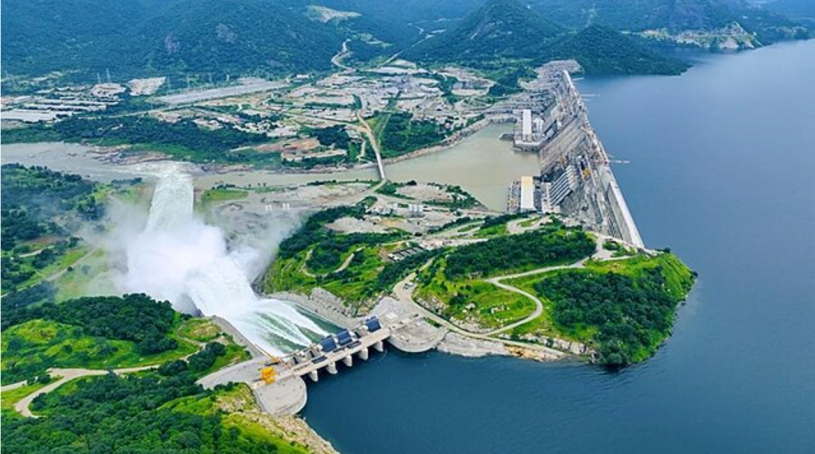
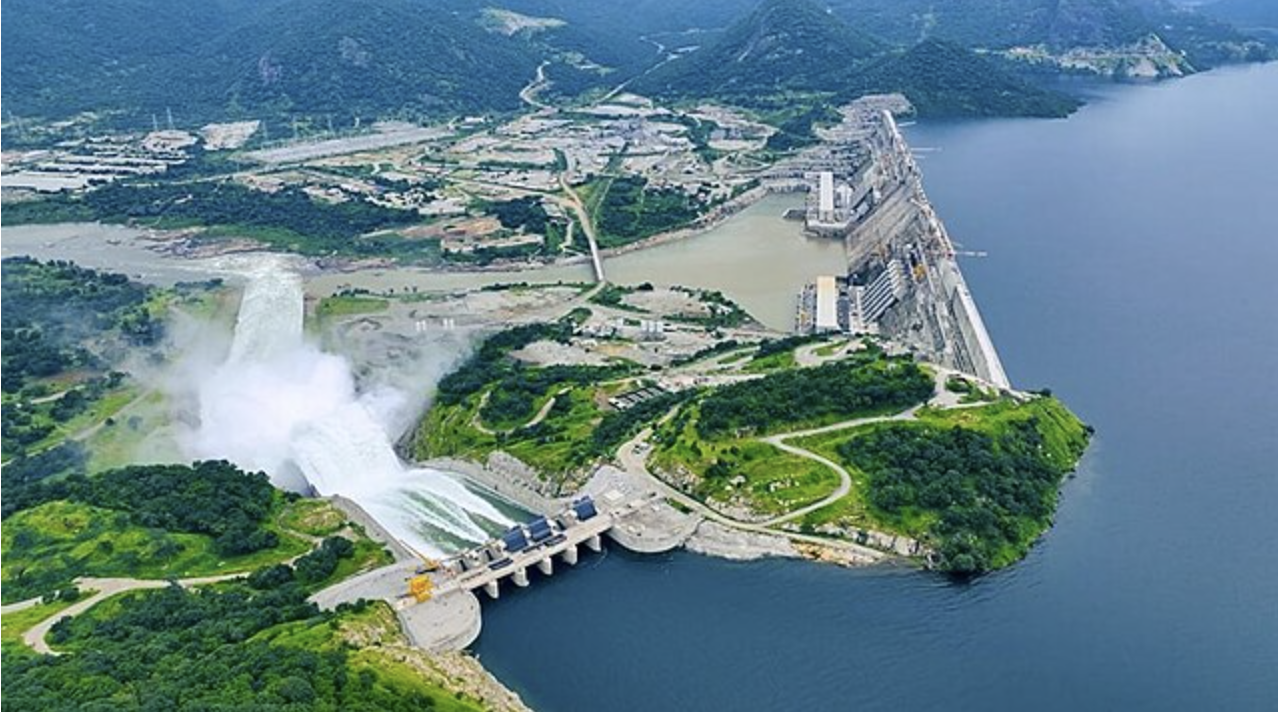
On Tuesday Ethiopia’s Grand Renaissance Dam (GERD) on the Blue Nile is due to be officially opened. It is a truly awesome achievement: the largest hydroelectric dam in Africa. It even dwarfs China’s mighty Three Gorges dam. The GERD has a capacity of 74 billion cubic meters almost double the Three Gorges Dam at 39.3 billion cubic meters.
As the BBC pointed out it will give Ethiopia energy dominance in the region.
Ethiopia was planning to increase the sale of electricity to neighbouring countries such as Kenya and Djibouti, with ambitions of building a transmission network to cross the Red Sea to sell to Middle Eastern states like Saudi Arabia.
One has to be impressed by the achievement. The vision of Prime Minister Meles Zenawi who announced in 2011 plans to build what he simply called “Project X”, setting in motion a process that has led to Egypt losing its “veto power” over the use of the Nile’s waters.
Triumph
Ethiopia faced huge hurdles to bring the project to fruition. Not least of which was getting the finance to pay for it after the normal channels were blocked
“Egypt lobbied massively for institutions like the World Bank not to finance the dam’s construction. This merely strengthened the Ethiopian government’s resolve, and it embarked on the big drive to raise funds from its citizens,” Meles said.
Today’s Prime Minister, Abiy Ahmed reflected somewhat bitterly on this legacy.
“We live in a world where even gambling houses can secure loans, yet we have been denied financing when asking for support to generate power.”
Denied international finance, Ethiopians paid for the GERD themselves. By January this year Ethiopians had raised over 20.2 billion Birr ($159.9 million) through public bond sales, with the Development Bank of Ethiopia contributing another 10 million Birr ($79,190).
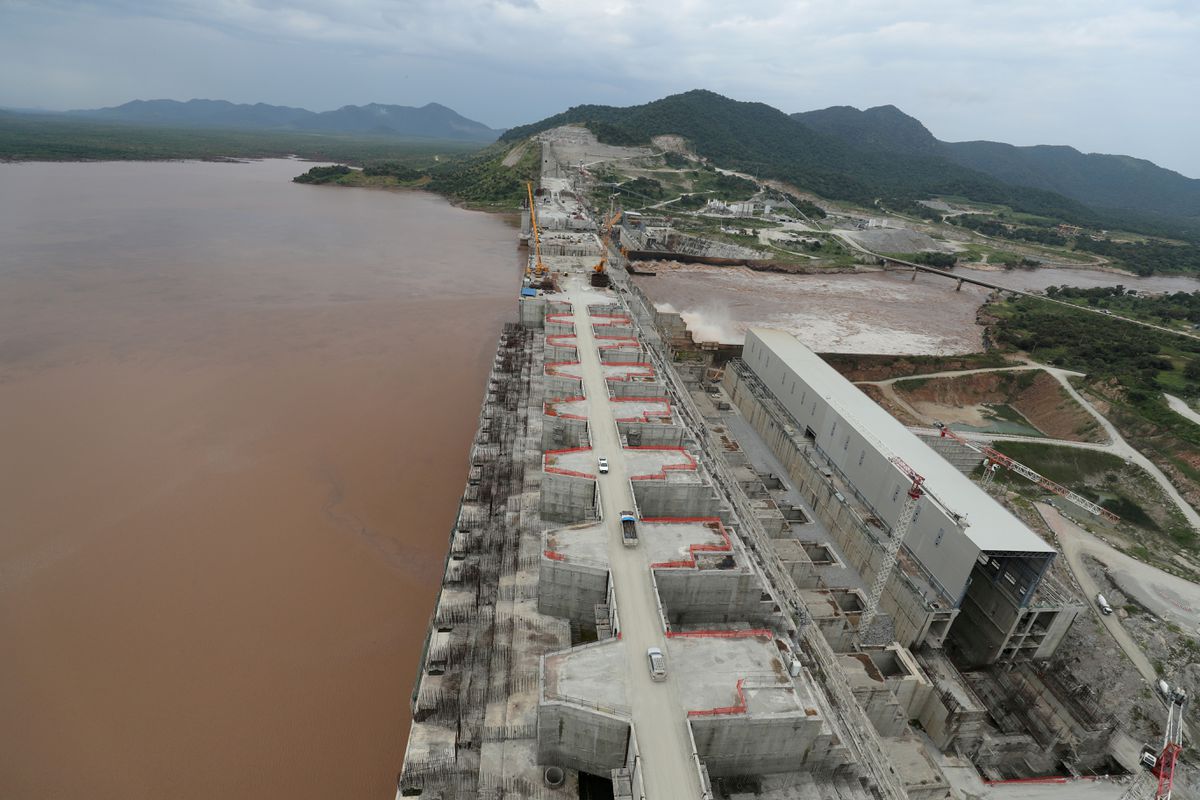
But the human cost must also be acknowledged.
Ethiopia’s Minister of Water and Energy Engineer, Habtamu Itefa, interviewed by The Reporter Magazine, confirmed the immense sacrifices made to complete the project. “Yes, that is true,” the Minister responded when asked about the 15,000 Ethiopians died over the course of the dam’s 14-year construction.
Tragedy
The Egyptians, who have been fighting to preserve the rights to the waters of the Nile which were guaranteed them by colonial treaties, see the GERD as a tragedy.
Egypt, which relies on the Nile for 97% of its water needs – especially for farming – continues to invoke historic rights over the river and says the GERD is an “existential” threat.
“Blow up the dam”
In his first term President Donald Trump attempted to broker a deal between Egypt and Ethiopia, but failed. Trump halted aid to Ethiopia and then made the extraordinary prediction that Egypt would end up “blowing up that dam.”
Egypt’s ambitious agricultural schemes
Egypt’s frustration stems from its failure to use its current water supplies appropriately and its grand agricultural developments. In 2021 I carried an article laying the problem out in greater detail.
If Egypt was just using the Nile to provide its people with drinking water (and was doing something to control the growth rate of its population of 102 million) that would be one thing. If Egypt was trying to simply continue irrigating its traditional farms along the Nile and in the Nile delta that would be a need Ethiopians should be sympathetic towards.
But it is not.
Little is said about Egypt’s plans to increase its agricultural production far from its traditional farmlands.The Aswan High Dam or Nasser Dam already irrigates large areas of the desert in the Toshka depression.

Watering the Sinai
The Sahara is not the only area that Egypt wishes to expand its agriculture into. In 2019 it was reported that:
“Tens of thousands of cubic metres of Nile and treated water are being pumped into Northern Sinai for farmland irrigation, part of an Egyptian national plan for development in the region, the Egyptian Ministry of Irrigation said.
The ministry said the water delivery aims to create farming communities, increase cultivable space and attract agricultural investments.
Water delivery to North Sinai is an old Egyptian dream. The idea of pumping Nile River water into Sinai emerged in the late 1970s after Egypt made peace with Israel.
In 1979, Egyptian President Anwar Sadat ordered a canal dug to carry water from the Damietta branch of the Nile, near Egypt’s Mediterranean coast, into Sinai. Water flowed into the canal and then into Sinai in 2001.
The Sheikh Jaber al-Sabah Canal was created to move water from the western Sinai to North Sinai. The canal siphons water into a major plant in Bir al-Abd, which distributes the water to farmland across North Sinai.”
The idea of watering the Sinai with the Nile water goes back decades. In 1981 Egypt announced:
The current plans of the Egyptian government call for a massive expansion of irrigated land, approximately 1.8 million additional hectares by the year 2000. The Egyptian Ministry of Irrigation presently intends to construct the Salaam, or Peace, Canal for the delivery of Nile water to the new reclamation areas in the Eastern Delta and Sinai.
In recent years Egypt’s President el-Sisi has gone further. He has ambitious plans to increase the irrigation in the Sinai.
Egypt’s Sisi directs government to increase agricultural plots in central, northern Sinai
Mon, 26 Apr 2021 – 06:45 GMT

President Abdel Fattah El Sisi meets with the Cabinet on April 26, 2021- press photo
CAIRO – 26 April 2021: President Abdel Fattah directed the government to increase agricultural land plots in central and northern Sinai, said the Presidential Spokesperson Bassam Radi in a statement on Monday.
In a cabinet meeting, the President was briefed on the national project for agriculture and land reclamation in central and north Sinai, within the framework of the State’s comprehensive strategy to expand integrated agriculture and land reclamation at the level of the Republic, Radi added.
“These efforts are exerted in complementarity with other similar projects, especially in the New Delta in northwest of the country, Toshka and East Owainat in the South Valley,” Radi continued.
“The President also directed that the latest equipment and machinery be provided to reclaim the targeted lands in Sinai, explore the best agricultural activities, and apply the cutting-edge irrigation methods to make optimum economic use of water and double production in quantity and quality,” he said. The spokesperson said that the inventory and study of data on the surveying and nature of the soil were further highlighted, alongside the achievement rates already made in the previously-allocated lands.
Egypt’s failure to use water effectively
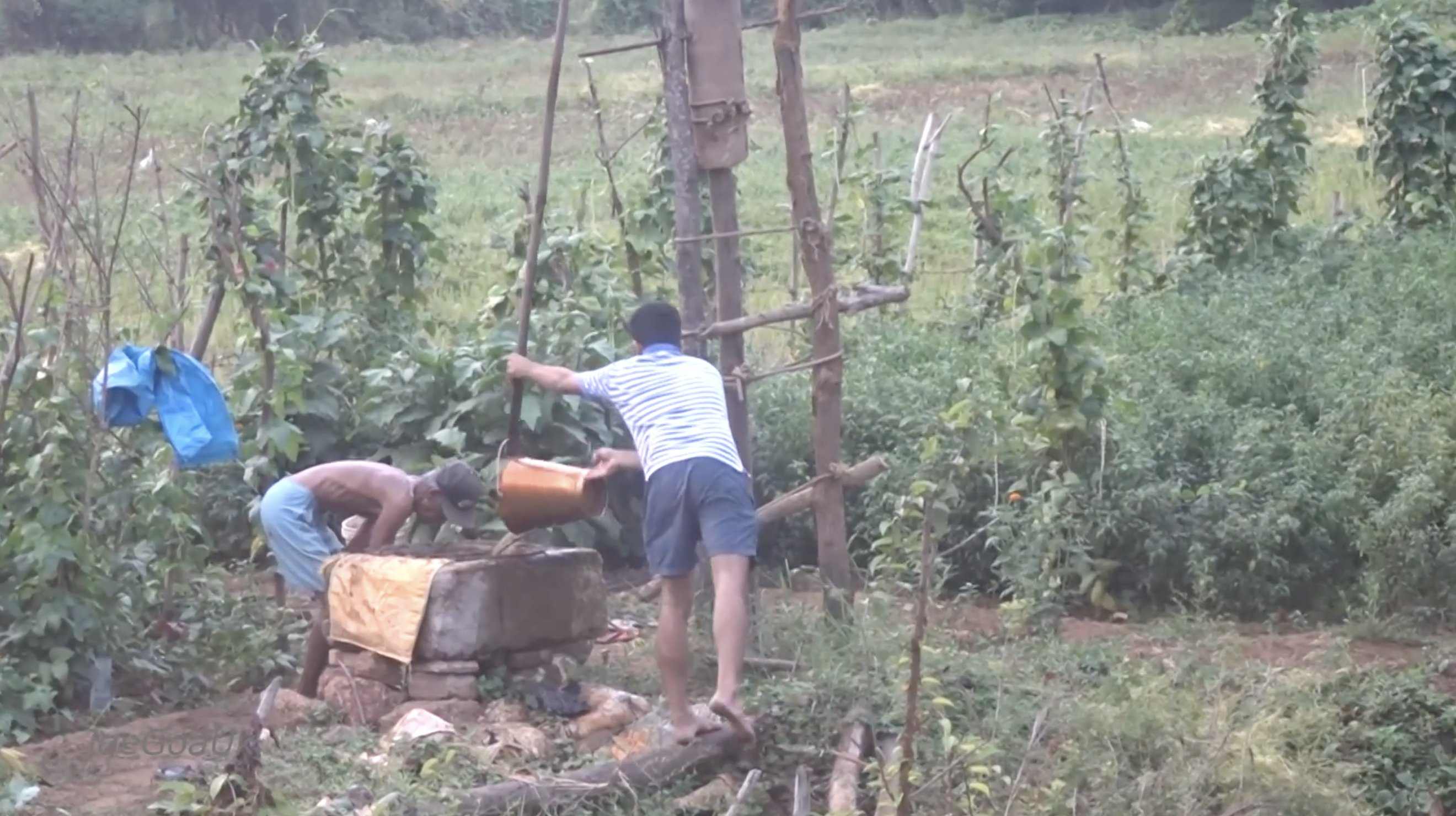
The Egyptians have some of the least effective forms of water use. Many haven’t changed down the centuries.
In a paper entitled Managing risks of the Grand Ethiopian Renaissance Dam on Egypt, Walaa Y. El-Nashar and Ahmed H. Elyamany of Zagazig University, Egypt showed that any loss of water from GERD could be mitigated.
They calculated that the new dam could result in an annual expected shortage is 27.91 BCM of water.
Since this paper aims to solve the water shortage problem caused by GERD, a number of management actions and strategies are suggested to secure Egypt’s water demands. These management actions and strategies are adapted from published researches to provide an integrated solution for the water shortage problem caused by the construction of GERD.
The following list of management actions and strategies are suggested to mitigate risks of GERD on Egypt:
1. Eliminating rice and other water consuming plants from the crop pattern which could save Egypt nearly one BCM of water, annually.
2. Improve the surface irrigation system by converting small field canals from surface canal to pipes. This will save 42% of water losses due to seepage and evaporation. The total amount of water used in agricultural is about 40 BCM yearly, the efficiency of surface irrigation system is 50–60%. The losses of water due to seepage and evaporation in surface irrigation are about 17.6 BCM. Accordingly, the amount of saved water is about 7.4 BCM.
3. Using fixed furrow irrigation system to save more than 35% from water applied which equal to 0.24 m3/m2. Then the saved water is 9.36 BCM.
4. Reduce irrigation losses by using modern irrigation systems such as sprinkler and drip irrigation in newly cultivated land. The efficiency of the modern irrigation systems is 75–85%, in average 80%. The losses of water due to seepage and evaporation from the modern systems are 8.8 BCM. Then the saved water is about 8.8 BCM than surface irrigation system.
5. Modify the cropping pattern by using low consumptive use crops.
6. Find alternatives water resources as:
a. Reuse of drainage water and treated wastewater. The volume of drainage water reused for irrigation has planned to reach a value of 8.3 BCM/year by the year 2017. The reuse of domestic and industrial wastewater is estimated to be about 1.5 BCM/year by the year 2025.
b. Desalination of sea water as an alternative to drinking and agriculture. But the desalination of sea water is very high in cost. The sea water desalination cost of one cubic meter is 5LE c. Drill water wells. The existence of aquifers in the desert, they are mostly deep and non‐renewable. The average pumping rate from these aquifers at the present time is about from 1.5 to 1.85 BCM/year, although the actual potential is 3.5 BCM/year
Taken together, any loss of water from GERD could be managed.
Is GERD neither Triumph nor Tragedy for Ethiopians?
For Ethiopians not among Prime Minister Abiy’s elite, the opening of the GERD dam is something of a yawn. It is a project that has been used for propaganda purposes for years and they are sick of hearing about it when their immediate concerns of insecurity and high prices for food are not addressed.
This is a comment from a friend.
His government, adept at PR, will try to milk it for all it’s worth. But I, like a large majority of the public, am largely indifferent.
Nobody is really talking about it. I even learned about the inauguration from the internet, since most don’t even watch state media.
The public’s spirit is broken by political factionalism. No one is happy with Abiy.The Oromo, expected to be his main support base, are half-hearted: only some areas (Jimma, Ambo, Shewa) show strong support, while Wellega, Borana, and Bale are hostile or indifferent.
The Amhara are dissatisfied as well, sympathetic to the Fano cause and unhappy that the Prosperity Party made a deal with the TPLF.
Somali and Afar regions are consumed by their own expansive agendas.
Meanwhile, the non-political public is crushed by inflation and an unbearably rising cost of living.
 Martin Plaut
Water – more valuable that gold but treated with such disdain!
Egypt’s longstanding conflict with the reality, with facts is astounding. As a hydro power project, the GERD is an infrastructure for a non-water consumptive use of the Abbay waters (the major tributary or contributor of the Nile. It is a win-win. Depicting it as a tragedy is baseless and careless aggravation of the situation. It is rather Egypt’s non-efficient use of the Nile waters and the transfer of water to the Sinai – outside of the boundaries of the Nile Basin, which is not only a tragedy, but also illegal. Taking the water outside of the basin, in particular is provocation, ill-intentioned, which could also open the door for other Nile basin countries to do the same. Ethiopia has optimum amount of water in its part of the Nile catchment while all its other basins are water deficit. Considering the precedence by Egypt, it would be reasonable for Ethiopia to consider transferring water from Abbay and other rivers that contribute to the Nile to other water deficit basins. Let us celebrate GERD and use to promote cooperation!