“The ultimate tragedy is not the oppression and cruelty by the bad people but the silence over that by the good people.”
— Martin Luther King Jr
By Mulugeta Gebregziabher, PhD
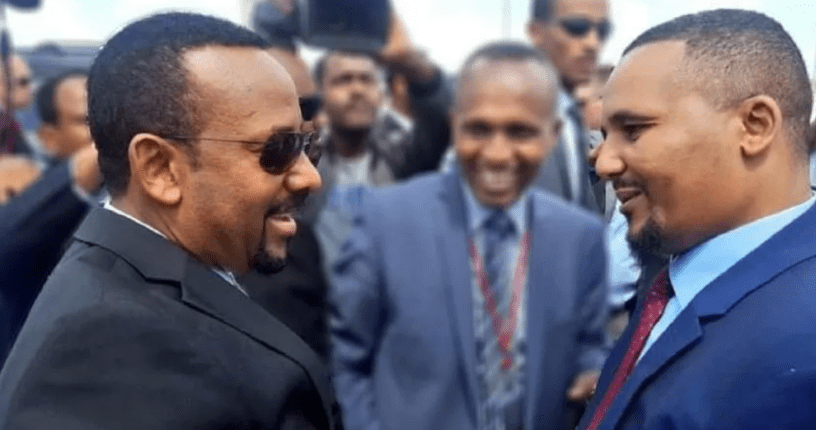
As Ethiopia continues to grapple with political instability and the aftermath of a devastating genocidal war and multiple civil wars, a new Diaspora ORO-MARA (D-ORO-MARA) like movement led by the duo, Lidetu Ayalew and Jawar Mohammed, has emerged. This looks like a sequel to the 2018-2020 ORO-MARA movement: an alliance of the former Oromo People’s Democratic Organization (OPDO) and the Amhara National Democratic Movement (ANDM) that was formed to oust the TPLF (Tigray People’s Liberation Front) from its dominant position in the EPRDF (Ethiopian People Revolutionary Front) coalition and that brought Abiy Ahmed to the premiership in April 2018.
This movement claims to offer an alternative to the current and past regimes where the first step is to “save Ethiopia from destruction by the current regime”. In a recent statement by this group that calls itself “Ethiopians Concerned for the Future of the Country and Survival of its Peoples” which is titled as “Our Survival Must Be Our Top Priority!”, the objectives are hopeful. However, for many Tigrayans, who have endured genocide, displacement, and systemic marginalization by a coalition of Ethiopian and Eritrean forces, this coalition raises significant questions without discounting the hope it promotes.
The Historical Burden of Tigray
Tigray has long been a crucible of resistance and reform in Ethiopia. From its role in overthrowing the Derg regime to leading the Ethiopian People’s Revolutionary Democratic Front (EPRDF), Tigrayans have shaped the country’s modern political landscape. The 1995 Constitution, which enshrined the right to self-determination under Article 39, was a product of this inclusive vision, one fiercely opposed by Lidetu and Amhara elites to this very day. Despite his public statements of supporting the constitution, some Oromo elites like Jawar didn’t show sufficient support to the constitutional order by opposing Abiy Ahmed and his erosion of the constitution until recently. This lack of consistency is a concern for Tigray which only constitutes less than 10% of the Ethiopian population but contributes a much bigger share to the economic, political, historical and cultural assets of Ethiopia.
In November 2020, the Ethiopian government, allied with Eritrean forces and regional militias, launched a brutal war on Tigray. The conflict resulted in about a million of deaths, widespread sexual violence, the destruction of health infrastructure, and a man-made famine. Multiple international bodies, including the UN Human Rights Council, Amnesty International, and Human Rights Watch, have documented war crimes and crimes against humanity. The New Lines Institute concluded that the atrocities amounted to genocide.
The Diaspora ORO-MARA Coalition: A Question of Legitimacy
As Ethiopia continues to grapple with political instability and the aftermath of a devastating genocidal war and multiple civil wars, a new Diaspora ORO-MARA (D-ORO-MARA) like movement led by the duo, Lidetu Ayalew and Jawar Mohammed, has emerged. This looks like a sequel to the 2018-2020 ORO-MARA movement- an alliance of the former Oromo People’s Democratic Organization (OPDO) and the Amhara National Democratic Movement (ANDM) that was formed to oust the TPLF (Tigray People’s Liberation Front) from its dominant position in the EPRDF (Ethiopian People Revolutionary Front) coalition and that brought Abiy Ahmed to the premiership in April 2018. This movement claims to offer an alternative to the current and past regimes where the first step is to “save Ethiopia from destruction by the current regime”. In a recent statement by this group that calls itself “Ethiopians Concerned for the Future of the Country and Survival of its Peoples” which is titled as “Our Survival Must Be Our Top Priority!”, the objectives are hopeful. However, for many Tigrayans, who have endured genocide, displacement, and systemic marginalization by a coalition of Ethiopian and Eritrean forces, this coalition raises significant questions without discounting the hope it promotes.
The D-ORO-MARA coalition has brought many important political, sovereignty and justice issues but mainly survival issue of the Ethiopian state. This is a welcome development. Lidetu Ayalew has played a commendable role in leading this effort and making it attractive to desperate forces who have been marginalized by the current regime after serving it to commit a genocide on the Tigray people. Some have still residual feelings on why Abiy-Isaias didn’t finish the TPLF. Raising concerns and legitimacy issues on this coalition should be important at this stage of its formation so that such concerns are fully addressed by the organizers. It is very important that we understand the position of the two key players in this movement.
Jawar Mohammed’s record is mixed while his recent efforts are admirable. He was instrumental in mobilizing the protests that brought Abiy Ahmed to power, a government that later presided over the Tigray genocide. Jawar has yet to issue a full formal apology for his justification of Eritrean involvement in the war which further alienates him from any credible claim to inclusive leadership. His appearance in the current coalition is very suspicious and troubling given his continued speeches that “he knows how to build coalition and popular movement to remove a government” alluding to his role in the coming to power of the Oro-Mara. While I live it to the Oromo elites, from outside, he seems to forget how much his political capital has diminished in many quarters of the Ethiopian politic.
The Historical Burden of Tigray
Tigray has long been a crucible of resistance and reform in Ethiopia. From its role in overthrowing the Derg regime to leading the Ethiopian People’s Revolutionary Democratic Front (EPRDF), Tigrayans have shaped the country’s modern political landscape. The 1995 Constitution, which enshrined the right to self-determination under Article 39, was a product of this inclusive vision, one fiercely opposed by Lidetu and Amhara elites to this very day. Despite his public statements of supporting the constitution, some Oromo elites like Jawar didn’t show sufficient support to the constitutional order by opposing Abiy Ahmed and his erosion of the constitution until recently. This lack of consistency is a concern for Tigray which only constitutes less than 10% of the Ethiopian population but contributes a much bigger share to the economic, political, historical and cultural assets of Ethiopia.
In November 2020, the Ethiopian government, allied with Eritrean forces and regional militias, launched a brutal war on Tigray. The conflict resulted in about a million of deaths, widespread sexual violence, the destruction of health infrastructure, and a man-made famine. Multiple international bodies, including the UN Human Rights Council, Amnesty International, and Human Rights Watch, have documented war crimes and crimes against humanity. The New Lines Institute concluded that the atrocities amounted to genocide.
The Diaspora ORO-MARA Coalition: A Question of Legitimacy
The D-ORO-MARA coalition has brought many important political, sovereignty and justice issues but mainly survival issue of the Ethiopian state. This is a welcome development. Lidetu Ayalew has played a commendable role in leading this effort and making it attractive to desperate forces who have been marginalized by the current regime after serving it to commit a genocide on the Tigray people. Some have still residual feelings on why Abiy-Isaias didn’t finish the TPLF. Raising concerns and legitimacy issues on this coalition should be important at this stage of its formation so that such concerns are fully addressed by the organizers. It is very important that we understand the position of the two key players in this movement.
What makes Lidetu different from the others is that he has played a remarkable role in opposing the war on Tigray and has consistently condemned Eritrea’s involvement. His stance during the conflict was a rare voice of reason among Ethiopia’s political elite. However, his recent comparison of the grassroots peace efforts between Eritreans and Tigrayans, known as “Tsimdo” to the Abiy-Isaias alliance aimed at eliminating the TPLF is flawed. Equating reconciliation with collusion undermines genuine efforts to heal border communities.
Jawar Mohammed’s record is mixed while his recent efforts are admirable. He was instrumental in mobilizing the protests that brought Abiy Ahmed to power, a government that later presided over the Tigray genocide. Jawar has yet to issue a full formal apology for his justification of Eritrean involvement in the war which further alienates him from any credible claim to inclusive leadership. His appearance in the current coalition is very suspicious and troubling given his continued speeches that “he knows how to build coalition and popular movement to remove a government” alluding to his role in the coming to power of the Oro-Mara. While I live it to the Oromo elites, from outside, he seems to forget how much his political capital has diminished in many quarters of the Ethiopian politic.
Tokenism and the Marginalization of Tigrayan Representation
The coalition has selectively included Tigrayan individuals with limited political capital and no organizational backing. These figures do not represent the broader Tigrayan community, nor do they have the mandate to speak on behalf of a people of Tigray who have suffered genocide. Some have had a history of undermining Tigray people’s endeavors for self-determination and independence. Prominent Tigrayan leaders, scholars, and civil society actors have been conspicuously absent from these discussions. Why are they not invited to contribute ideas or participate meaningfully?
This raises a critical question. With the involvement of such people with limited political capital, how do Tigrayan political voices get represented? How do Tigrayans advocating for independence reconcile their participation in a coalition that fundamentally opposes the constitutional right to self-determination? How do the Tigrayans who hate the TPLF who are working with the coalition of those whose political life can be characterized by their fierce opposition to the Tigray’s political aspirations and the most formidably organized political force (the TPLF mainly due to its support for the rights of the Tigray people) represent the wider Tigray community? The contradictions are glaring and undermine the credibility of both the coalition and the Tigrayan participants involved.
The other critical issue is the coalition’s events, including elite gatherings and the upcoming conference to select leaders and name the movement, have been dominated by media outlets with clear ethnic and political biases. Even though recent events are being broadcast by more platforms, the main platform and emcee for the first few meetings is a media platform known for its vulgar name calling of Tigrayan political leaders and elites and often aligned with the unitarist Amhara ideology of ‘one Ethiopia’ against multi-nationalist narratives. It also includes media outlets that called for ethnic cleansing of Tigrayans by suggesting that the fight is ’95% to 5%”. Such media played a significant role in shaping public opinion during the war and have historically marginalized Tigrayan voices. It is important to note that some of the media outlets that profess to represent Tigrayan voices are also not widely accepted by the wider Tigray population as their platform is in Amharic instead of Tigrigna. Their main audience is not the Tigray people but rather some people with YouTube access in the Diaspora and Ethiopia. The exclusion of mainstream Tigrayan media and the prominent role of these other media outlets in this coalition suggests a troubling continuity of exclusion.
D-ORO-MARA: Is It a Rebranded ORO-MARA?
Many Tigrayans view this coalition as a reincarnation of the Oromo-Amhara alliance that enabled the rise of the Prosperity Party and the subsequent war on Tigray. Except that it is now created in the Diaspora by a new frontman, Lidetu Ayalew, and Jawar Mohammed. The lack of transparency, the exclusion of credible Tigrayan voices, and the ideological hostility toward ethnic federalism all point to a familiar pattern of centralist, anti-Tigrayan politics masquerading as reform. In fact, there is an impromptu comparison being made whether Oro-Mara 2.0 would be better than EPRDF 2.0 (OLA, TDF and Some non-genocidal Amhara forces). The organizers should be honest enough to address such issues.
Speaking Truth to Power
Some of the voices in the coalition are people who supported the war, who enabled the war, and some of them were spectators on the sidelines waiting to join the victor. Many of these have not shown any remorse let alone apologize. Sadly, one of the Tigray representatives has saddened many Tigrayans by stating, “we are all accountable for past misdeeds”. If Tigrayan participants in this coalition are not speaking truth to power, they risk becoming complicit in a process that whitewashes past crimes and undermines future justice.
Conclusion
The D-ORO-MARA coalition, as currently constituted, offers little assurance to Tigrayans seeking justice, restitution, and the right to determine their political future. Until the coalition leaders acknowledge their past roles, embrace inclusive dialogue, and respect the constitutional rights of all nations and nationalities in Ethiopia, their efforts will be viewed with skepticism, if not outright rejection, by many in the Tigrayan community. In my view, for Tigrayans, the best route to independence is self-determination and the willingness to support the self-determination rights enshrined in the constitution of federal government of Ethiopia, which is enshrined by the blood and life of many Tigrayans. Without that guarantee, there is no reason to think that the new coalition is a better panacea. More importantly, this coalition should speak against another round of war rhetoric against Tigray. Tigray doesn’t need any more war. The ultimate tragedy is not the oppression and cruelty by the bad people but the silence over that by the good people.
About the author:
The author of this opinion piece, Mulugeta Gebregziabher (PhD) is Peace Laureate of the American Public Health Association and, serves as a tenured professor and vice chair of at the Department of Public Health Sciences, at the Medical University of South Carolina, USA. Views are his own and don’t represent views of his employers or organizations he is member of. He can be reached at mulugeta.gebz@gmail.com or his X @ProfMulugeta
 Martin Plaut
Thank you for sharing your views on this important topic
While the article contains some repetition, it offers a valuable perspective on the emerging ABRONET alliance. The author’s insights are thought-provoking and have sparked meaningful discussion.
However, Tegaru must remain vigilant to prevent a second wave of genocide, especially in light of the ORO-MARA formation. Figures like Jamar Mohamed (aka “the MECHA”)—along with others who were instrumental in directing the genocide in Tigray—continue to show intent to resume unfinished atrocities under new political covers.
Tigray must prioritize a strategic, peaceful future rather than be drawn back into the destructive cycles of Ethiopian politics.