Source: Belgian Office for the Commissioner General for Refugees and Stateless People
9 September 2025
This is based on extensive interviews, including some in Eritrea itself, in summer 2025. I have attached the PDF, which in Dutch, at end.
A power struggle and unresolved territorial disputes between Eritrea and Ethiopia resulted in a deadly border war lasting from 1998 to 2000. Tensions between the two countries remained high in the period that followed. However, this changed significantly when Abiy Ahmed came to power in Ethiopia in 2018. In September 2018, representatives of Ethiopia and Eritrea signed a peace agreement that ended the ‘no war, no peace’ situation. The rapprochement developed into a military alliance against the Tigray People’s Liberation Front (TPLF) in 2020 and led to open hostilities in Tigray in November of that year, with Eritrea directly involved through the deployment of ground troops. Eritrea was not, however, a party to the ceasefire that ended the war in November 2022. Differences of opinion between the two countries intensified following the outbreak of the Fano uprising in the Ethiopian region of Amhara and Abiy Ahmed’s October 2023 speech on access to the Red Sea.
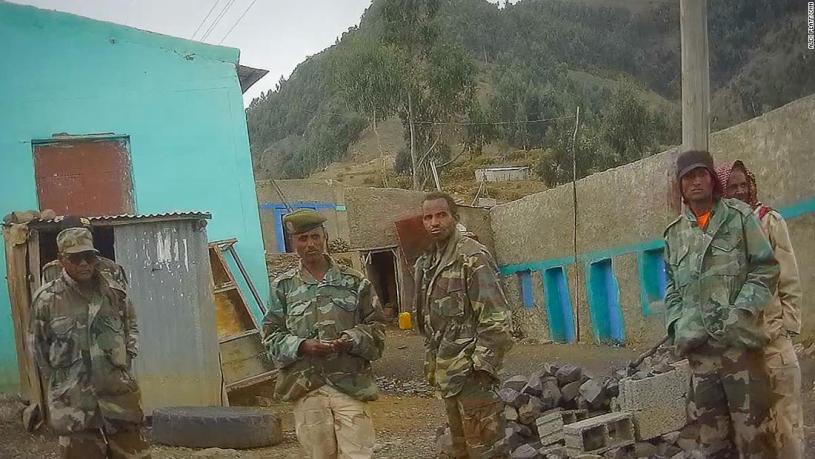
There is little information about the size of the Eritrean forces involved in the war in Tigray (November 2020 – November 2022). It is estimated that thousands of Eritrean conscripts were killed or wounded in the conflict. At the time of finalising this COI Focus, the Eritrean government had not released any information on the number of Eritrean casualties or the identities of those killed or missing.
The agreement between the Ethiopian authorities and the TPLF stipulates that foreign troops and soldiers not belonging to the Ethiopian National Defence Forces (ENDF) must withdraw from Tigray. Various sources report an Eritrean military presence in northern Tigray. However, Eritrea denies this, stating that Eritrean troops are only present in regions allocated to Eritrea by the border commission. According to reports, the situation has returned to the ‘no war, no peace’ status quo that prevailed before 2018.
National service, whereby men and women of conscription age perform military or civilian duties for an indefinite period, is standard practice in Eritrea. According to various sources, there was a surge in mobilisation during the war in Tigray, with the local administration calling up more people for national service and using giffas (targeted searches) to reach a broader range of profiles. After September 2022, the recruitment and mobilisation campaign further intensified throughout the country, with increasingly coercive practices being employed. In September 2022, Eritrea called up all reservists up to the age of 55. As many ignored the call-up, the authorities stepped up the giffas and carried out house searches. They imposed collective punishments on the families of draft dodgers in an attempt to force them to report for duty.
After the ceasefire and peace agreement of November 2022, sources initially continued to report these practices. The United States Department of State (USDoS) states that the mobilisation campaign has been declining in scale since January 2023, although the authorities are conducting security investigations into individuals suspected of evading conscription and arresting and detaining them. A state of general alertness has been reported among Eritrean troops, according to sources.
In general, sources are unable to provide information on cases of individuals returning to Eritrea, and consequently on the risks they face. Returnees, including regime supporters, are subject to the arbitrary and inconsistent treatment characteristic of Eritrea, as are all other Eritrean citizens. Individuals returning to Eritrea who are of conscription age must fulfil their national service upon arrival, unless they have already done so or have an exemption. However, an important distinction exists between permanent and temporary return. Those who meet the government’s requirements (paying a 2% tax and completing form 4/4.2) and have the legal right to reside in a country other than Eritrea are granted diaspora status. This exempts them from national military service and allows them to leave the country without an exit visa. These individuals can only return to Eritrea temporarily (for six to twelve months, sometimes extendable to two or three years), as permanent return would invalidate their diaspora status and make them liable for national service again.
Policy
The policy implemented by the Commissioner General is based on a thorough analysis of accurate and up-to-date information on the general situation in the country of origin. This information is collated in a professional manner from various, objective sources, including the EUAA, the UNHCR, relevant international human rights organisations, non-governmental organisations, professional literature and coverage in the media. When determining policy, the Commissioner General does not only examine the COI Focuses written by Cedoca and published on this website, as these deal with just one aspect of the general situation in the country of origin. The fact that a COI Focus could be out-of-date does not mean that the policy that is being implemented by the Commissioner General is no longer up-to-date.
When assessing an application for asylum, the Commissioner General not only considers the actual situation in the country of origin at the moment of decision-making, he also takes into account the individual situation and personal circumstances of the applicant for international protection. Every asylum application is examined individually. An applicant must comprehensively demonstrate that he has a well-founded fear of persecution or that there is a clear personal risk of serious harm. He cannot, therefore, simply refer back to the general conditions in his country, but must also present concrete, credible and personal facts.
There is no policy paper for this country available on the website
 Martin Plaut