
A humanistic case for price stability in a country at war with itself – Viewpoint by Eyob Yohannes
Source: Ethiopia Insight
Oct 03, 2025
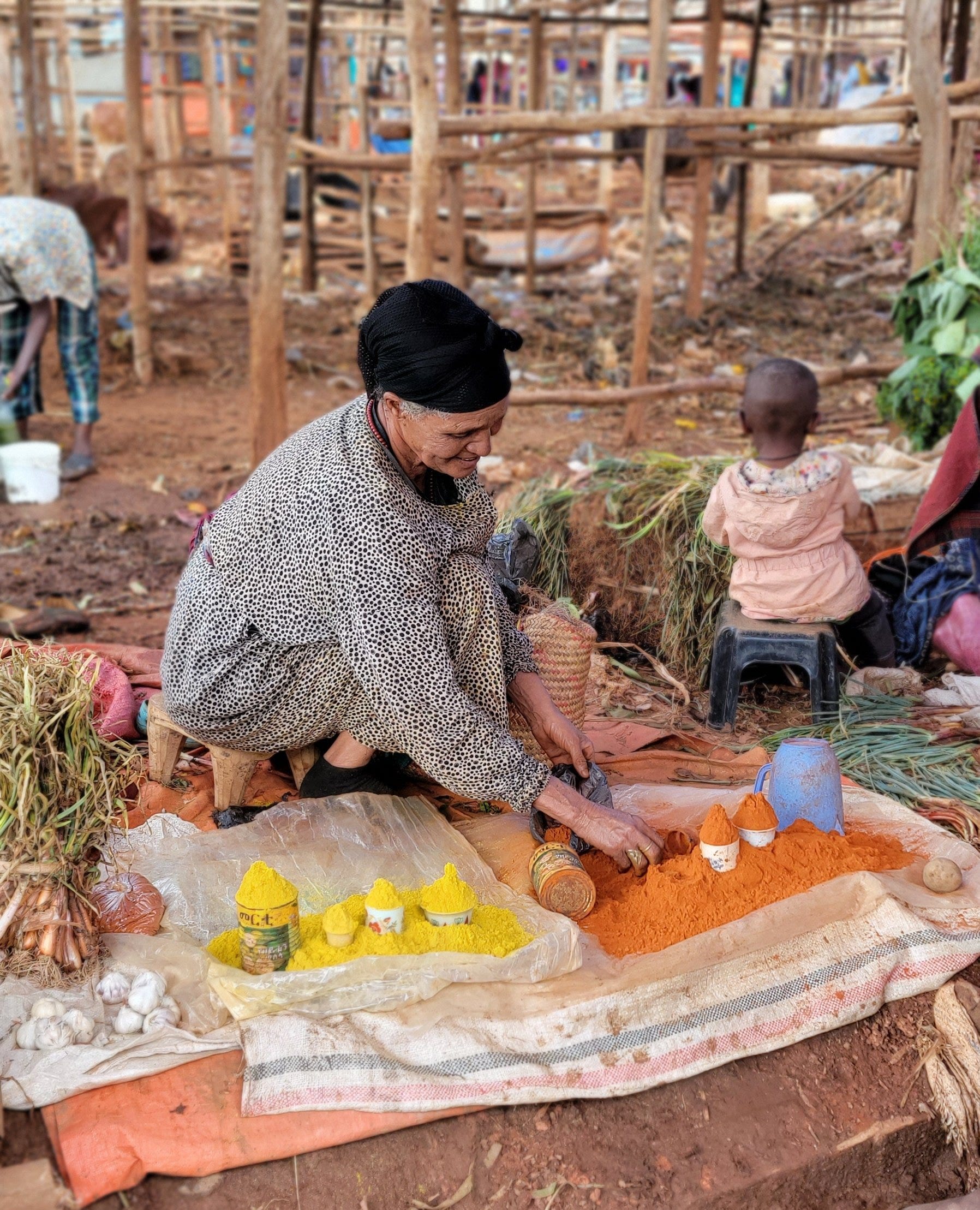
Start with a life, not a model.
A farmer who just wants to plant on time. A mother who wants to buy onions without bargaining from the throat. A driver who wants to finish his route before dusk and get home. An average Ethiopian isn’t asking the state for miracles; they’re asking the country to stop interrupting their routine.
Ethiopia Insight’s Substack is a reader-supported publication. To receive new posts and support my work, consider becoming a free or paid subscriber.
War interrupts routine. It taxes every errand and makes every price a rumor. And yet, even inside that pressure, people keep choosing order—queuing, haggling, planting, hauling—because dignity lives in the small predictabilities of a day that goes as planned.
Share Ethiopia Insight’s Substack
The Invisible Chain
For the majority of Ethiopians, agriculture is not just a sector in the economy—it is the economy. It sets the cost of food, the jobs available, the flow of goods, and the stability of prices. When a planting season is missed, the consequences ripple far beyond the village where seeds lay untouched in sacks. Factories in cities slow for lack of raw materials. Traders buy less because less is there to sell. Truckers sit idle because there is less to move. The price of cooking oil in a small shop in Addis Ababa rises and falls with whether sesame fields in the northwest were planted, tended, and harvested without interference.
This is the essential link that policy debates often understate: secure fields and safe roads are not rural luxuries; they are urban necessities.
When planting seasons are missed and corridors are risky, factories idle, trucks wait, foreign exchange thins, and prices rise. None of that is abstract to a household. It shows up as skipped milk, fewer eggs, higher taxi fares, and telling a child “next month.” Conflict becomes inflation, and inflation becomes choices no family should face about food.
The inflation that conflict brings is not just a number on a chart. It’s a regressive tax, biting hardest at the poorest households, who spend the most of their income on food. Even isolated incidents can make a market feel unstable: a bridge destroyed, a truck convoy delayed, a warehouse looted. Each incident introduces uncertainty, and uncertainty is expensive.
Power Map
From a realist perspective, three pillars determine whether the price of teff holds: control of violence, control of dollars, and control of trust.
Control of violence means who has the final say over whether seeds can be planted and trucks can move. In parts of Amhara and Oromia, this power is fragmented. Armed groups, local militias, and the federal state all have overlapping claims.
Control of dollars determines whether food imports, fuel, and fertilizer can enter the country at the right time. The IMF, major donors, and export performance shape this flow.
Control of trust is less visible but equally important. People decide how much grain to hold, when to sell, or whether to invest based on whether they believe official numbers and promises.
Any plan to make prices predictable must deal with all three pillars at once. Ignore one, and the other two will eventually falter.
Sober Bargains
These aren’t slogans. They’re specific trades that ordinary people would feel within weeks.
Planting and harvest windows are sacred. Local ceasefires tied to calendars—not constitutions—save seasons. If commanders on all sides agree to let seeds in and grain out along named routes for named weeks, families feel it first in the market.
Security along a handful of arteries—fertilizer in, grain out, coffee and sesame to port—does more for prices than a thousand speeches. Make corridor security a contracted service with transparent monitoring: incidents logged, penalties enforced, praise made public.
Harvests overstated and damage concealed turn planning into guesswork. Publish what’s true—acreage, yields, stocks—and open import windows early when gaps appear.
Keep strategic grain near secondary towns, last-mile fuel for haulage, and short-term transport subsidies on key routes. These are targeted cushions that keep goods moving.
Give cooperatives contracts and working capital so mills, tanneries, and breweries can plan a second shift. When they plan, they hire.
What would it feel like if it worked? It won’t look dramatic. It will feel ordinary.
Onions that arrive on Tuesdays again. A fare that stays the same for three paydays. A wage that stretches to month-end without creative arithmetic. A shopkeeper who stops apologizing for today’s price because yesterday’s held.
This ordinariness is precisely the goal. Stability does not announce itself, it settles in quietly, in prices that hold and shelves that stay stocked.
Power Interests
Realism reminds us that power rarely bends to ideals; it bends to interests. The task, then, is to make predictability itself an interest worth trading for.
For those at the center, price stability is not just economics; it is political time and borrowed legitimacy. Guard the corridors, protect the calendars, and anger quiets more quickly than any press conference could hope to.
For regional armed actors, a corridor truce need not mean surrender; it can be understood as rent. Communities that are able to plant and sell will feed themselves and pay. Influence rooted in provision lasts longer than fear.
And for donors and creditors, the imperative is simple: release dollars where corridors hold and numbers stay honest. Tie money to movement and measurement, not to endless meetings.
Support People-Centred Journalism
The Ethic Underneath
A humanistic economy treats predictability as a right, not a luxury. People shouldn’t have to be heroic to feed their families. The farmer’s desire to be left alone with his field, the mother’s hope that this week’s price is like last week’s, the driver’s wish to avoid dusk on a bad road, these are not small demands. They are the ground on which everything else stands: ambition, study, saving, risk-taking.
In Ethiopia’s current context, achieving this is not about sudden transformation. It is about building enough trust and quiet to let markets work the way they are meant to: moving goods predictably, pricing them fairly, and rewarding effort with stability.
When the farm is forced to fight, the sidewalk pays. Ethiopia can choose, in practical, bargain-shaped ways, to let routine win: protect the seasons, keep the roads quiet, tell the truth with numbers, and cushion the frictions that can’t yet be avoided. Do that consistently, and the economy will feel, not richer at first, but less cruel. And that’s the beginning of everything people are trying to build.
Peace, priced into bread. That’s the work.

About the author.
Eyob is a writer and data analyst based in Ethiopia. His work explores the intersection of political power, identity, and economic dependency in contemporary African states.
 Martin Plaut