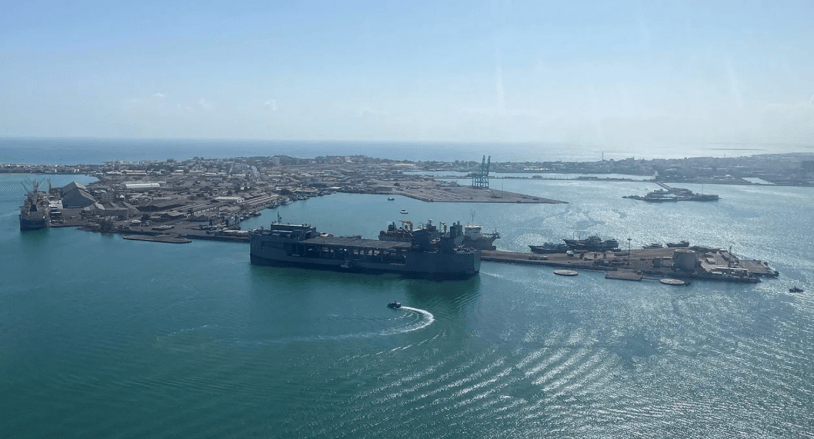
When Political Choices Turn Assets into Liabilities
By Dr. Tomas Solomon, USA
Nations frequently mistake location for strategy and symbolism for strength. History suggests otherwise. Without peace, trust, and economic cooperation, geographic advantages promise significant economic and strategic value but deliver little. Across the Horn of Africa, geography is often treated as destiny. Yet, ports, corridors, and chokepoints do not generate value in isolation. Only when political will, economic logic, and regional cooperation align can location become a lasting national advantage.
So, what economic and strategic value would Assab realistically provide to Eritrea if Ethiopia never uses it?
For years, conversations about Assab have begun and too often ended with a convenient but lazy and shallow claim: Assab is strategic because it lies near the Bab el-Mandeb Strait. Geographically, that is true. Economically, it explains almost nothing. Strategic location alone does not create prosperity, and repeating this line has allowed Eritreans to avoid a more difficult truth.
Yes, the Bab el-Mandeb is one of the world’s most important maritime corridors. Yes, a significant share of global trade and energy shipments passes through it. But proximity is not the same as participation. Ships do not stop at ports because they are “near” something important; they stop because those ports offer efficiency, scale, reliability, and access to markets. Without Ethiopia, Assab offers none of these at scale. Eritrea’s domestic market is small, and there is no commercial logic for major shipping lines to include Assab into their regular routes. Transshipment hubs are not created by slogans or declarations; they emerge from long-term trust, investment, predictability, and dense commercial activity. Currently, Assab resembles a bakery on a busy street that has severed ties with its suppliers: the location promises opportunity, but without inputs and partnerships, it produces nothing of value.
Some argue that Assab’s value lies in its military utility. That argument also deserves honesty. Major global powers already maintain extensive and permanent military facilities in Djibouti, a fact well documented by international security analysts on Djibouti’s role as the most militarized logistics hub in the Horn of Africa. Global powers do not need Assab. At most, the port could provide limited logistical access or contingency use. Even that would require Assab to compete with Berbera, Port Sudan, and other nearby ports. And military leases, where they exist, generate rent for governments, not development for societies. They do not build diversified economies, create broad employment, or sustain long-term growth.
After nearly three decades, the pattern is clear. Assab’s stagnation is not the result of bad luck or foreign conspiracy. It is structural. Historically, the port mattered because it served Ethiopian shipments. Once that relationship collapsed, Assab lost its natural economic function. What remained was symbolism, wrapped in rhetoric about sovereignty but little to show in terms of tangible economic outcomes.
This is where ultra-nationalist thinking does real damage. As Robert Keohane famously argued in his work on complex interdependence, political systems that treat cooperation as betrayal and interdependence as weakness undermine their own security and prosperity by rejecting the very mechanisms that produce stability and growth. In today’s world, prosperity grows from peace, partnership, and shared growth. Assab could benefit both Eritrea and Ethiopia if leaders and citizens were willing to move beyond zero-sum thinking and focus instead on trade, jobs, stability, and long-term regional development.
This leads to a second, equally important question that is often avoided.
What economic and strategic value would Assab realistically provide to Ethiopia if access were achieved through force rather than cooperation?
At first glance, the answer may appear obvious. Ethiopia seeks reliable access to the sea, and Assab lies geographically close. But economic value does not flow automatically from control. A port acquired through force would impose heavy political, financial, and security costs that would far outweigh its benefits.
A forced takeover would require sustained military presence, long-term security expenditures, and the constant risk of instability. It would invite regional backlash, international pressure, and reputational damage that could undermine Ethiopia’s standing as a regional economic leader. Rather than lowering costs, such a scenario would raise them, diverting resources away from development, infrastructure, and trade competitiveness. Russia’s occupation of territories in eastern and southern Ukraine since 2022 demonstrates this dynamic clearly. Despite territorial control, Moscow has faced continuous military resistance, massive financial and human costs, international sanctions, and the need for permanent security deployments, turning control itself into a long-term liability rather than a source of economic or strategic gain.
More critically, a port disconnected from cooperative political relations cannot function efficiently. Modern maritime trade depends on stability, predictable governance, insurance access, international compliance, and trusted logistics networks. None of these thrive under conflict or perpetual tension. Even if Ethiopia controlled Assab militarily, it would still lack the economic ecosystem required to turn the port into a competitive, high-volume gateway.
In practical terms, Assab would become a liability rather than an asset, delivering access on paper, but inefficiency and risk in reality. Control without cooperation would not solve Ethiopia’s structural trade challenges; it would simply relocate them under far worse conditions.
That raises the unavoidable question.
How can peace and partnership actually be secured?
The problem is not geography or history. It is political. The current regime in Eritrea has not only actively undermined the prospects for durable peace with Ethiopia; it has systematically drained the country’s human and economic potential through repression, repeated military conflicts, economic paralysis, and the constant manufacture of regional tensions, patterns documented for years by international organizations assessing Eritrea’s governance, human rights record, and economic performance. Unsurprisingly, this pattern has placed Eritrea’s long-term stability and its continued peaceful existence at serious risk.
Peace and partnership cannot be built on fear, secrecy, and permanent mobilization. They require a complete reversal of direction. The most viable path forward is political change: the removal of a failed regime and the adoption of policies that move Eritrea in the opposite direction of the last three decades. That means opening political space, normalizing relations with neighbors, demilitarizing the population, reviving the nation’s economy, and replacing political hostility with economic logic.
For Ethiopia in particular, a stable Eritrea as an ally would yield far greater economic, political, and security benefits than any land gain or confrontation over Assab. Through peaceful partnership with a future democratic Eritrea, Ethiopia could secure predictable and cost-effective access to maritime trade, significantly reduce the financial and human costs of recurring military tensions, and strengthen its regional standing as an economic powerhouse with growing influence. Over time, such cooperation would also provide strategic value through regional integration, advantages that no alternative approach could sustainably achieve.
When assessed objectively, both questions about the economic and strategic valuelead to the same conclusion. Assab holds little economic value for Eritrea if Ethiopia does not use it, and it would offer limited and costly returns to Ethiopia if taken by force. In either scenario, the port remains disconnected from the political trust, economic integration, and regional stability required to generate real value. Ports can only amplify existing economic relationships. Without peace and cooperation, Assab is reduced to symbolism, invoked in nationalist rhetoric but incapable of lifting either nation economically.
The real power of coexistence lies not in slogans or militarized nationalism, but in the simple, proven reality that neighbors who trade, cooperate, and grow together are more secure and more prosperous than those locked in permanent confrontation, a result consistently supported by research from the World Bank and the International Monetary Fund. Only peace, cooperation, and partnership can unlock Assab’s productive potential. A negotiated, mutually beneficial arrangement would allow a future democratic Eritrea to pursue economic revival while enabling Ethiopia to secure sustainable maritime access without the costs of conflict.
This conclusion may be uncomfortable, but it is the reality. Lasting advantage does not come from control; it comes from partnership. Without a peaceful and durable resolution between Eritrea and Ethiopia, Assab has no meaningful economic or strategic value, only the illusion of it. It has not had any meaningful economic or strategic value for the past 28 years, and it will not acquire one through rhetoric about chokepoints or sovereignty. Trade corridors, logistics networks, skilled labor, and shared infrastructure generate far more value than control or isolation ever could, and a port disconnected from economic vibrancy cannot add value.
Instead, peaceful coexistence between Eritrea and Ethiopia offers Assab its only credible path back to relevance while enabling both countries to realize their greatest potential as partners rather than rivals.
 Martin Plaut
This is a well-articulated strategy regarding Assab that could serve the interests of both Eritrea and Ethiopia. It would be beneficial for both countries to consider it as a key objective for future cooperation. That said, some caution is warranted, as past experiences suggest that certain political leaders have tended to rely on coercive or confrontational approaches rather than collaborative ones.
Well done, Dr. Tomas!
Simon Aman