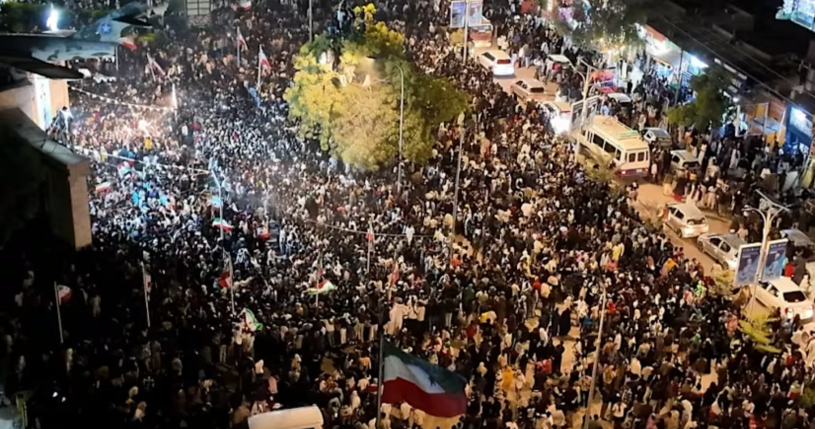
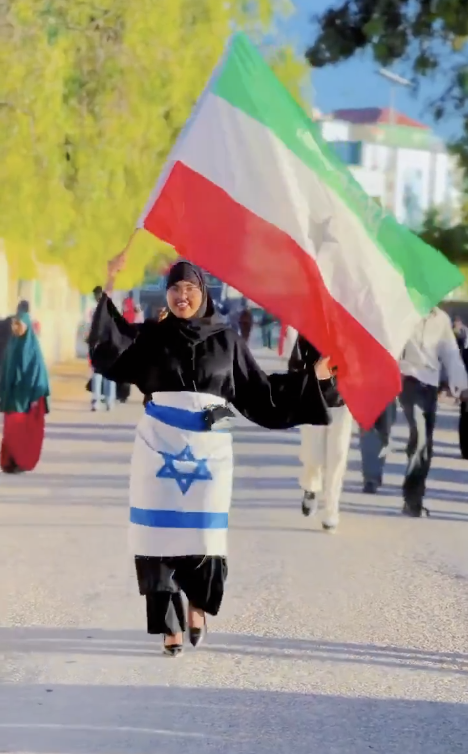
Israel’s recognition of Somaliland has been almost universally condemned – except in the one place that it really matters: Somaliland itself.
“I have not seen such an atmosphere in Hargeisa in decades. The city did not sleep. People stayed up the whole night. Fireworks, dance and songs of liberation. I stayed on the streets until fajr (morning) prayers,” a resident of Hargeisa is quoted as saying.
While Hargeisa celebrated, the mood in Mogadishu was exactly the opposite. Some of the largest demonstrations seen in the Somali capital protested against the Israeli decision.
This stand has been echoed by many, including the African Union, Eritrea, Saudi Arabia, Iran Jordan, Egypt, Algeria, the Comoros, Djibouti, Gambia, Iraq, Kuwait, Libya, the Maldives, Nigeria, Oman, Pakistan, the Palestinian Authority, Qatar, Somalia, Sudan, Turkey and Yemen.
So too have a range of Islamists, including the Houthis of Yemen and al-Shabaab, which operates in Somalia and is thought to have a presence in Somaliland.
One regional power is notably absent from this list: the United Arab Emirates. It is possibly the most significant, since the UAE not only runs the port of Berbera, but has had a military base in Somaliland since 2017.
The UN Security Council meeting
The UN Security Council is due to convene an emergency session on Monday (today) to discuss Israel’s recognition of Somaliland, with members likely to condemn Jerusalem’s move.
Apart from the response of most Arab nations, the European Union joined the chorus of condemnations of Israel’s decision.
“The European Union reaffirms the importance of respecting the unity, the sovereignty and the territorial integrity of the Federal Republic of Somalia pursuant of its constitution, the Charters of the African Union and the United Nations,” Brussels said in a statement.
“This is key for the peace and stability of the entire Horn of Africa region,” the statement continued. “The EU encourages meaningful dialogue between Somaliland and the Federal Government of Somalia to resolve long-standing differences.”
President Trump has indicated he is not yet prepared to recognise Somaliland. “Does anyone know what Somaliland is, really?”, he is quoted as asking at his West Palm Beach golf course.
Why optimism about Somaliland’s future?

There are many reasons for this, but the most significant is that it is what the people want. Their outpouring of joy at Israel’s recognition has been spectacular.
However, consider this:
- Somaliland has enjoyed independence before. It was granted its liberty by the United Kingdom as the State of Somaliland on 26 June 1960. Five days later, the State of Somaliland voluntarily united with Somalia. It was a brief period of independence, but what was voluntarily given can be voluntarily withdrawn.
- Somaliland has been a de-facto independent nation since 1991, when the fall of the Siad Barre government saw the disintegration of central authority in Mogadishu. The Somaliland Declaration of Independence took place on 18 May 1991.
- Since 1991 Somaliland has been a beacon of stability and development in a troubled region. A UK Government Minister said “in recent years, Somaliland has made great strides towards an inclusive democratic process, and that forms the bedrock of its stability.”
- This stability has allowed modest but consistent growth and rising living standards. GDP rose post-1991 to $1.4 billion by 2012 and ~$3.35 billion by 2021, implying ~3-4% average annual growth via livestock, trade and remittances.
- The people of Somaliland – like all Somali peoples – are both extraordinarily resilient and do not really rely on any state for their survival. They manage to thrive and have more regard for their camels and goats than international borders. It is their wellbeing that should come first.
A military solution
Of course it would be possible for Somalia to attack Somaliland, possibly supported by its allies. These include Egypt, which supplied equipment and arms after a deal in 2024.
Following the signing of a defence cooperation agreement in August 2024, Egypt has provided military support to Somalia, including heavy weaponry, on multiple occasions.
https://www.securitycouncilreport.org/monthly-forecast/2025-02/somalia-39.php
Would Egypt really support an invasion of Somaliland? It seems unlikely.
The other Somali ally is Turkey.
The largest Turkish military base outside Turkey, as well as the largest Turkish embassy, are both located in Somalia. Some 15,000 Somali soldiers have been trained by the Turks at that base since 2017, and Somali officers have undergone advanced training in Turkey.
https://www.haaretz.com/israel-news/2025-12-29/ty-article/.premium/by-recognizing-somaliland-israel-steps-into-a-labyrinth-of-regional-rivalries/0000019b-6730-d347-abbf-f7f2222a0000?utm_source=App_Share&utm_medium=iOS_Native
Interestingly, it has been reported that President Hassan Sheikh Mohamud will visit Turkey on Tuesday to meet with Turkish President Recep Tayyip Erdogan.
“Although Mohamud’s trip was scheduled before the latest tensions sparked by Israel’s move, Ankara insiders expect that Erdogan will address Israel’s unilateral action during the meeting.”
Ethiopia has previously suggested that it might recognise Somaliland in return for a base on the Red Sea. A memorandum of understanding to this effect was signed between Addis Ababa and Hargeisa.
This was later reneged on, following Turkish mediation. As the BBC reported:
“Ethiopia and Somalia have agreed to end their bitter dispute over Addis Ababa’s plans to build a port in the breakaway republic of Somaliland following talks in Turkey.”
However, the idea that Ethiopia would stand idly by if Somalia attacked Somaliland seems far-fetched. Nor would the UAE – which owns a military base – accept a military solution.
A better solution
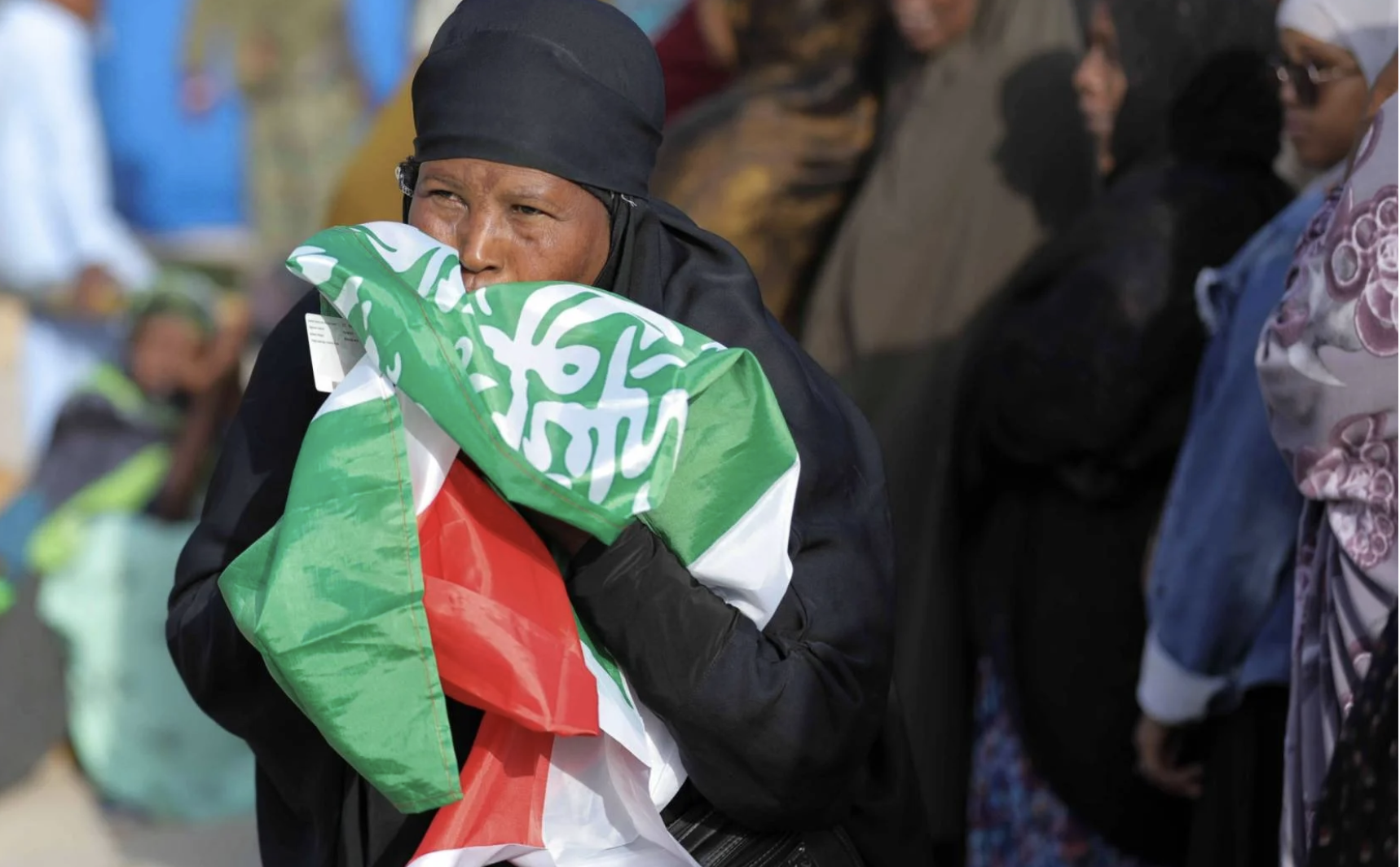
It would be far better if – once the dust and outrage has died down – for Somalia and Somaliland to find a way of living alongside each other.
Somaliland’s status as an independent nation should be put to the vote: preferably by an internationally witnessed referendum.
I personally witnessed just such referendums for South Sudan and Eritrea. In the wake of these both have joined the African Union and United Nations. Somaliland could follow a similar path.
Once it is accepted as a normal part of the international community, the people and government of Somaliland could – of course – negotiate any relationship with their neighbours.
A Somali federation might be a possibility, or a wider federation of the Horn of Africa. Difficult as these are to imagine now, in the heat of the moment, they are far from impossible.
 Martin Plaut
Interesting but I am quite certain that a referendum would end only one way – and that would cause significant repercussions. Puntland etc. would force for a referendum and would have a roadmap marked out by this. Ultimately, a referendum would plunge the entire region in to a collection of fractured states and international security would be drastically compromised. Bab Al Mandab is Israel’s only desire here, even if it causes far reaching consequences. UNSC need to strongly condemn this and Israel needs to be held to account and censured.