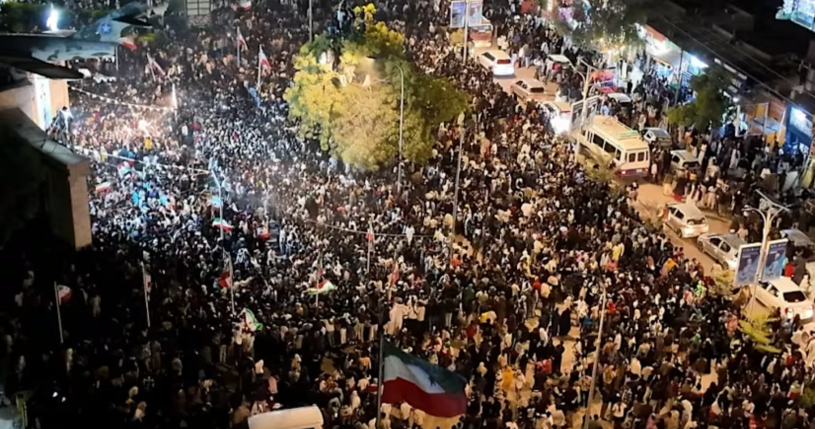
I am posting this because it contains interesting information and legal arguments about the history of Somaliland, not because I personally believe there is a link between the nation and NATO.
Martin
Dec 29, 2025, by Dillon Hosier
Source: Times of Israel blog
The non-recognition of Somaliland as an independent state poses a direct challenge to the consistency of international law and the security of the Western alliance.
Somaliland has functioned as a sovereign entity since 1991, fully satisfying the objective criteria for statehood under the 1933 Montevideo Convention. Yet it remains unrecognized by most states, notwithstanding Israel’s historic formal recognition on December 26, 2025.
This anomaly is not neutral—it validates the permanence of coerced or invalid unions, creating a precedent that undermines the legal basis of post-Cold War sovereignty restorations, including those of the Baltic states, and weakens NATO’s deterrence posture. Recognition of Somaliland is therefore a legal and strategic imperative.
I. Somaliland’s Legal Claim to Independence
Somaliland’s sovereignty rests on two interlocking foundations: declaratory statehood and the restoration of a previously recognized entity.
On June 26, 1960, the British Protectorate of Somaliland achieved independence as the State of Somaliland, receiving formal recognition from 35 nations, including the United States, United Kingdom, France, China, Egypt, Ethiopia, Ghana, Israel, Libya, and the Soviet Union. Five days later, it entered a proposed union with the former Italian Trust Territory to form the Somali Republic.
However, this union was never lawfully consummated: Somaliland’s legislature did not ratify the Act of Union, and two different versions were signed. Under Article 46 of the Vienna Convention on the Law of Treaties (1969), which reflects customary international law, a treaty is invalid if its conclusion manifestly violated a rule of fundamental internal importance. The absence of ratification and the 1961 referendum rejection by Somaliland voters meet this threshold. The union was therefore void ab initio. Prolonged administration cannot cure a foundational defect where consent was absent and subsequently repudiated.
In 1991, following the collapse of the Barre regime and the Isaaq genocide (50,000–200,000 deaths, 1987–1989), Somaliland restored its 1960 sovereignty. This is not secession but continuity—precisely the declaratory theory of statehood codified in the Montevideo Convention. Somaliland maintains a permanent population, defined territory, effective government, and capacity to enter international relations, satisfying all four Montevideo criteria as a matter of fact.
II. The Case Against Recognition—and Why It Fails
Opponents, led by the African Union, advance arguments that serve political convenience, not law:
- Secession Contagion: Somaliland is not seceding; it is restoring pre-union sovereignty. Uti possidetis juris preserves colonial borders at independence—Somaliland’s 1960 borders predate the union and were internationally accepted.
- Somali Territorial Integrity: Somalia’s claim rests on an unratified treaty. Functional reality—not nominal unity—must prevail, especially as Mogadishu has lost effective control over much of its territory to al-Shabaab.
- Regional Instability: 34 years of Somaliland stability contrast with Somalia’s collapse. Non-recognition rewards failure and invites chaos.
III. The Baltic Precedent: A Direct Legal Parallel
The Baltic states (Latvia, Lithuania, Estonia) offer the clearest analogy. Independent since 1918, they were forcibly annexed by the USSR in 1940 after sham elections. Western non-recognition preserved their sovereignty for 50 years; their 1991 restoration was continuity, not new statehood.
Somaliland’s unratified union parallels the Baltic sham votes. Denying Somaliland validates coerced unions, weakening the Baltic legal shield and inviting Russian revanchism. All three Baltic states are NATO members; undermining their continuity doctrine directly weakens the alliance’s collective defense rationale.
IV. Declaratory Law Applied Selectively
The Baltic states were preserved through strict adherence to the Declaratory Theory of statehood: sovereignty existed as a matter of fact, regardless of recognition. That same standard is denied to Somaliland, which satisfies every objective criterion of statehood. Instead, many of the same governments invoke a de facto Constitutive Theory elsewhere, attempting to assert Palestinian statehood through recognition alone despite the absence of defined territory, unified government, or effective control. This inversion—recognizing a non-state while denying an existing one—does not reflect legal principle. It reflects political ritual. International law is not sustained by diplomatic séances.
V. Bir Tawil and East Timor: Selective Doctrine Enforcement
Bir Tawil illustrates selective enforcement: the AU tolerates a 2,060 km² terra nullius vacuum to preserve colonial lines yet denies Somaliland’s functional borders. Conversely, East Timor proves the precedent: the UN never recognized Indonesia’s 1975 annexation, and a 1999 referendum restored sovereignty in 2002. Invalid incorporation does not extinguish sovereignty.
VI. The 1960 Recognitions: Sole Legal Successor Doctrine
Somaliland’s 35 recognitions in 1960 remain legally operative. Israel’s 2025 move affirms the continuing legal effect of those recognitions.
The Somali Republic that emerged from the failed 1960 union no longer functions as a sovereign state in any meaningful legal sense. By 2025, it had lost control over its territory, airspace, and monopoly on force, exemplified by the March 18, 2025 assassination attempt on senior leadership and sustained al-Shabaab territorial offensives. Where a recognized sovereign entity collapses, international law does not suspend sovereignty into abstraction; it follows the entity that actually exercises sovereign rights and duties. Somaliland alone fulfills that role. It administers territory, secures borders, controls airspace, enters binding agreements, and maintains internal order. As such, Somaliland is not a claimant to recognition; it is the sole surviving legal successor to the State of Somaliland recognized in June 1960.
VII. The NATO Security Imperative
Non-recognition poses a direct threat to the alliance:
- Eastern Flank: Validating coerced unions erodes Baltic sovereignty and NATO Article 5 credibility. The causal chain is direct: Precedent legitimacy → Russian legal narratives → Erosion of deterrence.
- Red Sea Security Arc: Somaliland anchors the western edge of the Bab el-Mandeb through the Port of Berbera, now integrated into regional logistics and security planning. In November 2025, Somaliland assumed full operational control of its airspace, closing a long-standing radar and monitoring gap over a critical maritime corridor. This transition—supported by Israeli surveillance and air-traffic technologies—eliminated a blind zone previously exploited by Iranian-aligned networks and illicit arms trafficking routes. Recognition aligns NATO with an existing security provider rather than imposing new stabilization burdens. It consolidates a functioning security node essential to NATO maritime operations, energy transit protection, and freedom of navigation.
Conclusion: Recognize Somaliland to Safeguard the West
Somaliland must be recognized to uphold law. Failure to do so signals to Russia that sham annexations “stick” and unratified unions are binding. NATO’s cohesion crumbles if norms erode—exposing the flank to aggression. Recognition imposes manageable diplomatic friction while preventing far greater strategic risk. Recognize Somaliland now: It’s legal, moral, and vital for NATO’s survival.
Bibliography
- The Times of Israel. “Israel becomes first country to recognize breakaway Somaliland as independent state.” December 26, 2025.
- The Jerusalem Strategic Tribune. “Israel Recognizes Somaliland; Will the US Be Next?” December 27, 2025.
- Welles Declaration. (1940) regarding the non-recognition of Baltic annexation.
- Vienna Convention on the Law of Treaties. (1969).
- Crawford, James. The Creation of States in International Law. Oxford University Press.
About the Author
Dillon Hosier is the Chief Advocacy Officer at the Israeli-American Civic Action Network, an organization dedicated to empowering Israelis and Americans through advocacy education and civic action to combat antisemitism, fight BDS, and strengthen the U.S.-Israel alliance. Previously, he served for a decade as the Political Officer at the Consulate General of Israel in Los Angeles.
 Martin Plaut
Much of this is made up.
Somaliland Protectrate gained independence on 26 June 1960 but no state on the world recognized it and they were not seeking for recognition. They were given independence to join their brothers in Italian Somaliland who were to gain independence on 1July 1960. The flag thst was raised at the Independence cermony was none other than the current Somali Government flag.
2. On a local level, the former British Somaliland is populated by 4 major Somali sub – clans. 4 of them are absolutely against secession while one is for.
3. The current on the ground reality of the former British Somaliland Protectrate is:-
45% controlled by Northeast State of Somalia, a unionist entity.
20% contested Awdal and Selel state; a unionist would be state.
35% Isaq sub clan controlled claiming to be Somaliland and aspiring to be recognized as an i dependent state.
Isreal and 35 other countries include USA, Egypt recognized Somaliland at 1960 before union