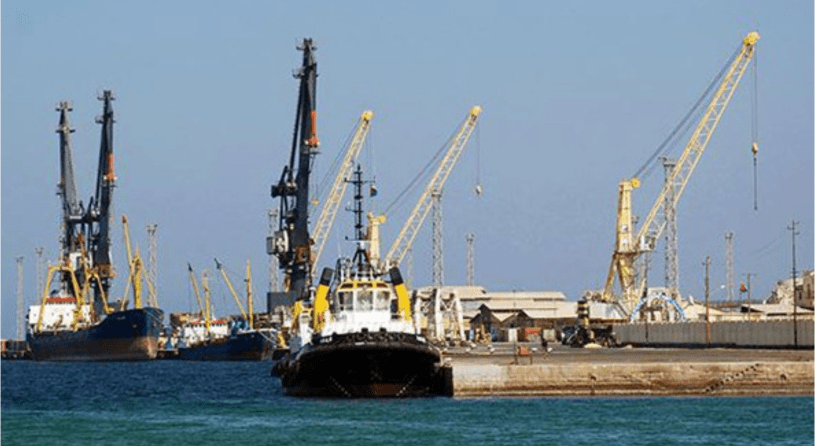
By H G Michael – An Eritrean American professional living in the USA.
In his article titled “Assab and the illusion of economic and strategic value: when political choices turn assets into liabilities” Dr Tomas seems to look at the Eritrean port of Assab through an Ethiopian lens at the exclusion of a broader economic vision for the region and beyond. Assab’s value should not be limited to serving Ethiopia’s economic and regional dominance ambitions.
A broader economic vision matter
The article correctly argues that geographic location alone does not create prosperity. Peace and cooperation are essential for sustainable development of a country and region at large. On these fundamentals, there is little disagreement. Where the analysis falls short, however, is in its extremely narrow definition of economic value, which reduces Assab almost entirely to a single function: serving Ethiopian cargo transit. That framing is incomplete and ultimately misleading.
Ports are not only gateways for landlocked neighbors. They are also anchors for tourism, fisheries, maritime services, logistics diversification, renewable energy, light manufacturing, coastal urban development etc. By ignoring Eritrea’s long Red Sea coastline and Assab’s unique ecological and geographic assets, the article substitutes one form of economic determinism for another.
The correct conclusion should be Assab’s coastal location has an independent economic value. Eritrea possesses more than 1,200 kilometers of Red Sea coastline: much of it pristine, undeveloped, and strategically positioned between Africa, the Middle East and Asia. Assab sits at the southern gateway of this coastline, adjacent not only to shipping lanes, but also to some of the most underutilized tourism and marine-development opportunities in the region.
Globally, coastal economies generate value far beyond cargo throughput. The Caribbean, the Red Sea resorts of Egypt, the Gulf states and parts of Southeast Asia demonstrate that tourism hubs, cruise ports, eco-resorts, diving destinations, fisheries, and maritime services can support millions of jobs and generate billions of dollars each year. To suggest that Assab has “little economic value” without Ethiopia’s use is to ignore decades of global development experience, to overlook recent interest on the Red Sea (the port of Assab in particular) and to omit its huge future potential. Until recently the UAE had a military and logistical hub in Assab, playing a significant role in regional and geopolitics and trade1
1 UAE and Port of Assab – Search . In October 2025, Eritrea and Egypt signed an accord for the latter to “upgrade the strategic Red Sea port of Assab in Eritrea and Doraleh in Djibouti, on the Gulf of Aden, to increase their capacity, and create berths for warships and the scope to post small but elite military contingents”2
2 Egypt increases pressure on Ethiopia through port deals with Eritrea and Djibouti | Eritrea Focus .
The major obstacle over the last 34 years for Eritrean ports in achieving their full potential has been and continues to be the Asmara regime, which seems to have no economic vision for the country by pure and sole focused on its survival. This status quo is being gradually eroded. With a democratic Government in Eritrea, a basic infrastructure, policy reform, and inward investment, Assab’s potential is huge; including but not limited to:
- Red Sea tourism and vacation destinations.
- Cruise ship and leisure marine services.
- Fisheries processing and export hubs include extractive outputs such as gold, copper, zinc and potash.
- Hospitality, construction, and service-sector employment.
- Regional labor opportunities for Eritreans, Ethiopians and other Africans.
- Logistic hubs for Ethiopia and other countries in east African extending to the Great Lake countries of Rwanda, DRC etc.
- Provide military base leases to countries such as Saudi Araba and others beyond in line with nations in the region.
Ironically, the article criticizes militarized nationalism while overlooking civilian, market-driven development model that reduces conflict incentives by creating shared prosperity.
The “Either Ethiopia or Nothing” argument is a fallacy
The article presents a binary myth: either Assab serves Ethiopia or it remains economically irrelevant. This logic unintentionally mirrors the same deterministic thinking it criticizes.
Yes, Assab historically served Ethiopian trade and provided as one of its naval bases – the second one been the Eritrean port of Massawa. That does not mean its future must be chained exclusively to serving Ethiopia. Economic diversification is precisely how resilience is built. Ports evolve. Economies that depend on a single client or corridor are fragile and prone to eventual demise.
A reimagined Assab could complement Ethiopian access while also standing on multiple independent economic pillars. Peaceful cooperation with Ethiopia would accelerate growth but it is not the sole conceivable source of value.
Peace is essential but vision matters too
The article is right on one central point: peace, trust, and cooperation are indispensable. No serious development, tourism included, can thrive under repression, secrecy, or perpetual mobilization. Political reform in Eritrea is necessary, and regional cooperation is beneficial. However, peace alone is not a development strategy. A peaceful country with no economic vision remains poor. Eritrea’s future prosperity will depend not only on reconciliation with neighbors, but also on how imaginatively it leverages its natural assets, especially its coastline.
Conclusion
Assab’s relevance should not be measured solely by whether Ethiopia uses it as a cargo outlet or not. That lens is too narrow for the 21st century. Ports today are platforms for tourism, services, innovation, and regional integration, not just containers corridors. Peaceful coexistence between Eritrea and Ethiopia would indeed unlock enormous mutual benefits. However, Assab’s potential does not begin nor end there. A long-neglected Red Sea coastline, if responsibly developed, could become a regional tourism and employment hub, benefiting Eritreans first and extending opportunities to Ethiopians and others through labor mobility and shared growth.
The real illusion is not believing in Assab’s broader potential, it is believing that a country with vast coastal assets has no economic future unless it serves someone else’s trade.
 Martin Plaut