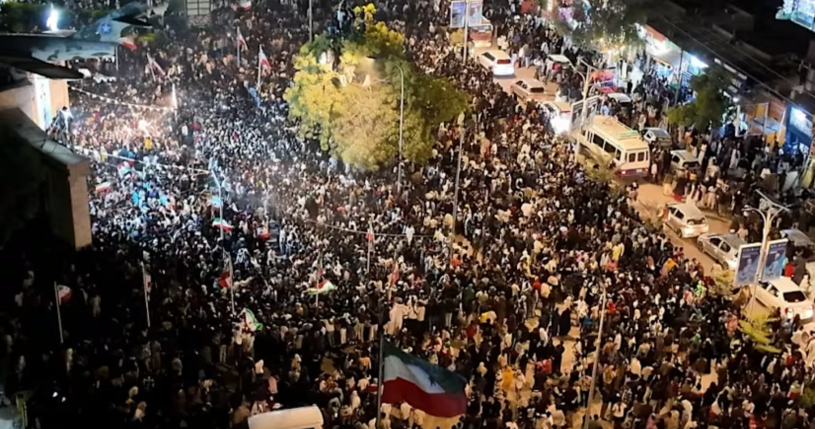
The Somaliland episode lays bare a deeper 21st-century crisis of sovereignty. Borders today are contested not merely by military force but through subtler instruments of power — economic coercion, infrastructural entanglement, and digital subversion. For the Indian Subcontinent — rattled by turmoil in Afghanistan and Pakistan, and instability in Bangladesh and Burma — the post-RBIO landscape poses a great danger.
Governments will continue to invoke the language of norms but employ it selectively and inconsistently. India is no exception
January 2, 2026 09:15 AM IST
Israel’s recognition of Somaliland as an independent state last week marks the definitive breakdown of what was once called the “rules-based international order” (RBIO). The move comes as Ukraine faces pressure to trade territory for peace, China threatens to take over Taiwan with force, and Washington’s own National Security Strategy 2025 dismisses the RBIO as a liberal illusion. As 2026 unfolds, it is clear that the post-Cold War normative framework has lost much of its restraining power.
For India — and the wider Subcontinent — the unravelling of the RBIO offers two sobering lessons. First, global norms alone do not guarantee a state’s territorial integrity. Second, territorial sovereignty is not a privilege conferred by the international community but a political treasure that must be constantly nurtured and secured against internal divisions and external threats.
Although condemnation of Israel’s decision has been widespread, few expect a reversal. Israel’s recognition of Somaliland rests on pragmatic calculus. Somaliland occupies prime geopolitical ground at the mouth of the Red Sea, a chokepoint connecting the Mediterranean to the Indian Ocean through the Suez Canal. For Israel, partnership with Somaliland promises maritime access, strategic depth, and a larger regional role.
Tel Aviv has calculated that these benefits are worth the political and diplomatic costs.
Israel’s calculus also punctures a core assumption of the post-Cold War order — when a state’s sovereignty is violated, the international community will rally to its defence. By that logic, Somalia’s territorial integrity should have enjoyed universal support.
In reality, reactions have been fragmented. Many Arab states have denounced Israel’s move, but the United Arab Emirates — with its heavy investments in the strategic Berbera port in Somaliland — remains ambivalent. So are Bahrain and Morocco, which have signed the Abraham Accords with Israel. Several African governments criticised the violation of Somali sovereignty, but landlocked Ethiopia, seeking maritime access in Somaliland, has been silent. Ethiopian leaders in the past have said, “Addis Ababa will not be the first to recognise Somaliland, but it will not be third either.”
For over three decades, Somaliland functioned as a de facto state. But its non-recognition symbolised the RBIO compromise between political reality and legal principle. By overturning this balance, Israel has acknowledged what many powers already practice: When material interests collide with political norms, the latter are readily sacrificed. The erosion of the RBIO did not begin with Somaliland, nor will it end there.
The very concept of a “rules-based international order” was popularised by Japan as part of its diplomatic campaign to build normative pressure against China’s expansionism in the Indo-Pacific over the last decade and more. That did not stop China’s territorial gains in the South China Sea. Clearly, rules without enforcement mean little.
In Europe, Ukraine now faces pressure from its own allies to contemplate territorial concessions to end the war with Russia. What began as Europe’s moral crusade for Ukraine’s sovereignty is ending in a negotiation over borders redrawn by force. Norms matter, but only until power trumps them.
Governments will continue to invoke the language of norms but employ it selectively and inconsistently. India is no exception. New Delhi is a staunch advocate of territorial sovereignty in Asia but is reluctant to criticise Russia’s annexation of Crimea in 2014 or its invasion of eastern Ukraine in 2022. India is unlikely to oppose Israel’s move on Somaliland, given its close partnerships with Israel and Ethiopia. At the same time, India does not want to alienate the African Union or its Middle Eastern partners, who oppose Israel’s decision.
Delhi’s response to the developments in the Horn of Africa will be more of a diplomatic balancing act rather than seizing the moral high ground. India’s stakes in the Red Sea and the Horn of Africa are tangible. Historically linked to British India through trade, finance, and defence networks, Somaliland lies firmly within India’s Indian Ocean sphere. Developments there directly affect India’s energy routes, maritime trade, and naval calculus.
Declarations about the inviolability of borders ring hollow when aggression goes unpunished or is tacitly accepted. With major powers embracing territorial revisionism — China in Asia, Russia in Europe, and the US in the Western Hemisphere — it is naïve for lesser states to depend on the presumed protective shield of the RBIO.
Nor can they rely on the solidarity of the so-called Global South. ASEAN has been ineffective in defending the Philippines against China’s incremental encroachments in the South China Sea. The Arab League and the Organisation of Islamic Cooperation have proved impotent in Gaza and will fare no better in Somaliland. Even BRICS, which aspires to remake global governance, remains divided. Egypt and Ethiopia, members of BRICS, are at odds on the Somaliland issue. So are Iran and the UAE.
The Somaliland episode lays bare a deeper 21st-century crisis of sovereignty. Borders today are contested not merely by military force but through subtler instruments of power — economic coercion, infrastructural entanglement, and digital subversion. For the Indian Subcontinent — rattled by turmoil in Afghanistan and Pakistan, and instability in Bangladesh and Burma — the post-RBIO landscape poses a great danger.
In this changing international environment, three priorities present themselves to Delhi. The first is to strengthen internal political coherence. Societies fractured along sectarian, ethnic, or regional lines are more exposed to external manipulation and internal breakdown. The second is credible deterrence: Norms cannot safeguard sovereignty unless backed by military capacity and the political will to impose costs on violators.
The third is India’s regional leadership. If India can’t promote South Asian peace and stability, the US and China will leverage the current conflicts in the Subcontinent to their own advantage. It is no surprise, then, that both Washington and Beijing claim a peace-making role between India and Pakistan.
The writer is contributing editor on international affairs for The Indian Express.
 Martin Plaut