With Israel and the UAE apparently working in tandem, it may just be a matter of time before the next domino falls– even if the Emirates so far are holding their cards close. For the region, the whole political centre of gravity has been wrenched from Addis and Nairobi to the Gulf and now the Levant.
Source: Sahan: The Somali Wire, Issue 908 | January 5, 2026
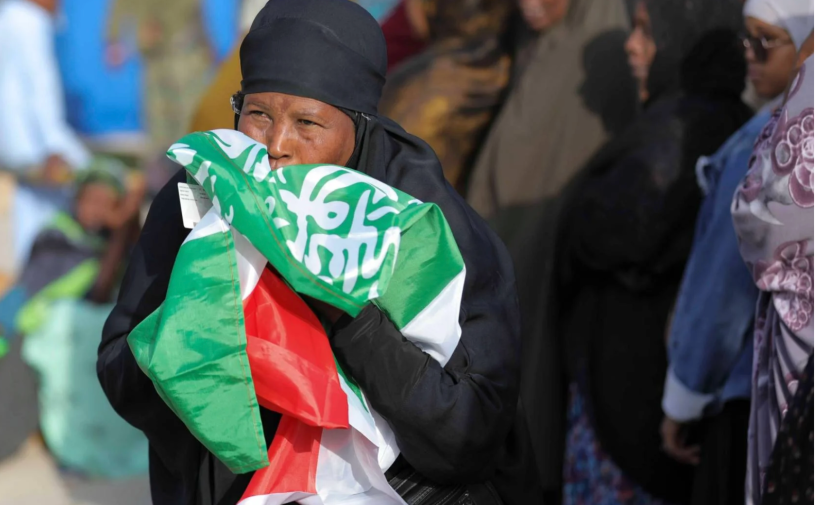
“Alea iacta est — The die is cast.” So spoke Emperor Julius Caesar, before leading his army across the Rubicon to seize power over ancient Rome. Israeli PM Binyamin Netanyahu might have uttered the same words on 26 December 2025, as Israel declared its bombshell recognition of Somaliland, sending a shockwave throughout the region. Framed by Netanyahu as part of the Abraham Accords, Israel’s monumental announcement marks the first sovereign state to recognise Somaliland since it declared independence from Somalia in 1991. For a democratic polity that has long battled for a modicum of credit on the global stage, it was little wonder that rapturous celebrations erupted in Hargeisa. But with immediate geopolitical headwinds– not least motivated by Israel’s pariah status for egregious violations of international law in Gaza– much of the nature of recognition and what comes next has been overshadowed. The work begins now for Somaliland’s broader recognition.
The announcement on 26 December followed months of secret negotiations between Hargeisa and Tel Aviv. There is little suggestion that Tel Aviv’s recognition is motivated by anything more than realpolitik, with Israel—working hand in glove with the Emirates—representing one of the geostrategic ‘blocs’ that has formed across both sides of the Red Sea. Israeli recognition of Somaliland now represents a definitive move by the government to shape the region’s politics. Forget any painstaking domestic progress in Hargeisa since the early 1990s, its democratic alternation, or its constitutionalism; this reflects the broader tussle for control of the littoral administrations, with the Israelis looking to secure their own perceived interests against Ankara and Tehran in particular. And the revival of the Abraham Accords represents an attempt to nominally restore Israel’s waning standing amongst the Arab and Muslim communities in the face of widespread condemnation of its war in Gaza.
Though rumours and accusations of ethnically cleansed Palestinians being forcibly resettled in Somaliland have been pushed by Mogadishu, that has never been on the cards– and nor is it likely to be, with Hargeisa well aware of the political risks. Nor for the time being at least, does it appear that Tel Aviv is positioning itself for a military base on the Gulf of Aden. More probable is a degree of intelligence cooperation and a listening post – possibly adjacent to the Emirati-run Port of Berbera. On paper, the Israel-Somaliland joint declaration outlined a pledge to establish full diplomatic relations and cooperation in technology, agriculture, health and security. The next step is expected to be a state visit by Somaliland President Abdirahman Irro to Israel and a public endorsement of the Abraham Accords.
The Mogadishu government — which has repeatedly made the prospect of reunification with Somaliland ever more unlikely through its sabre-rattling and destabilising juridical machinations — has reacted forcefully, insisting that Somaliland remains part of Somalia and that nothing has changed. Much like its reaction to the Ethiopia-Somaliland Memorandum of Understanding in 2024, it has rallied its assorted African and Middle Eastern allies to the fore and is hoping to wield its position on the UN Security Council to condemn Israel’s intervention. Certainly, Israel’s diminished global position has complicated the response to recognition, mobilising a diverse Arab-African bloc that encompasses Türkiye, Egypt, Saudi Arabia, Djibouti, Eritrea, Qatar and others against it. Allied with the hyper-nationalist Mogadishu administration, they have publicly opposed Somaliland’s recognition, warning that it could further destabilise the Horn of Africa and set a dangerous precedent for the rest of the African continent. As such, the Arab League and the Organisation of Islamic Cooperation have both offered their full-throated support for Mogadishu. And so far, unwilling to rock the boat, most other nations have adhered to the conservative political and normative consensus in favour of Somalia’s “territorial integrity, unity, and sovereignty,” with the European Union and Western nations broadly rejecting Israel’s move.
Led by the former Djiboutian foreign minister, the leadership of the African Union, too, has fallen in line with Mogadishu, with Mahamoud Ali Youssouf issuing a statement opposing Somaliland recognition and urging respect for borders inherited at independence. That, of course, is Somaliland’s precise argument, that the 1960 union between the north and south was a decision made by two independent states with recognised international boundaries, and that the declaration in 1991 was a reclaiming of Somaliland’s prior sovereign status. Youssouf’s statement further flies in the face of the African Union’s own recommendations drawn from a 2005 fact-finding mission, which referred to Somaliland’s case as “historically unique and self-justified” in African political history, and that the polity meets many of the criteria of a modern state. In the coming days, the convening of the African Union’s emergency Peace and Security Council meeting called by Egypt may prove key to whether any African state follows Israel. Now a close ally of Mogadishu, Cairo is expected to lobby for a binding resolution prohibiting member states from recognising Somaliland.
On the other hand, the UN Security Council emergency meeting last week, convened by Somalia—now briefly serving as its president as a non-permanent member—has been considered a ‘win’ in both Hargeisa and Mogadishu. For Somaliland, it is the first time that the polity’s status has been discussed on such a high-profile stage, with the ice on its unsettled status thawing, as well as no joint statement being issued. And for Somalia, 13 of the 15 members of the Security Council reaffirmed their support for its position. Certainly, although dozens of boilerplate statements in support of Somalia’s sovereignty have been issued, this may compel the international community to finally consider the merits and legality of Somaliland’s recognition and status. And ultimately, African Union member state decisions will be based on their own internal decisions.
The region and beyond are now in a frantic state of limbo, with Somaliland and Somalia in overdrive to garner support for their causes. Nairobi and Addis —two long-standing partners of Hargeisa —are playing catch-up, hedging their bets on the Somaliland issue in the face of pressure from Somalia. And since the Abraham Accords are central to Israel’s initiative, it may well be that the United States endorses recognition at a later point. Historic friends and sympathetic nations to Somaliland, including those in South Sudan, Ghana, and Rwanda, may also eventually come behind recognition, but there may be some level of political risk in being the ‘second’ nation after Israel, which could invite condemnation and pressure from a range of actors.
With Israel and the UAE apparently working in tandem, it may just be a matter of time before the next domino falls– even if the Emirates so far are holding their cards close. For the region, the whole political centre of gravity has been wrenched from Addis and Nairobi to the Gulf and now the Levant. But the unthinkable has finally happened: a political Rubicon has been crossed and Somaliland has been recognised. What comes next remains all to play for.
The Somali Wire Team
 Martin Plaut