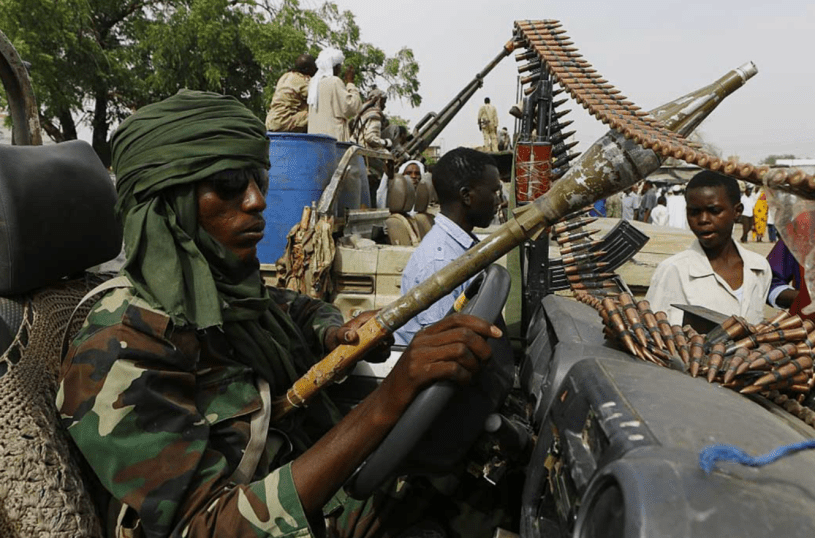
Tomorrow (9 January 2026) marks a thousand days since the war between the Sudan Armed Forces and the Rapid Support Forces began. It has been nothing less than a catastrophe – far worse than the much publicised Gaza war.
- Perhaps 150,000 have been killed.
- Nearly 25 million hit by severe hunger and famine.
- Some 8,856,313 internally displaced and over 3,500,000 refugees who have fled across Sudan’s borders.
First an article by Alex de Waal on the international consequences of the war. Then a summary by Al Jazeera.
Martin
Source: Foreign Affairs
The War That Outgrew Sudan
Middle East Rivalries Are Turning a Local War Into a Regional Crisis
Alex de Waal
January 8, 2026
ALEX de WAAL is Executive Director of the World Peace Foundation and a co-author of Sudan’s Unfinished Democracy: The Promise and Betrayal of a People’s Revolution.
Last summer, after more than two years of terrible fighting, it looked as though the United States might finally have landed on a viable approach for ending the civil war in Sudan. Since the conflict began in April 2023, Sudan’s state has collapsed, and its people have suffered the world’s largest humanitarian crisis. The battle lines have moved back and forth across the country, devastating the capital, Khartoum, and a score of other cities. Today, Khartoum and places east of the river Nile are dominated by the Sudanese Armed Forces, led by General Abdel Fattah al-Burhan, while the western half of the country is largely controlled by the SAF’s enemy, the paramilitary Rapid Support Forces, led by General Mohamed Hamdan Dagalo, known as Hemedti.
In June, the Trump administration convened the “Quad”— Egypt, Saudi Arabia, the United Arab Emirates (UAE), and the United States—to discuss a pathway to peace. These countries are more than mediators: throughout the war, Egypt and Saudi Arabia have supported the SAF, while the Emiratis have backed the RSF, although they deny it. Since these regional powers have had an outsize role in the conflict, it was hoped that a strong Quad agreement could produce a lasting cease-fire.
Yet expectations that U.S. President Donald Trump might inject vigor into the Sudanese peace process have until now been unrealized. In September, the Quad announced a plan that involved a cease-fire, access for humanitarian aid, and political negotiations toward a civilian-led government.
But a month later, as talks on implementing the plan stalled, the RSF carried out the worst atrocity of the entire war. After a brutal starvation siege that had lasted 18 months, RSF forces overran the city of El Fasher in the Darfur region. As they took the city, RSF fighters massacred at least 7,000 people, many of them civilians. As many as 100,000 people have yet to be accounted for, although some have trickled into towns and villages hundreds of miles away, their faces hollow as they struggle to find words to recount the horrors. Not only did the RSF fighters kill with impunity; they also circulated “trophy” videos of themselves torturing and murdering their victims with glee and denigrating them with dehumanizing epithets.
Despite international outrage, the fighting has not abated in the three months since. Currently, RSF forces are encircling the city of El Obeid in North Kordofan and have struck civilian targets, including a kindergarten. Meanwhile, both sides are continuing to receive weapons from their external backers. Since October, observers have noted an increase in military cargo flights to RSF-controlled airports, and the RSF has been deploying sophisticated Chinese-made drones, as well as Colombian mercenaries. Investigators have tracked the flights to the UAE.
With the new supplies, RSF forces may even threaten Khartoum, which they mostly controlled earlier in the war before the SAF pushed them out. At the same time, Egypt and Turkey have been funneling more arms to the SAF.
The longer the fighting continues, the greater the risk that it becomes a regional conflagration. The war is already entangling Sudan’s African neighbors. The RSF’s supply lines run through Chad, Libya, Somalia, and South Sudan—and may yet involve Ethiopia and Kenya. Its constituency of recruits among rural populations, especially historically nomadic communities, stretches westward across Sahelian Africa. Since the fall of El Fasher, there have been reports of cattle-herding Arab groups crossing the borders from the Central African Republic and Chad, aiming to seize the newly vacated lands. And the Sudanese war is also intermeshed with the volatile situation between Eritrea and Ethiopia, which threatens to devolve into a major war of its own.
By convening the Quad, Washington has correctly recognized that the road to ending Sudan’s war runs through the Gulf. But what few have fully grasped is that the conflict itself is international in ways that are new and different from previous Sudanese conflicts. Today, the territorial nation-state in Sudan—and in many parts of Africa and the Middle East—is rapidly being eclipsed by borderless fiefdoms run by warlords who answer to foreign patrons with deep pockets. And that has made this war, despite its deep unpopularity among the Sudanese themselves and the misery and hardship it has brought to tens of millions of people, much harder to contain. Without more decisive engagement from the highest levels of the Trump administration, there is now a serious risk that Sudan’s war tips the Horn of Africa, the Nile Valley, and the Sahara-Sahel region into a vast arena of anarchy.
MASSACRE OF A STATE
Resolving the war in Sudan would be difficult even under conducive circumstances. The El Fasher massacre in October captivated world attention for its exceptional brutality, but it was only the most conspicuous in a pattern of atrocities that has scarred the entire country since the fighting erupted. What happened in El Fasher echoed the killings in West Darfur that marked the early months of the war—killings that the U.S. State Department labeled a genocide. The takeover of the Darfuri city was also a concentrated version of unspeakable depravities inflicted on the national capital in the first months of the war, when RSF fighters ransacked, murdered, and raped their way through every neighborhood.
Together with his allies, Hemedti, the RSF leader, claims that his project is dismantling the “1956 state”—a reference to the Sudan that emerged after achieving independence on January 1 of that year from British colonial rule. According to the RSF narrative, the Sudanese state was captured by a clique of soldiers, businesspeople, and—from the 1980s onward—Islamists, who ran the government as an elite club that exploited the provinces to enrich themselves. This reached its zenith, the argument goes, with Omar al-Bashir’s 30-year rule (1989–2019), and Burhan’s SAF is merely a continuation of this “deep state.” It’s a message that has resonated among the poor and excluded in rural areas, especially Darfur, even though the RSF’s solution is not reforming the state but ransacking it and robbing the citizenry.
After two years of extreme violence, including plunder, rape, and massacre in rural and urban areas alike, the Sudanese people are polarized as never before. The level of venom expressed in rival social media postings and often in personal confrontations between supporters of one side and the other reveals extraordinary bitterness, fear, and hatred, even for a country that has experienced decades of war.
Most Sudanese support the goals of the 2019 revolution, when people across the country came out into the streets in nonviolent protests demanding an end to military rule, corruption, and endless wars. A broad-based coalition of civic groups and political parties hoped they could build a genuine democracy, with accountable institutions and a flourishing economy. But their hopes were dashed when Burhan and Hemedti conspired to remove the civilian leadership and then turned dreams for democracy to ashes when the two generals eventually turned on each other.
Since the war began, half a dozen peace plans have sketched out the ultimate goal of restoring civilian rule, but they all also recognize that the democrats are far weaker than the generals. Indeed, a formal peace process hasn’t even begun. A few weeks after the war erupted, Saudi Arabia and the United States invited delegates from the warring parties to Jeddah to try to reach a cease-fire. The two sides signed a Declaration of Commitment to respect civilians and facilitate humanitarian aid, a promise that was honored only in the breach. Since then, mediation efforts have been deadlocked, and each side can count on a foreign backer to provide it with weapons for its next offensive. Even while the country descends into famine, the SAF and the RSF have what they need to fight on.
THE EMIRATI ENIGMA
As the war drags on, the role of the UAE has become particularly fraught. While Egypt, Qatar, Saudi Arabia, and Turkey back the SAF, there is now plentiful evidence that the Emiratis are providing arms to the RSF for its ongoing campaigns. Because Abu Dhabi denies involvement, it has been impossible for mediators to engage Emirati officials in any discussion about the UAE’s interests, strategy, and potential compromises.
Analysts and diplomats can only speculate about why the UAE is backing such a murderous force. Most infer that Emirati President Mohamed bin Zayed al-Nahyan (known as MBZ) has a protector-protégé relationship with Hemedti that was cemented ten years ago when the RSF provided troops to Yemen to fight the Houthi rebels. In 2015, when the Houthis mounted a lightning attack that captured Sanaa, Yemen’s capital, Saudi Crown Prince Mohammed bin Salman (known as MBS) led a coalition that promised to reverse the Houthi gains and restore the internationally recognized government. The UAE joined, deploying its army and air force. But as the war dragged on without the promised victory, the Emirati-Saudi alliance cracked. Saudi Arabia was ready to make a truce with the Houthis. The Emiratis showed a greater interest in securing key ports and naval facilities in Yemen and to that end backed the separatist Southern Transitional Council. Just last month, the Southern Transitional Council went on the offensive against its ostensible allies in Yemen’s internationally recognized government, threatening a new, destabilizing round of conflict and intensifying the rift between Abu Dhabi and Riyadh.
The Emiratis also have a different approach toward Sudan’s Muslim Brotherhood, which supports the SAF, than Saudi Arabia does. Although Saudi Arabia follows Egypt in its confidence that Burhan can keep the Islamists in check, the UAE won’t tolerate them anywhere near power. There are also business connections between the UAE and the RSF—Hemedti’s family company exports Sudanese gold to Dubai—but commercial interests alone cannot explain the UAE alignment.
The road to ending Sudan’s war runs through the Gulf.
The key factor in the regional dimension of the Sudanese conflict is the fierce rivalry between the UAE and Saudi Arabia and between MBZ and MBS over who will be the dominant power broker across the Arabian Peninsula and Red Sea. As in Yemen, this competition is now playing out in Libya, Sudan, Syria, and the Horn of Africa, and the previously brotherly kingdoms of the UAE and Saudi Arabia are currently on opposite sides in a host of conflicts.
When the war between Burhan and Hemedti broke out in 2023, it was clear to every analyst of Sudan that the UAE needed to be included in the peace process. It was understood that any road map for ending the war would require high-level American outreach to Abu Dhabi—the secretary of state backed by the president. Yet throughout 2023 and 2024, while Sudan burned, the Biden administration failed to act at the highest level.
After the Trump administration came to office in early 2025, U.S. Secretary of State Marco Rubio acted where his predecessor had not. At Rubio’s invitation, the Quad met in June and issued a statement in September. A month later, the Quad was supposed to meet again to announce a plan for a cease-fire. But Burhan signaled to his Egyptian sponsor that he was not ready for that step. Most likely, he worried that groups in his fractious coalition wouldn’t agree. The RSF took his stalling as a green light to attack El Fasher, which it did the very next day. Hemedti likely thought he could blame SAF intransigence and didn’t expect that his fighters’ brutality—broadcast to the world through their own shocking videos of torture and execution—would instead bring the war’s horrors to the world’s attention.
At that moment, a strong private word from Trump to MBZ might have enabled the UAE to make a face-saving compromise, and Trump might have been able to announce a deal backed by both Gulf states. Instead, after meeting with MBS, Trump spoke publicly. “His Majesty would like me to do something very powerful having to do with Sudan,” he announced, adding later, “It’s horrible what’s happening.” At this point, any move by the Emiratis to agree to a joint plan would have been seen as backing down. Instead of reinforcing the Quad plan, Trump jeopardized it.
WAR WITHOUT BOUNDARIES
As Sudan’s regional backers dig in, the war poses a growing threat to the entire Horn of Africa. Consider the explosive situation in Ethiopia and Eritrea, where the same regional sponsors of Sudan’s war are once again backing different sides. The countries’ leaders, Ethiopia’s Abiy Ahmed and Eritrea’s Isaias Afwerki, were previously allies in Ethiopia’s 2020–22 civil war against the Tigrayan People’s Liberation Front. But they are now destabilizing each other and may yet go to war. Egypt is deeply worried by Ethiopia’s dam building on the Nile and is supporting Eritrea, which is therefore aligned with Sudan’s SAF.
Ethiopia, meanwhile, has thus far managed to stay out of direct involvement in Sudan’s war, but there are several potential flash points. One is its unresolved dispute with Sudan over the al-Fashaga triangle, a territory on the Ethiopian-Sudanese border claimed by both countries. Another stems from the fact that a division of Tigrayan troops have been fighting alongside the SAF. These highly capable fighters were originally United Nations peacekeepers serving on the boundary between Sudan and South Sudan, but they refused to go home during the war between the Ethiopian government and the Tigrayan People’s Liberation Front and have since played a crucial role in defending eastern Sudan against the RSF. They are still deployed near the frontline. If war breaks out between Ethiopia and Eritrea, it is unclear what these forces will do. But if Abu Dhabi decided to double down and use its leverage over Abiy to help the RSF directly—perhaps by pressing the Ethiopian leader to open a base for the RSF inside Ethiopia—this could spark a confrontation.
South Sudan is embroiled in its own political crisis and has tried to balance between the RSF and the SAF. So far it is walking the tightrope. Burhan invited South Sudan’s army north of the border to help secure Sudan’s largest oil field at Heglig, and when the SAF was forced to withdraw in early December under RSF attacks, the South Sudanese decided to cooperate with the incoming RSF. Egypt and its partners understand the predicament of South Sudanese President Salva Kiir, but if he swings behind the RSF, they could yet move to support any one of that country’s many potential rebels.
The war poses a growing threat to the entire Horn of Africa
Cairo, meanwhile, is already squeezed between crises in Gaza and Libya and facing an increasingly stagnant economy; a destabilizing spillover from Sudan would add to its troubles. Egypt is also trying to balance its reliance on the UAE for investment with its long-standing support for the SAF and its antagonism toward Ethiopia, especially over the latter’s dam on the Nile. Although Egypt finds itself aligned with Turkey in supporting Burhan in Sudan, it is also wary of Turkish backing for Sudan’s Islamists.
And then there’s Sudan’s Red Sea coast, an increasingly strategic shoreline. The Red Sea is a crucial artery for world shipping and increasingly a geostrategic hot spot. Twenty years ago, the only outside powers with a military presence in the Red Sea and the Gulf of Aden were France and the United States, which have adjacent bases in Djibouti. Maritime security was taken for granted. Since then, there’s been a scramble for military bases: China has opened its first overseas naval facility in Djibouti, at the southern entrance to the Red Sea; the UAE has a string of ports on the strategically located island of Socotra; and Turkey has signed a 99-year lease to develop the Sudanese port of Suakin, possibly with an eye toward building a naval facility. For Israel, the Red Sea is a national security priority: in the early 2000s, Iran smuggled weapons to Hamas through Sudanese territory, and two years ago, when the Houthis started attacking international shipping, they claimed solidarity with the Palestinians.
The stakes in the wider Horn of Africa were raised at the end of December, when Israel recognized Somaliland as an independent country from Somalia. This intensifies the rivalry between the UAE on one side—which brokered the Israeli-Somaliland deal and supports it—and Egypt, Saudi Arabia, and Turkey on the other, which oppose it. None of these regional players wants to see a rival, let alone a potential enemy, controlling real estate that could choke this strategic waterway.
A GLOBAL TEST
As the war reaches its one thousandth day on January 9, tens of thousands of Sudanese have died from violence and many more from hunger and disease. Half of the country’s 46 million people need emergency food aid, and a quarter have lost their homes. Entire cities have been destroyed, and the national economy has been set back a generation. All of this devastation is collateral damage from rivalries among Middle Eastern power brokers. In this game for control, Africa is notably absent: Egypt and Ethiopia are merely maneuvering at the margins. It is Saudi Arabia and the UAE that matter. At this point, the likely outcome of any peace process is that Sudan—whether united or divided—will end up as a vassal of the Gulf states.
Further afield, the war implicates not only the United States, which is allied with both Gulf states, but also Russia, which has long sought a foothold in northeastern Africa. When the war broke out, Russia’s Wagner paramilitary company had a partnership with the RSF, but Russia has since changed sides. It has commercial investments in gold in SAF-controlled territories, and it is seeking a port on the Red Sea. It has also used its veto at the UN Security Council to assert the Sudanese government’s sovereign right to control cross-border aid supplies, blocking humanitarian aid to Darfur.
The Sudanese conflict illustrates a brutal truth: there are no longer local wars in the Horn of Africa. The spark for battle might be a local rivalry, and it may burn fiercely on the fuel of local grievances and antipathies. But civil war is no longer confined within national boundaries, and no settlement can be contrived among national actors. Sudan’s earlier civil wars—the two north-south wars, the previous war in Darfur—may have spilled over boundaries and drawn in neighboring states, but the path to a solution was always domestic. No longer. Sudan’s peace needs to be negotiated as part of a regional or even a global package.
To their credit, Trump and Rubio have not given up. They are pressing for a cease-fire. It’s a long shot. The immediate obstacle isn’t the UAE but Burhan, who is struggling to keep his lieutenants in line. This will be a test of whether the White House has the appetite for brokering a deal that brings no immediate payoff, whether Egypt and Saudi Arabia can secure Burhan’s compliance, and whether the Emiratis will see virtue in restraint. And if a deal is to be more than a momentary handshake, it will require the traditional skills of patient diplomacy and coordination with multilateral organizations.
The United Nations and the African Union, which once could shape international diplomacy on Sudan, have become all but irrelevant. Nevertheless, one lesson of the recent past is that whatever deal is reached, peacekeepers will be needed to monitor a cease-fire and to protect civilians. For 20 years, the UN and the AU provided this essential service, but six years ago, the UN-African mission in Darfur was closed down. Reconstituting and deploying such a force will be difficult and expensive, but not more so than allowing the fires of war to burn indefinitely. This is how the multilateral institutions—and the African continent as a whole—can make themselves relevant again.
With African peacekeepers on the ground, the peace process could be wrested from the Arab autocrats, and the Sudanese might finally have a real chance at establishing civilian rule and building a democracy. For a country that has had more than its share of wars, the elements required to achieve peace in Sudan are well known. There is, by now, 25 years of experience of what works and what doesn’t. What is much harder is getting the international players that are now driving the conflict to apply that knowledge. As Sudan has become a prototype of a new kind of international war, it will also be a crucial test for whether peacemaking in such dire circumstances is still possible.
War in Sudan: Humanitarian collapse, fighting, deadlock: December 2025
Mass atrocities in Kordofan, the seizure of a key oilfield, and a “crime scene” in el-Fasher mark a deadly month as international funding dries up.
Source: Al Jazeera
The brutal war in Sudan, now deep into its third year, has shifted its centre of gravity to the strategic central region of Kordofan from Darfur, threatening to split the country in two.
December saw the paramilitary Rapid Support Forces (RSF) expand its offensive, seizing vital oil infrastructure and laying siege to key cities, while the government-aligned Sudanese Armed Forces (SAF) intensified aerial campaigns.
Humanitarian conditions hit a new nadir as the United Nations warned of a “survival mode” operations plan due to severe funding cuts, leaving millions at risk of starvation in 2026.
Here are the key battlefield, humanitarian, and political developments for December 2025.
Fighting and military control
- Battle for oil and the South Sudan deal: On December 8, the RSF seized the strategic Heglig oilfield – Sudan’s largest – in West Kordofan. Following a deadly drone attack on the facility, a tripartite agreement involving SAF, RSF, and Juba saw South Sudanese troops deploy to secure the field and neutralise it from combat.
- Kordofan as the new epicentre: Violence surged across Kordofan. The RSF claimed control of Babnusa, the gateway to West Kordofan, though the army denied the total fall of the city. Meanwhile, the RSF maintained “airtight sieges” on Kadugli and Dilling in South Kordofan, while pushing towards the strategic North Kordofan capital, el-Obeid.
- Escalation of drone warfare: Drones were used extensively by both sides with devastating effect. A strike on the Atbara power plant in River Nile state plunged major cities, including Port Sudan, into darkness. In Kalogi, South Kordofan, a drone attack on a preschool and hospital killed at least 116 people, including 46 children.
- Attacks on UN Peacekeepers: On December 13, a drone attack hit a UN logistics base in Kadugli, killing six Bangladeshi peacekeepers and wounding eight others. UN Secretary-General Antonio Guterres condemned the attack, stating it may constitute a war crime.
- El-Fasher a “crime scene”: A UN team gained access to el-Fasher for the first time since its fall in October, describing the largely deserted city as a “crime scene“. A report by the Yale Humanitarian Research Lab documented a systematic RSF campaign to burn bodies and destroy evidence of mass killings.
- Military plane crash: An Ilyushin Il-76 military transport plane crashed at Port Sudan’s Osman Digna airbase due to a technical malfunction, killing the entire crew.
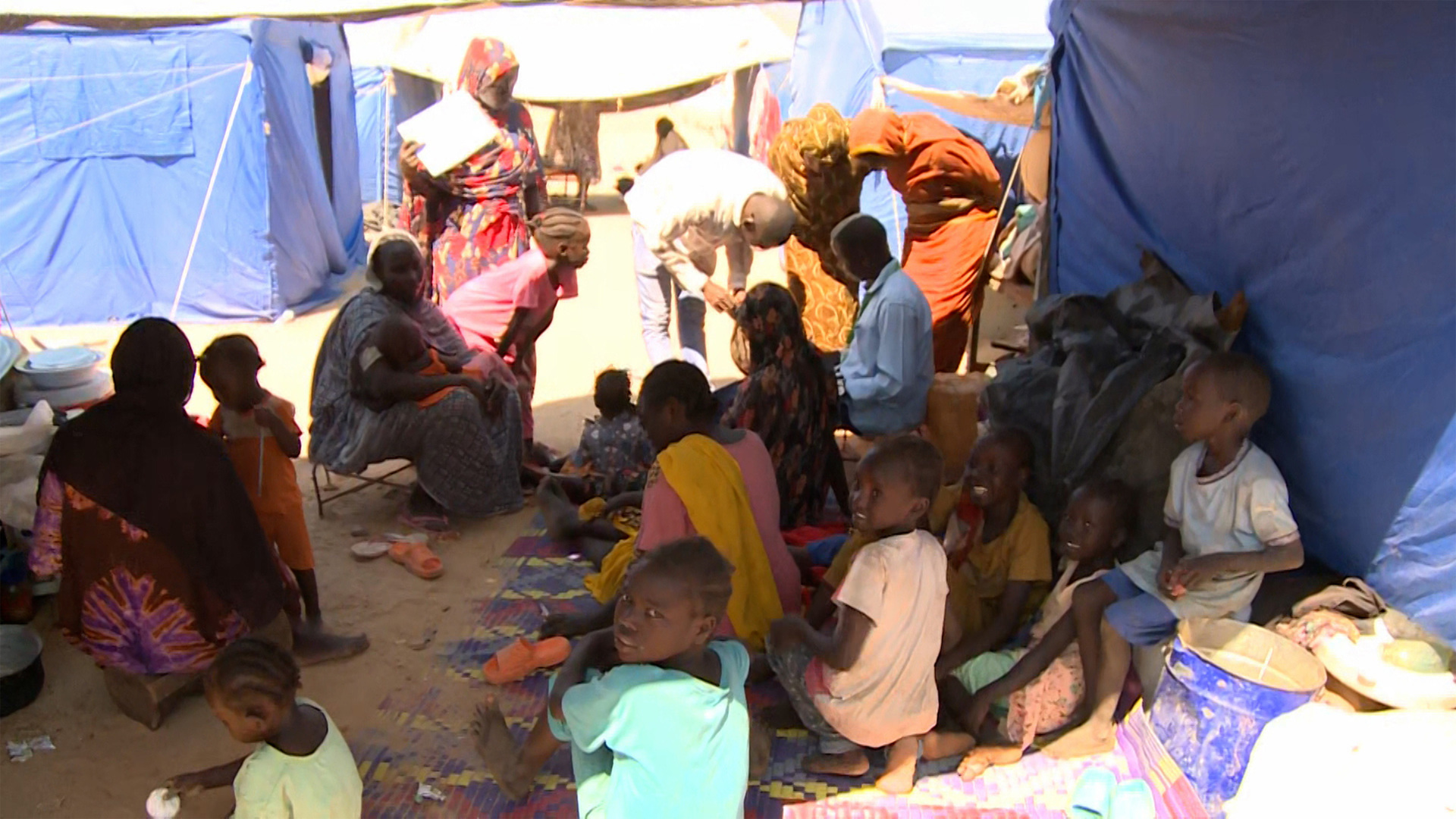
Humanitarian crisis
- Aid funding collapse: The UN announced it has been forced to halve its 2026 appeal to $23bn due to donor fatigue. Consequently, the World Food Programme (WFP) warned it must cut food rations by 70 percent starting in January, affecting communities already facing famine.
- Sudan tops emergency list: The International Rescue Committee (IRC) placed Sudan at the top of its Emergency Watchlist for 2026, citing the convergence of conflict, economic collapse, and shrinking international support.
- Systematic sexual violence: A report by the Strategic Initiative for Women in the Horn of Africa (SIHA) documented nearly 1,300 cases of sexual violence, attributing 87 percent of them to the RSF. The report detailed how rape is being used as a weapon of war, particularly against non-Arab groups.
- Health catastrophe: Malnutrition rates have skyrocketed, with UNICEF reporting that 53 percent of children screened in North Darfur are acutely malnourished. In Khartoum, a survey found 97 percent of households face food shortages, as authorities began exhuming makeshift graves in residential areas to move bodies to official cemeteries.
- EU Air Bridge: The European Union launched an “air bridge” operation to deliver life-saving supplies to Darfur, describing the situation there as “one of the world’s hardest places to reach”.
Diplomacy and political developments
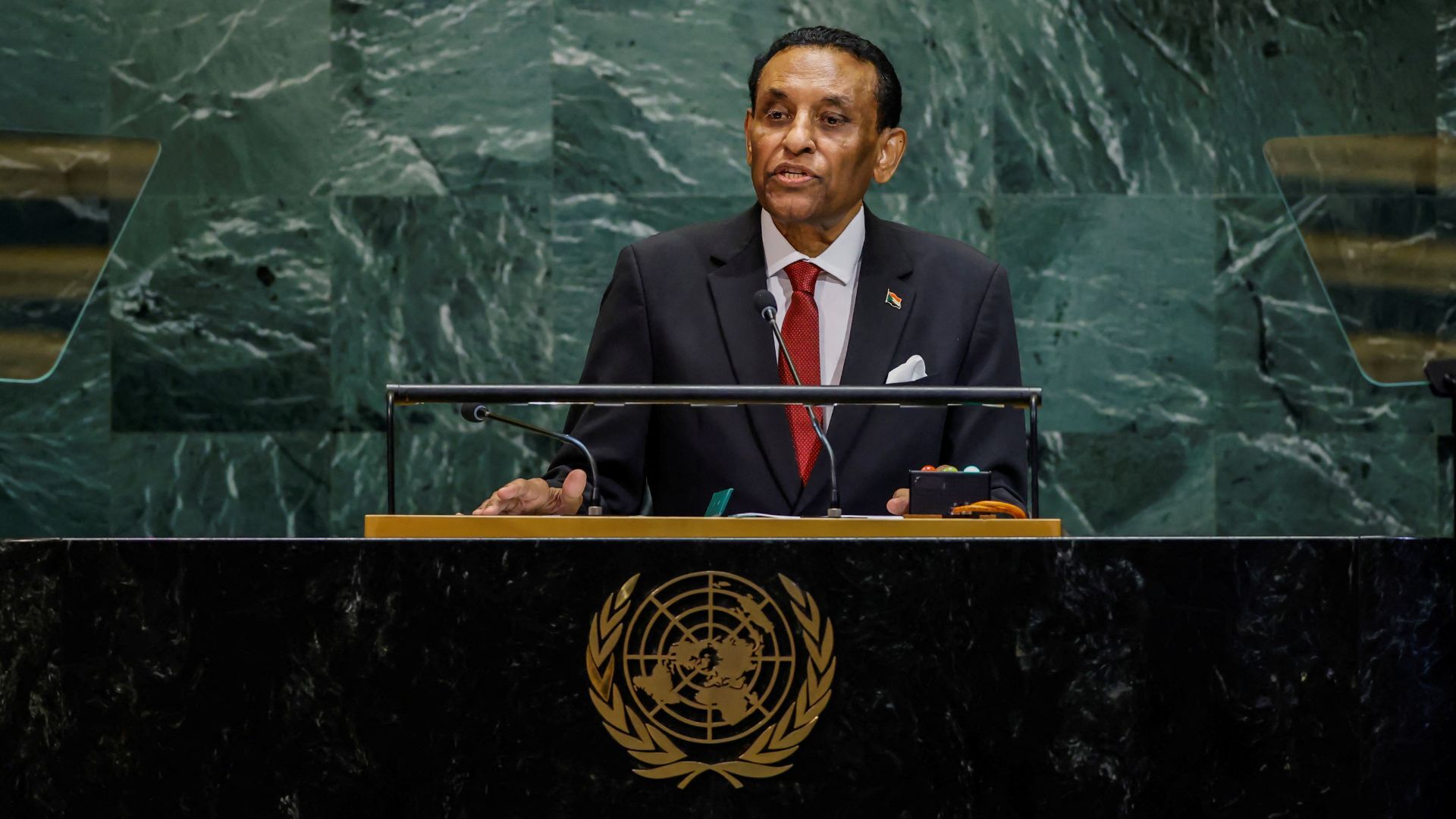
- Deadlock at the UN: Sudanese Prime Minister Kamil Idris presented a peace plan to the UN Security Council proposing an RSF withdrawal and disarmament. The RSF rejected the proposal as “wishful thinking” and “fantasy”.
- Al-Burhan rejects compromise: Speaking from Turkiye, SAF chief Abdel Fattah al-Burhan ruled out negotiations, insisting the war would only end with the RSF’s “surrender” and disarmament.
- Civilian “Third Pole”: In Nairobi, civilian leaders, including former PM Abdalla Hamdok and rebel leader Abdelwahid al-Nur, signed a declaration forming a new antiwar bloc, attempting to reclaim political agency from the warring generals.
- US pressure and sanctions: US Secretary of State Marco Rubio intensified diplomatic efforts, stating President Donald Trump is personally involved. The US Treasury sanctioned four Colombian nationals and companies for recruiting mercenaries to fight for the RSF.
- ICC Conviction: In a historic verdict, the International Criminal Court sentenced former Popular Defence Forces (Janjaweed) leader Ali Kushayb to 20 years in prison for war crimes committed in Darfur (2003-2004), the first such conviction for the region.
 Martin Plaut