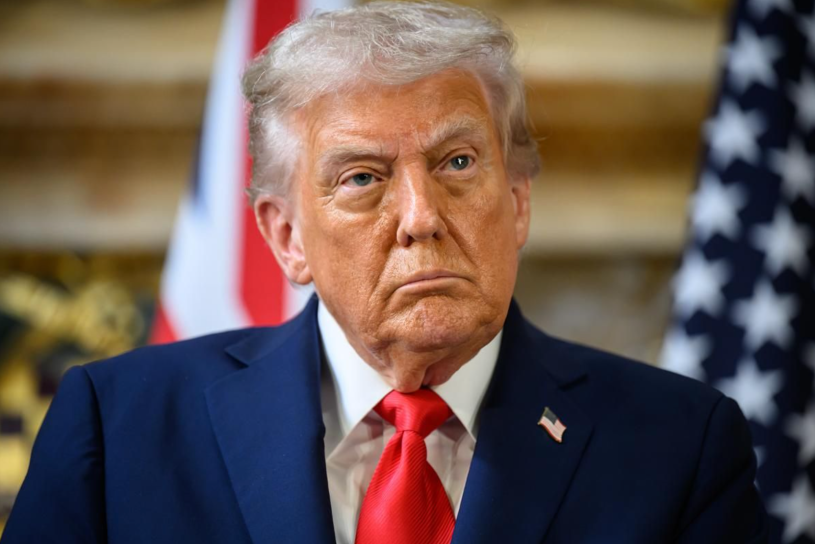
European countries are hoping to pull Mr Trump back from the brink by offering to station a military force on the island.
This comes as there are reports that President Trump is ordering an invasion. This is from the Sunday Mail.

Source: Sunday Telegraph
Starmer could send troops to Greenland to ease Trump’s security fears
European allies in talks to deploy force to counter growing threat from Chinese and Russian militaries

Nick Gutteridge Chief Political Correspondent. Joe Barnes Brussels Correspondent
10 January 2026 8:07pm GMT
Downing Street is in talks with European allies about deploying a military force to Greenland that would guard the Arctic for Donald Trump.
Military chiefs are drawing up plans for a possible Nato mission on the island, which the US president has threatened to seize for security reasons.
British officials have met with counterparts from countries including Germany and France in recent days to start the preparations.
The plans, still at an early stage, could involve British soldiers, warships and planes being deployed to protect Greenland from Russia and China.
European nations hope that significantly stepping up their presence in the Arctic would persuade Mr Trump to abandon his ambition to annex the strategic island.
It would allow him to claim a victory for American taxpayers by arguing that Europe was paying more of the cost of policing the Atlantic.
Mr Trump has threatened to take ownership of Greenland through the use of force. It is a self-governed island but is territorially part of Denmark, a Nato member.
Battle Lines
A US general on Trump, Greenland and Nato in crisis
He has cited concerns that Moscow or Beijing will seize the island if he does not, insisting that “we’re not going to have Russia or China as a neighbour”.
Greenland is also rich in natural resources, including copper, nickel, and rare earth minerals crucial for powering modern technology.
Government sources said Sir Keir Starmer took the threat from Russia and China in the area “extremely seriously” and agreed that action must be taken.

“We share President Trump’s view – Russia’s growing aggression in the High North must be deterred, and Euro-Atlantic security strengthened,” one told The Telegraph.
“Nato discussions on reinforcing security in the region continue, and we would never get ahead of those, but the UK is working with Nato allies to drive efforts to bolster Arctic deterrence and defence.
“The UK will continue to work with allies – as we always have – on operations in our national interest, protecting people back at home.”
Mr Trump has floated the idea of effectively buying the territory by offering each of its 30,000 citizens up to $100,000 to switch allegiance to the US.
He has also not ruled out using military force to take the island, insisting that “we are going to do something on Greenland whether they like it or not”.
His pursuit of the territory has plunged Nato into crisis and prompted speculation that the 75-year-old alliance could fall apart.
The importance of Greenland’s location

European countries are hoping to pull Mr Trump back from the brink by offering to station a military force on the island.
The idea was discussed at a meeting of Nato allies in Brussels on Thursday.
Members instructed the Supreme Headquarters Allied Powers Europe, the alliance’s military headquarters in Belgium, to determine what more could be done to secure the Arctic.
Sources told The Telegraph that the potential operation was in the early planning stages.
It could be a full-blown troop deployment or a combination of time-limited exercises, intelligence sharing, capability development and rerouted defence spending.
Any operation would likely be carried out under Nato’s banner and would be separate from existing missions in the Baltic and Poland.
British officials said the Armed Forces were already preparing for a greater role in Arctic security.
Preparations include commandos and Royal Navy ships taking part in last year’s Exercise Joint Viking, a joint Nato drill in Norway’s sub-zero temperatures.
This year, 1,500 Royal Marines will also deploy to Norway, Finland and Sweden for Exercise Cold Response, a training mission on defending frozen terrain.

The Telegraph also understands the European Union is drawing up plans for sanctions on US companies should Mr Trump reject the offer of a Nato deployment.
Technology giants such as Meta, Google, Microsoft and X could be restricted from operating on the Continent, as could American banks and financial firms.
A more extreme option could be to evict the US military from its bases in Europe, denying it a key staging post for operations in the Middle East and elsewhere.
Marco Rubio, the US secretary of state, is set to meet his Danish counterpart next week, with European officials hoping he can act as a moderating influence on Mr Trump.
Analysts said the president’s actions were typical of his negotiating strategy, which involves making maximalist demands to extract money from other countries.
Examples include his threat to impose massive tariffs on European pharmaceuticals but exempting countries, including Britain, that agreed to pay more for US drugs.
In recent months, the White House has also suggested that it wants Japan to pay more towards covering the cost of the 55,000 American troops based there.

Justin Crump, the chief executive of risk analysis firm Sibylline, said Mr Trump was “likely weighing the unity and resolve of European nations” over Greenland.
He said allies could “call Trump’s bluff” by proposing a Nato force in Greenland, suggesting security wasn’t the president’s real reason for wanting the island.
It came as a former RAF chief cast doubt over Britain’s ability to protect the Arctic, saying the nation’s defences had become “a flimsy facade”.
Air Marshal Edward Stringer said that the gap between the perception of the UK’s military strength and its actual capabilities had become cavernous.
‘Our defences are a facade’
In a report for Policy Exchange, he warned that not a single formation in the British military was currently sustainable in combat in its own right.
He wrote: “Now the USA is signalling strongly that it is putting ‘America First’ and the rest of Nato will have to look after its own defences.
“This fundamentally challenges the model that we had semi-accidentally slipped into – our national defences have been revealed to be a flimsy facade.
“The ‘Say-Do’ gap between the image of ourselves we have come to believe, and the reality of the hard power we can project in practice, is stark.
“The first necessary step is to recognise that, and recognise that the methods that got us into this mess have to be discarded ruthlessly.”
A spokesman for the Foreign Office said: “The UK is committed to working with Nato allies to strengthen Nato’s Arctic deterrence and defence.”
 Martin Plaut