
Fitsum H. Gebre[*]
Background
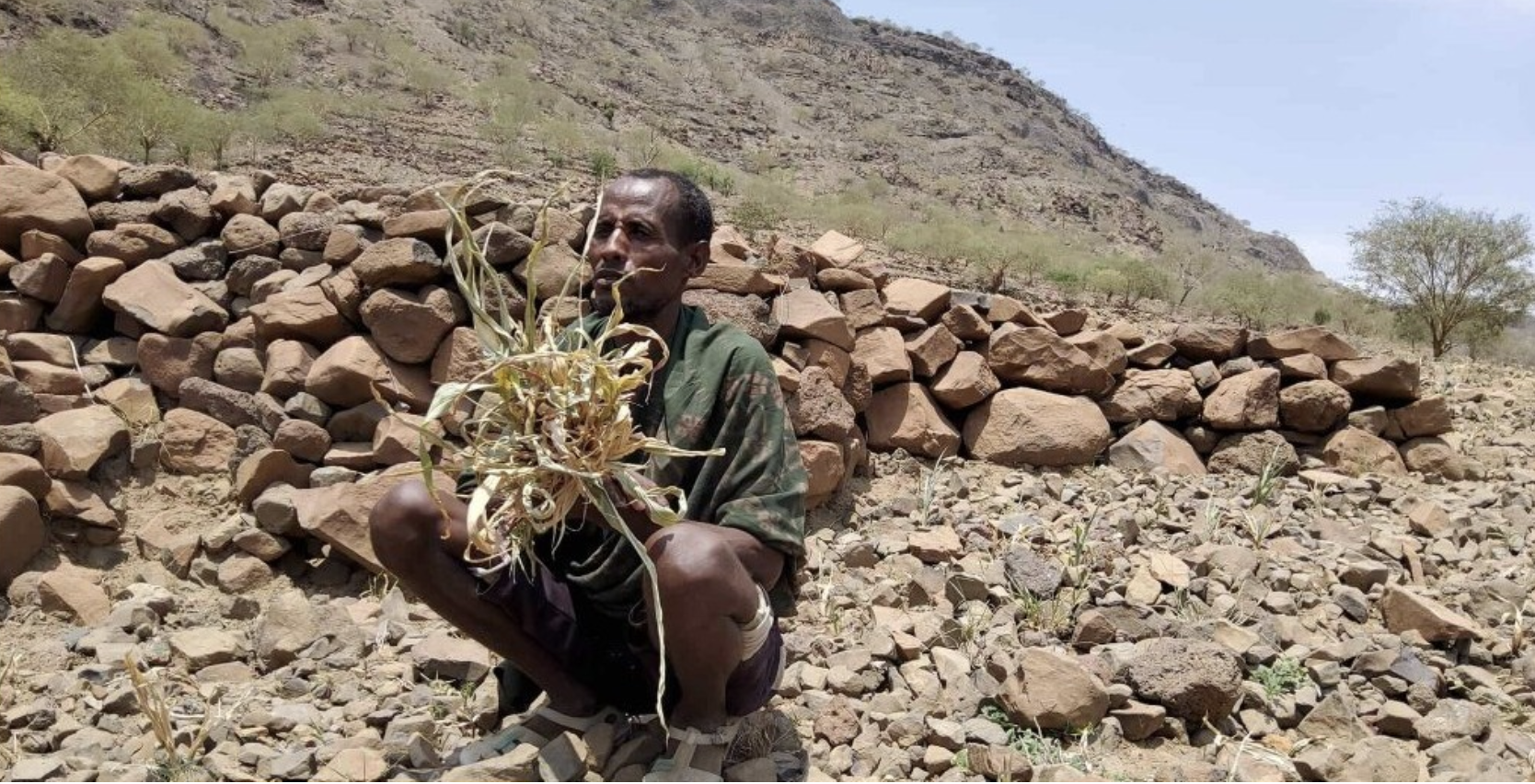
It is the beginning of new year; everyone is hoping for a better future. Tigrayans do also hope for a better year. Nonetheless, the situation in Tigray will not be different in 2026 or beyond given the current famine and starvation, and continuation famine designed as a strategy by the central government of Ethiopia during the last five years.
Famine and starvation are not new to Ethiopia. History of Ethiopia is characterized by endless famine. The Global Hunger Index (GHI) (2025) reports the overall hunger situation in Ethiopia is serious measuring 20.0 – 34.9 in GHI Severity of Hunger Scale. According to FEWS NET, Ethiopia ranks fifth worldwide in absolute numbers, underscoring its continued centrality to the global humanitarian crisis. It stresses that Ethiopia’s outlook remains fragile, particularly given the risk of renewed drought, conflict and access constraints related to funding shortfalls. The World Food Programme (WFP) report that around 10.2 million people are expected to require humanitarian assistance in 2025 in Ethiopia but its operations continue to face significant challenges from limited resources, pipeline disruptions, and conflict-related insecurity.
The food situation in Tigray is more severe following the brutal war conducted during 2020-2022, accompanied with series of events happening during the last five years. My argument is indicating famine and starvation in Tigray is designed as a strategy by the central government to promote famine, starvation and death of the civilians, on the top of the regime’s lack of poor-based policies. The roles of the past and current transitional governments, dominated by the Tigray People’s Liberation Front (TPLF) and elites supporting it, in the making of famine and starvation in Tigray may not be discounted.
Before dwelling on the famine situation in Tigray, it is important to define concepts such as famine, starvation and hunger. Famine, the extreme scarcity of food in a particular region or country, is often caused by natural factors such as drought, pest infestation, etc. and/or socio-economic causes such as war, displacement, instability, etc. Starvation, on the other hand, is the individual experience of severe hunger and malnutrition, often resulting from prolonged periods of inadequate food intake. Hunger is usually understood as distress associated with a lack of sufficient calories. Both famine and starvation can have devastating consequences on individuals and communities, as it is happening in Tigray now. Although, natural factors played a role in its making, famine and starvation in Tigray is primarily man-made.
A Nobel laurate in Economics, Amartya Sen (1998) coined the term ’entitlement approach’ in famine and poverty, focusing on the Ethiopian famines of 1973 and 1974, among others, as inability of the individual to access food and other essential assets due to economic, political and social factors. The triggering causes could be natural factors like drought, locust/pest infestation, hailstorm, etc. or man-made factors like war, displacement, and destruction of property, etc.
Famine as war strategy
Internally displaced people (IDP), in Hitsath and other camps, are caused by the intentional dislocation of the people from Western Tigray by the government and Amhara forces since Nov 2020. The IDPs and people in most parts of Tigray have been the victims of famine and starvation as has been widely circulated in the social media. Famine in Tigray was the result of war strategy followed by the central government to starve the civilians including those in IDPs. The policy pursued are full-scale blockade, including a near complete halt of movement of people, goods, and humanitarian aid to and from the region, complete communication blackout like blockade of access to the media, closure of banks and freezing the bank accounts of ethnic Tigrayans—both within the region and nationwide. The multilayered siege left Tigray almost entirely cut off from the outside world, with commercial and humanitarian supplies deliberately obstructed for most of the period. The communication blackout was implemented to deliberately produce and deliberately obscure, with aim to block the domestic and global attention. These policies resulted in widespread deprivation, suffering and death, much of which has received little documentation or recognition.
The war resulted into large-scale and systematic destruction and looting of social and economic infrastructures, including industries, farms, irrigation systems, food stocks, crop fields, orchards, food storage facilities, and businesses across Tigray. The occupying forces also actively obstructed farmers from tilling and planting their land, destroyed crops and damaged farm property, slaughtered livestock, and deprived them of access to alternative sources of livelihood such as beekeeping, traditional gold mining, and seasonal migration. Drone attacks and aerial bombing campaigns, targeting market centers and transport vehicles made civilian movement and commercial activities within the region incredibly difficult, and caused major disruptions in access to health services, food, and related critical services.
Satellite and ground evidence show a net loss of 543 square km of arable land and there are reports that show the war, in its seventh month in the conflict, was associated with a 37 percentage points increase in the probability of moderate to severe food insecurity.
Urban deprivation: The starvation no one saw
The narrative on humanitarian crisis during the Tigray siege has overwhelmingly focused on rural famine and the plight of IDPs. While these stories are both tragic and important, they do not represent the full picture of the suffering. Largely absent from both aid frameworks and scholarly attention is the acute yet silent starvation that gripped urban professionals—civil servants, schoolteachers, university faculty, salaried workers reliant on bank accounts, and pensioned retirees. In many urban centers in Tigray, these middle-income groups were among the first to be impacted by the siege, yet they remained invisible in the humanitarian responses.
Unlike rural residents, urban professionals who depended almost entirely on monthly salaries and modern banking infrastructure, were appraised to have led stable and relatively predictable lives before the war. When the war began and the region was besieged, the whole ecosystem they depended on collapsed. Salaries ceased without warning, banks were closed and accounts frozen, telecommunications shut down, and, critically, these sections of the population were overlooked by humanitarian actors. What followed was physical deprivation and profound psychological distress, as many experienced hunger for the first time under conditions that offered no formal recognition of their suffering. Pensioners—often urban residents with savings in banks and dependent on the monthly retirement salary, but no physical assets—also plunged into destitution.
The starvation in Tigray over the past five years should be understood within this context. The intent to starve the population was evident both in statements made by officials and in the actions taken during and after the war. Indeed, in its 2023 report, the UN-mandated International Commission of Human Rights Experts on Ethiopia (ICHREE) concluded that the Ethiopian government and its allies used “… starvation of the civilian population as a method of warfare, including by pillaging and destroying, removing, or rendering useless objects indispensable to their survival.”
Silence the guns but starvation still continues
The guns are silent in Tigray since Cession of Hostilities Agreement (CoHA), also known as Pretoria agreement, signed between the central government and the TPLF. Despite the agreement, the central government continue to impose economic blockade, obstruction of humanitarian aid and fuel and medical aid supply. This year alone there are reports of obstruction of humanitarian aid, blocking of monthly salary of the civil servants and freezing accounts of TPLF-affiliated companies in the commercial Bank of Ethiopia and significant reduction of fuel supply to Tigray.
Serious starvation and death in Hitsats and other places was reported by Tigray government affiliated Tigray Genocide Commission and the social media by tic tokers, and the later started mobilizing money and food for the hungry. The government’s denied of the existence of famine and starvation in Tigray. The government declared the attempt to mobilize contributions through social media is illegal and to be confiscated.
Tigray is an orphan without a government: what is next?
Tigray is in a political crisis threatening its existence as a national identity. The central government, despite the rhetoric, does not tolerate any peaceful opposition from within the party or outside and hopes of accommodating diversity in Ethiopia is practically impossible. It weakened all mechanisms of check-and-balances in the federal structure, dismantled functional and independent media, and replaced them by loyal media and by what it calls ‘media serwit’ [literally means soldiers of the media]. It is centralizing power in the country, the central government interfering in important regional affairs. The central government is doing everything it can to indulge regions in endless crisis and conflicts. It, for example, weakens Tigray, divids it, made possible by the divisions within the TPLF, obliterates it piece by piece, and perhaps other regions as well.
The TPLF has hindered any political reforms, weakened Tigray’s unity and its negotiating power against the central government. Tragically, part of the TPLF-wing, which claims itself to be true TPLF, chose to form alliance with the Shaebya (Eritrean) regime in a strategy called ‘Tsimdo’, which literally means pairing, despite the latter’s active involvement in the genocide war in Tigray, together with the Ethiopian central government, and continues to occupy districts and sub-districts in Tigray bordering Eritrea. One article characterized the main attributes of TPLF as ‘betrayal, venality, selfishness and short-sightedness’. The military oligarchy, which includes commanders of Core and above in ex-Tigrayan Defense Forces (TDF), is another important power center in Tigray, openly allayed with the TPLF-wing, exacerbating the political crisis. Ato Getachew’s, the ex-president of Tigray serving now as a cabinet member in the Abiy government, recent response to famine and latest political rhetoric sounds like ‘intellectual prostitution’ which is tantamount to self-destruction, from a picture that he used to depict during Tigrayan war. Getachew seems now to have been engaged in washing away widely documented crimes of the Ethiopian Defence Forces and Abiy Ahmed, the prime minister of Ethiopia, and other high-ranking functionaries, as the other wing of TPLF is doing with respect to Shaebya. By calling now for the central government to take measure against the so-called TPLF, Getachew may enable another genocide in Tigray, while the multitude effects of the first genocide on the people are still lingering. The second interim government, as it was the case of the first, is unable to be a true government, standing for itself, the people, and serving the basic functions of a government in the region.
This article reinforces the call for national dialogue and new leadership in Tigray that centers on the interest of the people and geo-political realities in the whole region; it is very instrumental for ending internal displacement and famine, starvation in Tigray. It is, hence, a call for the people of Tigray, especially its elites, to openly stand for their national interest and against the TPLF, if necessary. Finally, a new political landscape in Tigray requires political change in the center, making horizontal communications and collaborations, among peaceful and non-peaceful opposition forces in Ethiopia, and commitment for genuine change necessary.
[*] He is freelance researcher and could be addressed at f.hagos@gmail.com.
 Martin Plaut
First of all, I do not like the phrase “Starvation is not new to Ethiopia.” I have never seen starvation in the place where I was born and raised, the Ambo area. Also, even in the USA and the UK, millions of people live on government assistance.
Second, TPLF itself should be blamed for the current problems in Tigray and in the whole country. For 30 years, they had the opportunity to transform Ethiopia into a democratic country with sustainable peace by building strong institutions that protect democracy, but they failed to do so.
Abiy Ahmed is doing many of the same things he learned from TPLF, because he grew up politically under their system. I believe the Ethiopian people are tired of both TPLF and the Prosperity Party. They want a new era and a new system that fits today’s society—a government formed through free and fair elections, where every Ethiopian feels represented.
It would be approciated if you do unbaised report going forward.
Thanks,
K.M
Thank you for your comments. I understand that Ambo is found in Ethiopia. But note that Ethiopia is a big country with regional differences. Note that even in Ambo and the villages srounding it, there are poor people that are hungry.
Comparing PM Abiy with TPLF is a false comparison. He has to be blamed if his policies a cause of higher poverty and famine..