With Foreign Ministry warning against travel to Tigray, groups say Ethiopia still too volatile to be safe
By Sue Surkes Times of Israel
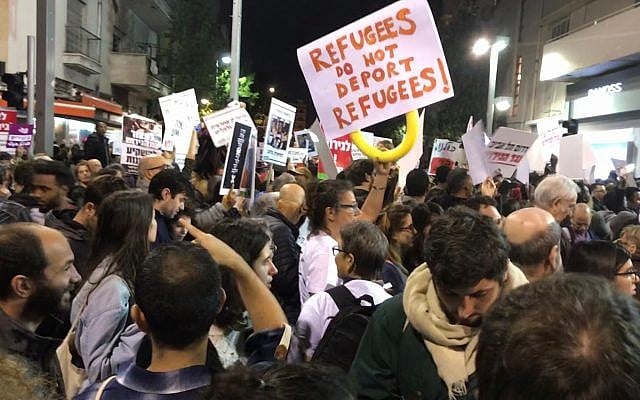
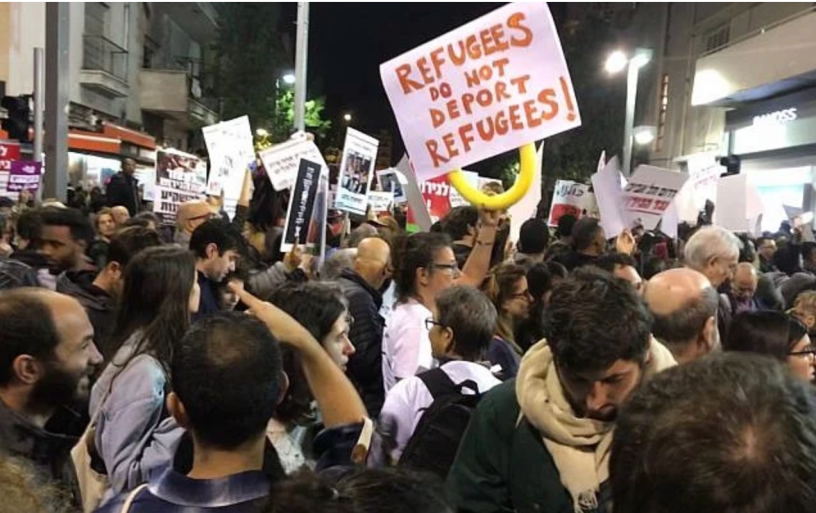
Protesters march in a demonstration in south Tel Aviv against Israel’s planned deportation of African migrants and refugees, February 24, 2018. (Miriam Herschlag/ Times of Israel/ File)
Rights activists are calling on the Interior Minister not to act on a High Court decision to deport Ethiopian migrants, saying the security situation in the African country is too volatile.
In November 2021, Israel granted group protection to Ethiopian nationals in light of the bloody civil war between the Ethiopian armed forces and the TPLF (Tigray People’s Liberation Front) from 2020 to 2022.
In January 2024, Israel’s then-interior minister, Moshe Arbel, withdrew protection, following professional advice that the security situation in Ethiopia was sufficiently stable for nationals to return.
In December, the High Court upheld that decision, rejecting an appeal by three organizations — the Hotline for Refugees and Migrants, HIAS Israel, and ASSAF – Aid Organization for Refugees and Asylum Seekers in Israel.
Saying they took no position on the rights of the Ethiopians concerned, the three High Court judges gave the migrants four months to prepare to leave.
However, the refugee and migrant organizations charge that Ethiopia is still too volatile. Israel’s Foreign Ministry itself says on its Addis Ababa website that Israelis should avoid non-essential travel to Tigray following the renewal of fighting between the Ethiopian army and the TPLF, which began on January 27.
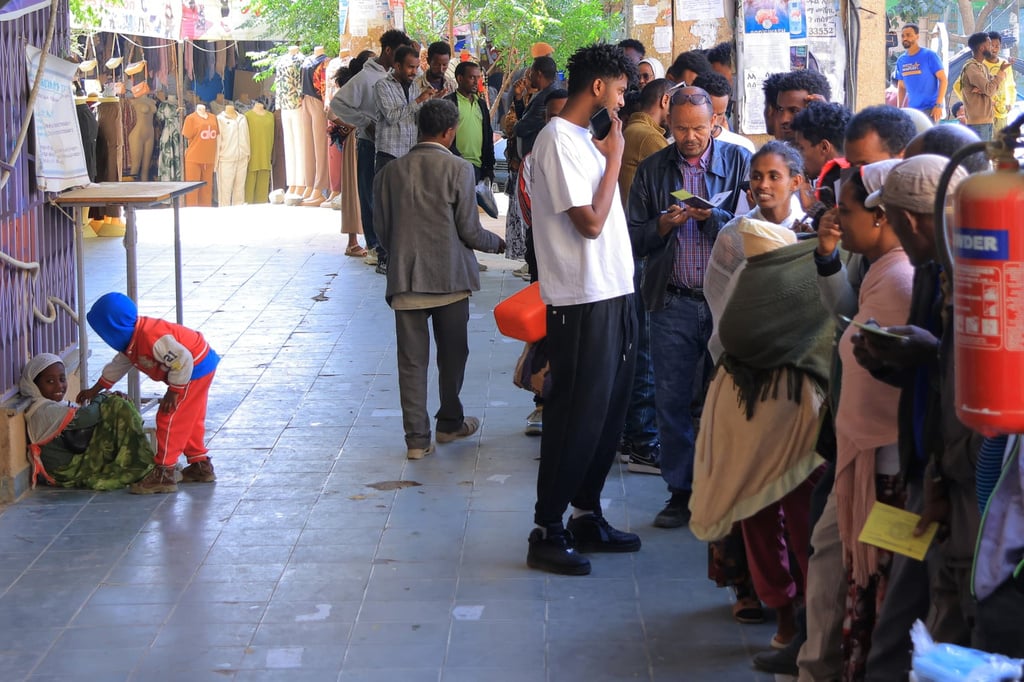
Conflict is also raging between Ethiopian authorities and Amhara militia groups in the Amhara region, and between security forces and armed groups in the Oromia region.
Neta Mishly, who directs the legal department at the Hotline for Refugees and Migrants, said, “The severe deterioration of the situation in Ethiopia in recent days has led Israel itself to issue a travel warning for the north of the country. Despite this, the decision to deport asylum seekers remains in place, and the Interior Ministry is determined to abandon the community and send its members directly into a bloody war zone.
“We call on the Ministry of Interior to withdraw this decision and to freeze all deportations to Ethiopia until there is a tangible change in the country’s situation.”
The Hotline estimates that just under 1,400 Ethiopian nationals are affected by the withdrawal of group protection, double the number cited by a spokeswoman for the Interior Ministry’s Population and Immigration Authority to the Times of Israel.
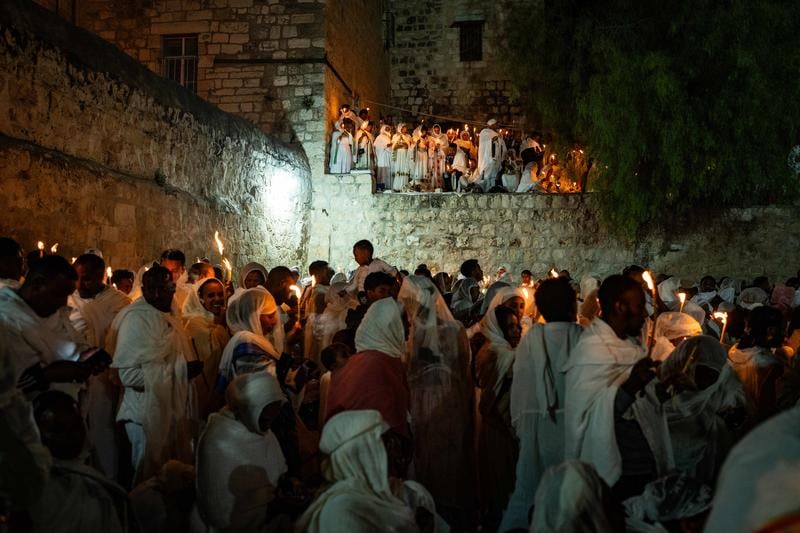
The difference in numbers appears to reflect a reality in which many non-Jewish Ethiopians live beneath the Interior Ministry’s radar.
For example, one person, identifying as Yossi, 44, fled to Israel from then-prime minister Meles Zenawi’s oppressive regime in 2002 and cleans to earn a living. He has four children, all attending Israeli schools and speaking only Hebrew.
Terrified of being caught, he said, “People are fleeing Ethiopia even now. You don’t know who might kill you; there are so many wars going on.” He went on, “I asked for asylum in Israel years ago, and was rejected. I even tried to go to Canada, but the Israelis wouldn’t give me the visa I needed to leave. So I live in limbo, constantly under pressure.”
Another, going by Yehudit, 37, from Tigray, is a single mother of two young children who has been in Israel for 17 years. She requested asylum in 2009, and said she never received a response. “My family fled the war and is in a camp in Sudan,” she said. “I have nowhere to go back to.”
Shira Abbo, head of public policy at the Hotline for Refugees and Migrants, said she feared that Interior Ministry inspectors would start “roaming the streets” and arresting Ethiopian nationals in the coming months ahead of deportation.
She added that there was particular concern for women and children. “During the war, we saw all sides using rape, often in front of families, and sometimes as a condition for food or lodging.”
The Population and Immigration Authority spokeswoman said, “Today, there are approximately 700 asylum seekers (not 1,300) from Ethiopia whose requests were denied. In accordance with the High Court of Justice’s decision, they were granted a preparation period for departure until April 18, 2026.”
She added, “We are closely monitoring developments in Ethiopia. Based on the information we have, the situation in the capital city, Addis Ababa, remains stable.”

Israel maintains a policy of temporary protection for all asylum-seekers from Eritrea (around 18,000 people) and Sudan (5,000), giving them a legal status that denies them all citizen and resident rights.
 Martin Plaut
Whatever the reason may be, Mr. Plaut seems to have overlooked in his description of the critical situation in Ethiopia that, since 2019, the major problems and dangers have been concentrated in the Amhara region and in Oromia, where the Amharic population has been subjected daily to a silent massacre and, since 2021, to an active, genocide-like war, and that no other ethnic group in Ethiopia is being massacred, displaced, persecuted, and targeted solely on the basis of their ethnicity. If these Amharas, who have emigrated to Israel due to religious and political oppression, are sent back, they will undoubtedly be subjected to genocide and persecution and used as cannon fodder. Stop sending Amhara asylum seekers back to Ethiopia
https://www.eurasiareview.com/21022026-ethnicity-at-the-gate-the-advantage-of-sounding-oromo-in-contemporary-ethiopia-analysis/
https://www.brusselstimes.com/
https://borkena.com/2026/03/16/ethiopia-arsi-the-new-auschwitz-targeted-atrocities-against-orthodox-amharas-in-arsi-oromia-ethiopia/