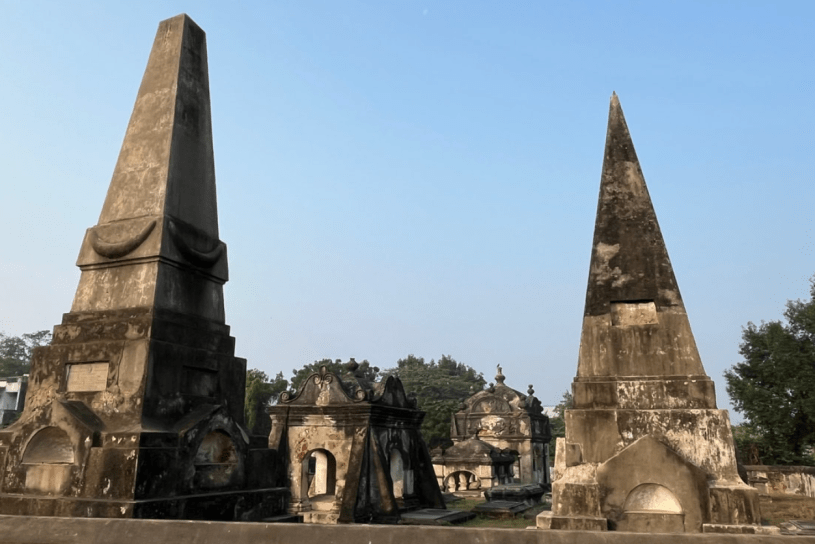
Source: Andrew Whitehead blog
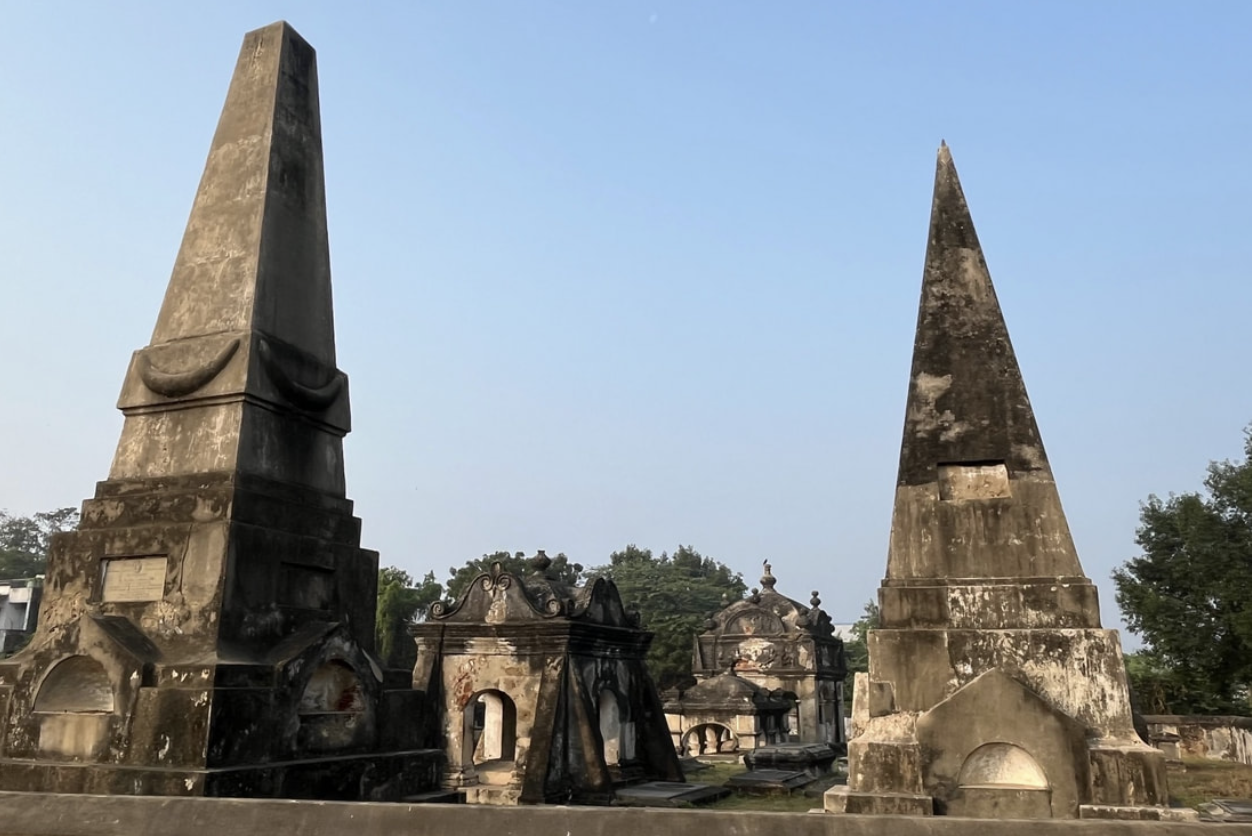
This is the stunning Dutch cemetery at Pulicat in the north-east corner of the Indian state of Tamil Nadu. It’s just about all that’s left of Fort Geldria, the first Dutch settlement in India and the principal Dutch fort.
It’s also all that remains of a much more sinister enterprise. Fort Geldria was for several decades a centre of the Dutch slave trade on India’s Coromandel coast.
Pulicat is now a fishing village on the south side of the vast Pulicat lake. In the medieval period it was a substantial coastal trading centre, particularly during the powerful and prosperous Tamil Chola dynasty. Middle Eastern merchants were present here from the seventh century. The Portuguese arrived at the start of the sixteenth century.
In about 1613, the Dutch started work on Fort Geldria and later pushed the Portuguese out of this corner of South India. For the best part of a century, this was the centre of governance of the Dutch in India. The Dutch East India Company, the VOC, was a powerful commercial force in Asia through the seventeenth and eighteenth centuries. The Dutch bought textiles produced in South India to trade with the Moluccas for their spices.
Under the Dutch, Pulicat also became a centre of the slave trade in India. Labourers were forced onto ships and sent to work on plantations in what is now Indonesia. So the wealth and confidence so clearly expressed in these graves and monuments rested on the pernicious trade in human beings.
Research has indicated that about 30,000 Indian slaves were transported by the Dutch to Java. The factors who captured and sold the slaves were in Chennai (then Madras) and that’s where they were shipped from – but Fort Geldria was the nerve centre of this trade, and the location of the money and power which underpinned this grotesque form of commerce.

The Dutch cemetery is now under the care of the Archaeological Survey of India. The gates have macabre ‘memento mori’ – visual reminders that we all will die which were common to both Catholic and Protestant religious iconography at the time.
There is nothing at all to indicate any connection with slavery. Indeed the slave trade on the Coromandel coast is one of the darker recesses of the Netherlands’ – and India’s – past, not erased but not much talked about.

Most of the graves are from the seventeenth century with inscriptions in Dutch. The adjoining fort was demolished by the British about 200 years ago and what remnants there are are shielded under dense scrub.
There are some indications of the fortified settlement – notably the well, a deep well, which you can see above. It’s unusual, I would imagine, to have a well in a graveyard. It doesn’t increase your appetite for the water to think that it may have drained through human remains. But this must have been a much prized source of drinking water, which was in short supply here (Pulicat lake, which is really a lagoon, is brackish and so no good for drinking or irrigation).

Some of the graves have fascinating emblems and designs. This one shows what I imagine was a fort, or perhaps a church, and could be a visual representation of Fort Geldria itself.
The inscription on the main obelisk suggest that this memorial is later than most of the surrounding graves.
It’s the burial place of Jacob Eilbracht, a Dutch colonial adminstrator with a tarnished reputation who died here in 1804. He was sufficiently important to have his portrait painted as a miniature.

The cemetery is broadly in good condition. The grounds are well kept and not at all overgrown,
That’s probably thanks to the local goats which are sufficiently agile to leap over the wall into the burial ground even when the gates are closed. They seem to have taken it upon themselves to keep the grass cropped.

Some of the bigger memorials also serve as shade for those wanting an afternoon nap.
There are a small number of much later British graves in the cemetery, again in generally good condition.
Some of the obelisks and mausoleums and a few of the graves could do with restoration before they suffer further erosion.
I went to Pulicat completely unaware of this magnificent cemetery and I was pleased to have the chance to look around – and disturbed then to discover when researching this blog the chilling link with the slave trade.

 Martin Plaut