Nontokozo Mchunu18 hours ago18 hours ago
Source: DW
A report by Reuters revealed that Ethiopia is hosting a facility used to train Sudan’s RSF paramilitary forces, with backing from the UAE. The UN says the war has killed over 40,000 and displaced millions of people.
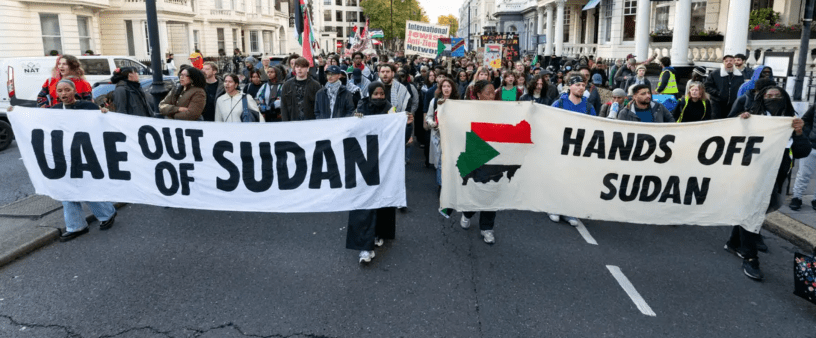
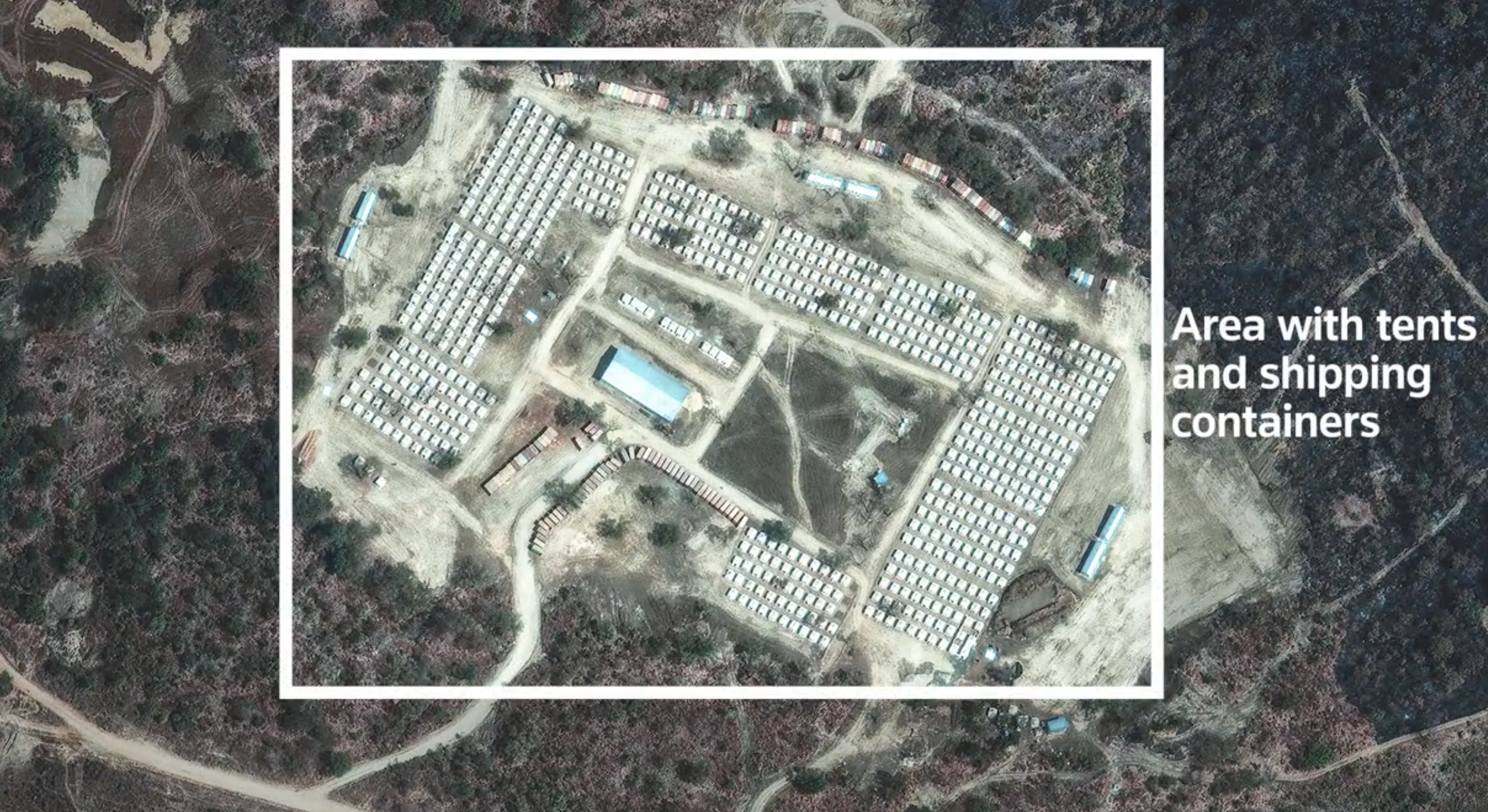
The recent report by Reuters found that Ethiopia is hosting a secret camp to train thousands of fighters for the Rapid Support Forces (RSF) paramilitary group in neighboring Sudan. The revelation is a sign that one of the world’s deadliest conflicts is being fueled by regional powers from Africa and the Middle East.
The report is the first direct evidence that Ethiopia is indeed involved in the Sudan conflict, reportedly providing a substantial supply of soldiers and training for the RSF, which has been battling Sudan’s government troops since 2023.
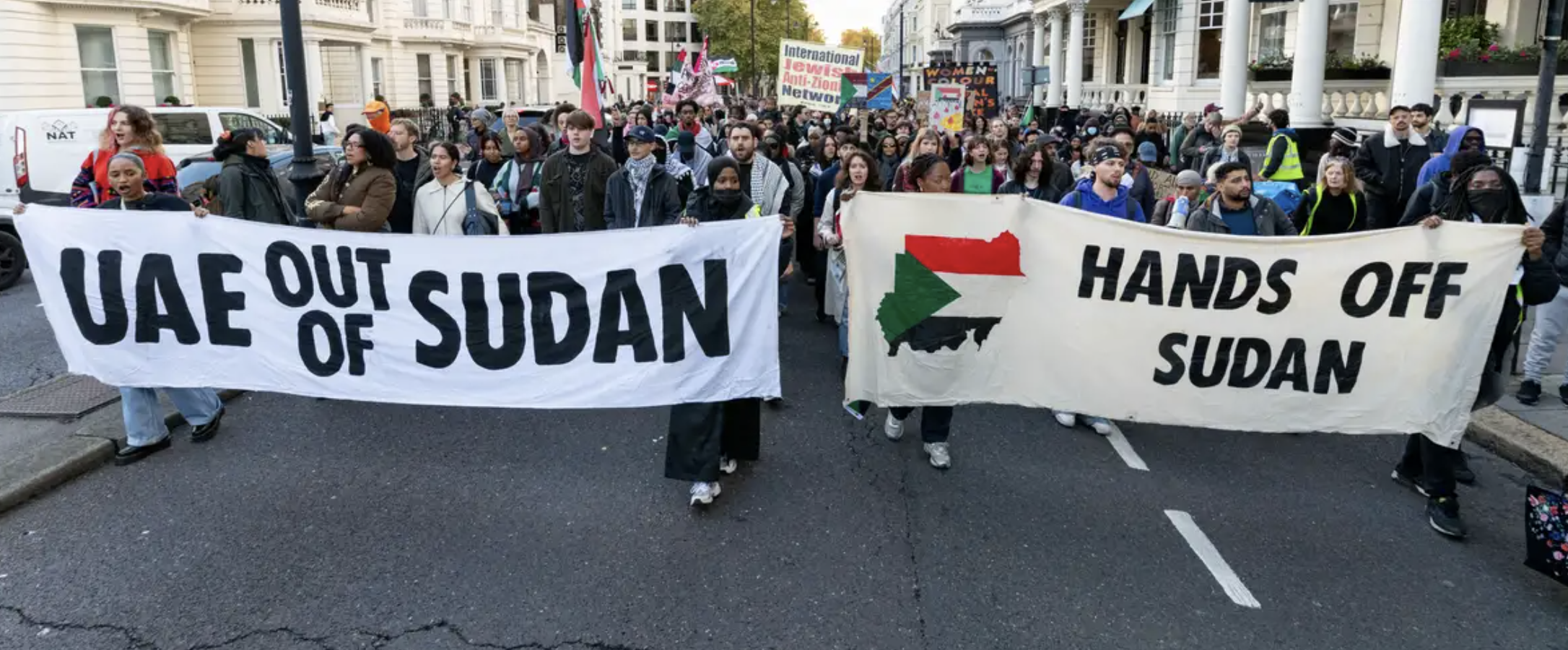
According to the report, the camp’s construction was financed by the United Arab Emirates (UAE), which also provided military trainers and logistical support to the site. However, the news agency could not independently verify the UAE’s involvement. When the agency requested a comment, the UAE responded that it had no involvement and was not a party to the conflict.
“The Rapid Support Forces were reported to have set up camp in western Ethiopia two months ago,” Abdurahman Seid, a geopolitical analyst for the Horn of Africa, told DW.
Sudan’s government has long accused foreign powers of aiding the RSF. Martin Plaut, a journalist and Horn of Africa expert, told DW that there had been many indications that things would move in that direction.
“It’s the UAE that is the driving force in all of this,” Plaut said. He added that if the Ethiopians were ever against their interests, they would not have gone along with it. “It is absolutely clear that the UAE is now the main driver in what is going on.”
No end to Sudan’s civil war in sight
Plaut noted that it would take a miracle to end the ongoing conflict in Sudan. “It is going to be extremely difficult for either side to inflict a decisive defeat on the other because if you look at it this way, the RSF is supported by the UAE. It has support from sections of Libya, Chad and Ethiopia,” he said, adding that they have a good base and sufficient funds.
Who are Sudan’s RSF?
“On the other hand, the Sudanese military is backed by Egypt, the Saudis [Saudi Arabia] and by Somalia,” he continued, stressing that neither side is going to run out of equipment, money, or personnel. “So, I don’t see any end to the conflict.”
Amza Hussein, a 54-year-old refugee, said that he had “lived through other wars in Sudan, but this one feels impossible to stop. Too many rebels are fighting.”
In 2024, Ethiopia hosted over 50,000 Sudanese refugees, even as it faced its own challenges. Issues of food insecurity were paramount while it faced internal displacement, with 3.5 million Ethiopians uprooted by conflicts in the Tigray, Amhara and Oromia regions.
Sudan’s humanitarian crisis
In early February, the Integrated Food Security Phase Classification, or IPC, reported that acute malnutrition had reached famine levels in two more towns in Darfur. Last year, IPC warned that people in Darfur’s major city of el-Fasher, which was captured by the RSF after an 18-month siege, were enduring famine.
According to the United Nations (UN), the war has claimed over 40,000 people and displaced an estimated 14 million others.
The World Health Organization (WHO) has described the ongoing conflict in Sudan as “the world’s worst health and humanitarian crisis.” More than 20 million people are in need of health assistance and more than 21 million are in desperate need of food.
The WHO also said that “an estimated 33.7 million people will need humanitarian aid this year.” However, severe access constraints and reduced humanitarian funding have worsened the situation in Sudan. Health services across the country have been severely affected by ongoing fighting and attacks, leading to shortages of health personnel and essential medical supplies.
WHO has reported that 201 attacks on health care have taken place since April 2023, with 1,858 deaths and 490 injuries.
Timeline of Sudan’s brutal civil war
Sudan has been in conflict since April 2023, when fighting broke out between the paramilitary Rapid Support Forces (RSF) and the Sudanese Armed Forces (SAF). The roots of the conflict lie in Sudan’s fragile political transition following the mass anti-government protests that began in December 2018 and led to the military ousting of long-time President Omar al-Bashir in April 2019.

After Bashir’s removal, a tense power-sharing arrangement was negotiated between the military and civilian protest leaders. In August 2019, a transitional government was formed under a Sovereign Council composed of both military and civilian members, alongside a civilian-led cabinet headed by Prime Minister Abdalla Hamdok. The arrangement was meant to lead to Sudan’s first-ever democratic elections.
However, on October 25, 2021, the military staged a coup that dissolved the civilian government. The coup was led by Abdel Fattah al-Burhan, head of the SAF and chair of the Sovereign Council, alongside Mohamed Hamdan Dagalo, widely known as Hemedti, the leader of the RSF. The two generals had previously shared power but joined forces to consolidate full military control.
Although Burhan and Dagalo were allies during the 2021 coup, tensions between them grew over the terms of a proposed new civilian transition—particularly over plans to integrate the RSF into the regular army, the timeline for security sector reform, and questions of ultimate command authority.
These disputes escalated into open warfare on April 15, 2023, beginning in the capital, Khartoum, before quickly spreading to other parts of the country, including Darfur, where the RSF has deep roots. The RSF itself evolved from the Janjaweed militias accused of atrocities during the Darfur conflict in the 2000s under Bashir’s rule.
Edited by: Chrispin Mwakideu
 Martin Plaut