
By Ephrem Hidug[1]
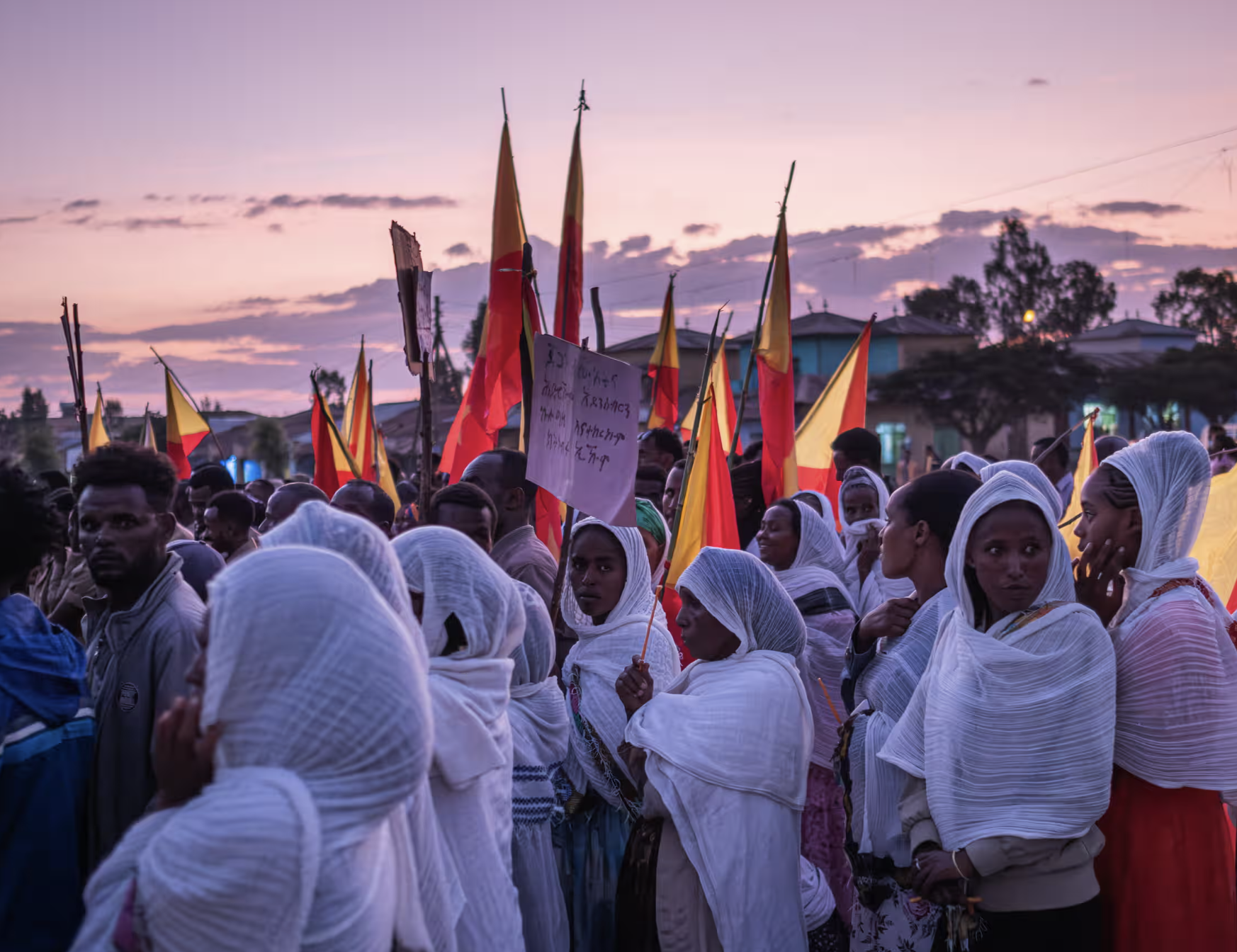
For over five years, the people of Tigray have lived with the aftermath of Tigray conflict that devastated lives, communities, and infrastructure. The war, which began in November 2020, was marked not only by conventional military operations but by widespread atrocities against civilians: massacres, sexual violence, forced displacement, and systematic destruction of essential infrastructure. International bodies, including the UN Human Rights Council’s International Commission of Human Rights Experts on Ethiopia (ICHREE), have repeatedly documented these violations. Yet, for years, the Ethiopian government remained largely silent. That silence ended on February 3, 2026, when Prime Minister Abiy Ahmed Ali addressed Parliament, acknowledging that Eritrean forces committed “serious crimes” on Ethiopian soil. He cited the Axum massacre, the looting and destruction of industrial facilities, and federal knowledge of these acts. This acknowledgment, carefully worded though it may be, carries profound legal consequences. It transforms political rhetoric into a probative instrument that establishes both factual and potentially legal responsibility.
The Ethiopian government has again chosen to launch a military operation in Tigray and other parts of Ethiopia. This represents a second phase of preparation to continue the violence and devastation in the region.
The United nation decision to lift sanctions on Eritrea has effectively rearmed a regime complicit in atrocities in Tigray. Furthermore, the failure to renew the mandate of the United Nations-mandated International Commission of Human Rights Experts on Ethiopia (ICHREE) has granted the Ethiopian government another opportunity to prepare for a potentially devastating new conflict.
Recent political tensions between Ethiopia and Eritrea have now reached a critical boiling point, with both parties appearing ready to engage in armed conflict. A renewed war between Ethiopia and Eritrea would likely cause immense human suffering across the Horn of Africa.
Following the signing of the Cessation of Hostilities Agreement between the Ethiopian government and the Tigray People’s Liberation Front (TPLF), commonly known as the Pretoria Agreement, in November 2022, active fighting formally came to an end. While the agreement silenced the guns, the situation largely remained in a “no war, no peace” state. Recently, however, tensions have escalated into renewed military confrontations among various parties. At the same time, conditions on the ground and patterns of alignment have changed significantly.
During the November 2020 Tigray conflict, the alignment of forces was relatively clear. Federal Ethiopian forces, supported by regional forces and Eritrean troops, were positioned on one side, while Tigray forces were on the other. The current situation, however, reflects a markedly different configuration of actors and alliances.
The Ethiopian government has continued military operations in the Oromia region against the Oromo Liberation Army (OLA) and has also entered into military confrontation with FANO, a group that was previously considered an ally during the Tigray war. Meanwhile, tensions between Ethiopia and Eritrea have risen sharply, reaching what observers describe as a critical point with the potential for direct confrontation. Reports indicate that both countries have moved military forces toward border areas. Ethiopia’s Minister of Foreign Affairs, Gedion Timotheos, has reportedly sent a communiqué to his Eritrean counterpart warning of the risks of escalation.
At the regional level, Ethiopia has been alleged to support Sudan’s Rapid Support Forces (RSF), contributing to strained relations with Sudan. In addition, Ethiopia’s move to pursue an agreement with the self-declared Republic of Somaliland has significantly heightened tensions with the Federal Government of Somalia, reflecting further shifts in regional alignments. Domestically, the TPLF no longer appears to hold the same level of public support it once commanded.
As a result, both regional and domestic alignments have shifted considerably compared to the period of the Tigray war. The Ethiopian government has stated that Eritrea, the TPLF, Fano, and the OLA are cooperating to destabilize the country. These developments point to a more complex and fluid security environment than during the earlier phase of the conflict.
In this evolving context, Ethiopia’s military faces the possibility of confronting both external and internal armed actors, with uncertain levels of regional support. At this stage, the Ethiopian Prime Minister addressed Parliament and, for the first time publicly, accused Eritrean forces of committing crimes against humanity and war crimes during the conflict.
Thus, the UN’s motto of “Never Again” to genocide appears ineffective in this context. It seems that lives in the Horn of Africa are treated merely as collateral damage by the leadership of Ethiopia and Eritrea, as well as by the international community.
Legal Implications of Prime Minister Abiy Ahmed’s Statements: Establishing a Foundation for Accountability
The Prime Minister’s acknowledgment that the federal government was aware of atrocities committed by allied forces, including those of Eritrea, constitutes more than a historical admission; it provides critical evidence with significant legal consequences under both Ethiopian and international law. By confirming contemporaneous knowledge, his statement establishes a foundation for pursuing command responsibility, the legal doctrine that holds leaders accountable for crimes committed by their subordinates.
This principle is enshrined internationally in the Rome Statute of the International Criminal Court (Article 28) and domestically in Ethiopia’s Criminal Code (Articles 36 & 37 of Proclamation No. 414/2004). While Ethiopia is not a party to the International Criminal Court, the doctrine is recognized as customary international law, binding on all states. The Prime Minister’s admission that he raised concerns with Eritrean leadership is particularly significant, as it directly fulfills a key element for proving culpability: a superior’s knowledge of ongoing crimes and a failure to prevent or punish them.
The content of the statement corroborates well-documented atrocities that fall under established categories of international crime:
- War Crimes: Acts including willful killing, torture, sexual violence, pillage, and the deliberate destruction of civilian infrastructure such as hospitals and factories.
- Crimes Against Humanity: Widespread and systematic attacks against the civilian population of Tigray, indicating a policy of persecution.
- Potential Genocide: Patterns of violence warrant a formal investigation into whether acts were committed with the intent to destroy, in whole or in part, a protected group, as defined under Ethiopian Criminal law (Article 269) and international law.
In legal proceedings, such a public acknowledgment by a head of government functions as powerful official testimony and self-admission, evidence courts treat as highly credible. It transforms allegations into substantiated facts, creating a direct evidential link between state authority and the commission of international crimes. Consequently, these statements provide a compelling factual and legal foundation for domestic prosecutors and international bodies to pursue formal investigations and build cases for criminal accountability.
What to do
Domestic Accountability:
Under the principle of territoriality, Ethiopia holds primary jurisdiction and possesses a robust domestic legal framework to address crimes committed on its soil. To translate this authority into credible justice, several concurrent avenues must be pursued with urgency:
- Prosecuting Perpetrators, Domestic and Foreign: Ethiopia has the clear legal authority to investigate and prosecute all perpetrators, including Eritrean officials, potentially in absentia. This would affirm the jus cogens principle that international crimes are not shielded by immunity. Concurrently, the Prime Minister’s admission of federal awareness implicates potential legal liability for Ethiopian officials who failed to prevent or punish allied atrocities, invoking both domestic and international responsibility.
- Reforming Transitional Justice for Accountability: While the Pretoria Agreement prioritizes reconciliation, its current framework lacks independent prosecutorial power. Legal reform is therefore essential to empower impartial investigations, uphold victims’ rights, and ensure accountability spans all levels of culpability.
For any domestic action to be credible, it must be built on a methodical process of evidence collection, forensic verification, and witness protection. The Prime Minister’s statement itself serves as critical evidence, helping to establish the mens rea necessary for charges of crimes against humanity.
This is the pivotal test for the Ethiopian legal system. For many, its capacity and independence remain in question. The Ministry of Justice must now prove its professionalism through concrete action: filing a substantive case in domestic courts. Without this decisive step, international actors will rightly interpret inaction as proof that exhausting local remedies is not a viable path, making an international remedy the necessary next option.
The International Imperative: Hybrid and UN Mechanisms
Given the scale and cross-border nature of the atrocities, international cooperation is indispensable. Ethiopia’s domestic efforts would be significantly strengthened by engaging with several pathways:
- A Hybrid Tribunal: Combining Ethiopian and international judges could ensure impartiality while grounding the process in domestic law, following models like the Extraordinary African Chambers.
- UN Investigative Support: Granting UN bodies’ access to archives, sites, and evidence is crucial to building an incontrovertible evidentiary base for prosecutions.
- ICC Referral: While politically complex—subject to potential UN Security Council vetoes—a referral remains a pathway, underscoring the seriousness of the crimes.
The Prime Minister’s acknowledgment provides Ethiopia with the factual foundation to consent to such mechanisms, thereby strengthening their legitimacy and signaling genuine political will.
Balancing the Scales: Politics, Law, and Imperative Justice
Political realities—fragile relations with Eritrea, internal opposition, regional stability—undeniably complicate the pursuit of justice. However, legal scholars emphasize that political expedience shall not override legal obligation. International human rights law, domestic criminal code, and fundamental norms all converge on a non-negotiable principle: serious violations demand accountability.
For survivors, justice delayed is justice denied. Without prosecutions and reparations, reconciliation becomes symbolic, and impunity risks perpetuating cycles of violence. Therefore, legal accountability is not merely a moral obligation—it is a strategic necessity for sustainable peace.
Conclusion: From Inflection Point to Action
Prime Minister Abiy Ahmed’s parliamentary speech is a critical legal and moral inflection point. By naming perpetrators and acknowledging federal awareness, he has:
- Established a public record with probative value;
- Explicitly highlighted Ethiopia’s obligation to investigate and prosecute;
- Provided a factual basis for international cooperation;
- Shifted the discourse from denial to actionable accountability.
The path forward is now clear. Ethiopia has the legal authority, an emerging evidentiary basis, and multiple procedural avenues. The international community and Ethiopian authorities face a stark choice: act decisively to uphold justice or risk cementing impunity. The law provides the framework; the question is whether political courage will match legal necessity.
The Prime Minister’s acknowledgment is not an endpoint—it is the beginning of a legal journey. Ethiopia now has the opportunity to demonstrate that accountability can prevail, that domestic and international law are not empty promises, and that survivors’ voices will finally be answered. Failure to act would constitute not only a moral catastrophe but a profound breach of law.
The Tigray conflict left a landscape of devastation. Now, with legal clarity emerging from the highest office, the world awaits the answer to one decisive question: Will justice finally follow acknowledgment?
[1] Ephrem B Hidug is a former Ethiopian diplomat with expertise in International law and diplomacy. He has contributed articles to different media outlets.
 Martin Plaut