There are many signs of a new war in the north of the country. Ethiopia and its regional rival Eritrea are increasingly being drawn into the maelstrom of the Sudanese civil war.
By Daniel Rickenbacher. Source: NZZ
February 18, 2026,
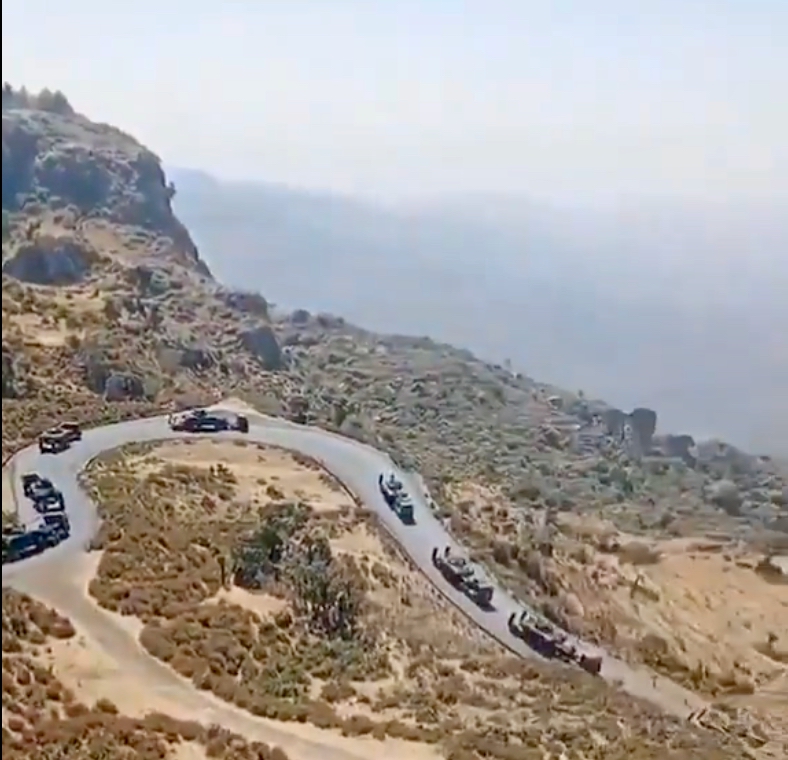
Endless convoys of trucks are stuck in the green Ethiopian hills. The videos circulating on social networks are said to show troop movements of the Ethiopian army heading north. In addition, there are reports of the recruitment of veterans and the withdrawal of the army from various provinces. In recent days, the signals indicating an imminent outbreak of war in Tigray in northern Ethiopia have increased. At the end of January, the first skirmishes and drone attacks already took place.Many feared a repeat of the Tigray War.
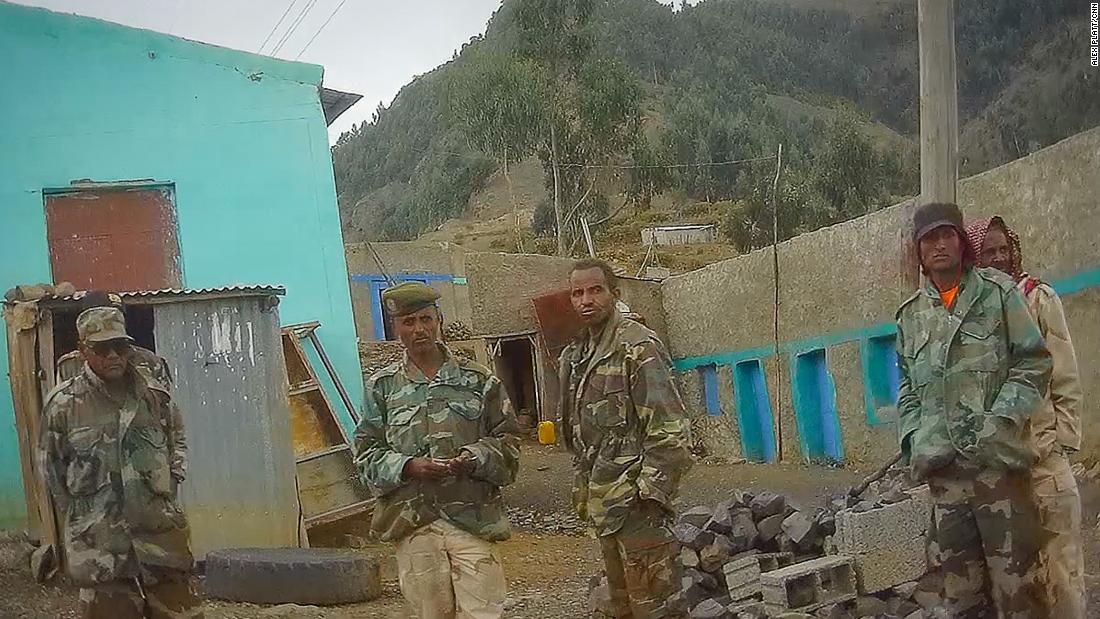
Between 2020 and 2022, the regional government led by the TPLF (Tigray People’s Liberation Front) fought against Ethiopia and Eritrea for control of the Tigray region. The war ended in 2022 with a ceasefire agreement reached in Pretoria, but the death toll was enormous. According to estimates, up to 600,000 people died, most of them civilians from Tigray. One million Tigrayans remain internally displaced. Nevertheless, the world public barely took notice of the war at that time.In northern Ethiopia, a new war is looming.
Last mediation attempts
Today, it is not much different, but there is an important difference from 2020: In the neighbouring country of Sudan, a civil war is raging between the Sudanese army and the militias of the Rapid Support Forces (RSF). The Tigray conflict threatens to be caught up in its wake.
The Sudanese army and its close ally Egypt accuse the Ethiopians, along with the United Arab Emirates, of supporting the RSF. New research by the Reuters news agency, which revealed an RSF training camp in western Ethiopia, substantiates these allegations. Ethiopia denies them.
But Egypt is also not a passive actor. In Cairo, they have been seeking a closer relationship with Eritrea, Ethiopia’s arch-rival, for some time. There has long been a conflict between Egypt and Ethiopia over the use of the Nile. The opening of the Grand Ethiopian Renaissance Dam (GERD) on the border with Sudan has further fuelled this.
At the end of January, people in Mekele were waiting in front of a bank to withdraw money. In the Tigray region, fear of a new war is growing.
Many fear the expansion of the Sudan war into Ethiopia. In recent weeks, there have been mediation attempts by the African Union and presumably also by Saudi Arabia. Saudi diplomats met with representatives of Ethiopia and Eritrea last week. These diplomatic efforts to defuse the conflict have, however, not been successful so far. Diplomatic circles report that the focus of international mediators in Africa is currently not on Ethiopia, but on Sudan. They are simply overwhelmed by the many hotspots. Even the former American special envoy for the Horn of Africa, Mike Hammer, who negotiated the ceasefire agreement in 2022, was withdrawn by the American government. To this day, there is no replacement.
The TPLF has new allies.
The ceasefire agreement between Ethiopia and the TPLF was not implemented on key points. The demobilisation of the Tigray Defence Forces (TDF), which are subordinate to the TPLF, has not taken place. Meanwhile, Amhara militias continue to occupy the west of the Tigray region, blocking the return of the displaced population. The advance of armed TPLF forces into these disputed areas marks the beginning of the current crisis and led to an initial exchange of fire with Ethiopian forces at the end of January.
“The war could be even bigger than the last one in Tigray,” says Solomon, an analyst from Ethiopia, warning in a conversation with the NZZ. For security reasons, he only speaks under a pseudonym. The situation is different from 2020. While the TPLF was isolated back then and Tigray could easily be surrounded by Eritrean and Ethiopian forces, this time it has powerful friends. There has been an unofficial alignment between Eritrea and the TPLF. The Eritreans would probably support the TPLF logistically in the event of war.
A lot of fire and a lot of dry leaves
But the political leadership in Tigray is divided among themselves. After the ceasefire, a faction friendly to Addis Ababa formed, which has since split off. This splinter group includes the renowned General Tsadkan Gebretensae, who commanded the Tigrayan troops in the last war and achieved several military successes. In a video on social networks, the timeliness of which could not be verified, he advocates a short war against the TPLF.
The Ethiopian Prime Minister could use the disunity of the Tigrayan leadership to bring these friendly circles in Mekele, the provincial capital of Tigray, to power. With control over the Tigray Highlands, the Ethiopian forces would also have a clear path to Eritrea, explains Solomon.
Prime Minister Abiy Ahmed sees Ethiopia’s lack of access to the sea as a major weakness and is openly pursuing a policy to establish such access. The port of Assab, Eritrea’s southernmost port, is located approximately 300 kilometres from the borders of the Tigray province. Officially, the government of Abiy Ahmed rules out military action against Eritrea and requested international mediation between Addis Ababa and Asmara in October to resolve the issue.
Gerrit Kurtz, Ethiopia expert at the German Institute for International and Security Affairs, however, observes the emergence of a narrative in Ethiopia that would justify a war. In a letter to UN Secretary-General António Guterres in October of last year, the Ethiopian Foreign Ministry accused Eritrea of interfering in internal affairs and supporting armed groups that are fighting against the government.
Solomon also fears that the Abiy Ahmed government could fall victim to a strategic miscalculation. Due to the disunity of the Tigrayan leadership, it may be assuming a simple war and underestimating the risk of escalation. Kurtz currently considers a local conflict in Tigray to be more likely, but does not want to rule out the possibility that the conflict could escalate into a war with Eritrea: “There is a lot of kindling and a lot of dry leaves.”
Addis Ababa remains calm.
The Sudanese political scientist Kholood Khair, who closely follows the Sudan war, also says that Ethiopian experts almost unanimously expect a war outbreak in the coming days or weeks.
The residents of the Tigray region also share this concern. In the provincial capital of Mekele, there was a rush on food stores and banks after the first armed clashes. In the Ethiopian capital Addis Ababa, however, there is no sign of such panic, says Solomon. People were indifferent to the events in the north and were concerned with their own affairs. This is different from the last Tigray war in 2020, when there was great enthusiasm in the Ethiopian capital at the beginning.
4,316 / 5,000
 Martin Plaut
This is a nice piece, well written. The conflict will invite external forces more than ever and could ultimately lead to the fragmentation of the state. Abiy Ahmed’s miscalculations and immature decisions, especially given Ethiopia’s economic dependence on foreign aid, may make the war even more devastating for him. he relies more on AI-generated information than on real intelligence and grounded political judgment, the consequences could be severe. This situation might even mark the beginning of the end of authoritarian rule.