| Source: Ethiopia Cable, Issue 320 | 24 February, 2026 |
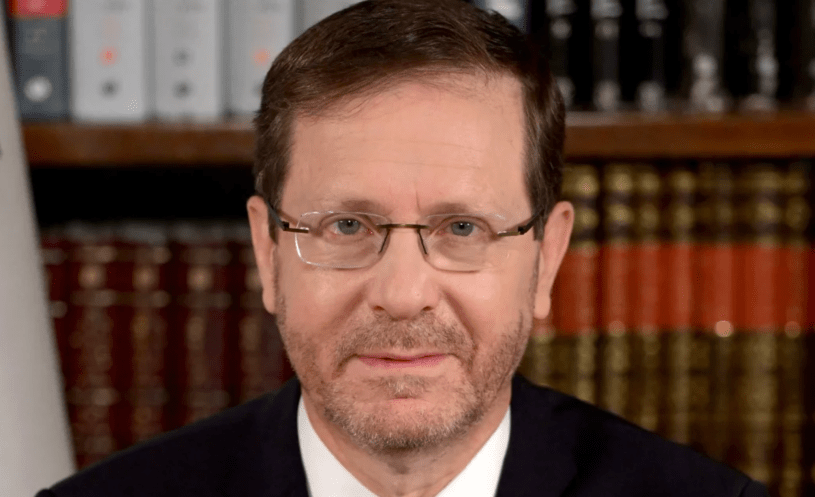
| Addis, Ankara and Tel Aviv With Israeli President Isaac Herzog expected in Addis Ababa today, the steady drumbeat of war to the north continues apace. Preparations for renewed conflict are stacking up, hand over fist. Having dangled Western Tigray before both Amhara and Tigray since the end of the Tigray war in 2022, this week the National Electoral Board of Ethiopia (NEBE) suddenly announced that 5 zones in Western Tigray would be removed from Mekelle’s jurisdiction. A thinly veiled provocation and blatant attempt to sever the developing Fano-Tigray People’s Liberation Front (TPLF) alliance, every alarm bell should be ringing for impending conflict. Meanwhile, PM Abiy Ahmed is basking in the trappings of the state, playing the role of regional leader to a spate of foreign dignitaries over the past week. With the region watching with alarm at the unfolding situation in northern Ethiopia, Abiy has fended off a host of criticism and pleas from allies and adversaries alike to hold off on war. Herzog’s dash to Addis, though, is likely not motivated by the prospect of renewed Tigray-Eritrean-Ethiopian violence, but rather a reaction against the visit of one of Israel’s principal geostrategic adversaries, Turkish President Recep Tayyip Erdoğan, to Ethiopia to mark the centenary of the Turkish embassy’s establishment in the country. During his first trip to Ethiopia in over a decade, Erdoğan’s public asks of Abiy were explicit—an entreaty for Addis not to follow Israel’s unilateral recognition of Somaliland in December 2025, stating that “Israel’s recognition of Somaliland would benefit neither Somaliland nor the Horn of Africa.” The ask was hardly a surprise. In conjunction with Mogadishu, since Tel Aviv’s sudden move, the Turkish president has spearheaded — along with Saudi Arabia and Egypt — the successful geopolitical push against other states following suit, rallying the Arab League and other multilaterals in their condemnation of Somaliland recognition. And though many in Hargeisa hoped that Ethiopia would live up to Meles Zenawi’s famous maxim that the country wouldn’t be the “first or third” to recognise the polity, Addis so far has preferred not to commit. The focus of Abiy, instead, has lain squarely with preparations for a resumption of armed conflict in Tigray. As part of Erdoğan’s public appeal, the Turkish leader stated that the “Horn of Africa should not be the battlefield of foreign forces. We believe that countries of the region should address their problems by themselves.” Though perhaps an admirable assertion, it is ironic to hear this from the Turkish president, someone who has facilitated the delivery of F-16 fighter jets to Mogadishu, Bayraktar drones to Ethiopia, and many thousands of BRG 55 rifles to the Sudanese army in the past years alone. Türkiye —like the UAE, Saudi Arabia, and Qatar —is a more than active participant in the ‘Red Sea Arena,’ the term used to denote the broader theatre of contestation along the arterial waterways of the Gulf of Aden and the Red Sea. Moreover, Ankara is now looking to establish a military base on the strategic Gulf of Aden in the contested Sanaag region, a clear rebuke to Israeli recognition while establishing this littoral stretch as a potential new flashpoint of its geopolitical contestation with Tel Aviv. Inadvertently, though, Erdoğan’s statement spoke directly to many of the broader fears about a resumption of conflict between Mekelle, Addis and Asmara —the externalisation of the Horn of Africa into the politics of the Gulf and the Middle East. Unlike during the 2020-2022 war, where external elements were broadly confined to delivering drones for the Ethiopian government, the raging war in Sudan could well envelop a spiralling conflict in the country’s north. To this end, emissaries from Riyadh have also repeatedly pleaded with senior Ethiopian officials, including Abiy, in recent weeks to avoid war with Eritrea, an ally in the Sudan war and firmly within the Cairo-Ankara-Riyadh axis. But such requests have been brushed aside, and it appears that Addis remains hell-bent on returning conflict to Tigray and beyond. Still, Ankara wields sway in Ethiopia, not least with Addis operating the Turkish-supplied Bayraktar drones in Amhara and Oromia. Furthermore, Türkiye is the second-largest source of Foreign Direct Investment (FDI) in Ethiopia, behind only China. And Erdoğan, having mediated the rupture in Mogadishu-Addis relations in 2024 after the infamous ‘Memorandum of Understanding’ that promised coastal territory for a naval base in exchange for sovereign recognition of Somaliland, clearly feels he has the heft to forestall any counter-pressure from the Israelis or the Emirates. He may be right, but it is unlikely that it is Turkish pressure holding off Ethiopian recognition, rather than Addis’s own interest in fomenting war. A conflict, of course, that has loomed much closer since Ethiopia’s interest returned to Assab, the Eritrean port city on the Red Sea. But Herzog, too, is arriving in Addis today with a rival geopolitical shopping list for Ethiopia. Having bloodied Iran’s ‘Axis of Resistance’ since October 2023, Israeli attention has now turned to forcibly reshaping the regional security architecture of the broader Red Sea, western Indian Ocean and Mediterranean. As part of this expanding strategy, Israel’s recognition of Somaliland seeks to secure a foothold on the Gulf of Aden to resist Iranian interests– via their Houthi proxies– and the developing Turkish stakes in Somalia and beyond. Herzog’s visit reflects a growing formal alliance now taking shape as a counterbalance to the Ankara-Cairo-Riyadh and Islamabad axes. To this end, in another telling intervention, Benjamin Netanyahu stated that Israel intends to “create an entire system, essentially a ‘hexagon’ of alliances around or within the Middle East”, referencing Greece, Cyprus, and other unnamed Arab, African, and Asian countries. The Israeli PM stated that the alliance would see “eye to eye… against the radical axes, both the radical Shia axis, which we have struck very hard, and the emerging radical Sunni axis.” The Sunni allusion is a clear rebuke to Ankara and Qatar, with both relationships having swiftly degenerated over Tel Aviv’s obliteration of the Gaza Strip and with significant divergences between the capitals on a host of issues spanning the Mediterranean, Levant, Red Sea and Horn of Africa. Two countries in particular are likely to play a prominent role in Israel’s new hexagon alliance: the UAE and India. In the Horn of Africa, Israel’s early securitised forays have sought to piggyback off the UAE’s relationships, with recognition of Somaliland quietly facilitated by the Emirates. And in turn, Herzog will likely be warmly welcomed by Abiy’s government, which remains wholly dependent on the UAE’s largesse and weaponry– and now helping to facilitate the training of Emirati-backed Rapid Support Force paramilitaries. India is also anticipated to play a prominent role within the new Israeli-led alliance, with PM Narendra Modi hailing relations with Israel and the “diverse nature of our bilateral relations” in a recent visit. In part, the growing military and defence ties between Saudi Arabia and Pakistan are precipitating the deepening Israeli-Indian relationship, while other signatories of the Abraham Accords —Bahrain and Morocco —are likely to fall into Netanyahu’s new securitised ‘hexagon.’ And the latest ascendant to the Abraham Accords, Somaliland may well be one of the ‘8’ alluded to countries by Netanyahu. India and Ethiopia, too, have elevated their relations to fresh heights in December, with Modi visiting Addis in a much-heralded display of bonhomie. Yet much of this would fall by the wayside in the event of a renewed war. In the press conference with Erdoğan, Abiy again pressed home Ethiopia’s interest in ‘restoring’ sea access, revisiting revisionist histories of unspecified “enemies” of the country conspiring to keep the country landlocked. In a hardly subtle message at a recent military ceremony, a vast banner featured an image of PM Abiy and the line “Whether they like us or not, we will not live as a landlocked state.” And so this surreal saga continues, with PM Abiy Ahmed playing the statesman with Erdoğan, Herzog, and the African Union summit while insurgencies rage in Oromia and Amhara, and the government prepares for yet more war. And for all the choreography of alliances, the immediate reality remains tanks on flatbeds heading north. The Ethiopian Cable Team |
 Martin Plaut