The political rewards Trump could gain by wading into the Horn of Africa would be slim, even if the Tigray’s Christianity recommends their cause to him. Yet there may be few more feasible, consequential foreign policy gains he could achieve.
Here’s a War Trump Really Could — and Should — Prevent
Source: Bloomberg
February 26, 2026 at 5:00 AM GMT
Marc Champion is a Bloomberg Opinion columnist covering Europe, Russia and the Middle East. He was previously Istanbul bureau chief for the Wall Street Journal.
- Donald Trump is in a position to lead pre-emptive diplomacy in the Horn of Africa, where tensions between Ethiopia’s federal government and the Tigray Popular Liberation Front are rising.
- A conflict in Tigray could have a wider impact due to the region’s complex web of alliances and rivalries, including those between the United Arab Emirates, Saudi Arabia, Egypt, and other countries.
- Trump has strong relationships with many of the major players involved and could act as a convener and cajoler-in-chief to help resolve the conflict and address underlying issues such as Ethiopia’s access to the Red Sea and Egypt’s water security concerns.
Donald Trump is fond of saying wars don’t start on his watch and that he’s ended some we never knew possible. That’s at least up for debate, as the US president lays his finger on the trigger of another possible attack on Iran. Even so, there is one high-stakes conflict in the already troubled Horn of Africa that’s ripe for pre-emptive diplomacy — and where he would be uniquely placed to lead.
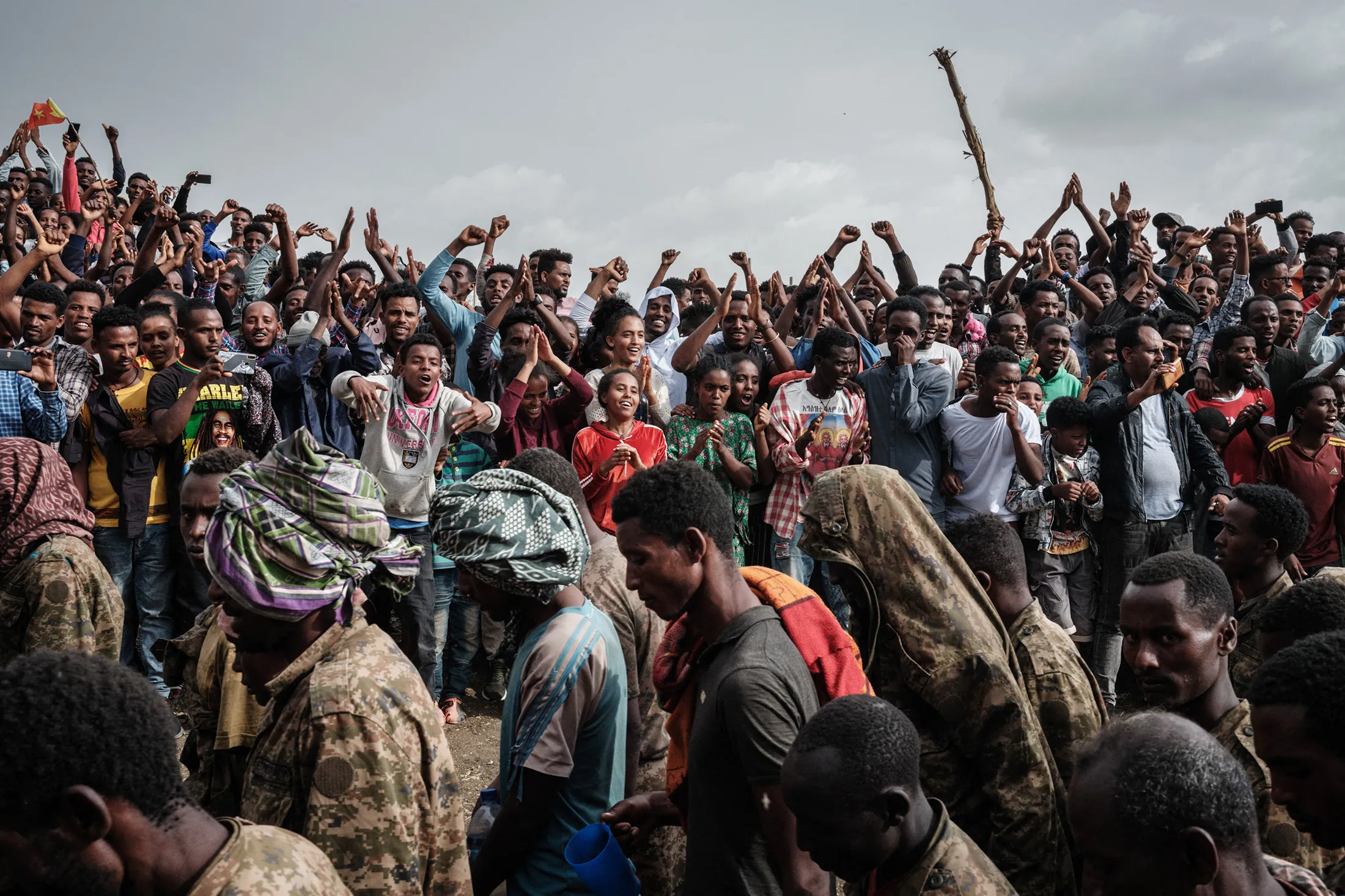
Ethiopia’s federal government has sent forces toward its northern province of Tigray, where a brutal 2020-2022 civil war that drew in neighboring Eritrea claimed hundreds of thousands of lives. There have already been skirmishes and drone strikes; on Feb. 19 , the International Crisis Group issued a report warning that the risk of conflict is high.
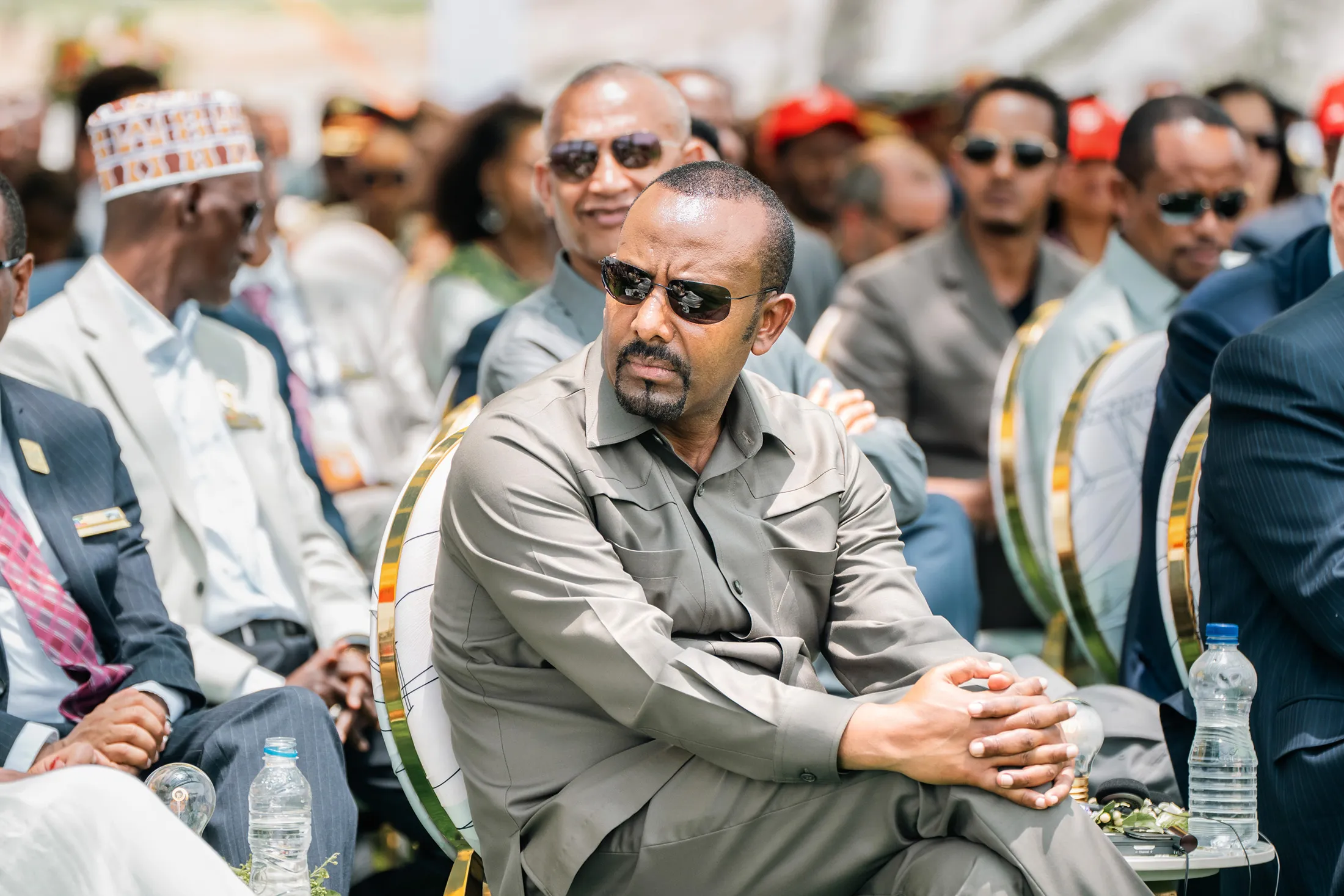
Tensions between Prime Minister Abiy Ahmed and the Tigray Popular Liberation Front (TPLF) — the dominant semi-military, semi-Marxist party he displaced from the capital in 2018 — have been rising again since at least last year, driven by frustrations over the failure to implement the terms of the peace deal that ended the previous war. On Tuesday, the province’s regional administration rejected federal decisions to suspend elections in contested areas of the province as “a direct attack on our people, designed to dismantle Tigray.”
Gulf Rivals
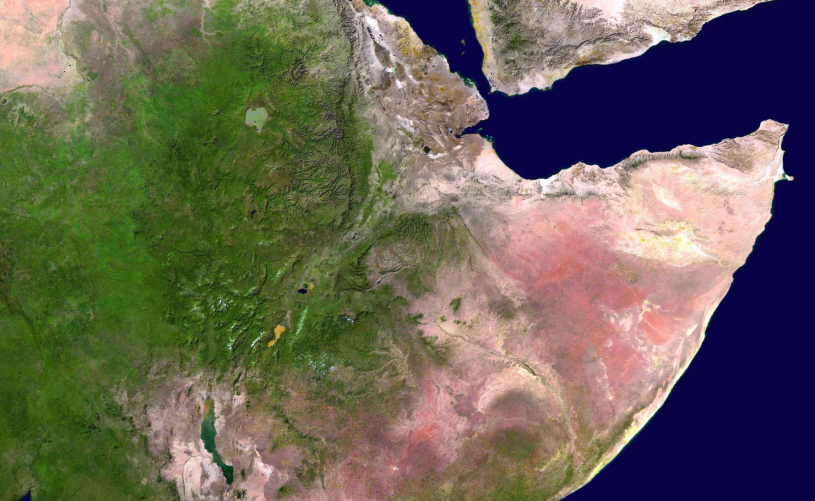
A familiar downward spiral of action and response has begun at a time when a rekindling of the bloodletting would likely have a far wider impact than four years ago, because so much has changed across the region in the interim. Ethiopia, an empire-cum-state that unites disparate ethnic groups and religions that spill over borders into neighboring countries, is now surrounded by wars and disputes fueled by two rival groups of regional powers. One, led by the United Arab Emirates, includes Ethiopia, Israel and Rwanda. The other, led by UAE rival Saudi Arabia, includes Eritrea, along with Egypt, Qatar and Turkey.
“All these conflicts are part of the same regional conflict system, with the alliances helping to shape how they’re sustained and metastasize,” Ahmed Soliman, a Horn of Africa researcher at the UK think tank Chatham House, told me. The last thing the region needs is for the ethnic and religious Ethiopian jigsaw at its heart to become the next battleground.
Trump has strong relationships with most of the major players involved; they even sit on his so-called Board of Peace. And because none of the parties at risk of going back to war in Tigray really want to, there’s a good chance that the right intermediary could not only dial back the tension, but also work out a framework for resolving its drivers.
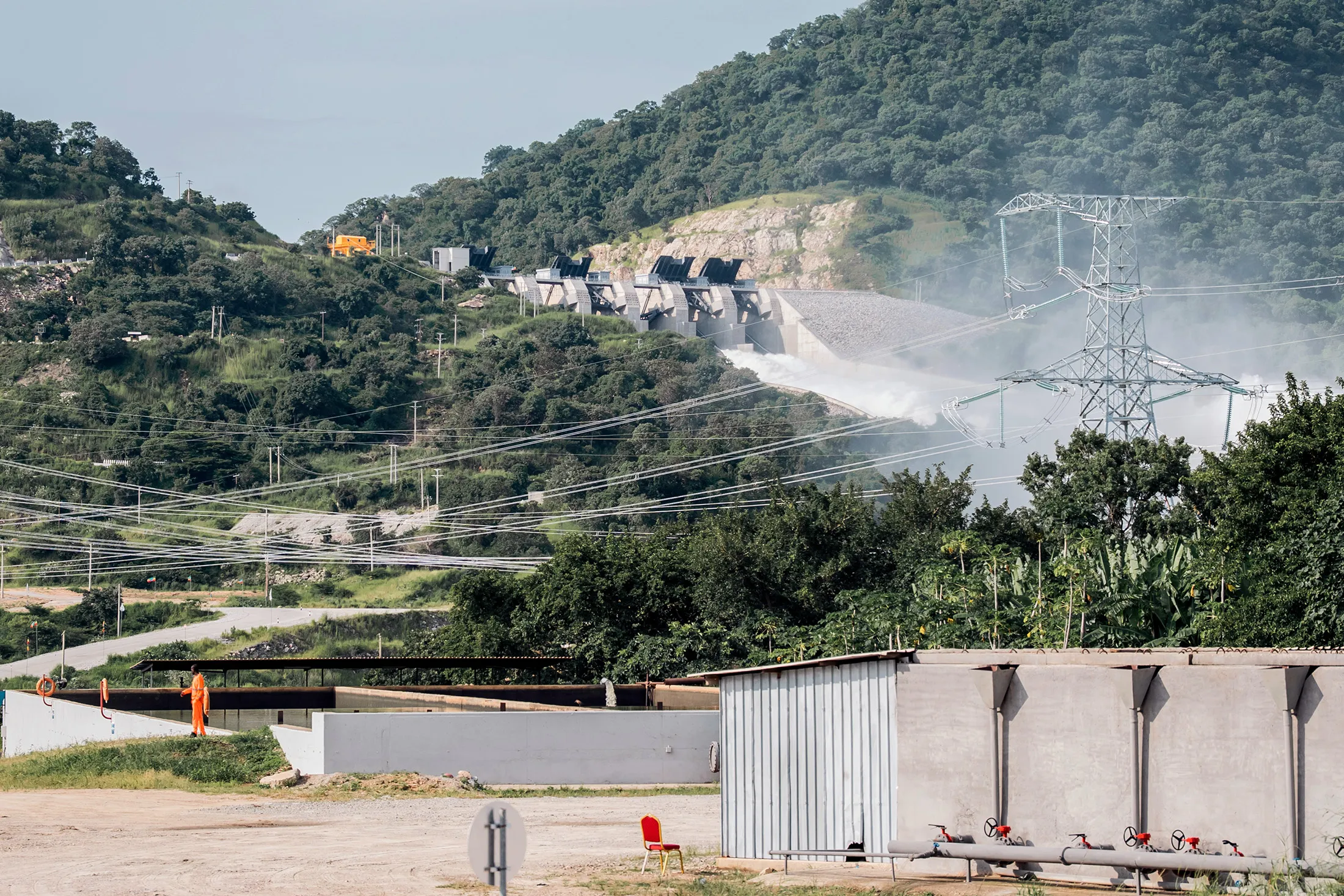
Some of these are long standing. Egypt and Ethiopia — ancient rivals for regional dominance at either end of the Nile — are embroiled in an intractable dispute over Ethiopia’s construction and now use of the continent’s largest hydroelectric dam. Known by its acronym GERD, the Grand Ethiopian Renaissance Dam is located on the headwaters of the Blue Nile, source of the vast majority of Egypt’s strained water supply. Trump last year sought to restart mediated talks between the two nations, but the attempt was doomed by his openly siding with Cairo and clumsy threats that the dam might be destroyed if Abiy didn’t cut a deal.
Other disputes are newer. A full-blown civil war has erupted since 2022 in neighboring Sudan. Ethiopia and Eritrea, who allied against the TPLF in the last war, have fallen out and now aid opposing sides across the Sudanese border. Another conflagration around Tigray would likely see one conflict bleed into the other in a vicious dynamic similar to what’s happened in the nearby Great Lakes region, where a peace deal Trump mediated last year between Rwanda and Democratic Republic of Congo failed to take hold.
The threat of war
Any renewal of hostilities in Tigray would likely now involve state-on-state conflict, with Eritrea switching sides to fight alongside the TPLF. One factor in the realignment is Abiy’s strident campaign for access to the Red Sea and the ability to build a naval base at Eritrea’s port of Assab, which belonged to Ethiopia until Eritrea fought its way to independence in 1993. Justified or not, Abiy sees Eritrea’s hand — and behind that Egypt’s — in a surge of provincial insurgencies against his government, not just in Tigray, but also in the country’s most populous regions, Amhara and Oromia. Eritrea, itself half ethnic Tigray, denies it has any troops in Ethiopia. But the facts are probably less important than what Abiy believes.
Already opposed in Sudan, to Ethiopia’s northwest, now the Saudi- and UAE-led coalitions are also contesting each other in Somalia and its breakaway territory of Somaliland, to the east. Last year, Abiy had signed a deal with Somaliland to lease space for a naval base, close to the main commercial port of Berbera, which is operated by the UAE’s Dubai World Ltd. He backed down only in the face of threats from the federal government in Mogadishu that if he didn’t, they’d kick out Ethiopian troops that are in Somalia to fight al-Qaeda-linked al-Shabaab jihadists. With a 6 million-strong ethnic-Somali population of his own just across the border, Abiy didn’t want to risk the loss of control that would bring.
Tensions between Mogadishu and the UAE boiled over in January. Among other perceived transgressions, the UAE appeared to be cooperating with Israel as it became the first nation in the world to recognize Somaliland as an independent state. The Israelis, too, were in search of a Red Sea military base, to take on the Houthi militias that have been firing missiles on Tel Aviv from Yemen, just across the water. The recognition — as this recent report from the UK’s Royal United Services Institute argues — may only serve to make Somaliland’s position less secure. On Feb. 9, Somalia signed a defense cooperation agreement with UAE rival, Saudi Arabia.
Two Waters
In Abiy’s view, the Nile and Red Sea issues are so entwined they form a single geopolitical challenge. He calls it his “Two Waters” doctrine. “The Nile is at the heart of everything, when you go back to the beginning,” Martin Plaut, a long-time observer of the region now at the University of London’s Institute of Commonwealth Studies, told me. “Egypt has been sponsoring the Eritreans as far back as the 1950s to try and stop the Nile being used.” The Red Sea, meanwhile, controls access to Cairo’s other economic lifeline, Suez.
There’s nothing irrational about Ethiopia’s search for Red Sea access, or its construction of the GERD, which in time will double the power-generation capacity of what is a poor and fast-growing nation. With a population upward of 132 million, this is the largest landlocked country in the world. The implications for trade and economic security would be significant. So, too, for the nation’s geopolitical ambitions; there’s a reason so many countries, including China, France, Italy, Japan and the US, have built naval and air bases in Djibouti, which sits between Ethiopia, Eritrea and Somalia at the southern entrance to the Red Sea. Turkey has a military presence in Somalia. The UAE has one in Somaliland.
This is all eminently solvable. It just takes some high-level determination and leverage to knock heads together — before things get out of hand.
The preponderance of science, for example, suggests that GERD, a dam created solely for power generation, need not threaten water supplies downstream in Cairo so long as there’s proper coordination. Similarly, it should be possible to give Ethiopia the assured access to the sea that it’s looking for. Indeed, the Abu Dhabi-based newspaper The National reported this week that Egypt has proposed arranging a Red Sea presence for Ethiopia, in exchange for a deal regulating the GERD’s water use. That should in turn make it easier for Abiy to come to an understanding with Eritrea and Tigray.
To the US administration’s credit, it has sent diplomats to the region in the attempt to calm the fighting in Sudan, and has delivered messages of restraint to Abiy over Tigray. But it will take more negotiating heft to do the kind of three-dimensional deal that would settle the demands of Ethiopia for power and Red Sea access, and of Egypt for water security, while also meeting Eritrean needs for security and Tigrayanconcerns over unimplemented clauses of the 2022 peace deal (such as repatriation of refugees).
Trump doesn’t have to do the detail. He can act as convener and cajoler-in-chief for US allies in the region who have deep, if conflicting, interests, and the leverage needed to get results. The political rewards Trump could gain by wading into the Horn of Africa would be slim, even if the Tigray’s Christianity recommends their cause to him. Yet there may be few more feasible, consequential foreign policy gains he could achieve.
 Martin Plaut