Published: March 9, 2026 1.54pm GMT Source: The Conversation
Author: Brendon J. Cannon Associate Professor, Khalifa University
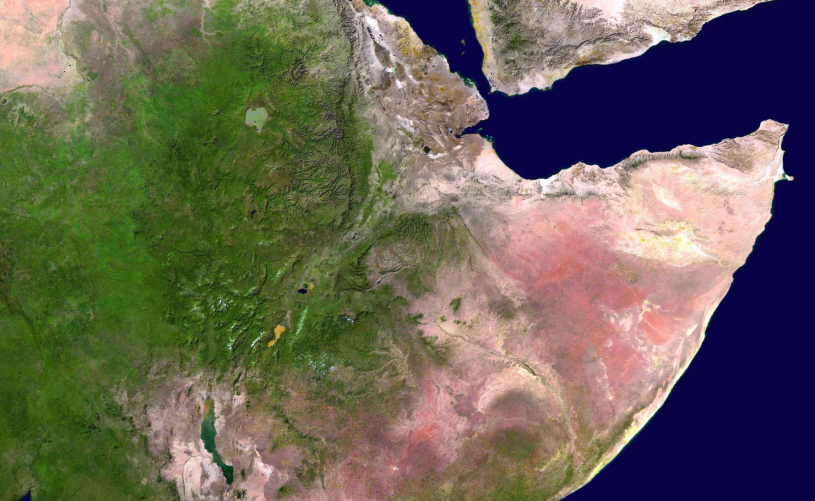
Gulf states have become increasingly prominent in the squabbles, civil wars and inter-country tensions in the Horn of Africa over the past decade. The countries in this region include Sudan, Ethiopia, Eritrea, Somaliland, Somalia and Djibouti.
As a result, the US-Israel war on Iran matters for the Horn, where Gulf money, Gulf diplomacy and Gulf defence equipment have become part of the operating environment of conflict and rivalry.
For over a decade, I have researched the interactions of sub-Saharan Africa with Arab Gulf states, as well as Turkey, Japan, China and others. In my view, Gulf states may scale back their engagement in the Horn as the security situation in the Middle Eastern region deteriorates.
This could potentially reshape conflicts, alignments and diplomacy across the Horn of Africa – if the war drags on.
Gulf states like the United Arab Emirates and Qatar – important partners for Ethiopia, Sudan and Somalia – will likely begin focusing inward on their own security. The strategic importance of Horn of Africa states for Saudi Arabia or the UAE will diminish.
In practical terms, this could mean a drop in high-level visits, a reduction in arms flows and a weakening of political loyalty as Horn actors adjust.
For the Horn, this could lead to two outcomes. One, an escalation in conflict, with states and armed groups seeking to settle scores while external patrons are distracted. Or second, a temporary cooling-off period as actors reassess the implications of reduced Gulf funding, arms and mediation.
Either way, the Horn is unlikely to grow calmer. Instead, longstanding grievances, between Ethiopia and Eritrea for instance, may become more pronounced.
Sudan’s war and Gulf backing
For Sudan, the implications of the ongoing conflict in the Gulf could be significant. The two warring parties – the Rapid Support Forces (RSF) and Sudan’s military – have relied heavily on external support.
Both may find themselves suddenly without the largesse and military equipment from Gulf backers, depending on how the Iran war unfolds. This drawback of support could hit the RSF particularly hard as its biggest external backer, the UAE, focuses on its own security. Sudan’s military, however, may continue to benefit from Turkish and Egyptian support.
Much recent commentary has focused on evolving “alliances” and “blocs” that pit the UAE/Israel/Somaliland/Ethiopia against Turkey/Saudi Arabia/Egypt/Somalia within Sudan’s civil war.
This framing, however, often misses two basic facts. First, these are not alliances but rather opportunistic alignments that bring together diverse actors and interests from outside the Horn. These alignments have always been opportunistic on the part of external state actors, such as Turkey, the UAE and Qatar.
They hold only as long as external patrons can plausibly deliver resources, arms and diplomatic attention without unacceptable reputational damage to themselves.
Second, state leaders in the Horn of Africa have largely steered these relationships themselves. They have used external patrons to advance domestic and regional interests.
Read more: Middle Eastern monarchies in Sudan’s war: what’s driving their interests
Gulf states’ opportunistic interventions were possible largely because they were at peace with one another and with Iran. That is no longer the case.
Sudan’s civil war may last even longer now that Gulf states are focused elsewhere. Neither side in the civil war will have the ability to land a knock-out punch.
Ethiopia, Eritrea, Somalia and Somaliland’s recognition
The Iran war could affect Ethiopia, Eritrea, Somalia and Somaliland in a number of ways.
Firstly, the diplomatic flurry of visits by Gulf leaders to Ethiopia and Somalia may slow. From 2023 to early 2026, Gulf leaders sought to shape political outcomes and advance investment and logistics interests. If this tempo slows, Horn actors will face less patronage and mediation, which may lead either to a pause in tensions or to quick escalation.
Secondly, Israel’s recognition of Somaliland – which Qatar and Saudi Arabia (as well as Egypt and Turkey) have taken a stand against – is now likely to be far from their agendas. Somalia’s long-standing ambition of reabsorbing Somaliland may also find waning external support.
Thirdly, Ethiopia’s interest in gaining access to the Red Sea has been one of the central issues in recent diplomatic manoeuvring in the Horn. With Saudi Arabia, in particular, focused on Iran, Addis Ababa may feel emboldened to formalise access through Somaliland (with which it had signed an agreement in 2024).
Turkey and Egypt may remain engaged
Two non-Gulf states, however, are likely to remain active in the Horn: Turkey and Egypt.
Turkey can still afford foreign policy opportunism in the region, as long as it does not become directly involved in the Iran war. For Ankara, the Gulf states’ distraction may create an opportunity to expand its influence. This could be through trying to help Somalia reassert control over Somaliland and other autonomous regions. It could also encourage Ethiopia to reduce tensions with Eritrea, or help balance relations between Ethiopia and Egypt. These would all enhance Turkey’s reputation outside its region and reinforce the image it has of itself as a rising, global power.
Read more: Egypt-Ethiopia hostilities are playing out in the Horn – the risk of new proxy wars is high
Egypt’s involvement is driven by existential concerns over the Nile. This is particularly about a dispute with Ethiopia over the Grand Ethiopian Renaissance Dam. This is a massive project on the Blue Nile that Egypt fears could reduce the flow of water on which its agriculture, economy and population depend.
For both Turkey and Egypt, curtailing Israel’s growing influence across the wider Middle East and the Horn of Africa remains a strategic priority. A stronger Israel would dilute Turkey’s desired role as a broker and patron in the Horn, and complicate Egypt’s efforts to constrain Ethiopia.
An emboldened Israel, however, could also reshape Egypt’s engagement with Ethiopia. Egypt and Turkey might offer Ethiopia’s Abiy Ahmed diplomatic incentives – including limited or symbolic access to the Red Sea in Somaliland’s port of Berbera, for instance. This would be in return for Addis Ababa’s agreement to reaffirm Somalia’s territorial integrity (and never recognise Somaliland). But this seems unlikely as neither Egypt nor Turkey possesses the power to put Somalia back together again.
The Horn’s own agenda
The real powers in the Horn of Africa remain the region’s own states and rival centres of authority. Horn states have the agency and interests to shape outcomes. They have long drawn external patrons into the region, playing them off against one another to extract resources, recognition and diplomatic support.
What the Iran war changes is not who sets the Horn’s agenda, but the external conditions under which Horn actors pursue it.
Gulf states have been opportunistic precisely because they had the capacity to act in the Horn when the Gulf itself was stable. That capacity may now be constrained.
This is not a new finding. In work published over five years ago, my colleague Federico Donelli and I argued that enduring security burdens at home limited the reach of Gulf ambitions in the Horn.
The Horn’s underlying conflicts and rivalries will therefore continue to interact in unpredictable ways.
 Martin Plaut