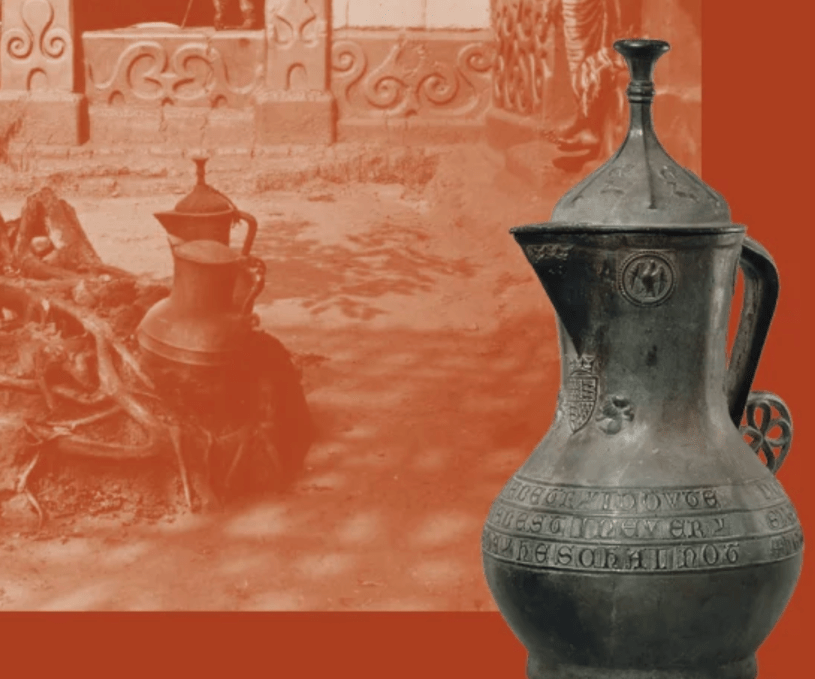
What can a medieval bronze jug reveal about the connections between England and Ghana?
Made in England between 1340 and 1405, the Asante Ewer later travelled to West Africa along the ancient trans-Saharan trade routes.
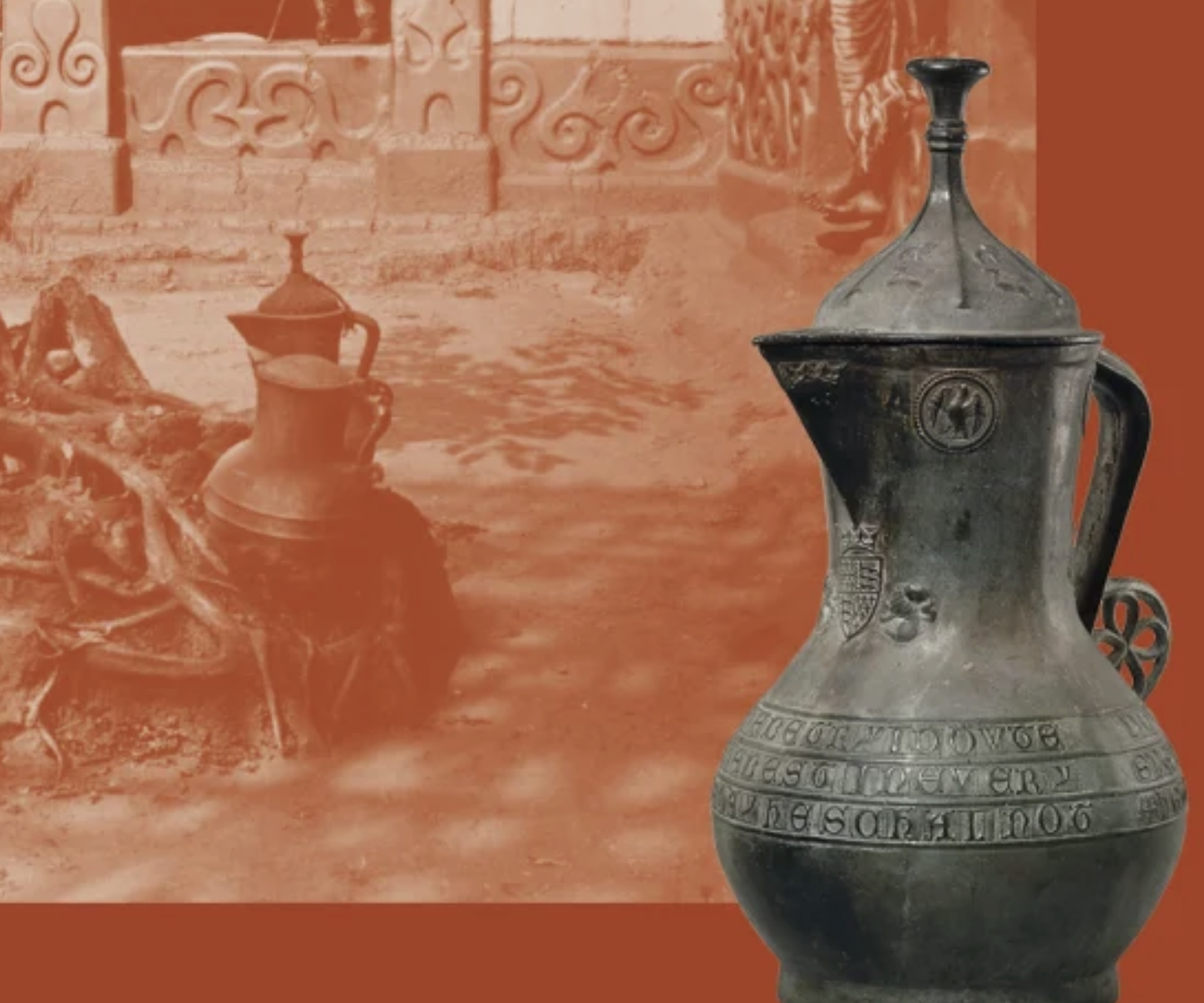
In the 1880s it was photographed in a courtyard of the royal palace of the Asantehene, king of the Asante people, in Kumasi (in present-day Ghana).
During the Anglo-Asante War of 1896 it was looted by British forces and subsequently purchased by the British Museum. A second ewer, also taken in 1896 and shown in the same photograph, was presented to the Prince of Wales’s Own (West Yorkshire) Regiment. This display reunites these two jugs.
A major new research project into the Asante Ewer – one of the finest examples of late medieval English bronze casting – is helping to further trace the story of its journey to Ghana, and its status and significance in West Africa. Its location in the centre of the palace courtyard, in what appears to be a shrine, embedded in the roots of sacred trees, suggests it was an object of significant cultural or ritual value.
Remarkable for surviving the long-distance journey from Europe to West Africa and back, the Asante Ewer has had vastly different lives, from a luxury English jug to sacred West African vessel, to colonial loot taken by British troops.
 Martin Plaut