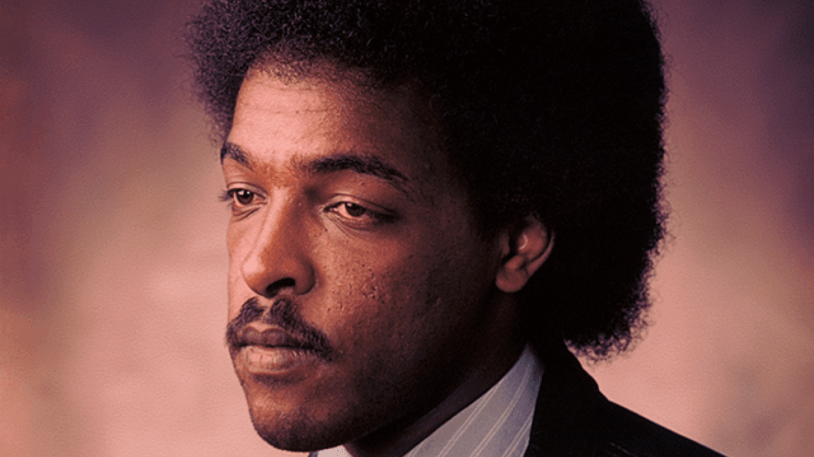
Why do Sweden and the EU not insist more forcefully on the release of Swedish and EU citizen Dawit Isaak? The answer lies in the EU’s official policy approach to Eritrea.
Mar 17, 2026
According to internal EU documents from 2022, the EU has “no alternative” but to engage with Eritrea, given its important strategic interests in the Horn of Africa. As a result, the Afwerki regime has virtually no reason to fear any direct confrontation with European leaders or accountability for its crimes. It also means that the Eritrean government has no incentive to release its long-term political prisoners, including Swedish journalist Dawit Isaak.
A shorter version of this article appeared in EXPRESSEN today https://www.expressen.se/debatt/debatt-eus-fega-linje-mot-eritrea-haller-inte/

By Susanne Berger Caroline Edelstam
March 17, 2026
“
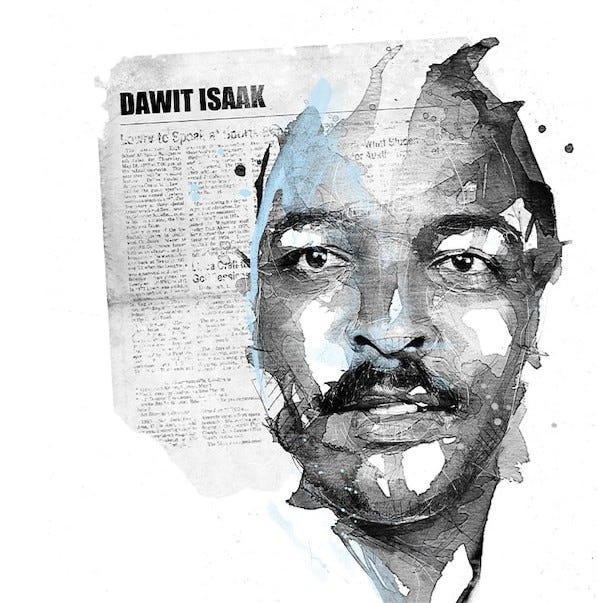
The 2022 summary report contains not a single reference to the enforced disappearance and arbitrary detention of a fellow EU citizen, Dawit Isaak, for almost a quarter of a century.
Dawit Isaak’s release not a priority
More than five months have passed since Swedish Foreign Minister Maria Malmer Stenergard demanded the immediate release of Swedish journalist Dawit Isaak on humanitarian grounds.
Eritrea’s only response so far appears to have been the invitation extended to Malmer Stenergard in December 2025, which resulted in a surprise two-day visit to the country. At the time, Malmer Stenergard expressed confidence that her new pragmatic approach to bilateral contacts would allow both sides to address sensitive issues more effectively, including the fate of Dawit Isaak.
Mr. Isaak has suffered 24 years of unlawful detention in Eritrea. In all this time, his family has not had any contact with him or even a basic proof of life. Instead, they have received only vague assurances from Eritrean and Swedish officials that Mr. Isaak remains imprisoned, despite rumors of his suffering from possibly serious health problems. Family members as well as human rights advocates are wondering why the Swedish Foreign Minister and the EU have not confronted Eritrea more directly, conveying in no uncertain terms that they consider Dawit Isaak’s release a priority and absolute necessity before any further normalization of relations can proceed.
Malmer Stenergard has emphasized that she repeatedly impressed on the Eritrean leadership the “importance” of freeing Mr. Isaak. However, the Swedish Foreign Minister notably refrained from any public criticism of Eritrea brutalizing a Swedish and EU citizen for over two decades, as well as the country’s abysmal overall human rights record.
No mention of political prisoners in 2022 EU report
A closer look into Sweden’s and the EU’s relations with Eritrea over the past decade provides a possible explanation for Malmer Stenergard’s restraint. It suggests that the regime of President Isaias Afwerki has virtually no incentive to release long-term political prisoners and can feel essentially secure that the EU will not seek any direct confrontation over the issue.
An EU report summarizing an official visit to the country in April-May 2022 is of particular interest. The delegation comprised representatives from twelve EU member states, including Sweden.
The author of the report was Lothar Jaschke, at the time the head of the Africa 5 section (Horn of Africa) of the European External Action Service (EAAS).1
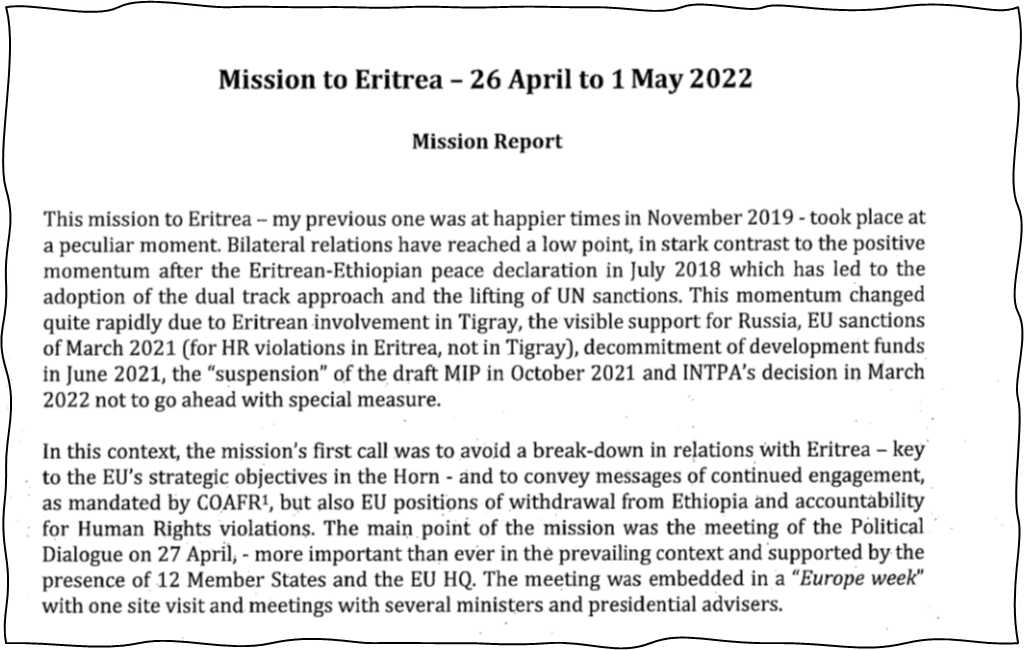
The discussions in Asmara centered on EU-Eritrean political relations, economic and social issues, peace and security, as well as questions related to development and regional integration.
Notably absent was any mention of the ruthless suppression of civil liberties and the fate of thousands of political prisoners. The summary report does not contain a single reference to the enforced disappearance and arbitrary detention of a fellow EU citizen, Dawit Isaak, for almost a quarter of a century.
The EU delegation raised the need for accountability of serious human rights violations exclusively in connection with Eritrea’s violent actions in the neighboring Ethiopian province of Tigray. Eritrea’s mandatory national service, which the United Nations and other international bodies have sharply criticized as a system of forced labor that has enslaved almost the entire Eritrean civilian population, was barely touched upon.
The 2022 meeting occurred at a low point in official EU-Eritrea relations. By then, the optimism following the Eritrean – Ethiopian peace deal in 2018 had almost completely evaporated. The reasons were Eritrea’s aggressive intervention in Tigray, its growing engagement with China (especially its embrace of China’s Belt& Road investment initiative) and its vocal support for Russia in the conflict with Ukraine.
Both sides agreed that the focus needed be on “rebuilding trust”. Eritrea stressed the importance of its sovereignty and territorial integrity, as well as its expectation to meet with EU officials as “equals”.
2021 EU policy mandates engagement
In response, the EU settled on a dual track approach: First, to avoid a full rupture of relations with Eritrea, and second, to seek continued engagement “on the basis of a comprehensive and balanced long-term strategic approach.” In fact, this pragmatic posture was formally mandated already in December 2021 by the Africa Working Party (COAFR), the EU’s official policy making body for sub-Saharan Africa.2
Shortly afterwards, in February 2022, President Afwerki issued a directive to seek closer engagement with the EU.
In his summation of the subsequent EU visit to Eritrea in April-May 2022, Jaschke concluded that from the European perspective, there really was no alternative to pursuing its “enhanced interactive dialogue” with Eritrea, “being fully cognizant of the EU’s long term strategic interests.” These concern primarily migration control (Eritrea is responsible for creating one of the highest influx of refugees into the EU), maritime security, and regional stability, according to Kjetil Tronvoll, professor of peace and conflict studies at Oslo New University College and an expert on the Horn of Africa. He remains skeptical of the EU’s approach. “Since the early 2000’s, Eritrea has been categorized as a ‘regional spoiler’ and was put under UN sanctions for it,” Tronvoll says. “Political engagement has failed for twenty years to pacify the regime; why should it succeed now?”
In his report, Jaschke points specifically to President Afwerki’s well known aversion to “conditionality” – such as tying development grants or the EU’s sanctions policy to specific benchmarks or political concessions. This limits the EU’s options to seek compliance from the regime, even in matters of fundamental concern, such as serious human rights violations.
“
Rather than crafting an individual, new approach, as Malmer Stenergard is trying to suggest, Sweden is basically following established EU policy.
Most importantly, it means that the Afwerki regime has virtually no reason to fear any direct confrontation with European leaders or to be held accountable for its crimes. It also partly explains Malmer Stenergard’s restrained approach with regards to the case of Dawit Isaak. The result is that rather than crafting an individual, new approach, as she is trying to suggest, the Swedish government is basically following established EU policy.
Sweden sidesteps calls for accountability, rejects public advocacy
Adherence to this policy partly explains why the Swedish Foreign Ministry has repeatedly refused to support the leveling of criminal charges against members of the Eritrean leadership (universal jurisdiction)3 or to pressure the regime publicly for Dawit Isaak’s release, arguing that such campaigns are rarely successful.
There is undoubtedly a limit to what these campaigns can accomplish on their own. Negotiations are best conducted by qualified experts and preferably entirely out of the public eye. However, to deny the potential impact of public advocacy, as a position of principle, is to turn a blind eye to history.
During the 1970s, Avital Sharansky, the wife of Soviet dissident Nathan Sharansky, rallied crucial public support among leading politicians in the US and Israel, as well as the international media. An illuminated billboard in New York’s Times Square displayed the words “Free Sharansky!”
In the late 1970s and early 80s, public advocacy by international human rights groups on behalf of Soviet physicist Andrei Sakharov led to sporadic contact with his family in the U.S. during Sakharov’s banishment from Moscow. International pressure ultimately forced the Soviet leadership to permit his wife Yelena Bonner to receive lifesaving medical treatment in the West.
The South African government capitulated to the enormous pressures created by a worldwide protest campaign to free civil rights leader and opposition figure Nelson Mandela from 27 years of imprisonment. It included a special 70th birthday concert staged in June 1988, in London’s Wembley Stadium. More than 75, 000 people attended in person, with a global television audience of an estimated 600 million viewers in 67 countries
In 2023, Iranian authorities released Iranian human rights attorney Nasrin Sotoudeh after more than thirteen years of continuous lawsuits, imprisonment and torture. In 2020, she faced an aggregate prison sentence of 38 years. A broad international coalition made up of international organizations, legal representatives, human rights groups, journalists and the Iranian opposition successfully rallied in her support.
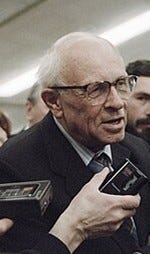
Political prisoners have repeatedly emphasized that the smallest news they manage to snap up from the outside world, via newspapers or radio broadcasts, or from fellow prisoners, can be a life saver, sustaining hope in the darkest moments. Knowledge that they have not been forgotten is indispensable to maintaining morale and resilience.
Nevertheless, all attempts to coordinate public advocacy efforts with Swedish diplomats have fallen on deaf ears. It hardly bears repeating that family members and advocates fully respect the importance of silent diplomacy and behind the scenes negotiations. Just as there is a time for silence, there are moments when public attention can create vital pressure and momentum. This is especially important when the respective regime’s grasp on power weakens, as is now the case in Eritrea.
“
One thing is clear: Sweden needs to find a way to rescue Dawit Isaak. Nobody else will.
The Isaak case as a catalyst for freeing other political prisoners
The release of prominent cartoonist Biniam Solomon after 15 years of incommunicado imprisonment and other prisoners held for close to two decades underscores the fact that the Eritrean leadership feels the need to make certain concessions. However, unlike Dawit Isaak, Solomon’s arrest was not linked to the activities of a specific group of prisoners, as is the case with the journalists and government officials detained in 2001. It makes the release of that set of detainees even more complicated for the regime.
Sweden must seize the current opportunity, says Jason Poblete, an international human rights lawyer with the U.S. based Global Liberty Alliance. “After the Swedish Foreign Minister’s visit to Asmara last year and her public assessment that Dawit Isaak is alive, the case finally has traction,” Poblete explains. “It now needs dates and documents: proof-of-life, an independent medical exam, and a humane release format.”
Dawit Isaak’s rescue can create serious momentum to free many others, Poblete adds, in Eritrea and other countries.
“From the U.S. side, the Isaak case is not a sidebar. A Sweden-led, benchmarked resolution—proof-of-life, independent medical access, timely repatriation —becomes a usable template for American cases elsewhere. It signals that responsible partners can act in concert and that, when deadlines slip, calibrated pressure follows.”
One thing is clear: Sweden must find a way to rescue Dawit Isaak. Nobody else will. The international community – including the UN, EU, and the African Union (AU) – have utterly failed in their responsibility to protect the Eritrean people from sustained violent abuse, including crimes against humanity. As tensions between Eritrea and Ethiopia are intensifying once again, the challenge will become even more complex.
Unless Sweden conveys to the Eritrean leadership that it will not accept anything less than Dawit Isaak’s immediate release, and follows up this demand with decisive steps, it is quite likely that, come September 23rd, (the date of Dawit Isaak’s original detention in 2001), his family will not celebrate their much longed for reunion, but instead mark the grim anniversary of an innocent Swedish citizen shamefully abandoned for 25 years.
Jaschke also served as political officer for Djibouti, Eritrea and South Sudan, Intergovernmental Authority on Development (IGAD). Eritrea recently announced its withdrawal from IGAD. He currently serves as Deputy Head of the European Union Delegation to South Sudan. The 2022 report first came to light as part of a document release by the Swedish National Archives (Riksarkivet), on the request of Reporters without Borders, Sweden (RUG).
Jaschke cites the December 15, 2021, COAFR statement in his summary report. EU policies and programs include the Rome Process which is designed to address irregular African migration, and the Global Gateway Initiative for Africa which allocates €150 billion for economic development projects.
We requested the 2025 COAFR reports concerning Eritrea, but the General Secretariat of the Council of the European Union rejected our application, with the argument that “their release could prejudice the relations between the European Union and Eritrea”, and would, therefore, not be in the public interest.
Since 2014, Swedish officials have argued that the opening of a criminal investigation against the Eritrean regime could jeopardize their efforts to free Dawit Isaak.
 Martin Plaut
Still proud th