
Documented abuses and the question of responsibility – Viewpoint by Desta Haileselassie Hagos.
Source: Ethiopia Insight
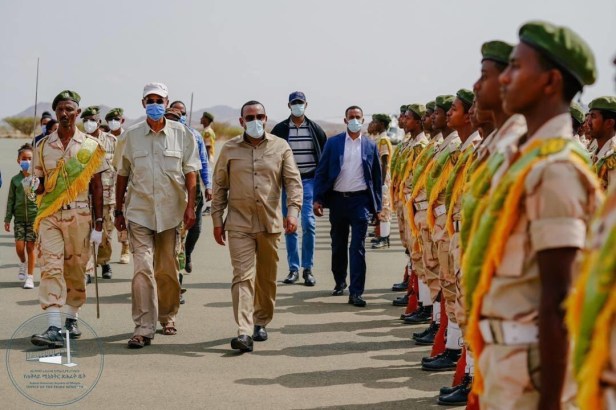
Beginning on 4 November 2020, the Tigray war unfolded as a coordinated campaign between two authoritarian regimes aligned in purpose and strategy. Eritrean forces operated alongside Ethiopia’s federal troops, contributing to widespread civilian suffering.
While Prime Minister Abiy Ahmed sought to dismantle Tigray’s political autonomy and federal protections, Eritrean President Isaias Afwerki pursued the systematic suppression of Tigrayan cultural, historical, and sociopolitical identity, an identity he long regarded as a challenge to the nationalism he built in Eritrea.
Isaias entered the conflict willingly, taking advantage of a communications blackout that concealed atrocities and shielded military operations from international scrutiny. His engagement reflected decades of entrenched hostility toward Tigrayans.
The main question is: who enabled Eritrea’s intervention? Eritrean Minister of Information Yemane G. Meskel confirmed that Eritrea entered Tigray “at the request of the Ethiopian government.” Ethiopian military commanders corroborated this, with Field Marshal Birhanu Jula, Chief of Staff of the Ethiopian military, stating that Eritrean support was crucial to the ENDF’s recovery from near defeat. His deputy, General Abebaw Tadesse, also confirmed joint ENDF-Eritrean operations.
The alliance between Abiy and Isaias was underpinned not only by tactical cooperation but also by shared hostility toward Tigray and a conviction that Tigray had to be decimated to secure their political survival.
Between 2018 and 2020, the two leaders met repeatedly in Addis Ababa, Asmara, Saudi Arabia, and the United Arab Emirates and visited each other’s military installations before the outbreak of war.
Leaked Eritrean communications suggest that, prior to 4 November 2020, Isaias told confidants that Eritrea could not secure its Red Sea coastline independently and that a political or economic union with Ethiopia might facilitate maritime and commercial cooperation.
Abiy, who has openly argued that Ethiopia must secure access to the sea, by any means necessary, was motivated by both strategic and imperial ambitions. He has recounted that his mother predicted he would become Ethiopia’s seventh king.
Together with Isaias’s long-standing hostility toward Tigray, these ambitionshelped lay the political and ideological groundwork for the war.
Share Ethiopia Insight’s Substack
Historical Roots
Understanding Isaias Afwerki’s role requires examining historical tensions predating 2020. The hostility traces back to the period when the Eritrean People’s Liberation Front (EPLF), led by Isaias, viewed the Tigrayan struggle for liberation as a political and ideological rival.
Although the EPLF and the Tigray People’s Liberation Front (TPLF) fought together against Mengistu Haile Mariam’s Derg regime, their relationship was marked by persistent mistrust. The EPLF opposed the TPLF’s revolutionary emphasis on self-determination, egalitarianism, and grassroots social mobilization.
Scholars John Young and Dan Connell note that the TPLF quickly developed strong rural support through village-level organization and community-based structures, in contrast to the EPLF’s more centralized command system.
This divergence unsettled EPLF leadership, which regarded itself as the senior liberation movement. As the TPLF gained political and military strength, tensions escalated.
Historical accounts consistently describe a strained relationship. Alex De Waal documents that, during the 1984 famine, the EPLF blocked the primary humanitarian corridor between Tigray and Sudan, forcing famine victims onto dangerous alternative routes.
Martin Plaut confirms that the blockade stranded between 60 and 100 relief trucks near Sheraro until the TPLF constructed an alternative supply route within seven days. Aid workers characterized the blockade as a “savage act,” reportedly ordered personally by Isaias to weaken Tigray through starvation.
Young describes the relationship as “beset with tensions,” culminating in a complete rupture in 1985. Connell notes that the EPLF treated the TPLF as a “junior partner,” fueling long-term resentment.
These historical records suggest that Isaias consistently rejected the emergence of a strong and independent Tigrayan political movement, a stance that later shaped Eritrea’s hostility toward Tigray.
Isaias’s opposition to Tigrayan self-determination persisted for decades. He regarded the survival of Tigray as a distinct political and cultural entity incompatible with his vision of Eritrean statehood and regional dominance.
In a 1999 address at Princeton University, Isaias dismissed the possibility of Tigrayan independence, describing the TPLF as a “small group” with unrealistic ambitions and insisting that independence was unviable. These remarks illustrate that, long before 2020, he viewed Tigrayan political identity as illegitimate and potentially dangerous.
Identity Targeted
The war extended beyond territorial or political disputes, targeting Tigrayan identity itself.
Following Eritrea’s independence, Isaias attempted to construct a distinct Eritrean national identity separate from both Ethiopia and Tigray. This project was inherently difficult because highland Eritreans and Tigrayans share language, religion, cultural traditions, and extensive family ties.
A strong and autonomous Tigray threatened this identity-building effort by preserving shared historical bonds. Rather than acknowledge these connections, the Eritrean state increasingly sought to suppress or deny them.
These tensions also have colonial origins. Italian colonial authorities portrayed Eritreans as culturally distinct, and often superior, to Tigrayans and Ethiopian highlanders, reinforcing divisions. Historian Alemseged Abbay explains how Eritrean and Tigrayan nationalist movements gradually diverged under the combined influence of colonial policies, armed struggle, and competing state-building visions. Under Isaias’s authoritarian rule, this divergence expanded into a broader cultural and psychological divide.
Vilification of Tigray became a recurring theme in Eritrean nationalist rhetoric. Through sustained propaganda, particularly targeting younger generations, the Eritrean government promoted suspicion and hostility toward Tigrayans.
Isaias dismantled Eritrea’s higher education system by closing the University of Asmara and restricting independent academic institutions. Public discourse, media freedom, and open intellectual exchange were heavily curtailed. Limiting educational opportunities while disseminating anti-Tigrayan narratives fostered hostility among youth with limited exposure to alternative perspectives.
By isolating and demonizing Tigray while tightly controlling information, the Eritrean state promoted the myth of a culturally distinct and superior Eritrean identity, portraying Tigrayan identity as illegitimate and expendable.
Genocidal Propaganda
Eritrea’s campaign against Tigray extended beyond military operations. Asmara funded and sheltered anti-Tigrayan political groups and media networks that dehumanized Tigrayans.
Ethiopian Satellite Television and Radio (ESAT), which received substantial Eritrean support, frequently portrayed Tigrayans as privileged, corrupt, and hostile to Ethiopian unity. Programming often framed the conflict as a struggle between “95 million Ethiopians” and “5 million Tigrayans,” reinforcing majoritarian hostility.
In August 2016, ESAT journalist Messay Mekonnen openly called for genocidal violence against Tigrayans, describing Tigray as a “colonizer” and urging that the “sea be dried to catch the fish,” a call to destroy the Tigrayan civilian population to eliminate the TPLF, broadcast years before the war began.
Eritrean security agencies also supported and trained members of Ginbot 7, an armed group that sought to topple the EPRDF-led government. Its leadership operated under Eritrean protection and later aligned with Abiy’s administration.
These networks inflamed anti-Tigrayan hatred across Ethiopia and prepared public opinion to accept or ignore mass destruction. Propaganda also influenced Eritrean diaspora communities, though many Eritreans rejected it and supported Tigray during the genocide.
Isaias also opposed Ethiopia’s multinational federal system, which constitutionally protected ethnic self-governance, including Tigrayan autonomy. A strong and politically autonomous Tigray undermined his identity project and reinforced historical connections between Eritreans and Tigrayans.
He consistently favored a centralized Ethiopian state. Weakening Tigray simultaneously removed a political rival and strengthened Eritrean nationalist narratives.
This hostility aligned closely with Abiy’s imperial ambitions, which sought to dismantle Ethiopia’s federal structure. When Abiy assumed power in 2018, Isaias saw an opportunity to eliminate Tigray’s political influence. His public declaration, “Game Over, Woyane,”signaled his conviction that his long-planned destruction of Tigray had arrived.
In July 2018, Isaias advocated for “political cleansing” in Tigray, a campaign aimed at eliminating its political elite and undermining federal protections. In 2020 and 2021, his public endorsements of Ethiopia’s “reform process” and denunciations of federalism as “toxic” underscored his resolve to erase Tigray’s socio-political identity from the Ethiopian map.
Internationally celebrated peace diplomacy between Eritrea and Ethiopia masked the consolidation of this alliance. Although revenge against the TPLF was frequently invoked, mounting evidence suggests that Tigrayan identity itself became a central target.
Documented Atrocities
International investigations by journalists, human rights organizations, and policy institutes have documented systematic atrocities committed by Eritrean forces and their allies.
A June 2024 report by the New Lines Institute concluded that there is strong evidence that Ethiopian and allied forces, including Eritrean troops, committed genocide against Tigrayans through mass killings, torture, widespread sexual violence, starvation, and destruction of cultural heritage.
A 2022 joint report by Human Rights Watch and Amnesty International documented crimes against humanity and ethnic cleansing in Western Tigray involving Amhara regional authorities, Ethiopian federal forces, and Eritrean soldiers. The U.S. State Department expressed grave concern that these acts amounted to ethnic cleansing.
One of the most widely documented massacres occurred in Axum in November 2020. Human Rights Watch reported that Eritrean forces killed hundreds of civilians following indiscriminate shelling. Over approximately 24 hours, soldiers systematically executed men and boys, with estimated fatalities ranging between 240 and 800.
Targeting of males was widely reported as deliberate. Some Eritrean soldiers described orders to kill Tigrayan males, euphemistically described as those who “pee against the wall.”
Similar massacres were documented in multiple locations, including Mariam Dengelat and Mariam Shewito, where soldiers conducted house-to-house executions. Survivors reported killings carried out in front of family members, including parents executed before children and vice versa.
Eyewitness accounts also described orders to kill Tigrayan males above early childhood age. Civilian data collected by TGHAT indicate that many victims were between 18 and 49 years old, suggesting targeting of Tigray’s productive population.
Sexual violence provided further evidence of genocidal patterns. Medical professionals interviewed by CNN documented survivors describing rape accompanied by statements denying Tigrayan identity and history. Perpetrators told victims they intended to “ethnically cleanse Tigray” and “cleanse the bloodline.”
Survivors reported that perpetrators made explicitly genocidal statements during assaults, including telling victims that “a Tigrayan womb should never give birth,” that “if you were male, we would kill you, but girls can make Amhara babies,” and that they would “never be able to give birth.”
Investigations by the Commission of Inquiry on Tigray Genocide (CITG) documented similar rhetoric, including explicit references to eliminating Tigrayans and creating a “Tigrayan-free world.”
Perpetrators frequently used slurs such as “Agame,” “Woyane,” and “Junta,” reinforcing dehumanization. Reports documented attempts to force pregnancy, induce infertility, or permanently injure reproductive organs, including the insertion of foreign objects such as razors, nails, and contaminated materials.
These acts were designed to prevent future generations of Tigrayans and align with internationally recognized indicators of genocidal violence.
Sexual violence was often conducted publicly. Families were forced to witness assaults or were coerced into committing sexual violence themselves. According to CITG data, Eritrean soldiers were responsible for approximately 54.47% of documented rape cases, Ethiopian soldiers 35.66%, and Amhara militia and Fano 4.88%.
Amnesty International documented at least 1,288 sexual violence cases in early 2021 alone, while United Nations investigations confirmed systematic sexual slavery. Some estimates suggest that up to one in ten Tigrayan women experienced sexual violence, though the actual number is likely higher due to the destruction of healthcare infrastructure and underreporting.
Cultural destruction further demonstrated the intent to erase Tigrayan identity. Eritrean soldiers destroyed churches, mosques, monasteries, and historically significant manuscripts. Mekelle University documented damage to at least 200 religious and cultural heritage sites.
Soldiers looted homes, farms, educational institutions, and medical facilities while obstructing agricultural activity. BBC investigations documented instances in which farmers were threatened with punishment if they attempted to cultivate land, effectively weaponizing starvation.
Environmental devastation compounded humanitarian destruction. Reports estimate approximately $46.6 billion in environmental damage, including the destruction of 53% of Tigray’s forest cover and widespread soil and water degradation. Social infrastructure losses were estimated at $10.86 billion, with Eritrean forces responsible for a significant share of the damage.
Even after the November 2022 Pretoria Agreement, Amnesty International documented Eritrean forces continuing house-to-house killings and sexual violence. These actions reinforced the perception that the violence extended beyond conventional military objectives.
Taken together, the scale, pattern, and language associated with these crimes strongly indicate genocidal intent. Eritrean forces entered Tigray not merely to defeat a political adversary but to destroy a civilian population.
Support Ethiopia Insight on Patreon
Rewriting Genocide
In genocide’s aftermath, revisionism can endanger truth and accountability. Figures such as General Tsadkan Gebretensae, a Tigrayan general now aligned with the federal government, have been accused of making public statements aimed at rewriting history to politically shield Abiy.
Tsadkan emphasizes Eritrean atrocities while downplaying Ethiopian crimes, allowing Abiy to appear as a reluctant participant rather than an architect of genocide.
He has falsely claimed that Eritrean soldiers committed the Mahbere Dego massacre, despite overwhelming evidence showing Ethiopian soldiers executed civilians there. Investigations by Bellingcat confirmed the massacre through geolocated video evidence.
Testimonies identify Ethiopian military units and commanders responsible. Some perpetrators later confessed on Tigray Television after capture by the Tigray Defense Forces.
Despite this evidence, Tsadkan and the two other senior figures in Tigray’s interim administration, including Getachew Reda, authorized the release of 449 captured Ethiopian soldiers, 444 men and five women, in two rounds, among them individuals implicated in mass atrocities. Critics argue the decision undermined justice and accountability.
Similarly, Getachew Reda, former head of the Tigray Interim Administration who recently made a highly controversial shift in allegiance and now serves as Abiy’s advisor, has portrayed the prime minister as a peacemaker, praisinghis role in preserving the Pretoria Agreement while downplaying documented atrocities. He has publicly stated he would no longer use the word genocide while working with the federal government.
Such narratives shift blame solely to Eritrea, absolving Ethiopia and the Amhara militia. This revisionism may serve Abiy’s strategic interests, including mobilizing anti-Eritrean sentiment linked to Red Sea ambitions.
On 3 February Abiy told Parliament that his break with Eritrea was driven by atrocities committed by Eritrean forces in Tigray, not by disputes over Red Sea access. He claimed he had repeatedly sent former foreign minister Gedu Andargachew with a message to Asmara: “Do not terrorize the people of Tigray, do not loot their wealth; the fight is with the TPLF, not the people of Tigray.” He said he later dispatched then–Deputy Prime Minister Demeke Mekonnen with the same warning.
Three days later, Gedu publicly contradicted that account, stating that Ethiopian and Eritrean forces operated “as a single force” until the Pretoria ceasefire. This pattern of narrative repositioning—mirrored by statements from General Tsadkan and Getachew Reda—suggests a coordinated effort to recast responsibility in a way that shields Ethiopia’s leadership from accountability.
The evidence, however, is conclusive in demonstrating Ethiopia’s complicity. EU envoy Pekka Haavisto reported Ethiopian leaders using language about wiping out Tigrayans for 100 years, evidence of genocidal intent recognized internationally.
Ethiopian forces carried out airstrikes on civilian areas, mass killings, starvation sieges, forced displacement of millions, and ethnic cleansing in Western Tigray.
The evidence of Eritrean crimes is undeniable. But emphasizing Eritrean atrocities while erasing Ethiopian and Amhara militia crimes betrays victims and distorts history.
The genocide against Tigrayans was a joint project involving Eritrean forces, Ethiopian forces, and Amhara militia and Fano. Abiy invited Eritrean troops, deployed his army, and enabled allied militias. All must be held accountable.
The victims of the Tigray genocide deserve truth, justice, and accountability. Nothing less will honor their suffering or prevent such mass atrocities from happening again.

About the author.
Desta is a computer science lecturer at Howard University in Washington DC. He has also been documenting Tigrayan death since the outbreak of the war on Tigray. He manages the Tigray Genocide website and can be reached at desta.hagos@howard.edu.
 Martin Plaut