
Weaponizing the peace agreement risks famine and renewed conflict – Viewpoint by Kiros Nigus Thegay.
Millions of civilians remain displaced. Banking, fuel distribution, and telecommunications services remain unreliable and tightly restricted. Reconstruction has stalled under layers of administrative interference. These outcomes are not the byproduct of logistical difficulty. They reflect policy choices made and maintained by federal authorities that have preserved siege-like conditions long after battlefield operations formally ended.
| MAR 19 Ethiopia Insight |
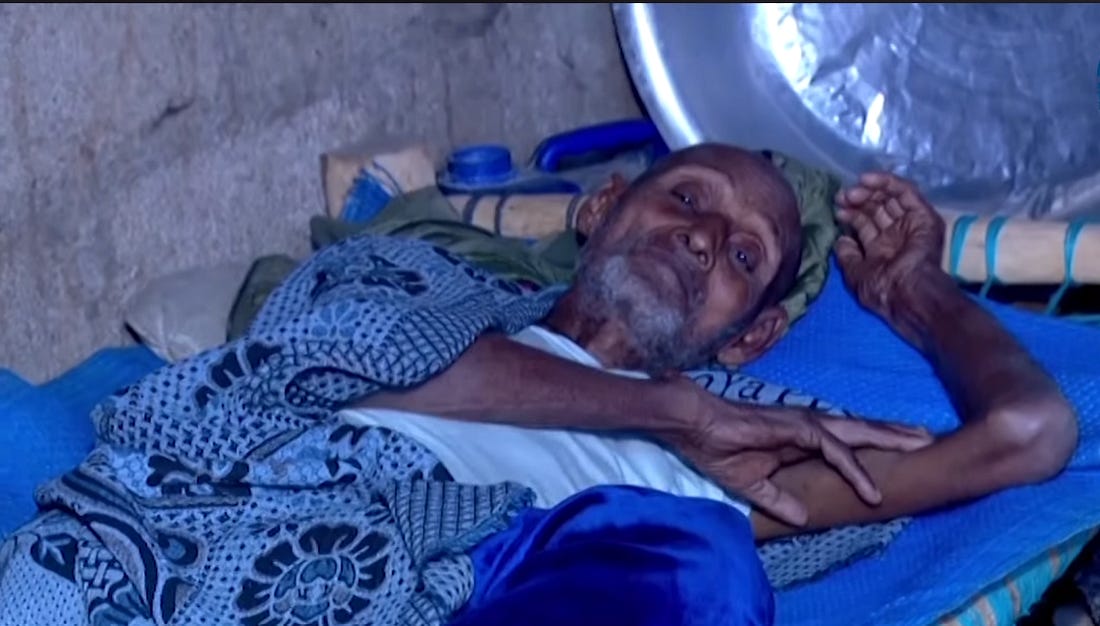
On 23 September, a two-year old boy, Naod Haileselassie, was killed by a hyena inside an Internally Displaced Persons camp in Mekelle, Tigray. His death was a preventable tragedy, a direct consequence of a man-made humanitarian blockade that has left civilians exposed and starving.
In the weeks that followed, scores perished from documented starvation in the Hitsats camp, deaths revealed not by the state but by citizens bearing witness on social media. These events have captured global attention, but they are merely the most visceral symptoms of a deeper crisis: the systematic weaponization of a peace process.
The 2022 Pretoria Cessation of Hostilities Agreement formally ended large-scale fighting in Tigray and was presented as the foundation for recovery and reconciliation. Three years later, its legacy is being shaped by a different reality.
Federal policies introduced in the agreement’s aftermath have preserved many of the conditions that devastated civilian life during the war. Rather than facilitating normalization, the accord has enabled Prime Minister Abiy Ahmed’s government to exercise sustained political and economic pressure over Tigray while maintaining the diplomatic appearance of peace.
The result is a post-war order defined by managed deprivation.
War Through Peace
The Pretoria Agreement created expectations that basic services would be restored, displaced people would return home, extraconstitutional territorial occupations would be addressed and humanitarian relief would flow without obstruction.
These commitments formed the core justification for ending active hostilities. Nearly three years later, the lived reality in Tigray reveals a pattern of deliberate federal decisions that have prevented those commitments from materializing.
Millions of civilians remain displaced. Banking, fuel distribution, and telecommunications services remain unreliable and tightly restricted. Reconstruction has stalled under layers of administrative interference. These outcomes are not the byproduct of logistical difficulty. They reflect policy choices made and maintained by federal authorities that have preserved siege-like conditions long after battlefield operations formally ended.
By maintaining these restrictions while publicly invoking the language of reconciliation, Abiy’s government has transformed the agreement into a mechanism of political leverage over an already devastated region.
Weaponized Starvation
The most devastating manifestation of this policy is the deliberate obstructionof humanitarian relief. Aid deliveries to displacement camps remain inconsistent and frequently delayed. Medical supplies and nutritional support have been withheld or slowed through bureaucratic barriers imposed by federal authorities. Internally displaced populations, already weakened by years of conflict, now face escalating malnutrition and preventable disease.
Federal officials have responded to reports of famine conditions with systematic denial. Ethiopia’s Commissioner for Disaster Risk Management, Shiferaw Teklemariam, publicly dismissed starvation claims, asserting that humanitarian assistance was fully operational while accusing “TPLF-aligned” media and diaspora networks of fabricating evidence.
These statements directly contradict reports from humanitarian workers, camp residents, and independent observers documenting widespread food shortages and rising mortality.
The deaths in Mekelle and Hitsats expose the human consequences of these policies. Camps housing thousands of displaced civilians lack adequate shelter, lighting, medical care, sanitation, and food distribution.
Residents remain trapped in environments where survival is determined by erratic aid deliveries controlled through federal administrative channels. These conditions are the foreseeable outcome of sustained federal restrictions on humanitarian access and resource flow into Tigray.
The government’s actions have extended beyond restricting aid. Authorities have reportedly confiscated funds raised by concerned Ethiopians and diaspora communities attempting to support the displaced people struggling to survive in increasingly precarious conditions.
Millions of dollars intended for food, shelter, and medical assistance were seized under the justification of regulatory enforcement. These seizures dismantled fragile civilian relief networks and signaled that independent humanitarian solidarity would not be tolerated.
Such measures reveal a governing strategy in which civilian survival is subordinated to political control.
Economic Sabotage
The federal government’s policies have also systematically undermined Tigray’s economic recovery. During the war, deliberate communications blackouts severed banking systems, telecommunications, and electricity supply.
The Pretoria Agreement promised the restoration of these services as a foundation for peace and reconstruction. Instead, peace remains distant, access to financial systems remains severely constrained, and fuel shortages continue to paralyze transportation, commerce, and public service delivery.
These economic restrictions have prevented businesses from reopening, disrupted agricultural recovery, and deepened unemployment across the region. Humanitarian organizations attempting to scale relief operations have faced logistical barriers tied directly to fuel and banking limitations imposed at the federal level.
At the same time, federal authorities have actively reshaped Tigray’s political environment. Internal divisions within regional leadership have been exploitedto weaken governance structures. Civic institutions and administrative bodies struggle to function under persistent external pressure. Community-led relief initiatives face regulatory obstruction, harassment, and forced closure.
These interventions have eroded Tigray’s institutional resilience while expanding federal influence over regional political dynamics. The effect is a governance vacuum in which local authorities lack both the resources and autonomy necessary to respond to humanitarian emergencies.
Diplomatic Façade
Internationally, the Ethiopian government continues to present itself as a partner committed to post-conflict reconstruction and national unity. The existence of the Pretoria Agreement has provided powerful diplomatic cover, allowing federal authorities to project an image of compliance even as core provisions remain unfulfilled.
For many international actors, the mere halt of large-scale fighting has come to signify stability. A signed accord offers political convenience, dampening curiosity about whether its promises are being fulfilled.
This posture has blunted sustained pressure for accountability. External partners point to Pretoria as evidence of progress, even as implementation remains uneven and contingent on political calculations. The result is a growing dissonance between the formal narratives of peace and the harsh, persistent conditions experienced by civilians.
Domestically, state-aligned media and political networks have promotednarratives portraying Tigray’s political leadership as responsible for ongoing instability. This messaging deflects scrutiny from federal policy decisions while framing humanitarian advocacy as political subversion.
The federal government’s response to starvation deaths illustrates a broader strategy of narrative control. Reports documenting mortality in displacement camps have largely emerged through citizen journalists and social media platforms. Rather than mobilizing emergency relief, federal officials have dismissed these reports as fabricated propaganda.
Survivors and witnesses face intimidation, and independent investigations into wartime atrocities have encountered persistent federal resistance. International organizations and human rights groups have documented mass killings, widespread sexual violence, and the destruction of hospitals, schools, and religious institutions during the war. Efforts to establish accountability mechanisms have repeatedly been obstructed by federal authorities.
The government continues to portray Tigrayan political organizations as primary obstacles to peace. This narrative obscures the federal government’s role in launching the war in November 2020 through coordinated military operations involving Eritrean forces and regional militias. The scale of destruction that followed transformed Tigray’s social and institutional landscape.
While Tigrayan political actors have publicly supported international investigations into these crimes, federal authorities have resisted external oversight and accountability frameworks, leaving survivors without meaningful legal recourse.
The language of reconciliation remains central to federal messaging, yet the structural conditions required for durable peace remain absent. Displacement continues on a massive scale. Territorial disputes remain unresolved. Economic recovery remains obstructed. Humanitarian access remains politically conditioned.
These realities reflect a deliberate federal strategy that prioritizes control over reconciliation. Administrative restrictions, economic barriers, and information management have collectively weakened Tigray’s capacity for social recovery. The conflict has shifted from open warfare to sustained civilian coercion administered through bureaucratic mechanisms.
The Burden of Responsibility
The suffering unfolding in Tigray is neither accidental nor inevitable. It reflects the cumulative outcome of federal policies designed and maintained under the leadership of Abiy. The transformation of the Pretoria Agreement into a mechanism of political domination represents a profound betrayal of the peace it promised to deliver.
The people of Tigray are demanding outcomes that form the foundation of any legitimate peace: the safe return of displaced civilians, the restoration of basic services, unfettered humanitarian access, and accountability for mass atrocities. These demands are consistent with both international humanitarian law and Ethiopia’s own constitutional obligations.
History repeatedly demonstrates that peace processes built on denial and coercion cannot produce national stability. Without accountability, reconciliation remains rhetorical. Without humanitarian restoration, peace remains symbolic. Without truth, political unity becomes impossible.
The Pretoria Agreement offered Ethiopia an opportunity to end one of the most devastating conflicts in modern African history. That opportunity remains endangered by federal policies that have prolonged civilian suffering under the cover of diplomatic progress.
Naod’s death was not an isolated tragedy. It was a warning. The silent siege of Tigray continues, sustained by decisions made in Addis Ababa. Until those decisions change, the peace promised in Pretoria will remain an illusion sustained by bureaucracy, propaganda, and human suffering.
History will record not only the war that devastated Tigray, but also the political choices that prolonged it after the guns fell silent.

About the author.
Kiros is a human rights advocate dedicated to accountability and justice for genocide and ongoing atrocities in Tigray, Ethiopia.
 Martin Plaut