Source: Addis Standard
March 24, 2026
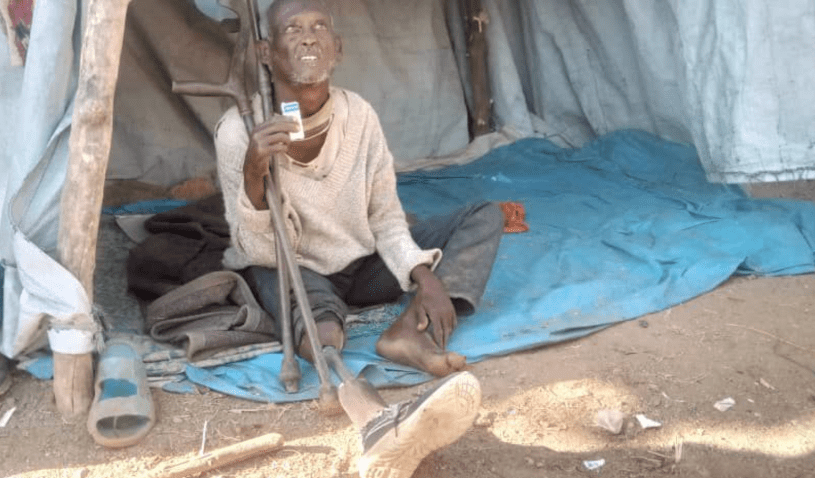
Addis Ababa – More than 1,300 internally displaced persons (IDPs) have died from hunger and lack of medical care in camps across Ethiopia’s Tigray region over the past three years, according to a regional official cited by Agence France-Presse (AFP).
Gebreselassie Tareke, a director at Tigray’s Social Affairs Office, told AFP that at least 1,309 people had died in IDP camps, warning that conditions are deteriorating amid declining humanitarian assistance. “The situation is getting worse,” he said, noting reduced support from both the federal government and international aid organizations. He added that one of the most affected camps hosts around 150,000 people, with many others at risk.
The warning follows a call by Volker TürkTürk, the United Nations High Commissioner for Human Rights, for urgent de-escalation, urging all parties to act “before it is too late.”
Recent reporting by Addis Standard points to similar conditions on the ground. On 19 March 2026, it reported that at least 333 IDPs had died at the Hitsats camp since May 2025 due to hunger and lack of medicine, while 125 deaths were recorded in Adwa since October 2025.
Displaced residents and camp coordinators described shrinking aid, worsening shortages, and continued arrivals as key drivers of the crisis. “People are wasting away; people are dying,” said Abrha Mebrahtom, coordinator of the Hitsats IDP center.
Across Tigray, IDPs and local officials warn that limited access to food, healthcare, and shelter, coupled with delays in returns, are deepening an already severe humanitarian crisis.
The accounts echo earlier Addis Standard reports documenting deteriorating conditions in IDP centers across Tigray, including Abiy Addi, where returnees from Sudan reported receiving no assistance for months, alongside prior warnings of hunger-related deaths in Hitsats.
Displaced residents and coordinators in Hitsats say the situation has further worsened, with rising fatalities, disease outbreaks, and reduced humanitarian support.
“To speak of the conditions in Hitsats, one must see it with their own eyes,” said Abrha Mebrahtom, coordinator of the Hitsats IDP center. “Though there were good starts previously, they have now ceased. People are wasting away; people are dying.”
He cited severe food shortages, lack of clean water, and exposure to extreme heat as key drivers of illness. “Since moving to this location, eight people have died. The overall situation is dire,” he said, adding that residents have lived under torn plastic sheeting for three years without adequate shelter or electricity.
According to Abrha, the center hosts 4,856 households, or about 16,650 people—a figure that continues to rise as new arrivals cross from Sudan and Western Tigray. “Five or six people arrive daily,” he said, noting most come from Adebay and Freselam areas. “No one is leaving.”
A teacher, Gebremedhin, also based in Nigste Saba, said declining aid and uncertainty are fueling anxiety. “Rations dropped from 15kg to 12kg,” he said. “Combined with political instability, people are in deep worry.”
He linked ongoing displacement to delays in implementing the Pretoria Agreement, which was expected to facilitate returns. “It seems the promise to return us to our land is being ignored,” he said.
He added that free healthcare services have ended, leaving vulnerable groups without treatment. “The elderly and those with psychiatric needs cannot find medicine. It is heartbreaking to see people die from treatable illnesses.”
According to him, the Nigste Saba center alone hosts around 5,000 displaced people, many of whom cannot access shelter and instead rely on costly rentals.
“We don’t know if aid will continue next month,” he said, warning prolonged hardship could drive youth to migrate through dangerous routes. “We want to return home and live in peace.”
At a broader level, coordinators say the scale of displacement in Adwa is straining already fragile systems.
“Adwa has nearly 115,000 displaced people across six centers,” said Abrha Gebreselama, coordinator of Adwa IDP centers. “Food conditions are extremely weak.”
He reported delays in aid delivery and rising mortality, particularly among people with chronic illnesses. “In this center alone, 125 people have died,” he said, citing shortages of medicine and basic services.
“There is no help for clothing or hygiene,” he added. “Food, shelter, and healthcare are our greatest crises.”
The latest testimonies reflect a pattern documented in earlier Addis Standard reporting, with displaced populations across Tigray repeatedly warning of shrinking aid, inadequate shelter, and barriers to safe return. Residents continue to call for urgent humanitarian intervention, restoration of basic services, and progress toward durable solutions, including voluntary return to their places of origin.
In a 22 December 2025 report, Addis Standard, citing local media, documented that more than 1,700 internally displaced persons (IDPs) sheltering at the Hitsats IDP center in Tigray were facing a worsening hunger crisis. The report indicated repeated fatalities and growing numbers of people in critical condition due to severe food shortages and limited access to medical care.
Families at the center, many displaced from Western Tigray, told local broadcasters that hunger and lack of medicine had caused repeated deaths in the camp. They said assistance was insufficient: the 15 kilograms of grain distributed intermittently did not meet basic needs, and nearly half of it had to be sold to cover milling costs and other essentials. The type of grain provided was reportedly difficult for children, the elderly, and those with medical conditions to consume.
Following these reports, multiple political parties, civil society organizations, and advocacy groups issued urgent appeals, warning of a deepening humanitarian crisis at Hitsats and other displacement sites across Tigray. They cited deaths from hunger, lack of medical care, and what they described as prolonged inaction by authorities and the international community.
Addressing the crisis, Gebrehiwot Gebregzabher, head of the Disaster Risk Management Commission, told Addis Standard that “Eighty percent of the IDP population across 146 camps in Tigray originates from Western Tigray.” He noted that fuel shortages had significantly worsened the humanitarian response, limiting distribution of the available aid. “We are unable to distribute even the limited resources we have because of fuel shortages,” he said, adding that the fuel allocation to Tigray had dropped to 1.2 million liters from a previous level of 15 million liters. Gebrehiwot emphasized that amid shifting global humanitarian priorities, the most sustainable solution is the return of IDPs to their homes.
The return of tens of thousands of Tigrayan IDPs displaced during the two-year war, alongside the constitutional restoration of Western Tigray under the regional administration, remains one of the most significant yet unfulfilled provisions of the Pretoria Peace Agreement.
The Commission of Inquiry on Tigray Genocide (CITG) cited findings from its August 2025 assessment of 92 IDP centers, including Hitsats. According to the Commission, 325 deaths occurred at Hitsats during the assessment period, primarily due to lack of food, medical care, and other basic necessities. The report also documented cases of physical injury, forced disappearance, and systematic deprivation of basic needs, as well as irregular and substandard food assistance and the near absence of healthcare services across many IDP sites.
In a joint appeal to senior United Nations officials, major humanitarian agencies, and donor governments, the Global Society of Tigray Scholars and Professionals (GSTS) said IDPs in Hitsats and other camps were “already dying from starvation, malnutrition, and preventable diseases.” The group called for an immediate scale-up of food and medical assistance, unimpeded humanitarian access, and stronger international coordination to avert what it described as a catastrophic loss of life.
Public response to the Hitsats crisis was significant, particularly among youth groups supporting IDPs across Ethiopia. Lt. Gen. Tadesse Woreda, President of the Tigray Interim Administration (TIA), said this solidarity reflects a revival of the country’s weakened social fabric, as hundreds of thousands continue to endure dire conditions in displacement camps. Briefing the media, he expressed appreciation to Ethiopians and Eritreans at home and abroad for their support, noting that volunteer efforts demonstrate resilience despite years of war.
However, in a 24 December 2025 report, the Ethiopian Disaster Risk Management Commission (EDRMC) rejected claims that IDPs at Hitsats had been denied aid, stating that food assistance had been delivered “completely and without interruption” in recent months. The Commission emphasized that federal authorities had been prioritizing IDPs in temporary shelters, including Hitsats, and described contrary reports as “incorrect” and unreflective of conditions at the camp. Records showed uninterrupted distributions between September and December 2025.
At the same time, Ethiopia’s Disaster Risk Management Commission (DRMC) warned that any humanitarian aid delivered outside government channels is “unacceptable and legally punishable,” even as the Interim Regional Administration of Tigray cited ongoing food shortages and gaps in aid coverage. Speaking to the Ethiopian News Agency (ENA), DRMC Commissioner Shiferaw Teklemariam (PhD) said all support must be channeled through the government’s disaster management framework, mandated by the Disaster Risk Management Proclamation. “Procedures outside the government’s established system—whether conducted individually or in groups—are unacceptable and legally punishable,” he said, adding that humanitarian assistance is permitted only through the Commission on behalf of the government.
Amid reports of starvation-related deaths in Tigray, the federal disaster commissioner’s warning against “unauthorized aid” underscored tensions between government control and widespread, unmet humanitarian needs cited by the interim administration.
 Martin Plaut