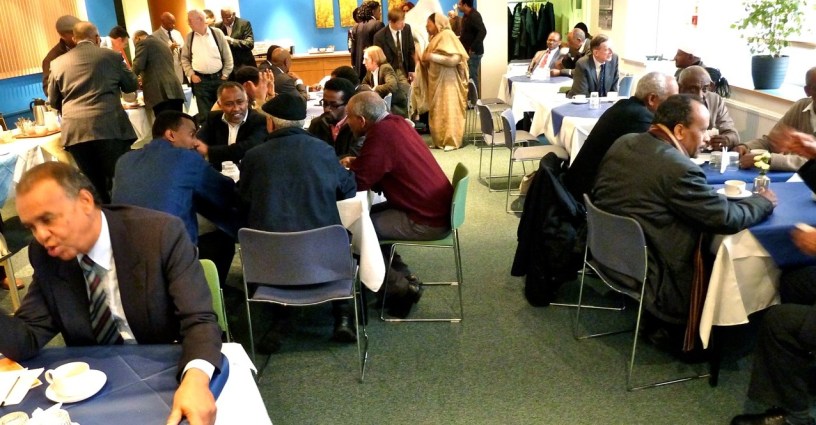
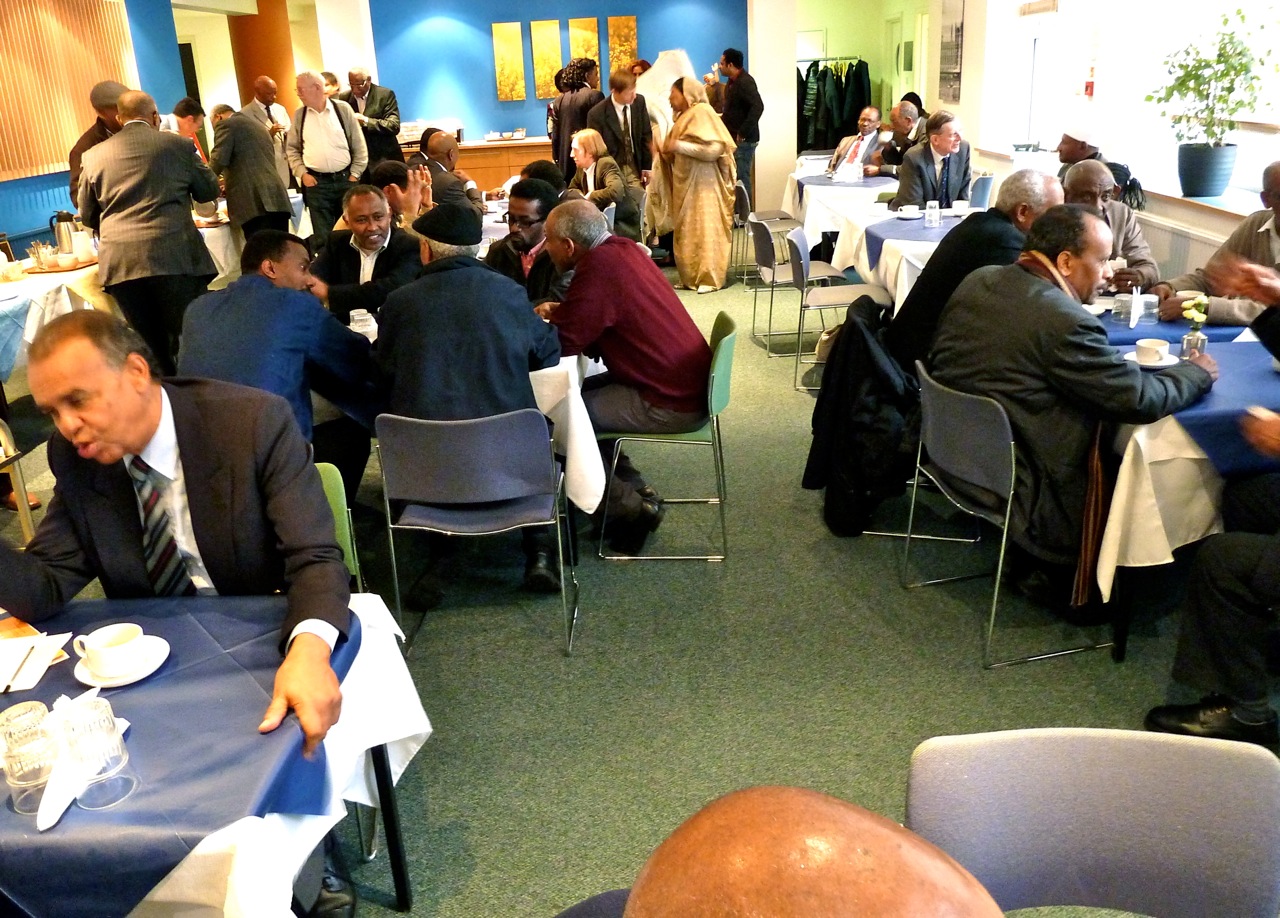
There was animated and passionate discussion when activists from across the Horn of Africa came to discuss how to end divisions between Ethiopia and Eritrea. A seminar on Saturday, 17th of November looked at the legacy of the war of 1998 – 2000.
The death of Prime Minister Meles Zenawi and tentative moves by both Eritrea and Ethiopia gave the organisers of the seminar a hope that the time might be right to reach across the divide.
The former Sudanese Prime Minister, Sadiq al-Mahdi made a powerful appeal for peace: “war will not solve the problems of the region,” he said.
“Ultra-nationalism”
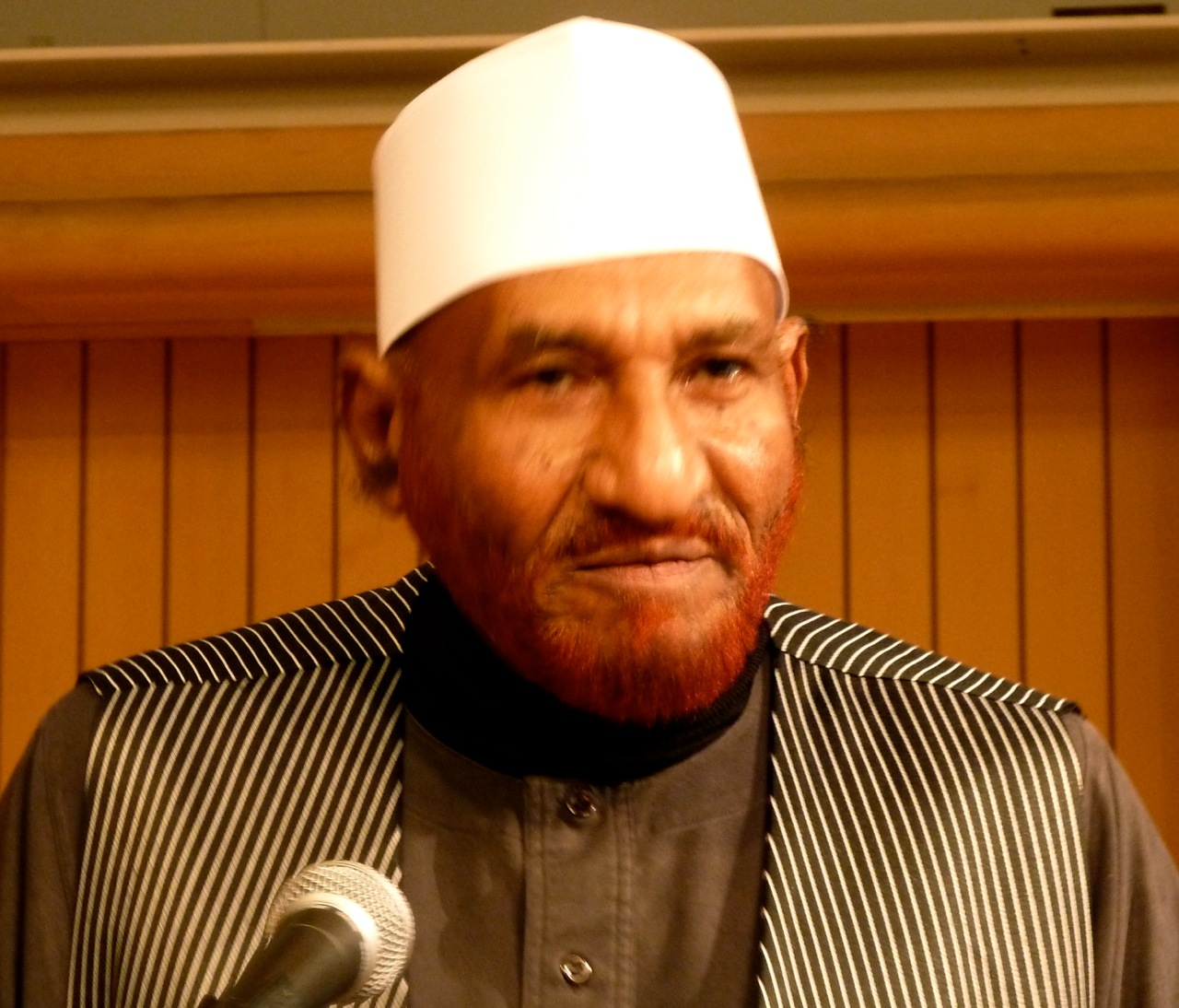
Mr Sadiq described the inter-dependence of the people of the Horn. “This is an inter-dependence that must be realised.
“We were shocked by the outbreak of hostilities in 1998,” he said. “I led a delegation to both sides. We offered mediation.” But these efforts had met with no success.
Mr Sadiq pointed out that radical secessionist movements, like the TPLF, had to prove their nationalist credentials once they came to power. He compared their position to that of Napoleon, a Corsican, who had become Emperor of all France. Like Napoleon, they had become what he termed “ultra-nationalists.”
The only means of ending the hostilities between Eritrea and Ethiopia was to move from polarisation towards what he called “a new dawn.”
Borders had to be retained, but they should be ‘soft borders’ – allowing trade and cultural integration. “We need to change the content of the relationship, not for the form,” said Mr Sadiq.
“War makes states and states make war”
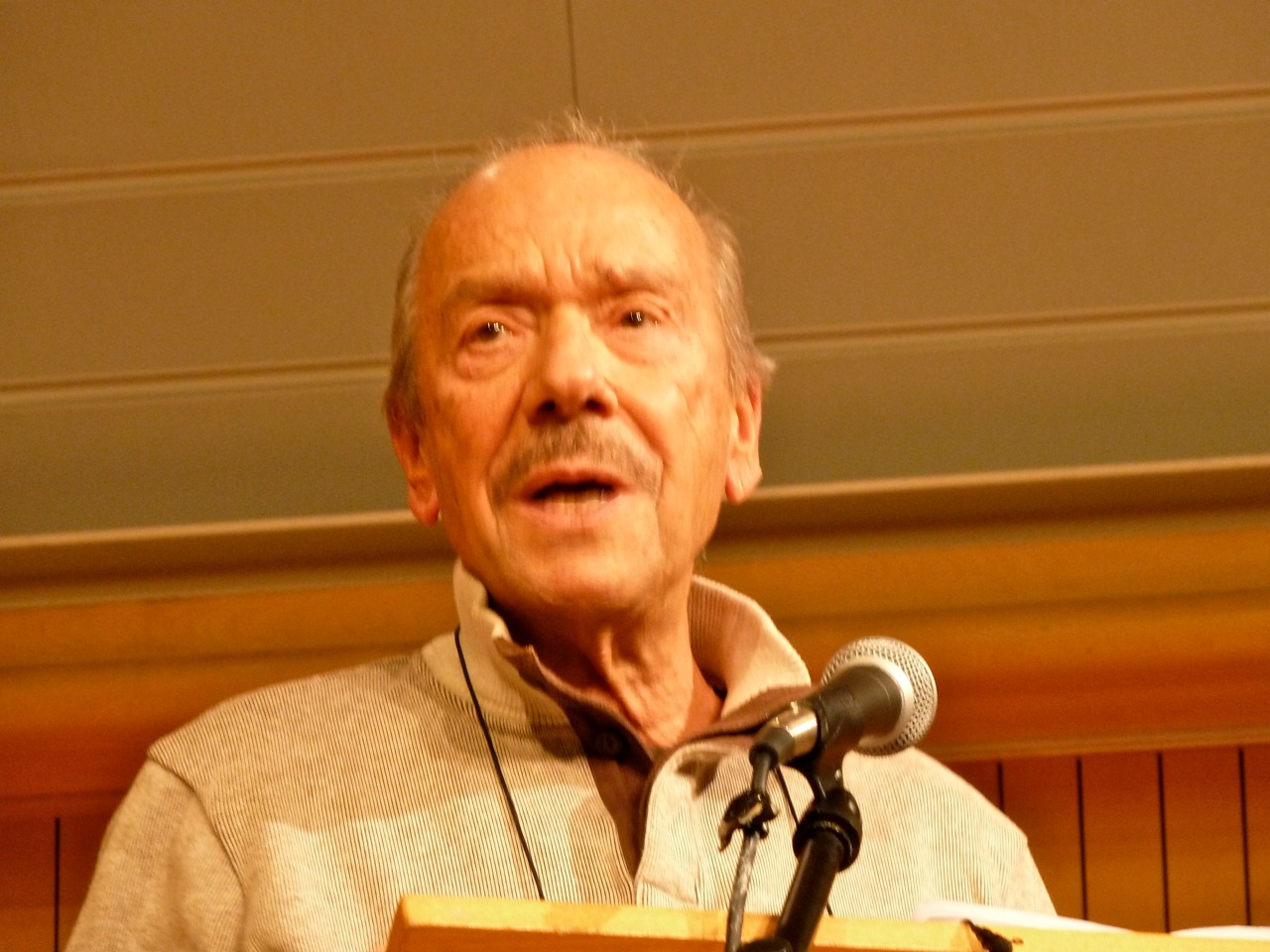
The meeting was chaired by Dr Mohammed Suliman (former Sudanese Education Minster) and among the participants were the Ethiopian ambassador to the UK H.E. Berhanu Kebede and Mr Osman Jamaa, former Somali Minister of Fisheries.
The range of speakers included Prof. John Markakis of Crete University; Gunter Schroder, a German scholar on the Horn of Africa; Martin Plaut of the Institute of Commonwealth Studies and Jason Mosley of Chatham House.
Drawing on his many years of expertise on the Horn, John Markakis said that nationalism led to war, and war led to nationalism. “War makes states and states make war,” he said.
This was by no means unique to the Horn and could be seen across Europe. In the process of nation-building those in power enforce homogeneity and conformity, in order to entrench their power, Mr Markakis argued.
Genuine federalism is rejected by nation-builders, since it would diminish their powers. They wish to contain power at the state level and not share it with others.
Mr Markakis pointed out that war had provided no solution to the problems of the region and the conflicts remained as unresolved as they had ever been. He warned that if opposition movements, now out of power, took control, they would probably make the same mistakes. Only an end to centralised power and allowing local decision making might break this cycle.
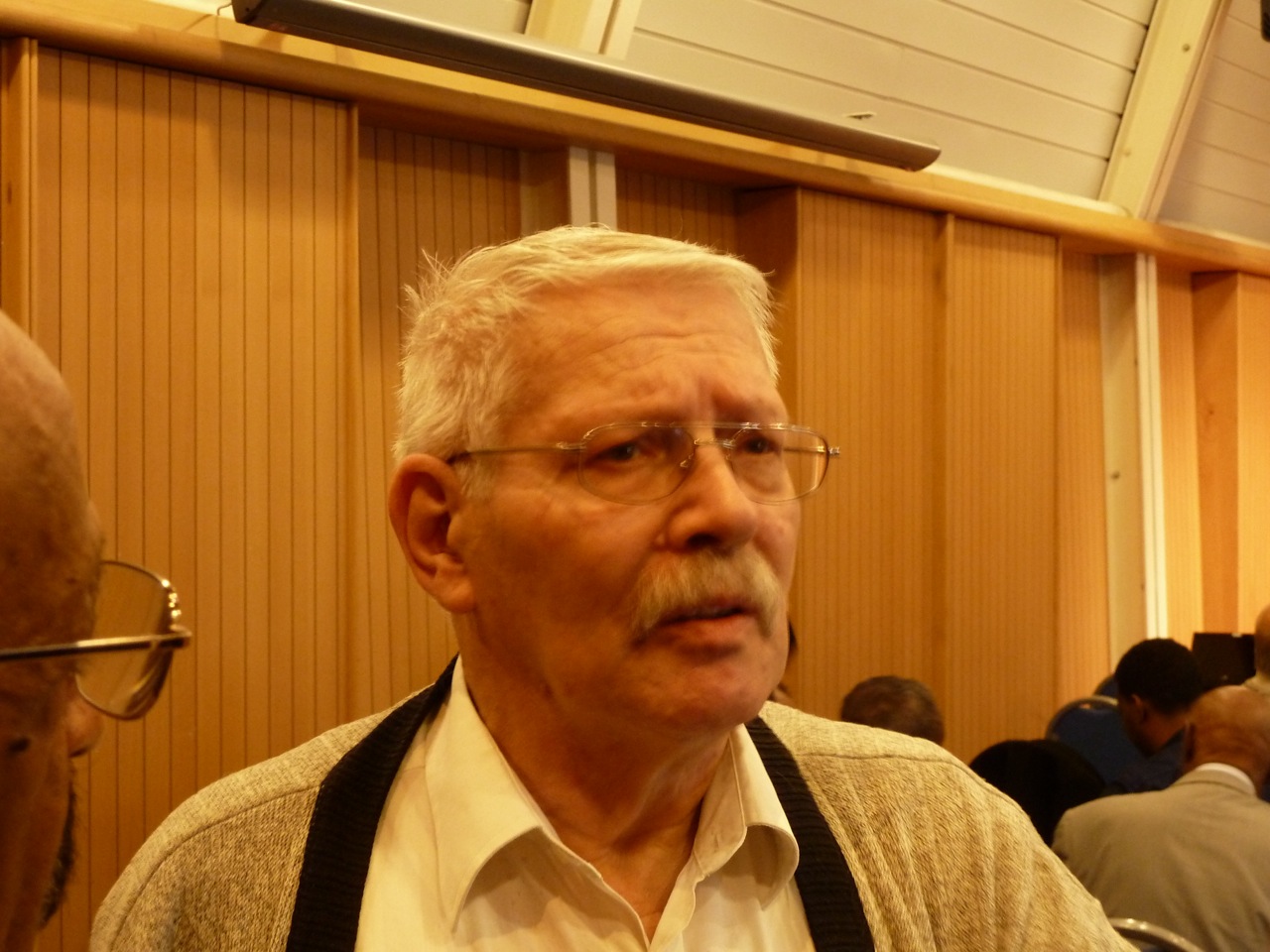
Gunter Schroder considered whether relations between Eritrea and Ethiopia might change under Prime Minister, Hailemariam Desalegn, who has just come to power. “He does not have the hang-ups of the Tigrayans,” he said, referring to the troubled relationship between the highlanders of Eritrea and Tigray. But he will have to operate within the geo-strategic realities of Ethiopia.
This, Mr Schroder argued, required movements that came to power in Addis Ababa to defend the state from incursions from the East (Somalia) and the North (Eritrea). He said this was an enduring reality and would not change. Having said this, he believed that it would be easier for Ethiopia to bend than Eritrea, to resolve their border differences.
Not irrational
But this would have to be done without threatening the Boundary Commission decision. “Eritreans worry that if they negotiate with Ethiopia, as Addis Ababa requests, they will negate the Commission’s ruling.” This they would not do, which meant that Ethiopia would need to open discussions while guaranteeing the adjudication.
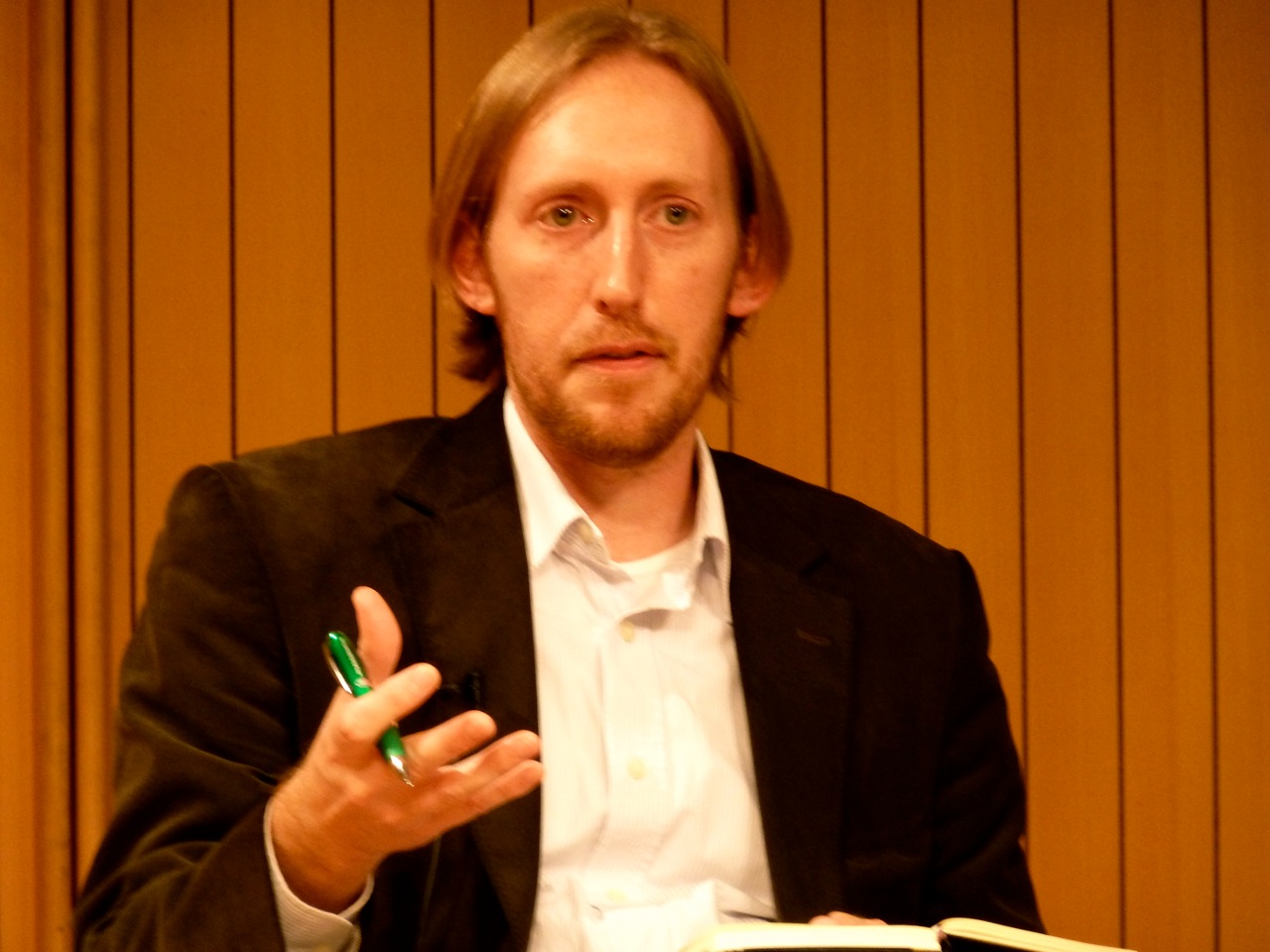
Jason Mosley spoke of the assumptions underlying much analysis about the conflict between Eritrea and Ethiopia, saying it was wrong to consider President Isaias acted irrationally or against the interests of the Eritrean state in relation to the findings of the Boundary Commission. Mr Mosley said his strategy might be poor, but not without logic. Mr Mosley said Eritrea’s fear was that by entering into talks over the implementation of the Commission’s findings the country would put in jeopardy the ruling itself.
Martin Plaut looked at what was known about Hailemariam Desalegn, and referred to the nature of ethnic federalism encouraged by former Prime Minister Meles. Drawing on the US telegrams in Wikileaks he pointed to the continuity of policy between the two men, and of their calls for a strong developmental state, requiring a powerful centralised political party.
 Martin Plaut
Honestly, what did these high-fluting scholars just say that is of significant importance to the solution of the Eth-Eri problem?
solotuion of Eth-Ere problem?
what did Mr. Sadiq do when he was in power,,,,,iintensified war in south sudan, dispute with all his neighburing countries with Liybia, with Egypt, with Uganda, with central Africa,,,and since 90th hand in gloves with the enemy of the eitrean people PIA… PLS enough of these old traditional leaders they are tried and tested and failed leaders… ,
What the scholars mentioned looks shallow,they did not address the root causes of the problem. The boarder was just an excuse. It would have been more helpful if they addressed the issues behind the boarder problem.
In my opinion what these scholars are discussing does not get to the bottom line of things and promote action on both sides to forge peace.
Let me give an opinion as an Eritrean:
When it comes to our neighbor Ethiopia, “the mediator’s” final and binding resolution should be used only as a start for the leaders of Eritrea to further forge peace, not as an end. It was an end for the mediators but a start for the leaders of the two countries. It is up to Eritrea and Ethiopia to make the “demarcation resolution” work so that the people who live in those lands are accommodated as well. It is not only a land issue, it is in fact more of a “residents” issue. Thus the need for negotiation is a must. The Eritrean government has the responsibility to work out ways to implement by further negotiating with Ethiopia. for the best interest of all affected. (Ethiopia has always it is ready to talk). When you resolve a conflict it is never “my way” resolution. It has always been, how can I get what I want by giving what they want. All Conflict Resolution Models (CRM) suggest that, in order to resolve a conflict, you must have a concern for self, and at the same time you must have a concern for others. If you don’t have a concern for self then you are passive and your dignity and self-esteem is questionable. On the other hand if you are only interested on what you want and forget your opponent then you are not balanced and you are aggressive and selfish. In our case, thus the need for negotiation.
At this time at least the way the Eritrean government has told the world, they are not willing to talk to further cement the rulings put by mediators. In my opinion this stand is the “ poison pill” that is killing the Horn of Africa.
I genuinely question your “Eritreanness” not because I don’t agree with you or you don’t follow “the Eritrean stance” but quite frankly because you are dishonest, either on purpose or because of a complete lack of facts and knowledge.
It’s ridiculous for someone to say …” When you resolve a conflict it is never “my way” resolution”…and then laughably claim that Eritrea, not Ethiopia is the guilty party for doing just that.
Incase you missed it, it was meles that said in spite of having lost Badme (which btw, he said was useless/meaningless etc) Ethiopia got a lot more then Eritrea, but yet Ethiopian leaders were still not happy with that “give and take” solution by impartial arbitrators of their own choosing, and wanted more. It’s Ethiopian leaders that have decided “It’s either my/our way…or no way” not Eritrea.
You need to get the facts straight.
BTW, it was the EEBC which stated that inspite of Ethiopia’s claims to have (finally) accepted the Delimitation/demarcation “in principle” it’s words and deeds suggest the opposite.
Well anybody his/her mind except the TPLF knows that when a final a binding judgment is given by the court there is no way the parties will return to negotiation. Even a layman can understand it. The problem is TPLF has the upper hand it is in its best advantage to keep Eritrea hostage through the threat of war. Such thinking is bolstered by the sanctions placed by the UNSC. What the TPLF does not understand is Things will not remain the same. They change. Those changes are coming and I believe TPLF might have lost a golden opportunity to solve the problem. As I see it now war between Ethiopia and Eritrea is imminent. The question is when?
The two countries couldn’t resolve their border disputes through a dialogue, thus the Ethiopian regime resorted to an outright invasion that went far beyond the disputed territories and suffered heavy human losses it couldn’t recover from, forcing it to sign the Algiers Peace Agreement to settle the disputes by a UN-appointed independent legal border commission.
The Independent Border Commission ruled in favor of Eritrea, but the Ethiopian regime rejected the commission’s Final and Binding legal decision and called for a “dialogue” in an attempt to go back to square one and restart the war.
However, Eritrea, by sticking to the legally binding decision against repeated calls by mediators for a “dialogue” and go back to square, it has cleverly avoided another senseless war. It should be noted that the last war has claimed the lives of over 100,000 Ethiopian soldiers, and 19,000 Eritreans.
The regime in Ethiopia hails from an ethnic minority that makes up a mere 3% of the Ethiopian population, but most of its soldiers come from the oppressed ethnic majority Oromo, therefore losing additional 100,000 Oromo men in a war won’t have any effects on the minority regime that views its own soldiers and citizens as domestic enemies.
But for the secular spectrum of homogeneous government in Eritrea, the loss of 19,000 men and women can have a very devastating effect in much the same way that we Americans collectively mourn our fallen heroes.
Peace loving people around the world should condemn the Ethiopian regime for violating the agreements it had signed to accept whatever the outcome of the UN-appointed independent legal border commission’s Final and Binding decisions.
Dr Martin Luther King, Jr. once said, “A nation that continues to produce soft-minded men purchases its own spiritual death on the installment plan.”
Don’t sit idle and watch Ethiopia die a spiritual death as a result of its mindless leaders.
Haben, well said. As an Eritrean, I would rather loose Bademe, (a dusty village inhabited by Ethiopians since its inception) than loose so many villages by the Tsorona Region, inhabited by Eritreans for centuries. the Govt. of Eritrea is using the “no talk on implementation”, only as an excuse to keep the status quo, which has helped it greatly to grip an iron hand over its people. Who said D.I.A. is stupid?
Mr. Plaut, I have read your numerous articles on the Eritrean-Ethiopian conflict, as well as those of many other writers, during the conflict and in the aftermath. And whether it is your views or that of your colleagues or various political officials(US, UN, EU, AU etc) it boggles my mind how truly simple it is, but you all seem to get it so frustratingly impossible to understand.
It is really quite simple. Ethiopia reneged on an internationally binding agreement and the International community, the very same ones that were quick to slap sanctions on Eritrea, were unwilling to enforce Ethiopia to accept it. The very simple fact is the international community messed this up. They pathetically were “charmed” Zenawi as he took them for the fools they were by telling them “up is down, down is up”. That “negotiation” before demarcating the border was an attempt by Ethiopia to re-open the ruling. It’s rather embarrassing to listen to supposed intelligent people buying into the nonsense of a person effectively saying “ofcourse, I will buy that car for $22,000…just as soon as we can agree on the price”.
The solution to the “intractable” conflict is simple. Ethiopia needs to or has to be forced to allow for the demarcation. All else will fall into place. The peace agreement had a clause were it mentioned that the two sides needed to discuss (with the UN/International community’s help ofcourse) or address the issue of those that would find themselves displaced by the demarcation. So the simple reality is, there is absolutely nothing to discuss or negotiate, the peace agreement that both parties signed and the international community wholeheartedly embraced, addressed all the issues that Ethiopia, tries to raise as a precondition for the demarcation to occur.
Plain and simple. It would be nice if someone was honest enough to cut through the BS and simply call Ethiopia out.
As an Ethiopian, I am very happy with what’s going on in my country and I am equally glad Eritreans got what they fought for 30 years.Since we can not leave in peace together I am comfortable with the way it is now .I sorry to say this ,but I think some Eritreans scholars have made the habit of blaming Ethiopia for every misery Eritrea is in to.
Subject: Reaching Across The Eritrea – Ethiopia Divide
I did comment briefly on the subject the first time I read it (seminar 17 Nov. 2012)
This time I am concentrating on the accompanying photo (enlarged). Something struck me! I do not know how to express my feeling in a “nice” [*] way. So let me comment in a slant manner.
It is my sincere opinion that future Eri-Eth affairs belong to the young generation. Let them see the problems and solutions from the 21st Century percpective and forge ahead to have a blue-print for their future. If they make ‘mistakes’, so be it! Only stagnant mind is free from mistakes.
Past generation have already made their ‘mistakes’ and it is a glaring and shameful history (history that was centered around self-aggrandizement and conveniences). Let us admit it and be honest to ourselves!
Now, let the young generation have their ‘shots’ and forge their destiny, free from the shackle of the past. The ideas of the 60’s, with the consequential devastation for both counries (Eri -Eth) have no place in 2012.
Mr. Martin Plaut, as an admirable volunteer, would do a great service to Africa if his energy is devoted to providing a ‘space’ to the young generation for the solution to future Africa. Africa’s solution is ahead– not in the past.
——————————–
[*] My Teacher of “201-English” used to frown upon the use of the word “nice”, declaring it to be “meaningless”! I accepted it without question because my role was to obey, mimick,, and to pass the exam — and hopefully get that 11″ x13″ paper which, to my trained (not educated) mind is the ultimate achievement in Life. But alas that is another devastating subject inflicting Africa.
the Ethio-Eritrea problem can not be solved as long as both countries do not have a representative government. Especially in Eritrea, the border conflict issue is the only thing that helps legitimizes the Eritrean dictatorship to stay in power, no way the government wants it solved! No way!