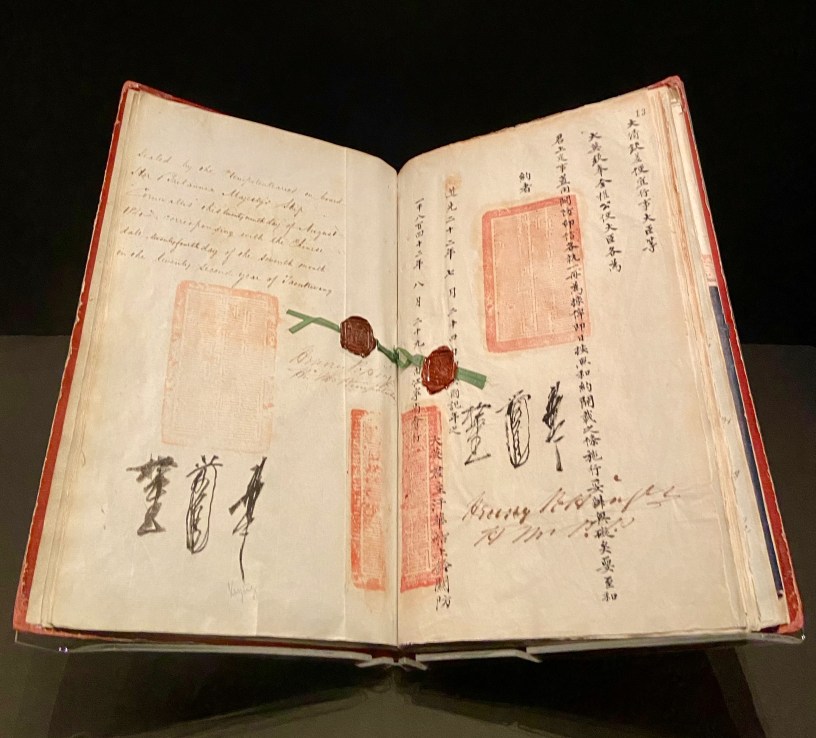
Few events actually change world history, but the Treaty of Nanjing in 1842 really did. It was one of the “unequal treaties” that Britain imposed on the Chinese.
In a nutshell, the story is this. The British loved Chinese tea, but China would only accept gold or silver in return. They were not interested in British manufactured goods. At first Britain paid them the precious metals, but these were soon running low.
Crisis.
So the British came up with a scheme: sell China opium!
Unsurprisingly, the Chinese emperor was less than amused and refused to allow the drug sales.
So – to force China to take its opium – London waged two wars, known as the Opium Wars, to force the drugs on China. This is an excellent summary of the wars.
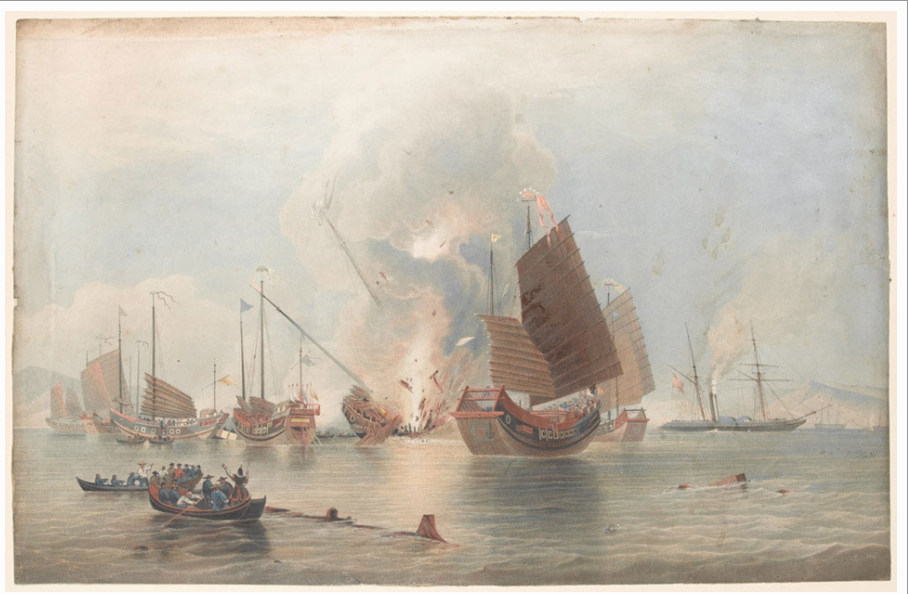
Britain won, and imposed what the Chinese (rightly) regarded as “unequal treaties” – the first was the Treaty of Nanjing in 1842. Here is the actual treaty, currently on display in the British Museum’s exhibition: “China’s hidden century.”


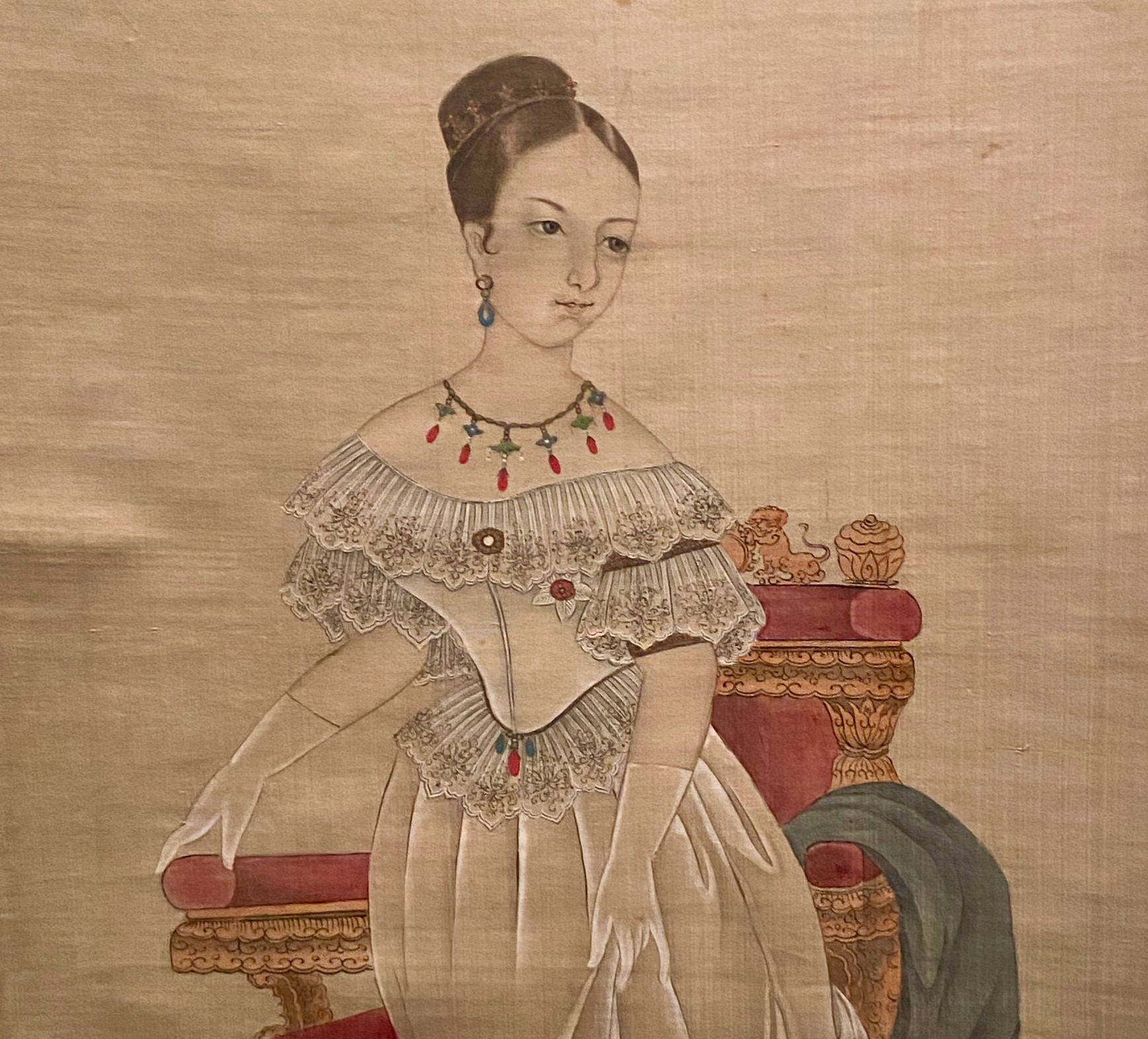
The treaty was signed during the reign of Queen Victoria and here is a picture of the young queen, by a Chinese artist.
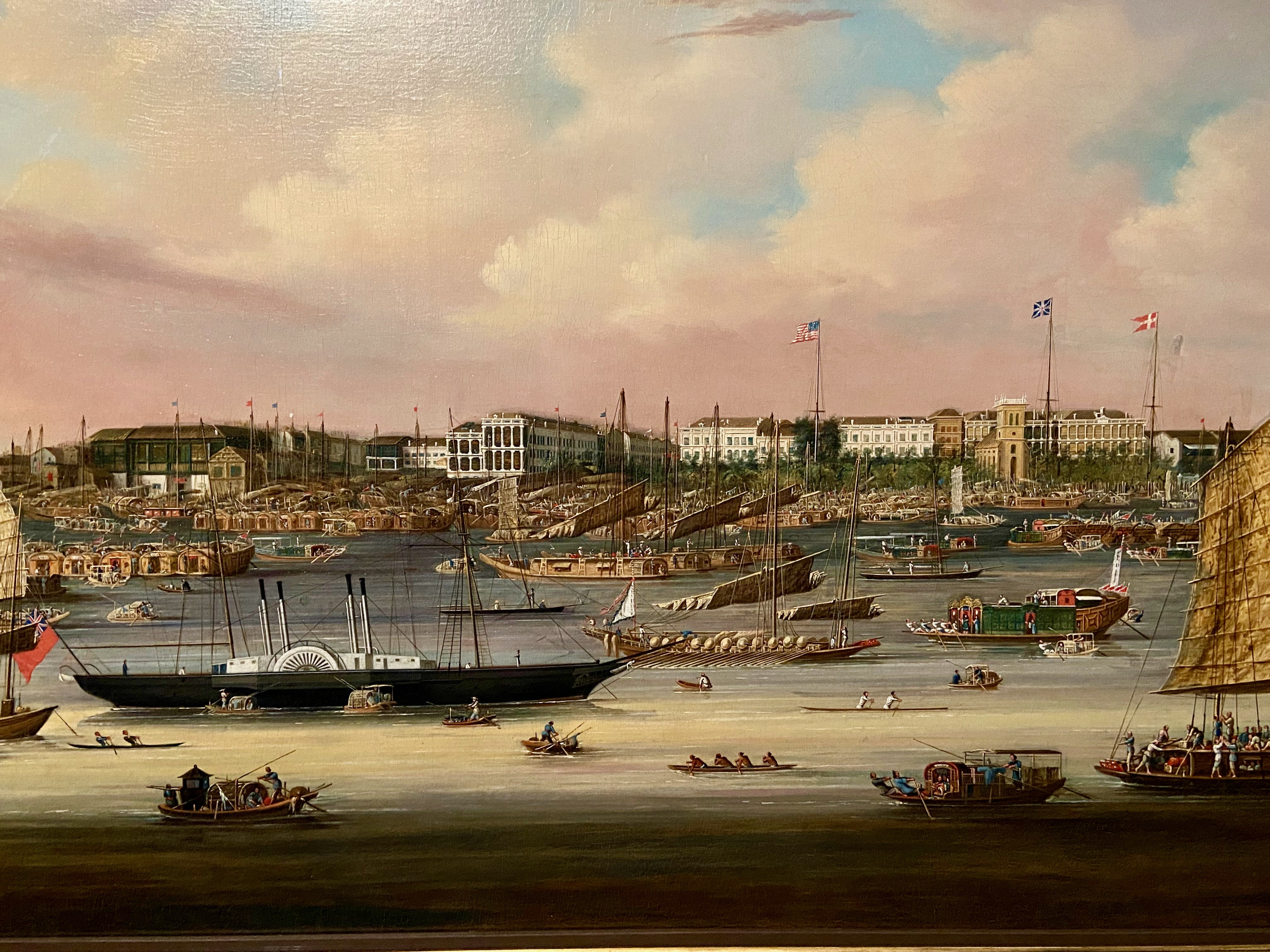
As a result of the treaty (and another signed after the Second Opium war) in 1860, the British and other foreign powers were allowed to establish bases on the Chinese coast, including Hong Kong.
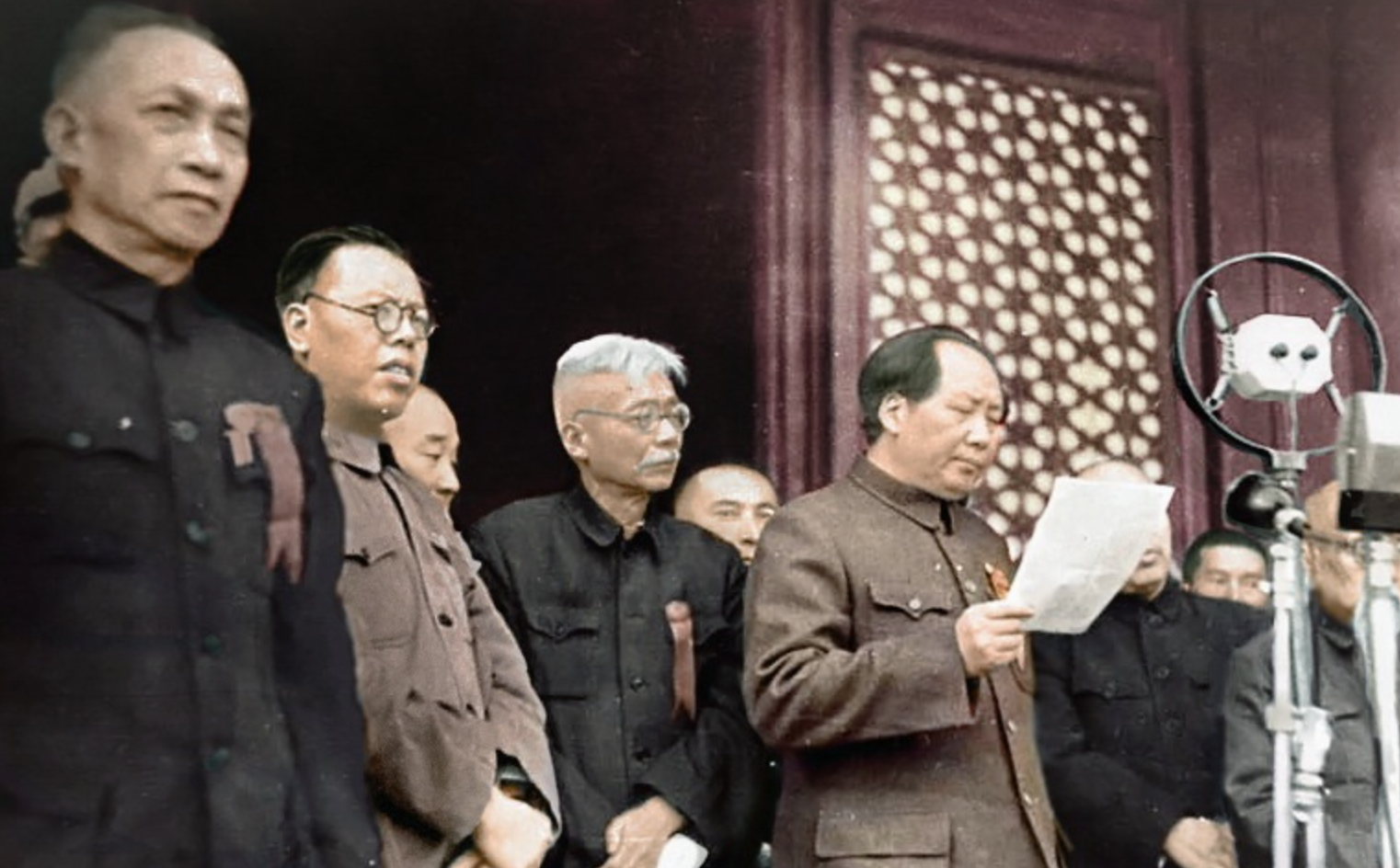
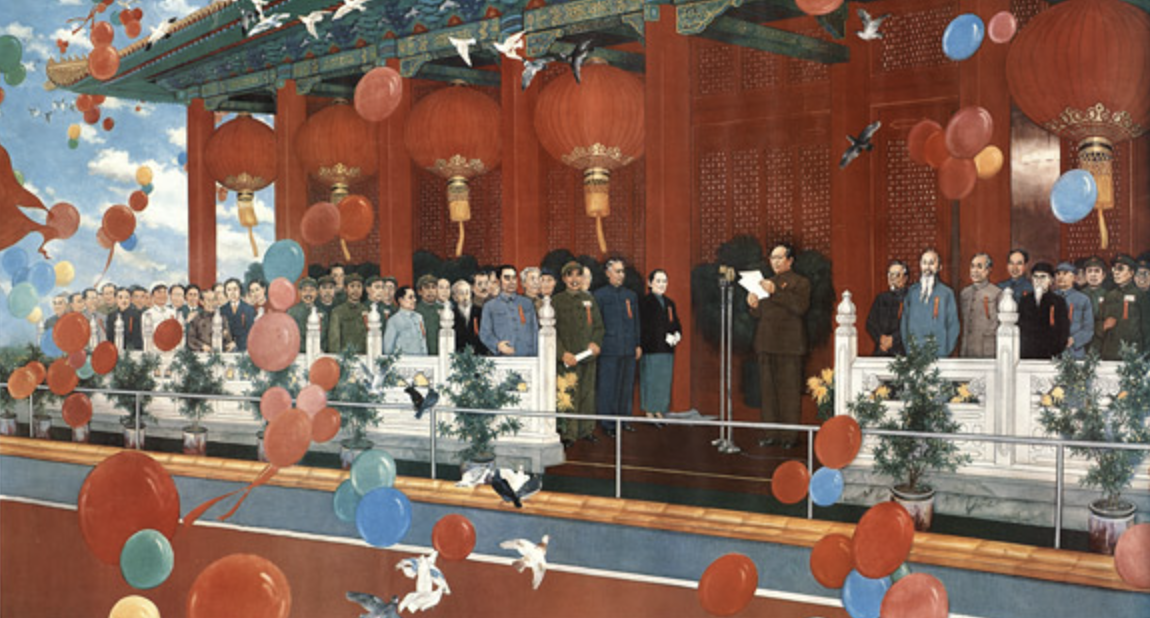
Chinese regarded the wars and the treaties as a moment of national humiliation – something Mao Zedong referred to in 1949 when he memorably declared at the founding of the People’s Republic of China: “The Chinese people have stood up!”
It was a moment commemorated in posters like this one.
 Martin Plaut