Dear reader,
This 58th digest holds a collection of news items that we received from Tigray (section 1), followed by a startling report on the dire food situation (section 2). Further we pay attention to the military conflict in the Amhara Region, including first-hand information (section 3) and once more we demand justice for war crime victims (section 4). There is a notice for the première of a new video “Tigray cultural heritage under siege” (section 5), as well as a list of other media pieces that, by sheer coincidence, are all connected to Eritrea (section 6).
We take this chance to wish all Tigrayan women a nice Ashenda holiday despite the sorrows! While Ashenda celebrations in villages are more socially genuine and less standardized, the Mekelle Ashenda festival is an eye-catcher (see this video by Tewodros Hailemichael and Thera Mjaaland). For the first time since 2019, after the emergence of COVID-19 and especially after the war, Ashenda will be celebrated in Mekelle today, 22 August.
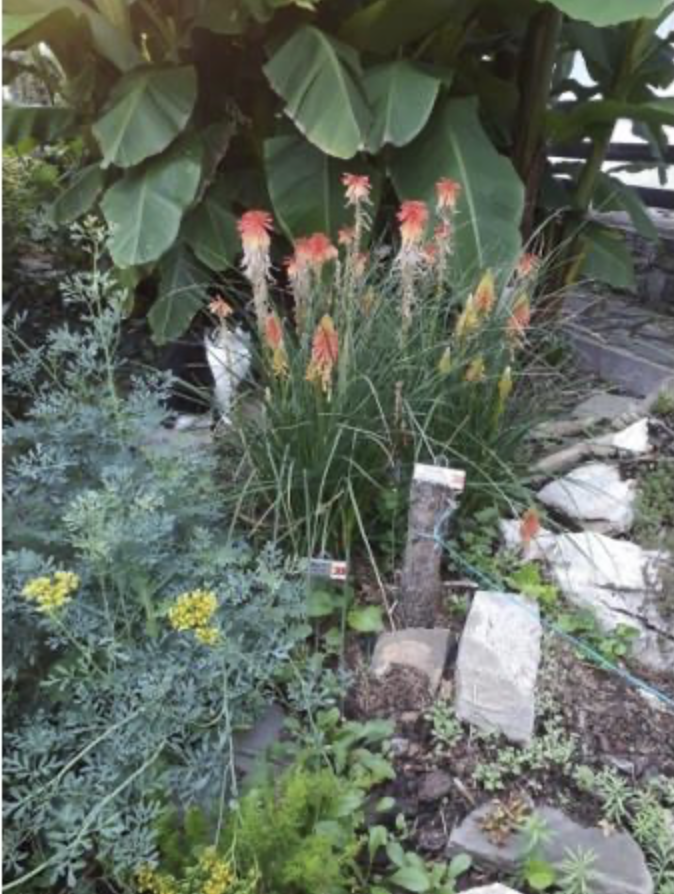
Mid-August is when the ashenda flowers bloom in Tigray (and also in the Tigray Garden in Belgium)
In Mekelle University (MU) and the three other universities in Tigray, BSc, MSc and PhD study programs have resumed. The admitted students are Tigrayan students who were studying in the universities in Tigray but were forced to stop their study due to the war, and others who had beenstudying in universities outside Tigray but had no opportunity to join their previous universities. We understand also that staff rooted in other regions of Ethiopia have returned back to MU in order to take up their teaching activities. Yet, coping up with three years of academic standstill will be an enormous task for the four universities in Tigray.
Reversely, the poor salary payment conditions and acute shortage of medical equipment have pushed numerous medical doctors to leave the Ayder hospital and relocate to Addis Ababa or abroad. Also in Adigrat, around 80 medical doctors have left the town. A quantitative analysis of the brain drain induced by the Tigray war, the blockade, as well as the subsequent crisis, is required.
On the positive side, we learnt that the rural road from Hagere Selam to tabiya Mika’el Abiy has been overhauled and even extended down to theInda Abba Hadera monastery, 20 km in total. Also in the town of Hagere Selam, 11 km of roads were renovated, as a joint effort by TDF, the municipality and the Dogu’a Tembien woreda. This is not a stand-alone example but it indicates some revival taking place in Tigray. (Photo report of the full road trip mid-August is available upon request)
“Normalcy” has however not at all returned to Tigray, and the impressive recent eye-witness report by Mulugeta Gebrehiwot (published by Tufts University, USA) is a must for anyone who wants to know the real living conditions in Tigray: Part One, and Part Two.
Further reading:
- The Guardian, 7 August 2023: ‘People are under siege’: why Ethiopia’s war in Tigray isn’t over (with focus on the Irob indigenous people in Tigray, still largely occupied by Eritrean troops)
- Tghat, 2 August 2023: Tigray – State of Affairs: A First Person Account
- AFP, 27 July 2023: Tigray Says Demobilised 50,000 Fighters Under Peace Process
- BBC, 3 August 2023: Ethiopian church expels Tigray priests amid rift
Specifically in the Central and Southeastern zones, more Tigrayan households are in the worst stage of food insecurity in June 2023 than they were a year earlier, according to the first significant evaluation completed since the cessation of food aid. More than one in ten children under the age of two were found to be suffering from severe acute malnutrition, and the gross acute malnutrition rate for children under the age of five was 38%, exceeding the threshold for famine, according to a study conducted by researchers at the Tigray Health Research Institute, Mekelle University and Adigrat University. Data from the analysis indicate that the effect of the siege effect on Tigray’s food security in June 2022 was not as severe as the effect of aid suspension in June 2023. Read the highlights of the report, summarized by Duke Burbridge, and published by Tghat.com
Early August, news were made that the WFP had cautiously began distributing food aid in Tigray. The Commissioner of Tigray’s Disaster Risk Management Commission confirmed the resumption of certain relief activities in select sections of the region, but cautioned that this should not be interpreted as the restoration of stalled food aid; rather, it is the resumption of the safety net program (PSNP). The distinction is that humanitarian aid imposes no requirements on recipients, whereas safety net programs require people to engage in particular public labor activities, for which many of the people who need food aid are simply too weak.
An independent source confirmed, indeed, that WFP does not yet deliver any humanitarian food aid. The small distribution that occurred, was a pilot resumption of PSNP. Humanitarian distributions have not started at all. We learnt in addition that Tigray’s share of PSNP for the war years will not be available retroactively.
Further readings on the humanitarian situation in Tigray
- Addis Standard, 11 August 2023: “I lost my two newborn babies due to hunger”– a mother in Abiy Addi IDP camp, Tigray
- BBC, 19 August 2023: Ethiopia’s Tigray crisis: Deaths from starvation after aid halted – official
- OCHA, 27 July 2023: Ethiopia – Situation Report
- Addis Standard, 31 July 2023: Editorial: Condemning abhorrent food aid theft by cutting aid is punishing victims twice. Death is staring in the face of millions in Ethiopia, rescue them now!
- Associated Press, 8 August 2023: The World Food Program slowly resumes food aid to Ethiopia after months of suspension and criticism
- Addis Standard, 9 August 2023: Authorities in Tigray region dispute reports of resumption of food aid by WFP
- Tigray Emergency Coordination Centre Operational update, 04 August 2023 (summarized by Tghat)
- Tghat, 16 August 2023: Nutrition support for Tigrayan children cut for third straight month
An armed conflict erupted between the Ethiopian army and the Fano militias in Amhara region. See some media reports:
- AlJazeera, 4 August 2023: Ethiopia declares state of emergency following clashes in Amhara
- Crisis24, 2 August 2023: Ethiopia: Increased tensions likely in Amhara Region through late August amid ongoing military operations
- Al Jazeera, 8 August 2023: What is behind the latest fighting in Ethiopia?
- ICHREE, 10 August 2023: De-escalate tensions in Amhara
- Reuters, 14 August 2023: Suspected air strike kills 26 in Ethiopia’s Amhara region
- The New Humanitarian, 15 August 2023: Ethiopia shaken by a new and growing rebellion in Amhara
- BBC, 16 August 2023: Why Ethiopia’s Amhara militiamen are battling the army
- France24, 10 August 2023: Ethiopia’s restive Amhara ‘calm’ after govt claims militia retreat
- Ethiopia Insight, 14 August 2023: Five reasons why Ethiopia is at war with itself, again
- The Reporter, 12 August 2023: Gov’t says 1st phase Amhara region operation successful
- Addis Standard, 12 August 2023: Command Post admits civilian deaths in Amhara region, reveals list of suspects under custody
I reached out to some of our alumni living in the Amhara region. One of them writes: “In Bahir Dar and other areas of the Amhara region, there has been fighting that resulted in numerous fatalities. My family is good, and my neighborhood is rather secure. After roughly a week of being under lockdown due to the violence, Bahir Dar has been rather stable as of August 11, and we are able to walk around the city. Due to the war, there has been no internet access in the Amhara region since the final week of July.”
Another alumnus, and previous long-standing staff of Mekelle University, has become an MP for the Amhara region. Back in 2020, he was a strong advocate of what he called a ‘police operation against TPLF’. Now that war turns to Amhara region, he made this statement in the Ethiopian parliament on 8 August: “Instead of merely implementing curfews, true resolution requires actively engaging in our communities to promote peace. The problem’s solution hinges on discussions, apologies, and deliberate, thoughtful consideration. Fano and ENDF collaborated alongside the Amhara people and other nations during challenging times. I suggest that the government redirects its efforts towards fostering peace through regional support and alternative strategies”.
The repercussions of war and state of emergency on civilian populations are properly expressed in this – Tigray has also experienced these repercussions, and to a great extent. Yet, the MP goes on to say that he views the war that Abiy and Fano waged against Tigray favorably (“…during challenging times”), calling in the earmarked enemy as a red herring.
Other Ethiopian politicians, such as Eskinder Nega, an ardent supporter of the nazi Holocaust, call for Fano to increase its military presence throughout Ethiopia.
We can draw a few take-home messages from the foregoing:
- It is better to pursue dialogue than war, as we have advocated since the Tigray war began in 2020; remarkably, colleagues from the Amhara region vigorously resisted our call for peace at the time;
- If the Amhara region and its paramilitary force gave up their claims to and presence in parts of the Tigray, Benishangul-Gumuz, and Oromia regions, many of Ethiopia’s problems may be resolved;
- Abiy Ahmed’s Nobel Prize for Peace has still not been rescinded; and
- All around Ethiopia, independent inquiries into war crimes are required. The ICHREE’s mandate ought to be extended.
Further readings on the armed conflict in Amhara region, in French, in Dutch and in Italian:
- Le Monde, 5 August 2023: L’Ethiopie au bord d’un nouveau conflit après des affrontements en Amhara [in French] (Ethiopia on the brink of new conflict after clashes in Amhara)
- ANSA, 5 August 2023: Etiopia, ‘ribelli dell’Amhara controllano tre città’ [in Italian] (Ethiopia, ‘Amhara rebels control three cities’)
- Africa Rivista, 3 August 2023: Etiopia: scontri in Amhara, segnalate interruzioni ad internet [in Italian] (Ethiopia: clashes in Amhara, internet outages reported)
- Il Riformista, 15 August 2023: Etiopia senza pace, lo scontro in corso tra gli eserciti indipendenti contro le truppe del governo [in Italian] (Ethiopia without peace, the ongoing clash between independent armies against government troops)
- NRC (Koert Lindijer), 8 August 2023: Abiy Ahmed veroorzaakt nieuw etnisch conflict in Ethiopië door spanningen aan te wakkeren [in Dutch] (Abiy Ahmed causes new ethnic conflict in Ethiopia by stoking tensions)
- Trouw (Joris Belgers), 13 August 2023: De strijd in Amhara is de grootste uitdaging voor Ethiopië sinds de burgeroorlog in Tigray [in Dutch] (The battle in Amhara is the biggest challenge for Ethiopia since the civil war in Tigray)
One of our friends writes: “I travelled to Tigray for a couple of days to see my brothers and sisters. I returned with a mixed feeling. I am relieved that all my close family members are alive and safe, and it was really great to see the resilience of the population as a whole, but at the same time it is really devastating to learn closely about the extent and degree of the casualties and the devastation.”
Civil Society Organisations from Tigray, as well as the Commission of Inquiry on Tigray Genocide expressed their concerns about the possible termination of the UN Independent Commission of Human Rights Experts for Ethiopia (ICHREE), as demanded by the Ethiopian government. The insist on the extension of the mandate as the atrocities in Tigray have not been thoroughly investigated and the government is still committing such crimes all over the country.
- Amnesty International, 18 August 2023: Ethiopia: Authorities must grant independent investigators, media unfettered access to Amhara region to probe violations under state of emergency.
- Addis Standard, 25 July 2023: Members of Congress call for sanctions on individuals responsible for human rights abuses in Western Tigray
- Aaron Maasho and Martin Witteveen: Ethiopië blokkeert gerechtigheid voor de slachtoffers in Tigray (NRC) [in Dutch] (Ethiopia blocks justice for victims in Tigray)
- Tsedale Lemma on Twitter (15 August 2023): There must be a universal clarity on the need to have unimpeded access for ICHREE to all areas of violence in Ethiopia
LAST MINUTE: even after fleeing the country, Ethiopians are targeted by warfare
- The Guardian, 21 August 2023: ‘Fired on like rain’: Saudi border guards accused of mass killings of Ethiopians
- Human Rights Watch, 21 August 2023: Saudi Arabia: Mass Killings of Migrants at Yemen Border
A message from www.tigrayatwar.org : Religious and cultural heritage, including ancient churches and monasteries, define every part of people’s life in Tigray. Integral to this heritage are Tigrayan priests and monks, considered God’s representatives on earth. They have been responsible for creating and protecting this precious historical, religious, and cultural heritage for hundreds of years. Churches, monasteries, manuscripts, and all associated precious heritage items have been ransacked and destroyed across the state of Tigray. There has also been a concerted attack on priesthood. For Tigrayans, this campaign of genocide is simply destroying an intrinsic aspect of their physical and spiritual lives, with devastating psychological effects.
A new video about the destruction of Tigray’s cultural heritage will be premiered on 2 September at 15:00 CET.
- Addis Insight, 21 July 2023: Ethiopia Seeks Port Access Through Negotiations and Force
- AFP, 3 August 2023: Youth halt Eritrean dictator’s festival in Sweden
- Mirjam Van Reisen: Why the Swedish minister is wrong about the Eritrean festival disruption
- Associated Press, 8 August 2023: UN investigator says Eritreans experienced torture and sexual violence during national service
- Martin Plaut, 11 August 2023: Hard times in Ethiopia: the plight of Eritrean refugees inside Addis and across the country
- Associated Press, 9 August 2023: Eritrea’s repressive government criticizes exiles who attack overseas festivals as ‘asylum scum’
- The Guardian, 12 August 2023: Eritrean diaspora vow to continue disrupting festivals that ‘promote dictatorship’
- Jurist, 11 August 2023: UK government ‘appalled’ by human rights violations in Tigray, calls upon Eritrean forces to leave
- Addis Standard, 11 August 2023: Eritrea summons British envoy for remarks by Ambassador in Ethiopia on troops’ withdrawal
Professor Jan Nyssen, Ghent University
 Martin Plaut